
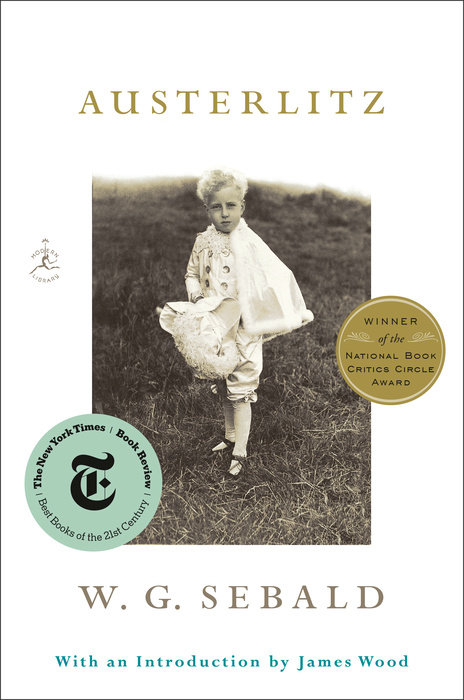
In Walt Hunter’s inspiring new essay “Stop Meeting Students Where They Are,” he describes the value of pushing his students in an American literature class to write without the safety net of what they know. He references a line from W. G. Sebald’s Austerlitz:
Once a fluent and successful writer, Austerlitz suddenly falls into a crisis of faith about the sentence, which becomes “at best a makeshift expedient, a kind of unhealthy growth issuing from our ignorance, something which we use, in the same way as many sea plants and animals use their tentacles, to grope blindly through the darkness enveloping us.”
Running with that concept of “writing into the darkness,” Hunter challenges his students to knock out a quick essay about their difficulties reading, providing them with prompts:
One was: “Write about a moment in an Emily Dickinson poem that you don’t understand.” Another was: “Write about your morning routine, but in the style of Faulkner.” I didn’t want to create 32 new Faulkners. I wanted the students to experience the moment when their own style broke through the imitation, when the attempt to write like Faulkner failed and revealed, as a kind of photonegative, their own emergent voices. John Keats called this state of being “negative capability,” a condition in which the writer leans to live in a perpetual state of uncertainty. If it was really true that the students couldn’t read, then it was up to me to put the books in their way and make them deal with them…
Try this approach yourself. Think of something that makes no sense to you, that you have failed to understand. Describe that feeling. Write through it.
See what you find.
 Chris Barsanti