Screening Room: ‘Devo’

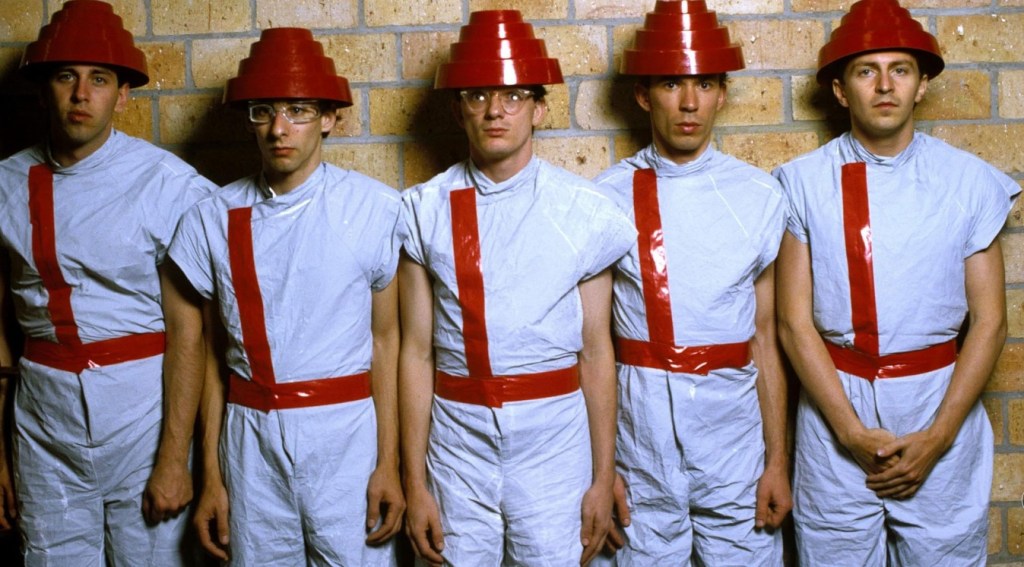
My review of Chris Smith’s documentary Devo ran at The Playlist:

Weaving in spectacular early footage of Devo’s first shows back in Ohio, Smith shows them happily alienating audiences who didn’t know what to make of these robotic weirdoes in the era of denim, sideburns, mellow harmonies, and noodly guitar solos. One show at an Akron bar called the Crypt, right by the Firestone plant, nearly led to the band getting pummeled. After being inspired a couple of years later by the Ramones’ first album to speed up their music and start playing CBGB in New York, Devo actually did get into it with the Dead Boys. This showed Devo could annoy even punks, whose music they appreciated for its sonic velocity but looked down on as “simple” and “anti-intellectual”…

Devo runs on Netflix next week. Are we not men?

Shameless Self-Promotion: ‘The Writer’s Year 2026’ on Sale Now

According to my publisher, the 2026 edition of The Writer’s Year Page-A-Day calendar will:

BANISH WRITER’S BLOCK: This essential calendar provides a steady guide to help you achieve your goals—or at least be productive and have fun trying—with regular writing prompts and monthly check-ins to help you track your progress.

Who am I to argue? Get your copy here!

Writer’s Desk: Get the Details Right

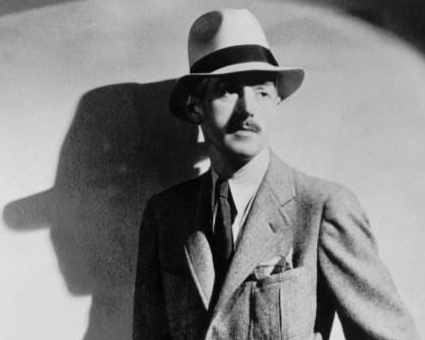
In the 1920s, before Dashiell Hammett went to Hollywood, he reviewed crime fiction for the Saturday Evening Post. This job caused him much consternation. Having spent some years working as a Pinkerton detective, he had some lived knowledge of the world of criminality (which brought some realism to his novels, especially Red Harvest and The Glass Key).

Hammett laid out several rules for crime writers to follow:

  • “Not nearly so much can be seen by moonlight as you imagine. This is especially true of colors.”
  • “Fingerprints of any value to the police are seldom found on anybody’s skin.”
  • “When you are knocked unconscious you do not feel the blow that does it.”
  • “When a bullet from a Colt’s .45, or any firearm of approximately the same size and power, hits you, even if not in a fatal spot, it usually knocks you over. It is quite upsetting at any reasonable range.”

Listen to Dashiell, especially regarding how it feels to be hit or shot (“quite upsetting”). Update as needed for technological advances.

Writer’s Desk: Talk Yourself to Sleep

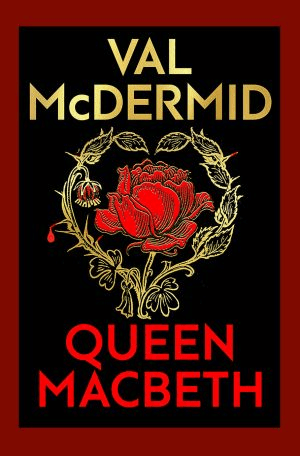
Even the most prolific authors hit roadblocks. Val McDermid (40-plus books) is no different.

She tackles those problems in an interesting fashion:

If in the morning I know I’m going to be writing a scene that’s not quite clear in my head yet, or a difficult confrontation, or a complicated transition, or I’m not quite sure why somebody’s doing something at all, then I’ll set myself a problem when I’m going to sleep and I’ll talk myself to sleep almost through it, and then nine times out of ten when I get in the shower in the morning, the answer’s there…

Screening Room: ‘It’s Never Over, Jeff Buckley’

My review of the documentary It’s Never Over, Jeff Buckley was published at Slant Magazine:

…relates Jeff Buckley’s meteoric rise and early death in the 1990s through the adoring and wounded voices of his family, friends, and bandmates. Berg leavens their wistful memories with personal and concert footage, along with Buckley’s notebook jottings, ramblingly funny and emotional voicemails, and jagged animations that are meant to simulate his manic and at times self-destructive mindset…

Here’s the trailer:

Screening Room: ‘Eddington’

Joaquin Phoenix and Pedro Pascal in ‘Eddington’ (A24)

My review of Eddington is at PopMatters:

A comic neo-Western with a bent for hyperreality and savage satirical viewpoint, Eddington is set in the kind of remote, raggedy New Mexico town where people are on a first-name basis, the scattered businesses look dusty and on the verge of bankruptcy, and more than two cars on the same block qualifies as a traffic jam. Like in many Westerns, the unresolved disputes of a small community are refracted through a looming showdown. Here, the confrontation is between Sheriff Joe Cross (Joaquin Phoenix) and Mayor Ted Garcia (Pedro Pascal), whose animus is ostensibly over masking policies being implemented as the story begins in May 2020…

Here’s the trailer:

Reader’s Corner: ‘The Martians’

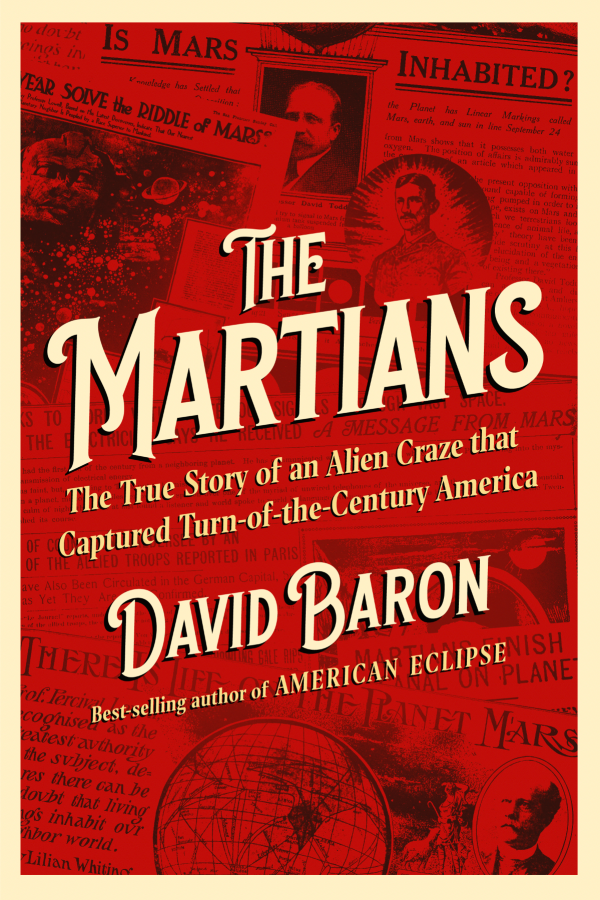
My review of David Baron’s new history book The Martians is at PopMatters:

[In 1907] the country was several years into a bona-fide mania for Martians. The aliens were the basis of hit theater shows, a constant source of wildly illustrated speculations in newspapers, and the subject of fervent speculation. Starting in the early 1890s, discussion on the subject tended not towards whether there were intelligent beings on Mars but what kind of intelligent beings they were…

Writer’s Desk: Self-Doubt is Okay

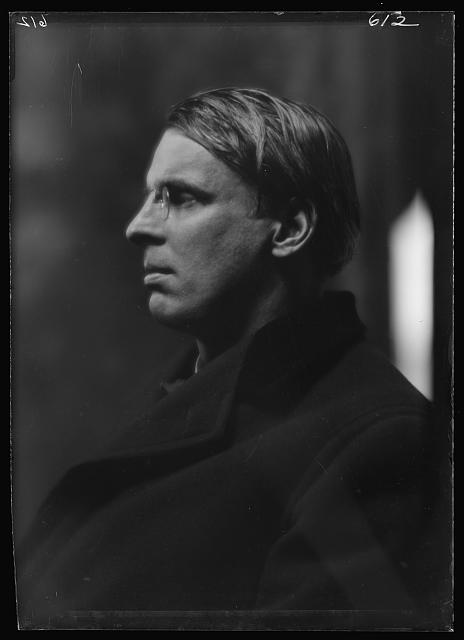
W. B. Yeats (1914)

In those moments when nothing seems to be working, some writers might imagine that for more successful (or at least productive) others who have spent years lashed to the desk, things came easily. They must have known they were great, yes?

One of W. B. Yeats’ last poems, “The Circus Animals’ Desertion,” shows what a fallacy this is. He starts the piece in a vein of specific misery any writer will recognize (“I sought a theme and sought for it in vain / I sought it daily for six weeks or so”) and then drops a line which is like a sigh of giving up (“What can I but enumerate old themes”).

The trick is not to gnash one’s teeth about having nothing to write about and being unable to write it well even if an idea did come. A little wallowing is okay. But see it as all part of the process. If you have zipped through a piece and feel inordinately proud of the results, something might be missing. Self-doubt throws sand in the gears, but in the process those grains can get ground into diamonds.

Remember Charles Bukowski:

Bad writers tend to have self-confidence, while the good ones tend to have self-doubt…

Writer’s Desk: Trust Your Characters

Tana French (Dublin Murder Squad series) writes novels about flawed people. Very flawed people. But her advice to writers about how to approach those characters is simple, clear, and for some likely very difficult to follow:

Your character is always right. No real person thinks they’re being stupid or misguided or bigoted or evil or just plain wrong – so your characters can’t, either. If you’re writing a scene for a character with whom you disagree in every way, you still need to show how that character is absolutely justified in his or her own mind, or the scene will come across as being about the author’s views rather than about the character’s. You can’t make the judgement that your character is wrong; let the readers do that for themselves…

Trusting the character, right or wrong, is another way of trusting the reader.

Writer’s Desk: It Ain’t Easy, Kids

One of the great pulp writers Florida, and actually America, ever produced, John D. MacDonald (best known for The Executioners, filmed twice as Cape Fear) knew about determination, productivity, rejection, and making a living somehow on what strangers thought about the words he typed on a page.

As such, his advice to young writers deserves a listen:

Most beginners think that writing is a quick ticket to some kind of celebrity status, to broads and talk shows. Those with that shallow motivation can forget it. Here’s how it goes. Take a person 25 years old. If that person has not read a minimum of three books a week since he or she was ten years old, or 2,340 books—comic books not counted—and if he or she is not still reading at that pace or preferably, at a greater pace, then forget it. If he or she is not willing to commit one million words to paper—ten medium-long novels—without much hope of ever selling one word, in the process of learning this trade, then forget it. And if he or she can be discouraged by anyone in this world from continuing to write, write, write—then forget it…

h/t CrimeReads

Writer’s Desk: Copy from the Masters

Michael Moorcock is among the most prolific and influential British science fiction and fantasy writers of all time. He doesn’t seem to ever get stuck for inspiration.

But when Moorcock needs ideas or advice on how to tell a story, he goes to the greats:

Find an author you admire (mine was Conrad) and copy their plots and characters in order to tell your own story, just as people learn to draw and paint by copying the masters…

No shame.

Writer’s Desk: No Shame in Writing Fast

In his enthralling new biography on William F. Buckley, Sam Tanenhaus says the following about his subject’s approach to his work:

Like so many writers he loathed the act of writing, but like very few he did it with speed and efficiency…

Buckley spent a career making use of that efficiency. For many years, he wrote multiple columns a week while editing the National Review, hosting Firing Line, and publishing dozens of books (sure, some were padded collections of columns and letters, but still), not to mention swanning around high society affairs, going yachting, and generally engaging in the life of a gentleman. He accomplished this through efficiency. Not messing around. Knowing what he wanted to say before firing up the word processor.

In 1986, Buckley took to the pages of the New York Times to make an argument for fast writing. A scold over at Newsweek had snarked that Buckley sometimes spent a mere 20 minutes on his newspaper columns, which was apparently too little time for serious writing. Buckley responded in indignation:

It is axiomatic, in cognitive science, that there is no necessary correlation between profundity of thought and length of time spent on thought … I am, I fully grant, a phenomenon, but not because of any speed in composition. I asked myself the other day, Who else, on so many issues, has been so right so much of the time? I couldn’t think of anyone. And I devoted to the exercise 20 minutes…

See what you can get done in that much time. Hold yourself to 20 minutes. Then do it again the next day. And the next.

You might be surprised.

Screening Room: ‘Meeting with Pol Pot’

My review of this new film from Rithy Panh ran at Slant Magazine:

In Rithy Panh’s Meeting with Pol Pot, three French journalists are invited to meet with Khmer Rouge leader Pol Pot in 1978. Looking to discover the truth, they find themselves made accomplices of an elaborate public relations effort meant to hide the regime’s atrocities from the outside world. Loosely based on Elizabeth Becker’s When the War Was Over, the film is hard-hitting yet illusive, much like the story its characters are hunting…

Here’s the trailer: