Screening Room: ‘Dahomey’

My review of Mati Diop’s new documentary Dahomey ran at PopMatters:

Looking back at the 19th century, when European powers rampaged across Africa and cut apart kingdoms to plunder resources and kidnap millions for the slave trade, it would be understandable to argue that stolen artifacts were not top of mind for those being colonized. To its credit, Mati Diop’s lovely yet fractious documentary Dahomey does not try to make that argument. What she does attempt is a deeper story about the loss that lingers from colonial conquest and the uncertainty about how to move forward…

Here’s the trailer:

Writer’s Desk: Identify With All Your Characters

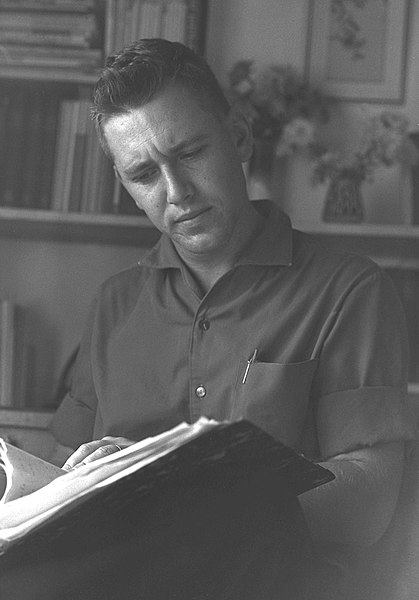
Amos Oz, 1965 (Moshe Pridan)

Because many of the novels and stories written by Amos Oz dealt in some ways with the Israeli-Palestinian conflict, they were frequently read as statements about one thing or another. Oz always rejected that formulation. His stories were grounded in history but they were about humans.

In 2016, Oz talked to The Believer about this:

Each time I have the urge in me to make a statement or send a message or to issue a manifesto, I don’t bother to write a novel. I write an article and publish it in a popular newspaper…

Referencing D.H. Lawrence’s thoughts on the subject, Oz also made a point of resisting the urge writers (and often readers) have to take sides with their characters:

He said, in writing a novel, the writer must be able to identify emotionally and intellectually with two or three or four contradicting perspectives and give each of them very a convincing voice. It’s like playing tennis with yourself and you have to be on both sides of the yard. You have to be on both sides, or all sides if there are more than two sides…

If you choose sides, you shortchange the other character or characters. They all have stories and perspectives worth hearing.

If not, why are they in your book?

Screening Room: ‘Look Into My Eyes’

My review of the documentary Look Into My Eyes ran at PopMatters:

It shouldn’t be a shock that many of the New York psychics profiled by Lana Wilson in her fascinating and, at times, maddening documentary Look Into My Eyes are actors, writers, or artists. At the very least, they are fascinated by invented worlds. Mediums and other people who have claimed to communicate with the spirits of the dead have historically relied on a bit of theater. Thus, the seances are conducted with heavy drapes, dark shadows, and guttering candles rather than in a fluorescent-lit WeWork space…

Here’s the trailer:

Reader’s Corner: New York Comic Con 2024

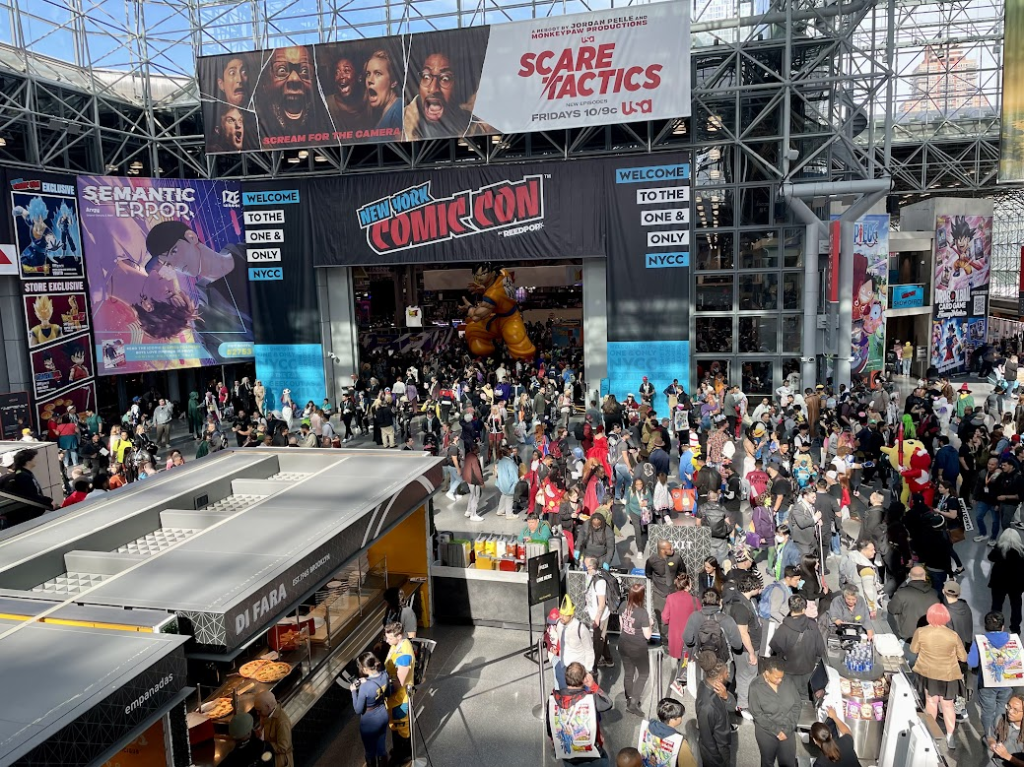
On my way to last week’s New York Comic Con, I overheard an attendee telling a non-geek civilian that it was “bigger than San Diego.” I silently scoffed. Then I arrived at Javits.

Not sure how the final attendance numbers worked out in this comic East Coast-West Coast beef, but given the thousands of people swarming the booths, inhaling chicken fingers on the go, running for all the exclusive collectible sales, and taking pics with various roaming cosplayers (plenty of Ghostbusters and Lady Deadpools, along with the odd Darth Maul and Son Goku), New York is clearly giving San Diego competition.

I was there covering the annual ICv2 state of the industry talk (2023 numbers are down a bit from 2022 but still substantially up from pre-COVID) and related panel discussions (when in doubt, get Keanu Reeves to lead your comic Kickstarter campaign) for Publishers Weekly.

Writer’s Desk: Stay Open, Stay Confident

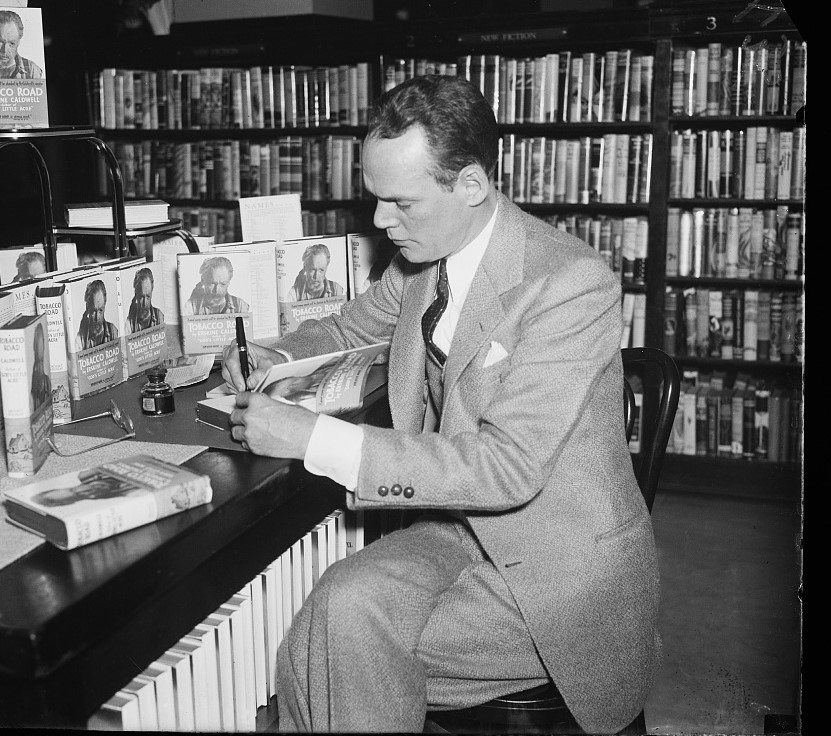
When he was interviewed by The Atlantic in the summer of 1958, Erskine Caldwell was just about the biggest author in America. The interviewer notes that Caldwell’s novel God’s Little Acre had sold over eight million copies, “more than any other novel written in our century.” An incredible achievement, especially for an author whose work does not appear on nearly any syllabi or even many greatest books of the twentieth century lists these days (excepting perhaps Tobacco Road).

Still, given those numbers, Caldwell had reason to be confident:

It’s not that I don’t welcome criticism from a publisher or a reader or an editor, it’s just that I think I know more about it than he does…

And he was probably right.

Stay open to feedback. We all need it. But always remember there’s a chance that you may actually know what you are doing.

Writer’s Desk: Write with Conviction and Humility

In a recent piece for the New Yorker that ranged from George Orwell’s Why I Write to Ta-Nehisi Coates’ new book The Message, Jay Caspian Kang grapples with a problem that can bedevil some of us who make words as a vocation: How much does our writing matter, and should it?

Writers, dramatic and vain by nature, seem particularly ill-suited to offer wisdom. Perhaps there are some lessons to be gleaned from a lifetime of reading and typing, but if they exist they’ve mostly hidden themselves from me. Call me a cynic, but I’ve grown to see writing as a vocation that should be performed dutifully, with ample amounts of irony and self-deprecating humor. This isn’t to say that writing can’t influence politics or provide hope, but I am not sure that anyone can really set out to achieve that goal. Our job is to type…

Kang is not arguing that writing cannot be used to advance a larger purpose. Drawing on a talk he once heard from George Saunders, Kang posits that when writing, “you type, tie it together, and hope that, more often than not, something resonates.”

The trap that writers can set for themselves, Kang believes, is setting expectations for their work which exceeds their abilities:

I do not think it is the job of writers to “save the world,” nor do I think they should set out to do so—not out of any objection about the sanctity of art for its own sake but, rather, because the pressure to always be political, significant, or weighty leads to leaden, predictable prose…

Do good work. Hope that this will resonate and connect with readers in a way that enriches them and even broadens their perspective.

Just do not expect to change the world.

Writer’s Desk: Residency in Red Wing

Anderson Center at Tower View, near Red Wing, Minnesota

Near the town of Red Wing, Minnesota is the estate of Dr. Alexander Pierce Anderson, who made some millions by creating things like Quaker Puffed Wheat. Since 1995, the Anderson Center has hosted residencies for artists from around the world.

It costs $30 to apply. Selected writers will have two- or four-week residences at the Center with beautiful accommodations, work spaces, meals, and even transportation to and from the airport if you are coming from out of town.

Here’s a video about the application process:

TV Room: ‘Disclaimer’

My review of the new Apple TV series Disclaimer was just published at Slant Magazine:

Alfonso Cuarón’s potboiler Disclaimer, an adaptation of the Renee Knight’s 2015 novel of the same name, begins with famed documentarian Catherine (Cate Blanchett) being fêted at an awards ceremony. Scenes of Catherine and her husband, Roger (Sacha Baron Cohen), living a posh life in their gorgeous London rowhouse are intercut with a storyline about a pair of students, Jonathan (Louis Partridge) and Sasha (Liv Hill), having a gap-year escapade in Italy. Meanwhile, a gloomier third narrative tracks Stephen (Kevin Kline), a widowed schoolteacher who seems to have lost every reason for living except for the drive to exact vengeance on Catherine for a crime that he believes she got away with…

The seven-part series premieres October 11. Here’s the trailer:

Writer’s Desk: Do It, Don’t Talk About It

In her book Making a Literary Life: Advice for Writers and Other Dreamers, Carolyn See has a lot to say about how to survive and even thrive in the writing life.

In part, she does this by keeping it simple. She includes practical asides about what will be demanded of you, though what she says does help (“A thousand words a day—or two hours of revisions—five days a week for the rest of your life”).

See also reminds writers what not to do:

You know the last thing in the world people want to hear from you, the very last thing they’re interested in? The fact that you always have wanted to write, that you cherish dreams of being a writer, that you wrote something and got rejected once, that you believe you have it in you-if only the people around you would give you a chance-to write a very credible, if not great, American novel…

Screening Room: ‘Megalopolis’

My review of the long awaited Megalopolis ran at PopMatters:

About an hour and a half into Francis Ford Coppola’s sometimes jaw-dropping and frequently interminable Megalopolis, the sometimes astounding and frequently inscrutable filmmaker finally delivers a scene that seems worthy of the film he seems to believe he is making. During a tense meal with his political rival and future father-in-law Mayor Cicero (Giancarlo Esposito), visionary city planner Cesar Catilina (Adam Driver) makes a passionate argument for the need to create a better world, only to have Cicero sharply retort about how every utopia carries with it a potential dystopia. For good measure, Cicero’s daughter and Cesar’s love Julia (Nathalie Emmanuel) jumps in to make her father’s point with some deftly delivered Marcus Aurelius quotes.

For about a minute, Megalopolis crackles to life with the clarity it has been missing. But soon, the moment is past, and Coppola is back to jumbling together messily overproduced spectacle moments, which add up to far less than the sum of their portentous bits…

Megalopolis opens this weekend. If you’re going, it’s worth springing for the IMAX.

Here’s the trailer:

Reader’s Corner: ‘Polostan’

My review of Neal Stephenson’s Polostan is up at PopMatters:

As the first volume of a projected trilogy, Polostan avoids the tendency of such books to serve as a crowded place setting for everything to come. Rather than spreading his narrative across a half-dozen main characters that he spends the next two books stitching together, Stephenson packs everything readers might want in their characters into one woman and lets her run with it. (Given Stephenson’s tendency for thousand-pagers, one wonders if he wrote this whole thing as one book and the publisher argued him into chopping it up)…

Writer’s Desk: Epiphanies are Cheating

Photo by Ritika Roy (licensed under CC-CC0 1.0)

Novelist and writing professor Charles Baxter was reading a Best American Short Stories volume when he realized something: Every story seemed to end the same way:

I kept coming upon final pages in which there was a moment when a character stopped and looked off into the distance, and then a sentence the equivalent of ‘Suddenly she realized…’ appeared…

For Baxter, this seems like cheating:

If you’re trying to write a story with a beginning, middle, and end but haven’t found a way of tying it up dramatically, an epiphany will do the job. But it often ends up feeling like a shortcut, and besides … I’ve had so god-damned few epiphanies in my life that I’m suspicious of them…

Beware of the easy conclusion.

Writer’s Desk: Look Outside

Built-in desk at Fallingwater

Anne McCaffrey (Dragonriders of Pern series) moved from America to Ireland, where she enjoyed, among other things, the “lovely vistas.” It’s not something that most writers can manage, of course. But she made a good point about the importance of having something to look at:

I think writers need windows on a view to remind them that a whole world is out there, not the minutiae with which they might be dealing on a close scale…

Writer’s Desk: Design It Yourself

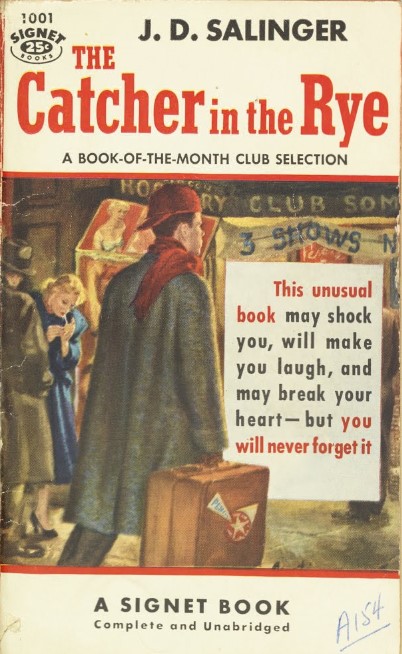
When J.D. Salinger saw the Signet paperback cover for his novel The Catcher in the Rye, with a very literal painting of Holden Caulfield wandering the sordid streets of New York, like many authors, he was displeased. Unlike many authors, he took matters in his own hand.

One of the more famous of the book’s many covers was its mass market Bantam edition, featuring the very familiar stark white design and rainbow stripes cutting across the upper left corner.

According to LitHub, Salinger designed it himself.

Most authors have very little control over how their books are presented. But whenever you have the opportunity to make any decisions about design, marketing, or anything else involved in the packaging of your work, seize it.

Who knows? You might design a cover that could last for more than a half century.