Writer’s Desk: Be a Collector

Writers like A.S. Byatt are not the kind who simply get an idea and start banging away at the keys. They study, accrue, and consider.

In this interview, the elderly Byatt, still recovering from a recent hospitalization but full of ambition about new projects, talked about her process:

You collect the things and then you study them. And I collect ideas and then I study them. And I collect people’s lives and then I study them. And because I don’t write autobiographical fiction, I need more than one life, just as I need more than one glass ball, all the different patterns, in order to see what is the same, what is different. I feel that about real people and people in books, and people in biographies. It’s the human desire to know things…

Study leads to knowledge leads to more fully realized characters and invented stories that can feel as real as what you had been studying.
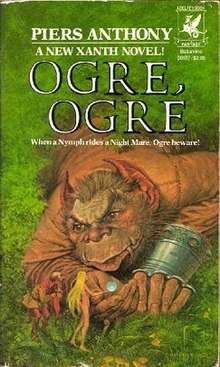
Writer’s Desk: Be a Fool

The ever-punning fantasy author Piers Anthony has written, oh who knows how many books? A lot. So many that entire shelves at some used bookstores are given over to his well-read work. Not all of it is for the ages. But the man just loves to put words on paper.

So who better to give would-be writers some advice? Here’s what he had to say about the fools who decide they have it in them to write a whole novel:

Consider the first card of the Tarot deck, titled The Fool. There’s this young man traipsing along with a small dog at his heel, toting a bag of his worldly goods on the end of his wooden staff, carrying a flower in his other hand, gazing raptly at the sky—and about to step off a cliff, because he isn’t watching his feet. A fool indeed. Does this feel familiar? It should. You’re doing much the same thing. What made you ever think you could bat out a bad book like that, let alone write anything readable?

Yes, in the end he comes around to describing why it’s still a good idea. Because the world is made livable by its fools.

Writer’s Desk: Prove Them All Wrong

Writers know that to get anywhere they generally require at least a few people to support what they are trying to do. Teachers, publishers, parents, spouses; everyone needs backup.

Conversely, writers also know that to get anywhere, they also have to fight their way through the opposition. August Wilson, who was well into his thirties by the time he started making real progress in his soon-to-be-stellar career, encapsulated the struggle thusly:

Your belief in yourself must be greater than everyone’s disbelief in you…

Writer’s Desk: You Are Talented

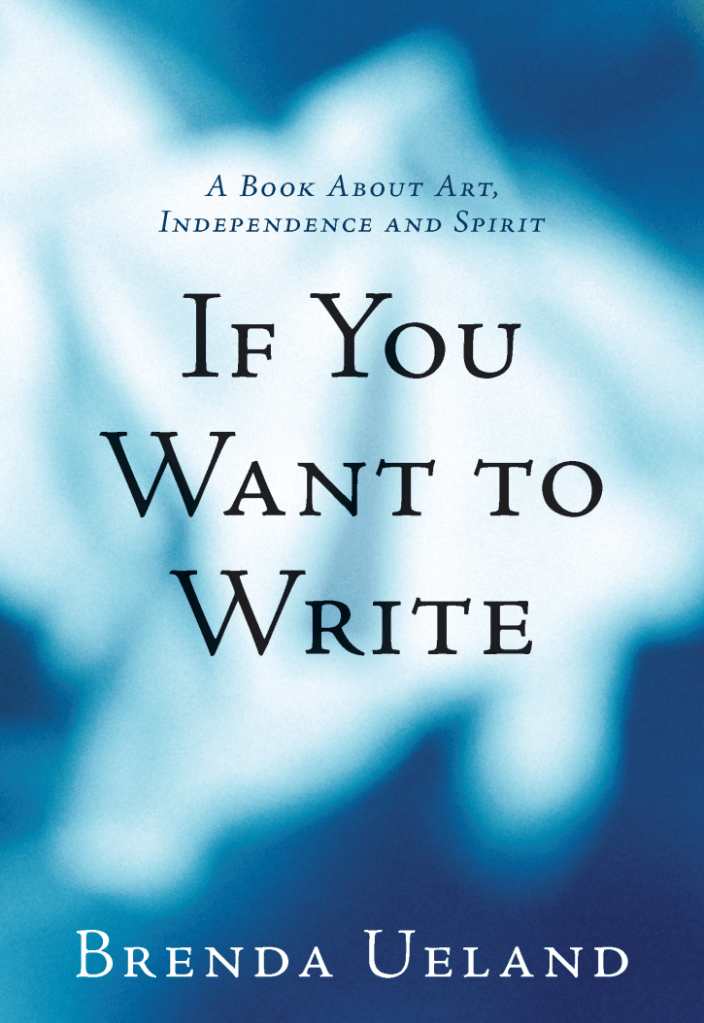
Onetime Greenwich Village bohemian and longtime Minnesotan Brenda Ueland published one of the great writing manuals in 1938. Unfortunately, very few people read If You Want to Write; after all, that was a time when the profession was seen as far harder to break into then it is today.

The people of 1938 were missing out:

Everybody is talented because everybody who is human has something to express. Try not expressing any thing for twenty-four hours and see what happens. You will nearly burst…

Writer’s Desk: Do the Opposite

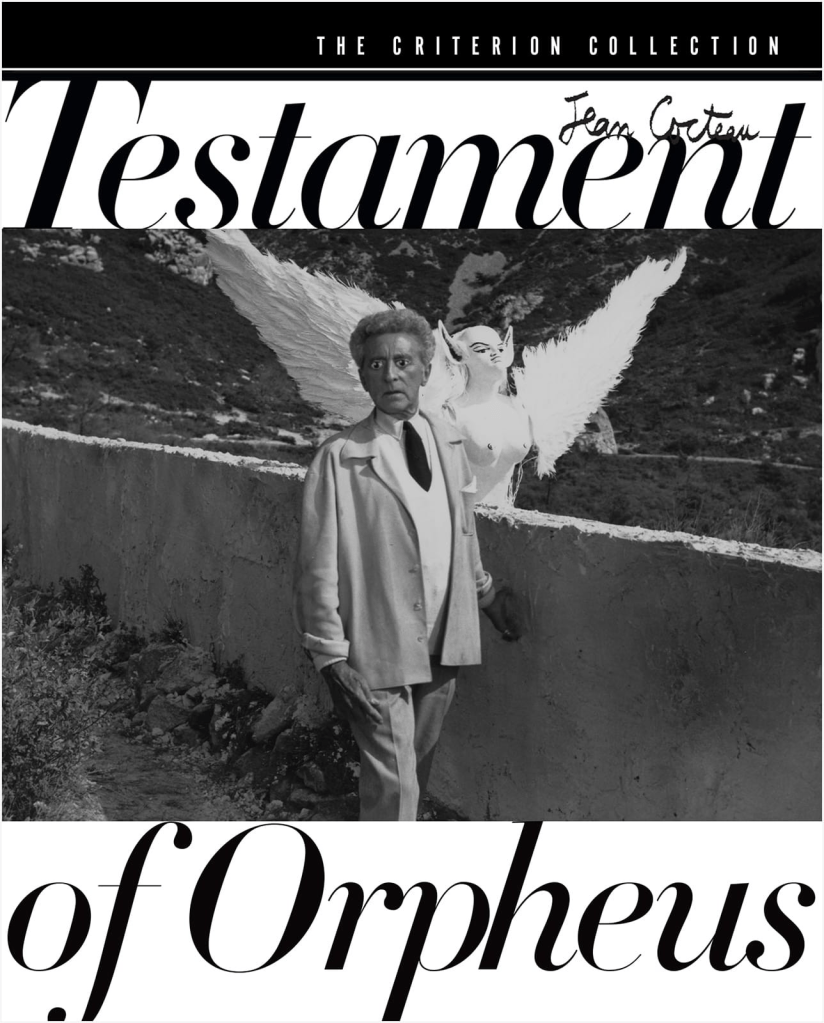
Director, playwright, and poet Jean Cocteau straddled worlds. His movies were like phantasmagorical dreams, his limpid writing flowed like filmstrips. For a few decades, his work defined much of what people meant when they talked about the avant-garde.

In other words, Cocteau was not an artist like most others. Because of that, he had very specific advice for those just starting out in their careers, which applies to writers as much as any artist:

Listen carefully to first criticisms made of your work. Note just what it is about your work that critics don’t like—then cultivate it. That’s the only part of your work that’s individual and worth keeping…

Reader’s Corner: Of Anaïs Nin, He-Man, “The Talk,” and the Bomb

My latest graphic novel roundup was published in the Minneapolis Star-Tribune:

If you think graphic novels tend to focus on people who get superpowers from spider bites or radioactive experiments gone wrong, think again.

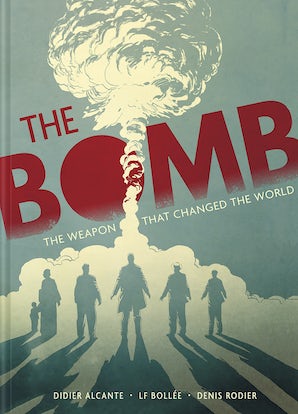
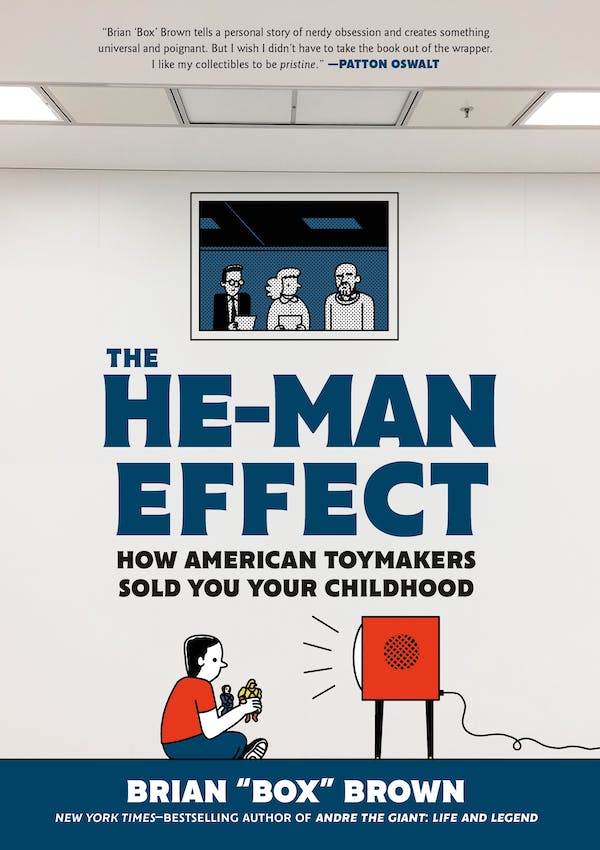
Four of this summer’s best graphic novels cover topics as wide-ranging as the sexual exploits of writer Anaïs Nin, “the talk” Black parents have with their kids in an attempt to keep them safe, the race to build an atomic bomb and, OK, super-heroic He-Man. The illustration styles are as varied as the subject matter of these four titles…

Writer’s Desk: Challenge Yourself

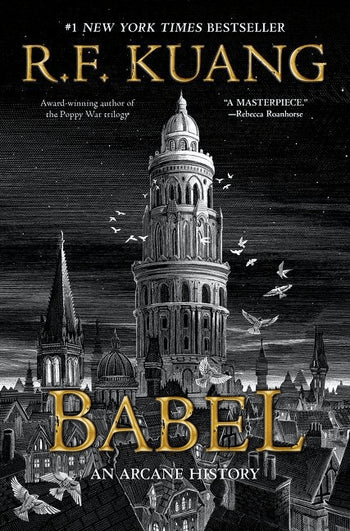
The highly prolific R. F. Kuang has in just a few short years published multiple knockout successes. From her bestselling fantasies Babel and The Poppy War series to the publishing social media satire Yellowface, she has delivered one success after another. At the same time, she is still pursuing a PhD in East Asian Languages and Literature at Yale.

Rather than seeing her studies as something that gets in the way of her writing, though, Kuang seems to take that part of her work as a boost to her fiction. She told Clarkesworld:

Academia is fun because you’re constantly being challenged by smarter people to revise and reinvestigate your opinions. Stories have to come from somewhere; for me, they come from whatever research questions are bothering me at the moment. Reading critical theory makes my fiction better because good, interesting fiction is mired in precisely the stuff critical theory addresses. Whatever depth or profundity makes its way into my work comes straight from people much smarter than me. I also just really enjoy research on its own terms…

Being surrounded by people and ideas that challenge your assumptions is often seen as the kind of thing that spurs sharper thinking, but not necessarily sharper writing. Try it out.

See what you might be wrong about. Dive into something new. Write about something entirely different.

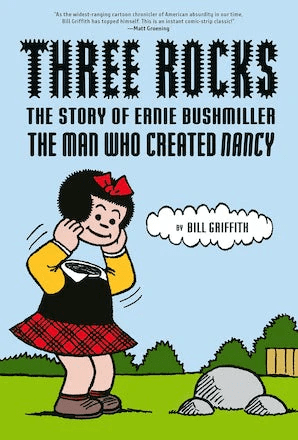
Reader’s Corner: ‘Zippy the Pinhead’ to ‘Nancy’

I interviewed Zippy the Pinhead creator Bill Griffith about his new book on the mastermind behind the comic strip Nancy. Griffith is speaking about the book, Three Rocks, with Matt Groening at San Diego Comic Con.

My interview ran in Publishers Weekly:

How do you feel about going to Comic-Con?

It’s not my turf—I don’t find too many readers who are doing Spider-Man cosplay. Although I would love it if somebody did Nancy and Sluggo cosplay while I’m in San Diego. Then I would forgive them all of their transgressions.

Writer’s Desk: Take Some Time Off

Some writers live by the routine. Others abhor them. Both are correct.

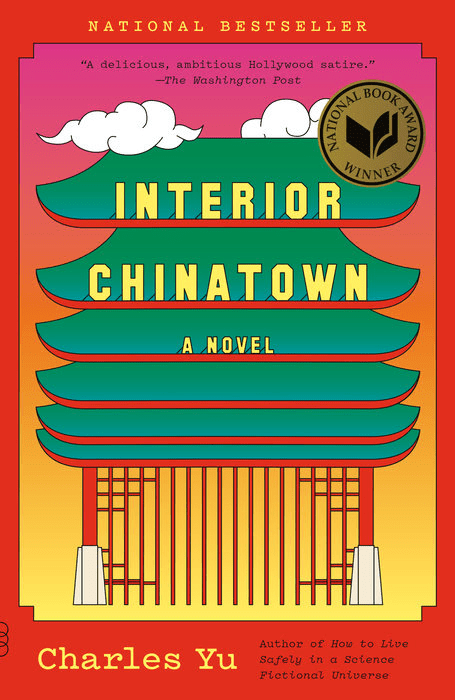
Charles Yu, the imaginative stylist of Interior Chinatown and the series Westworld, told PBS that he appreciates the importance of non-writing time:

What I do is try to frame a question or idea in a useful or interesting way, set my subconscious to work on it, and then check back later to see if there’s been progress,” Yu said. He likens the process to when a computer has programs running in the background — you might not see the central processing unit in action, but every once in a while you might get an update from the progress bar. The same thing happens when he takes time away from writing, he said: “Ding, update from your brain: ‘here’s a sentence that might be interesting.'”

Writer’s Desk: Forget About It

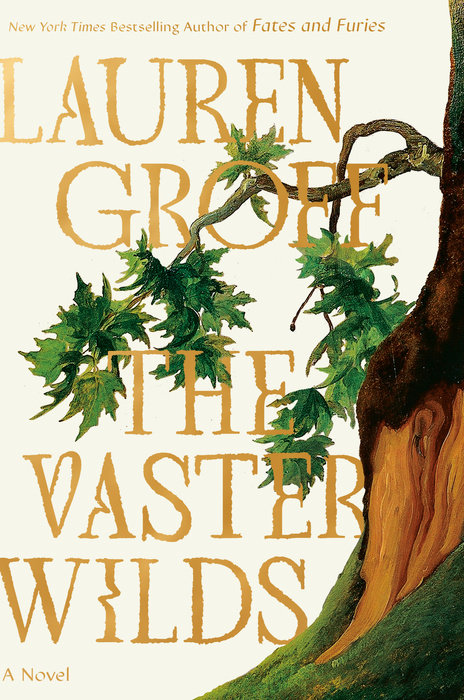
When the novelist Lauren Groff (who wrote the inimitable Matrix) has writer’s block, she thinks there could be a few different issues going on. It could be impatience or maybe a fear of imperfection.

There is also the block caused by what she calls the canary in the coalmine. This is your unconscious telling you something is off, potentially structural. Groff’s solution to this is brilliant in its simplicity:

… you may need to put your work in a drawer for a few months and reread it with fresh eyes when you’ve forgotten a good deal about it. During that time away, be in your chair every day, but be there by reading everything you can get your hands on, and you’ll find a solution in the hundreds of thousands of words you’ve read.

Put it away. Forget. Read. Get back to it.

Writer’s Desk: Don’t Think, Just Write

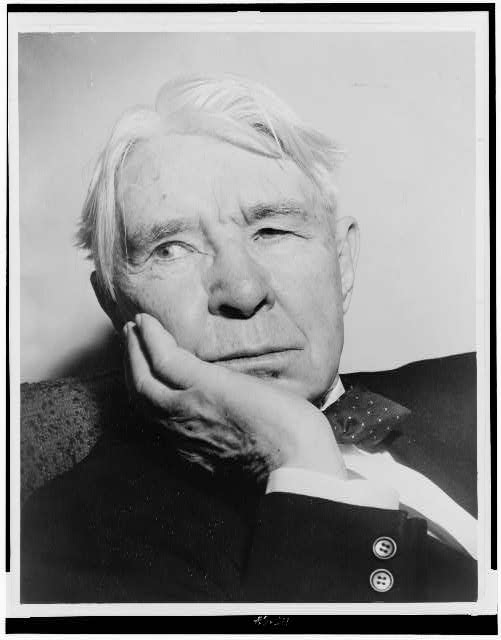
In between his poetry, journalism, and deciphering of the grand mystery that is Abraham Lincoln, Carl Sandburg also made the occasional attempt to figure out what is this thing called writing.

In one of his more insightful pieces, “Trying to Write,” he looked back at the time he interviewed Babe Ruth (because it was the 1920s and that was what journalists of his stature could do and then humble-brag about later). Sandburg asks the Bambino what it’s like to always have people seek his system for hitting home runs. Ruth responds:

… all I can tell ‘em is I pick a good one and sock it. I get back to the dugout and they ask me what it was I hit and I tell ‘em I don’t know except it looked good.

Which is maybe some of the greatest writing advice around. Don’t worry about how it looked good, just make sure you can identify it when it happens.

Reader’s Corner: Talking with David Simon

I recently had the great honor of talking with the great David Simon (The Wire, Treme, Generation Kill) about policing, writing, crime, and the graphic novel adaptation of his classic study of a Baltimore detective unit, Homicide: A Year on the Killing Streets.

A part of my interview with Simon is at Publishers Weekly:

… They took a vote and only three guys wanted me to be there. The rest thought it was a terrible idea. But, it not being a democracy, they put me in the unit anyway. Nobody was hostile. They got used to me. One guy, Terry McLarney, we were drinking at the bar and he said, “I see what you’re doing. This isn’t really about the cases. This is about us.” I said, “Don’t tell anyone” …

Writer’s Desk: Don’t Think About It

Cormac McCarthy has appeared more on this site than most other writers. And for good reason. But I am going to go back to him one more time in honor of his passing this week at the age of 89.

Though sometimes very long-winded on the page (rarely in a bad way, see Suttree for an example of him at his most wonderfully prolix), McCarthy was a man of few and preferably no words when it came to talking about his craft.

In 2014, some high school students wrangled a quick email interview with the reclusive McCarthy. Asked about his “process” of turning ideas into words on the page, McCarthy said only this:

Writing is very subconscious and the last thing I want to do is think about it…

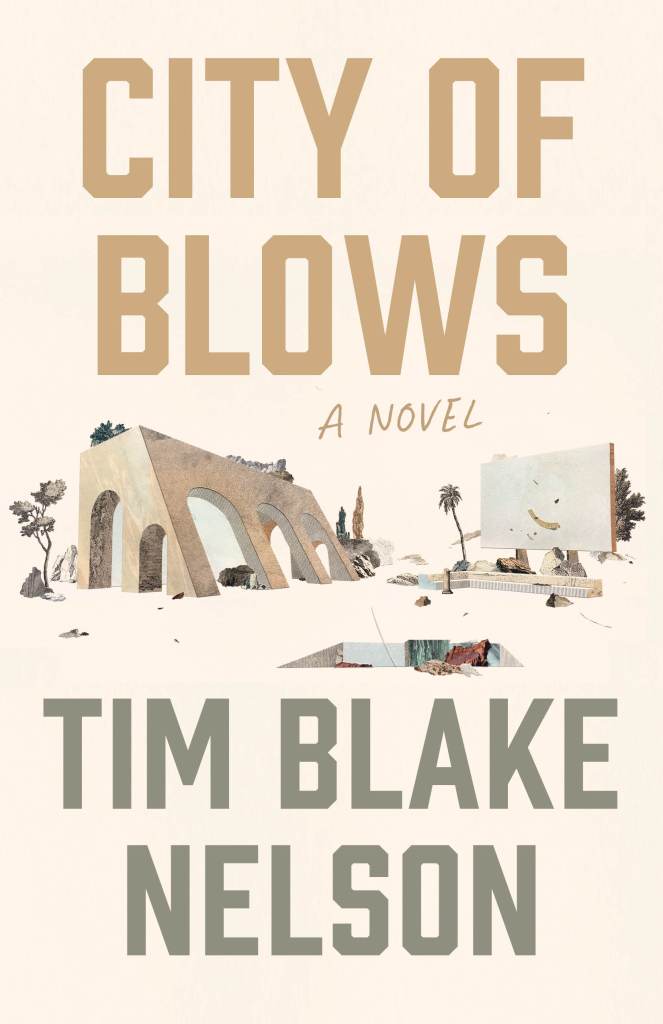
Reader’s Corner: ‘City of Blows’

Writer / director / actor Tim Blake Nelson has done everything from play a cornpone buffoon in O Brother, Where Art Thou? to write and direct The Grey Zone, one of the most chilling stories ever made about the Holocaust.

His debut novel, City of Blows, is a gnarly satire about Hollywood, ambition, and how the combination of the two grinds most people into dust.

My review ran in the Summer 2023 print edition of Rain Taxi Review of Books:

…At multiple points, the characters in this clamorous story interlace with Nelson’s background and career; the novel is stippled with the kind of inside takes on Hollywood sausage-making that a veteran like Nelson could use to fill many more books. But City of Blows is less a warts-and-all showbiz tale than a study of what happens when sky-high expectations meet the buzzsaw of reality—albeit a reality radically distorted by an industry awash in outlandish promises, byzantine court politics, and juvenile score-settling…

Writer’s Desk: Keep at It

For a Danish Baroness who did not necessarily need to write, Karen Blixen took the vocation seriously. Publishing under the pen name Isak Dinesen, she wrote poetic prose, memoir (Out of Africa), and lovingly crafted Romantic-styled short stories (Seven Gothic Tales).

She didn’t feel the need to do things the standard way. As she related to The Paris Review:

During the German occupation of Denmark I thought I should go mad with boredom and dullness. I wanted so to be amused, to amuse myself, and besides I was short of money, so I went to my publisher in Copenhagen and said, look here, will you give me an advance on a novel, and send me a stenographer to dictate it to? They said they would, and she appeared and I started dictating. I had no idea at all of what the story would be about when I began. I added a little every day, improvising. It was very confusing to the poor stenographer…

Her oft-quoted recipe for success was quite simple:

I write a little every day, without hope and without despair…