Writer’s Desk: Get Outside Yourself

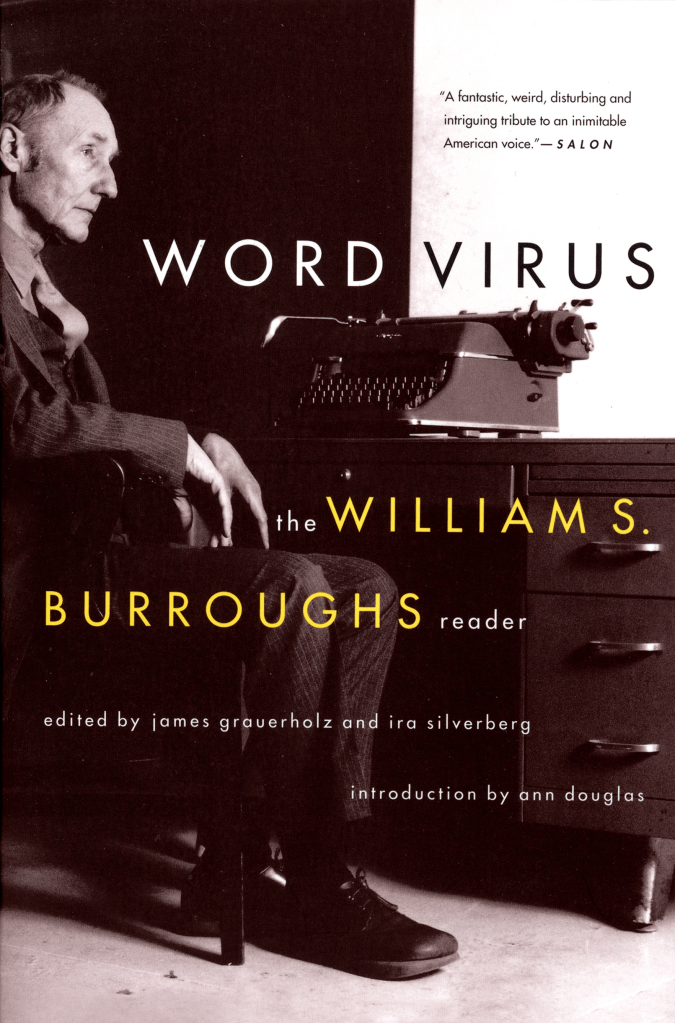
Though William S. Burroughs’ writing frequently left reality behind (Naked Lunch‘s Mugwumps and whatnot), a surprising amount of it was based on his life. The details of his Midwestern upbringing and years as a wastrel flâneur were frequently reworked in his fiction.

Still, Burroughs found it crucial for his writing to get past the limitations of self. As he once told fellow Beat and occasional collaborator Allen Ginsberg, that came with risks:

The only way I can write narrative is to get right outside my body and experience it. This can be exhausting and at times dangerous. One cannot be sure of redemption…

Reader’s Corner: Quentin Tarantino, Author

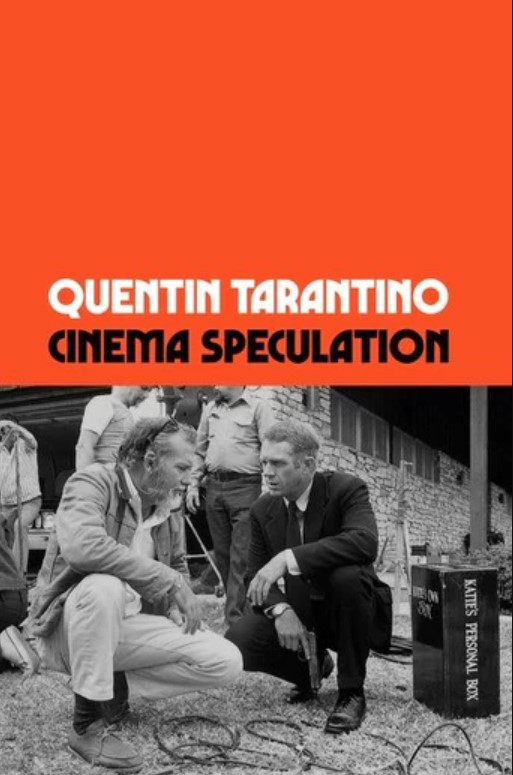
I wrote about Quentin Tarantino’s new sideline writing books for The Millions:

His first book was 2021’s Once Upon a Time in Hollywood, based on his 2019 film. Released as a mass market paperback and printed on appropriately dubious paper stock, it was made to look like the kind of quick-and-dirty film novelizations that once composed a profitable though semi-disreputable pillar of publishing, complete with back-of-the-book ads. The book is less a novelization than a remix, a self-produced work of fan fiction, or an expansion pack for the Tarantino Cinematic Universe…

Writer’s Desk: Be Spontaneous

The somewhat unsung Harlem Renaissance writer Claude McKay was a poet, novelist, and active socialist of the anti-Stalinist inclination. He channeled his passionate beliefs into an impressive series of books that showed his desire to write with spirit and truth rather than formalism.

McKay explained why in Harlem Shadows:

I have not used patterns, images and words that would stamp me a classicist or modernist … I have never studied poetics; but the forms I have used I am convinced are the ones I can work with in the highest degree of spontaneity and freedom. I have chosen my melodies and rhythms by instinct, and I have favored words and figured which flow smoothly and harmoniously into my compositions.

Choose the words that feel right for the piece. And for you. Not what you think should be chosen.

Writer’s Desk: Less, Please

Minimalist writing is generally understood as a style that pares away unnecessary words to get at a truer understanding of the story. Think of a writer using minimalism like a sculptor cleaving off marble to expose the piece of art lying underneath.

In this essay about the novelist Amy Hempel, Chuck Palahniuk (Fight Club) described the value of her approach this way:

No silly adverbs like sleepilyirritablysadly, please. And no measurements, no feet, yards, degrees or years-old…

Get to the point. Write with a minimum of editorial commentary. The reader will get it, assuming you have done your job. Adverbs only when absolutely necessary.

Writer’s Desk: First By Hand

Yes, in the 21st century, there are still writers who use pen and ink, for their first drafts, at least.

Sam Anderson, a staff writer for the New York Times Magazine, told another writer at the paper that he actually composed the first draft of most of his long pieces by pen. He liked how it slowed him down:

There’s a kind of folk craftiness to it. The first step is a very personal thing — drawing yourself out of your mind and body. Then, later, you translate that into impersonal print…

Anderson also found that the process, even though it was time-consuming and required to be typed up later, was ultimately a time saver because it stopped him from fooling around on the Internet.

Writer’s Desk: Writing Through the Hard Times

Among the writers Charlie Jane Anders spoke with for Never Say You Can’t Survive was Rebecca Solnit, who has written many books (Hope in the Dark) about that very topic. This is Solnit’s advice for how to keep putting words on the page even when everything seems to be falling apart:

Your writing doesn’t ignore what you think, your writing doesn’t think your body is weird, your writing is not going to nag you about that thing you did when you were eleven, your writing thinks you are the boss, and so it’s the best thing to do in the worst of times, as well as in the best, or so I have found. Writing a sentence is drawing a line and some of those lines are roads out of hell…

Writer’s Desk: Keep Making Things Up

Though some people seem to forget this, much of the art of writing is the art of invention. Even journalism and history involve coming up with a story that pulls everything together, the only thing being that you then need to ensure you have the research to back up your story.

Nobel winner Isaac Bashevis Singer once quipped:

When I was a little boy, they called me a liar, but now that I’m grown up, they call me a writer.

Writing is one of the only vocations where such behavior is encouraged. Run with it.

Writer’s Desk: Show Your Work

Writing is something we all have to do on our own. But eventually somebody else has to see it. Better that the first person you show it to is not your editor.

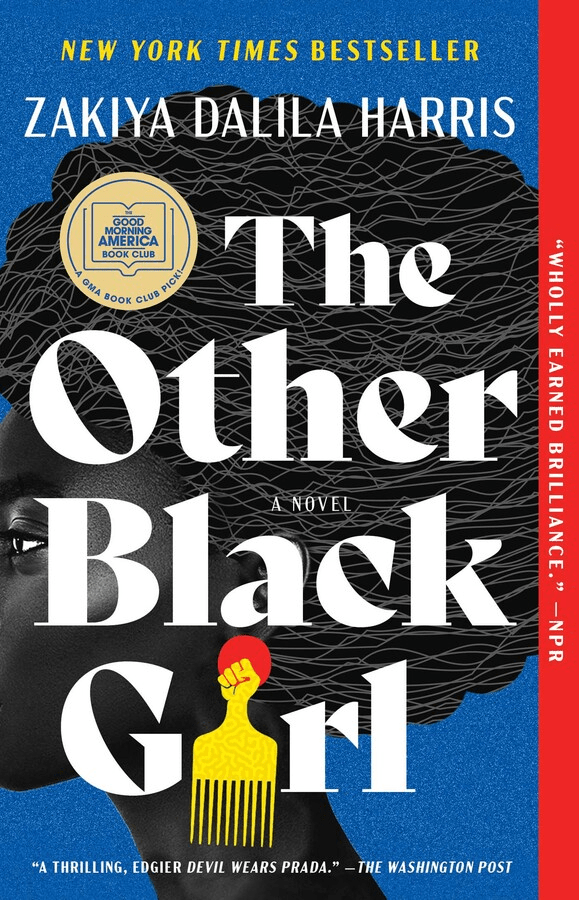
Zakiya Dalila Harris (The Other Black Girl) suggested showing your work:

Share your writing early with other people. Having other eyes on your work is crucial, especially when you’ve been cocooned in your work for so long. It’s important to open up your bubble…

She also suggested getting out in a different sense:

Also, be around people as much as you can. People-watch at the park. Work a job that requires you to talk to strangers…

The writer who is out in the world is the one who can be trusted to say something about it on the page that rings true.

Writer’s Desk: Write For Yourself First

New Year’s Day is usually the time we start making promises to ourselves about what the coming year will bring. Writers are the same. We measure so much of ourselves by what we have produced. This makes us very susceptible to ideas of self-improvement, measurement, holding ourselves accountable, and feelings of letting ourselves down.

But as important as those things are when it comes to getting things done, none of it is worthwhile if you never enjoy yourself.

That is not to say every minute laboring over your piece is going to be a picnic. A lot of it will be be frustrating, a slog that challenges your desire to ever write another word.

But if that is all you feel, then this is the year to find the joy in this. Write for yourself for a while. Make yourself laugh, cry, or even just reminisce. Maybe you will never show it to anyone. That is okay. Writing is never a waste of time if you enjoy it.

Wendy Knerr said this in Writer’s Digest:

I’ve talked to published writers who are nostalgic about the days when all of their writing was just for them, before editors, agents and readers were influencing their craft. A friend who has published several short story collections told me he spent three years writing just for himself before considering publication and that he wishes he had spent 10. He said the time before the pressures of the market bear down on your creative spirit are often the best times of your writing career. You might think it is easy for published writers to lament their exit from the bliss of “pre-publication.” But this hindsight is an indication that, published or not, you already have access to the most rewarding gifts that writing has to offer…

Remember: This is supposed to be fun.

Writer’s Desk: Use the Holiday

Nobody wants to write over the holidays. Much better to watch the snow, open a book, make some kind of warming cocktail involving rum.

Still, we all have our schedules to stick to. So make the holiday work for you.

Think about this line from Truman Capote’s A Christmas Memory:

One by one the household emerges, looking as though they’d like to kill us both; but it’s Christmas, so they can’t…

Give it a shot. Just no using mistletoe as a plot device

Reader’s Corner: Best Graphic Novels of 2022

Every year, Publishers Weekly solicits the dogged scriveners like myself who cover graphic novels for them with a simple question, “What was good? What was best?”

Fortunately, a large enough number of us agreed about the best graphic novel of the year: Kate Beaton’s masterful Ducks: Two Years in the Oil Sands.

The full poll results are here.

You can read an excerpt from Ducks here.

Writer’s Desk: Make This Your Life

At the end of a talk, playwright Tony Kushner (Angels in America) once gave, he despaired at being able to provide any practical advice. That is, except for how to procrastinate:

I’m undisciplined and unhappy writing and expect to be until the writing stops. I find a remarkable number of things to do in a day much more compelling than writing. I could give you absolutely sterling advice on how to avoid writing, how when you run out of things to do other than going to your desk and writing…

Eventually, though, Kushner circled to the thing itself. Like a great writer finally discovering his story, he focused on the fundamentals:

All I really know about writing is that if you’re a writer, writing is what you do. The work, intellectual, emotional, physical work, is everything—the means, the ends, the justifications, and the doubts, the ignominy, acclaim, disappointment, and elation, everything that can happen will happen only when and if you write…

Writer’s Desk: Don’t Be Boring

Steven Spielberg’s latest, The Fabelmans, is an autobiographical piece about growing up in a fractured family as a frustrated dreamer with no idea of how to do what he cannot stop thinking about: making movies.

At one point, the Spielberg stand-in, Sam Fabelman, is interviewing for a television directing gig when the man he is talking with asks whether he wants to meet John Ford. Sam gulps and agrees.

When the grizzled director finally appears, he grumbles at Sam and directs his attention to two Western paintings on the wall. Ford asks Sam what he sees. Frustrated at Sam’s fumbling responses, Ford tells him what he was trying to point out: Where the painter placed the horizon.

Ford’s lesson?

When the horizon’s at the bottom, it’s interesting. When the horizon’s at the top, it’s interesting. When the horizon’s in the middle, it’s boring as shit. Now, good luck to you. And get the fuck out of my office.

Whether you are making a movie, writing a book, or painting a painting, keep the audience off balance. Lean into the unexpected. Make them look closer. Make them look harder.

And don’t be boring as shit.

Screening Room: ‘White Noise’

Many have said that Don DeLillo’s White Noise is an unfilmmable novel. Well, it’s a film with Adam Driver, Greta Gerwig, Don Cheadle, and even a killer LCD Soundsystem-scored dance number.

White Noise is playing now in limited release. It will be on Netflix December 30. My review is at PopMatters:

Pity the person asking what White Noise, Noah Baumbach’s messy yet fun adaptation of Don DeLillo’s 1984 novel of comic catastrophe and looming portents, is about. The response may take time to compose, arrive in paragraph form, involve contemplative gazing, and include the phrase “it’s about … America.” Such an answer may drive the potential viewer towards something starring Ryan Reynolds. This is a shame…

Here’s the trailer: