Writer’s Desk: Maybe Change the World?

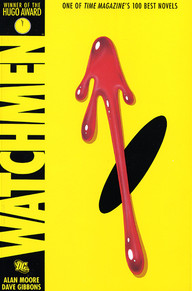
Comics legend Alan Moore (Watchmen, From Hell, League of Extraordinary Gentlemen) has a writing tutorial now on BBC Maestro, which looks absolutely fantastic. Moore is an expert at weaving together numerous characters and overlapping dramatic arcs inside complex and frequently historical settings while still maintaining clarity and momentum. Not an easy feat.

On top of that, he wants to focus not just on mechanics, but the larger picture. Namely: What can writing accomplish?

You should remember that a writer can change the world. Think of the books that have completely changed human history. See yourself in that light. Because if you are a writer, then you are having an effect upon human history…

Aim big.

Writer’s Desk: Go Easy On Yourself

The lure of the writer’s life can be hard to resist. Tabitha Blankenbiller writes movingly in Catapult about its attraction and the difficulties of giving up the dream. Here she describes the recognizable zeal that overtook her in her MFA program:

I devoured the foundational texts: Bird by Bird, The Liars’ Club, The Elements of Style. They’re what pushed me to write page after page each night no matter how hard my day job tried to wring the soul out of me. Each paragraph, each new essay draft, each exchange with my advisor was microscopically better than the one that had come before it. And the act of doing this work as ritual, as necessity, saved me. There was no longer a question of what I would do with my life…

She became a writer. She placed pieces in a wide array of respected publications (The Rumpus, Tin House) and eventually published a book. Which is more than most of us can say. But eventually things caught up with her. The never-ending hustle to get notice, to get an agent, to climb the ladder of literary notice, it all takes a toll, especially when you add the grind of everyday life to it.

Then she learned how to take a break.

I did not write for days, weeks, months at a time. The further I drifted from the epicenter of that world, the less it defined me. I sat with questions I wouldn’t have admitted before for fear of cursing myself: What if I never write another book? What if I only create what I want, when I feel compelled, for no other reason than I have something I have to say?…

And the world did not end.

Reader’s Corner: ‘We Don’t Know Ourselves’

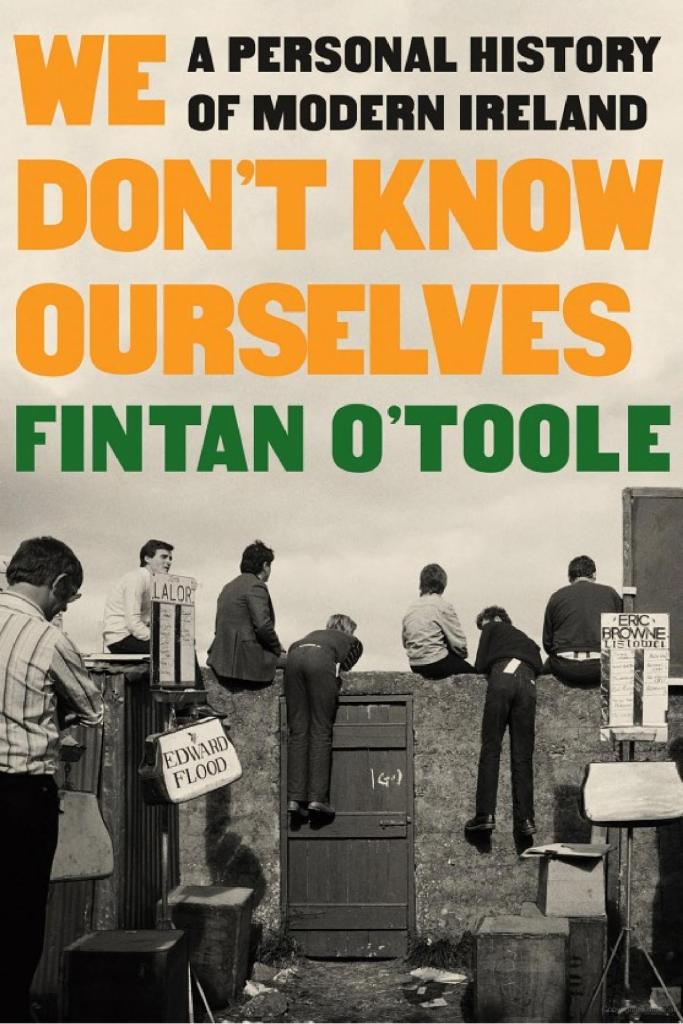
Born in Dublin in 1958, journalist Fintan O’Toole grew up in Ireland just as the country was shaking off (or, more often, not) the bonds of pre-modern theocracy that kept them in the past. His “personal history” We Don’t Know Ourselves tells how a country tried to enter the modern world without losing its soul. It’s fantastic.

My review is at PopMatters:

Protectionism—moral, cultural, and economic—kept new ideas and products out. In what O’Toole calls a “bitter paradox”, Ireland was then “an agrarian economy that was actually not much good at producing food.” Education was primarily limited to the well-off, keeping business and farming relatively primitive. In a comical but illustrative moment, Irish bishops refused an American offer through the Marshall Plan to create a National Institute of Agriculture to modernize farming because “it would not have a proper basis in religious doctrine.” Ireland’s stagnation produced despair, waves of emigration that threatened to empty the island completely, and one very good joke that made the rounds: “The wolf was at the door, howling to get out”…

Writer’s Desk: Make Things Up to Get By

Writers go through hard times like anybody else. For some, their writing can then become a slog. When things are bad, many of us like to escape from ourselves. And when you are sitting alone, hour after hour, plumbing your thoughts for new insights and plot points and similes (“The fresh-risen sun painted the sky like a…”), it feels like you cannot get away from yourself.

In her new book Never Say You Can’t Survive, author Charlie Jane Anders (who wrote the fantastic sci-fi novel The City in the Middle of the Night) has some suggestions about what to do when things are miserable, starting with how she coped with what she calls her “hell-year” of 2020:

… dreaming up imaginary worlds and larger-than-life people who never lived.

Just as reading can transport people, writing can take us out of ourselves. Anders goes on:

You never stop learning how to do better at writing—even if you’ve published a bunch of books and “arrived” as an author, you’re still on a steep learning curve, for as long as you’re stringing words together. This is excellent, because it means there will always be new discoveries and insights. Put another way, if writing was a house, you would never run out of rooms to explore…

Exploring beats wallowing.

Writer’s Desk: Characters Need to Change

When Dan Harmon was first attracting notice as the creator of the cult sitcom Community, he also frequently expounded on his ideas about story creation. In large part, the narrative framework he crafted drew in self-acknowledged fashion from Joseph Campbell, but dealt more with writerly needs (establishing audience interest, etc.).

The gist of his story structure is here:

  1. You (a character is in a zone of comfort)
  2. Need (but they want something)
  3. Go (they enter an unfamiliar situation)
  4. Search (adapt to it)
  5. Find (find what they wanted)
  6. Take (pay its price)
  7. Return (and go back to where they started)
  8. Change (now capable of change)

It is really worth digging into Harmon’s explanations of each step. But the most interesting aspect comes at the end, when your protagonist does something they never would have done at the start of the story. This is because of something they learned along the way:

Remember that zippo the bum gave him? It blocked the bullet! It’s hack, but it’s hack because it’s worked a thousand times. Grab it, deconstruct it, create your own version…

Writer’s Desk: Don’t Give Up

You are writing a story. Things are coming together. You can see the ending. Not only that, you can feel the ending. And it’s going to be great.

But. There’s that one section that just is not working out. It feels awkward. Forced. Fake. You start to worry the whole endeavor is doomed.

Not so fast, writes George Saunders in LitHub:

A rough patch in a story is not an error or a defect or evidence of our lack of talent or proof that we are imposters, missing some essential frequency being broadcast from Story Central. It’s an indicator that our heroic, brilliant subconscious is working out a problem as it stumbles towards beauty, and is asking for our help, and what it needs for us to do, just now, is have faith. And wait. And, while we’re waiting (as an active form of waiting), keep revising (revising that bit and everything around it). Be O.K., for now, with its apparent imperfection (which is actually just a momentary lagging behind). Keep coming back to that place, with affection and hope, until it relents and pops into clarity…

A bad stretch of writing is not necessarily bad, just unformed.

Chisel away.

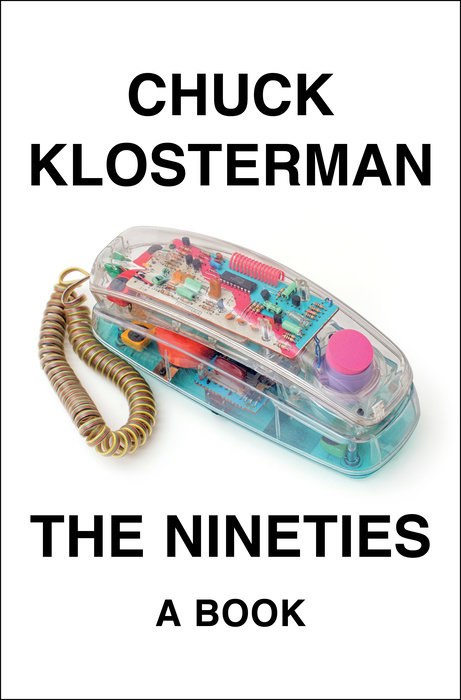
Reader’s Corner: ‘The Nineties’

Is it everything you ever wanted to remember about Pavement, O.J., or Saved by the Bell? Not quite, but that is okay. Chuck Klosterman is after larger game.

My review of The Nineties ran in the Minneapolis Star-Tribune:

Klosterman tries to look past the “grunge cartoon” take on the decade. This is welcome, given how often cultural chroniclers reduce periods to worn cliches. He knows that just muddling together Kurt Cobain, the O.J. Simpson trial, Biosphere 2, Boris Yeltsin, Bush v. Gore, Timothy McVeigh, “Friends,” and the “Clear Craze” (Crystal Pepsi, Zima) produces no greater understanding. This is partially due to Klosterman’s somewhat self-satirizing Gen-X suspicion of certainties. He is most discerning when parsing the tortured relationship his generation had in the Nineties to authenticity and popularity: Alanis Morissette “was successful because of her honesty, but anyone that successful had to be lying”…

You can read an excerpt here.

And for some appropriate musical accompaniment, Ben Folds:

Writer’s Desk: Skip the Complexity Trap

Some of the best writing tips are the easy ones.

Derek Thompson, who hosts the podcast Plain English, has a few simple rules drawn from practicing journalism on a regular basis:

  • Simple is smart: “Smart people respect simple language not because simple words are easy, but because expressing interesting ideas in small words takes a lot of work.”
  • Be interesting: “If you have nothing new to add to a topic in reporting or sources or interpretation or framing, move on.”
  • Write musically: “…think about repetition and variety. Crescendos and rests. Pace and punctuation. Read your work out loud, and feel the rhythm of the words in your voice.”
  • Avoid skin that is too thick or thin: “…stay away from the extremes of hypersensitivity-to-feedback and obliviousness-to-feedback. Seek out wise criticism. Reserve time in your week for the regret that comes with getting things wrong.”

Again, many of these thoughts may be self-evident. But repetition helps.

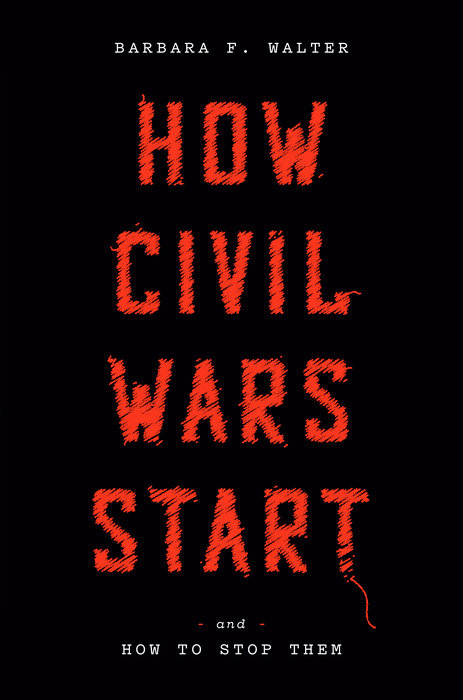
Reader’s Corner: ‘How Civil Wars Start’

In political scientist Barbara F. Walter’s new book How Civil Wars Start, she builds on her decades spent researching such conflicts around the world to show how many of the same instigating factors are now present in the United States.

My review is at PopMatters:

From Syria to Ukraine, Afghanistan to Yemen, today’s rebels usually exist as a hodgepodge of ad-hoc elements using guerrilla and terror tactics to destabilize, sow chaos, and undermine the central authority. If there is a Second American Civil War (and Walter is careful to say “if”), it will probably look less like Antietam or Gettysburg and more like the Oklahoma City bombing and the bloody sectarian flareups that ripped through Belfast and Baghdad for so many years…

You can read an excerpt here.

Writer’s Desk: Every Story is Haunted

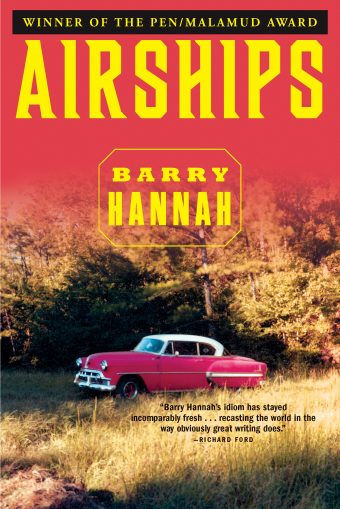
Barry Hannah, one of the great novelists of the American South whom depressingly few people have ever heard of, let alone read, didn’t sell a lot of books. (Read Airships or the great whooping holler that is Yonder Lies Your Orphan and you will see what people have missed.) So to make a living, Hannah did as most literary authors of middling sales records have over the years: He taught.

One of his students was Judith Claire Mitchell. She remembered that Hannah would begin his fiction workshops by writing two words on the board: “Ghost story.”

What did he mean?

All stories, he’d say, are ghost stories. Something haunts the work and the reader turns the pages to find out what it is.

Now, given that Hannah is an exemplar of the brawling, history-haunted, orotund manner that we associated with many Southern writers, it is no surprise that he would always be thinking of ghosts. But most writers should. Ghosts are the past. And without a past, your story will have no anchor.

Haunt your words.

Writer’s Desk: Amuse Yourself First

A writer without an audience is an unhappy writer. But a writer who writes just for that audience will not always be any more satisfied. The great satirist Kingsley Amis (Lucky Jim) explained why to The Paris Review:

I read somewhere recently somebody saying, “When I want to read a book, I write one.” I think that’s very good. It puts its finger on it, because there are never enough books of the kind one likes: one adds to the stock for one’s own entertainment…

Writer’s Desk: Follow Your Own Advice

Booker Prize-winning novelist John Banville does not seem to be the sunniest person to be around when trying to finish a book. According to this interview in The Daily Beast, his wife has reportedly described his personality while writing as being like “a murderer who’s just come back from a particularly bloody killing.”

So perhaps it is not surprising that he is not one for giving advice to other writers:

When young writers approach me for advice, I remind them, as gently as I can, that they are on their own, with no help available anywhere. Which is how it should be. Like Popeye, I am what I am…

Though being reminded that it is all up to you is not-unhelpful. Meaning that Banville, despite his protestations, actually is giving advice.

Reader’s Corner: ‘Woke Racism’

I reviewed John McWhorter’s most recent book, which came out last fall and became a quick (not surprisingly, given the title) bestseller, for PopMatters:

Woke Racism has the feel of something written in a blaze of indignation between podcasts, which is both a strength and a weakness of the text. This may explain the nuggets of anti-woke outrage, mostly stories about writers and academics targeted by antiracist Twitter mobs, dispersed somewhat randomly throughout. Many of those stories certainly pass the absurdity test—very few Twitter pile-ons or abrupt firings following a social media defenestration look defensible in the light of day. But a scattering of anecdotes does not an argument make…

You can read an excerpt of the book here.

Writer’s Desk: Hook the Reader

Every writer knows the advantage given by a great opening line. Like here:

  • “We were somewhere around Barstow on the edge of the desert when the drugs began to take hold.”
  • “Marley was dead, to begin with.”
  • “In a hole in the ground there lived a hobbit.”

The best first lines provoke curiosity. What drugs? How did Marley die? What the heck is a hobbit? Sometimes the more questions you can raise the better.

For examples of this, try looking not at great novel starts but newspaper ledes. Those are the Who/What/When/Where paragraphs that usually come at the start of a news item and can contain an entire novel’s worth of curiosity and detail if done right.

In “Florida Woman Bites Camel,” Calvin Trillin provides a delightful example of how one newspaper (in this case the Advocate of Baton Rouge, Louisiana) accomplished this task in a story from 2019:

A veterinarian prescribed antibiotics Monday for a camel that lives behind an Iberville Parish truck stop after a Florida woman told law officers she bit the 600 pound animal’s genitalia after it sat on her when she and her husband entered its enclosure to retrieve their deaf dog.

And it was all true. The reader who does not want to know more about this camel-biting pair from Florida is probably not a reader who would rather be watching television.