Writer’s Desk: Keep Going, Even When It’s Terrible

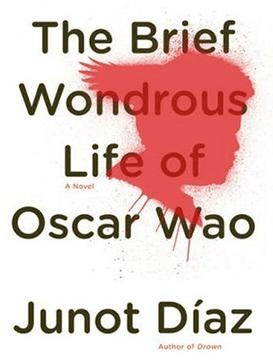
Junot Diaz spent five years trying to write a novel. Five. But try as he did every single day, nothing worked. It was stuck at the 75-page point and refused to budget.

So he decided to give it another go. He dug out the manuscript and tasked himself with finding something, anything, good in it that he could salvage. What happened?

Spent the whole night reading everything I had written, and guess what? It was still terrible. In fact with the new distance the lameness was even worse than I’d thought…

With nothing else to do except became what he calls “a normal” (no bookstores, no hanging out with writer buddies, definitely no reading the Times Sunday book section), Diaz just went back at it:

There were no sudden miracles. It took two more years of heartbreak, of being utterly, dismayingly lost before the novel I had dreamed about for all those years finally started revealing itself. And another three years after that before I could look up from my desk and say the word I’d wanted to say for more than a decade: done.

Sometimes dedication and time are all you have to throw at the book. But eventually it can work. Dedication will win out, not a burst of inspiration.

Keep going.
Writer’s Desk: There Are So Many Worse Jobs Out There

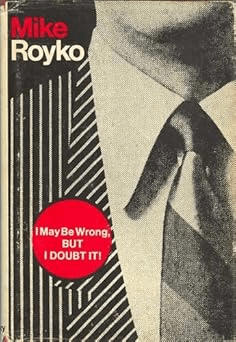
Mike Royko, the Chicago columnist who set the template for pugnacious yet thoughtful commentary and deft political satire, wasn’t sure what he wanted to be when growing up. In his March 16, 1990 Chicago Tribune column, “Why Be a Writer? Think of Your Feet” (collected in One More Time: The Best of Mike Royko) he described being a seven-year-old and helping his dad at work:

Watching my father dashing up those steps at 5 a.m., sweat pouring down his face, I learned two things: 1. Being a milkman was hard work. 2: I didn’t want to be a milkman.

Royko learns about other professions like house painting (“Housepainters drank a lot. My grandfather and his cronies said that was because fumes from the paint were hazardous but shots and beers were an effective antidote”) and many other menial jobs (bowling alley, landscaping, machine shop). Rather than declare that this was the true and honest kind of labor, he came to a simple conclusion: “They made my flat feet hurt.”

Then Royko read an article about Ernest Hemingway’s typical day:

He would arise, have a bit of breakfast, and write until about noon. Then he and a pal or two would get in his cabin cruiser and spend the rest of the afternoon sipping tall cool ones and fishing … This impressed me as a sensible way to earn a living, and that was when I began thinking about becoming a writer…

We don’t all get the Hemingway life. But no writer ever said their work was murder on the knees or involved inhaling toxic fumes.

Writer’s Desk: Get Out of the Way

It’s hard for writers to avoid making themselves the subject. They do, after all, spend most of their time with just themselves and the page. Theoretically, they think of the reader. But they’re not around. The writer is. Always.

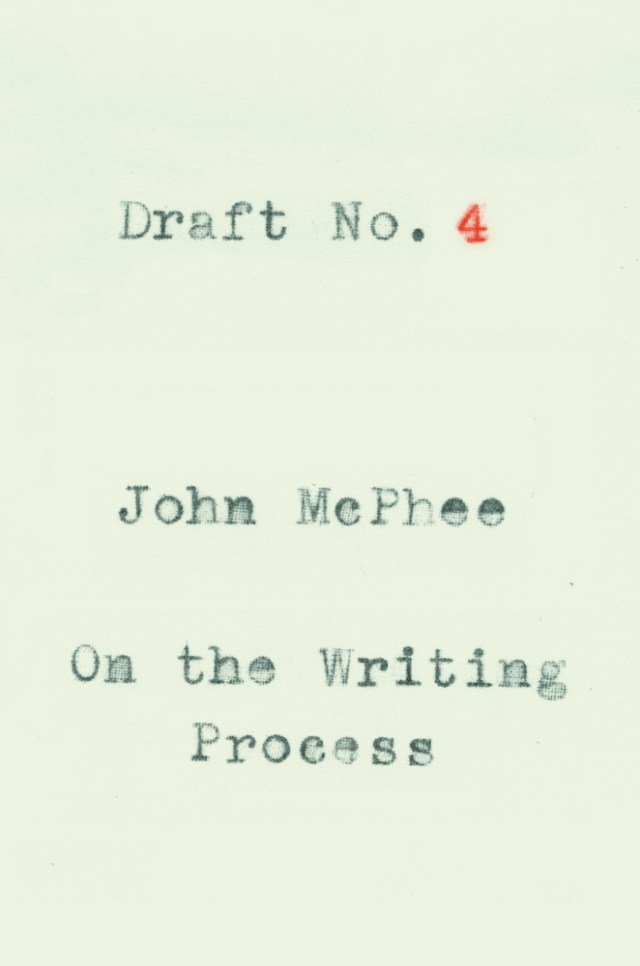
This can cause you to be just a little too present in the work. Noticeable. Drawing attention. John McPhee had some thoughts on this, which can be guessed from the title of his piece, “Omission“:

When you are deciding what to leave out, begin with the author. If you see yourself prancing around between the subject and reader, get lost…

The reader might like you. They may even have chosen your work because of other things you have written. But fundamentally they are there because they want to know what you have to tell them.

Get to it.

Reader’s Corner: The Didion Box Set

The new Joan Didion Collection from the Library of America is a monster, but in a good way. It packs together an incredible seventeen works, ranging from her best-known collections of essays and reportage (The White Album, Slouching Towards Bethlehem), novels (Run River, Salvador), and later works (The Year of Magical Thinking). It’s pretty much all here, really only missing her and John Gregory Dunne’s screenplay work (which is fine) and her early film criticism for National Review (not fine, somebody needs to collect those).

I wrote about the collection for the Spring 2025 print edition of Rain Taxi Review of Books:

If there is any disagreement that we are at Peak Didion, the November 2024 publication of the Library of America’s three-volume Joan Didion Collection should settle it. This is the kind of hefty doorstop that announces An Important Writer You Should Have Read, but unlike some such LOA sets, this one presents one classic after another with virtually no padding, giving the full sweep of Didion’s career as it evolved across decades of American ferment, imperial overextension, and social entropy…

Writer’s Desk: It’s Your Book, Find It

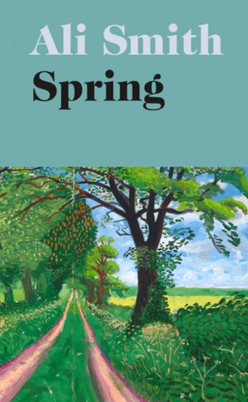
Booker-winning novelist Ali Smith believes you don’t have to worry about the reader in the end:

All a writer can do is work with language to get the story right.  Full stop.  & I’ve always believed that what readers feel is readers’ own business…

This is liberating. But it is also a challenge; a gauntlet thrown. Because it means that there is nothing else for the writer to worry about.

Nobody else can or will write the book that you can write…

It’s up to you.

Writer’s Desk: Stay Flexible

There’s nothing wrong with planning out your writing. Some people need it. Organizing things can keep you from introducing things in your first chapter that can kill plot possibilities for the conclusion if you’re not looking ahead.

Also, knocking out a detailed outline is a fantastic way to procrastinate getting any real writing done.

But avoid limiting yourself.

Roddy Doyle explains:

Change your mind. Good ideas are often killed by better ones…

Writers sometimes worry they have a limited amount of material and shouldn’t waste it. This isn’t true. If you’re meant to be a writer, the ideas will come. If you think of a better one, go with it.

Writer’s Desk: Go Out on a Limb

(Elaine May, 1959)

The legendary improv comedian, screenwriter, and underestimated director (yes, standing up for Ishtar) Elaine May had a motto which has been repeated in different iterations for decades:

The only safe thing is to take a chance.

According to her long-time comedy partner Mike Nichols, this wasn’t as contradictory as it sounds:

If you stay safe, and don’t take a chance—don’t do something that’s different from the last thing, something that makes you nervous and holds dangers—if you keep trying to do the thing that worked last time, the encrustations of mannerisms begin to take you over. And pretty soon you’re no good at all—and therefore not safe at all…

Avoid those encrustations of mannerisms at all cost.

Writer’s Desk: Challenge Yourself

(Orson Welles, 1964, by Nicolas Tikhomiroff)

Orson Welles spent most of his career scrapping for money, fighting with producers, and generally trying to balance fifteen spinning plates while doing a magic card trick at the same time. It was an exhausting way to make art.

Still, when indie filmmaker Henry Jaglom was complaining to him one time about not having the time or money to finish a movie the way he wanted, Welles had a tart response:

The enemy of art is the absence of limitations.

This doesn’t mean you should intentionally impoverish yourself to invent challenges. But Welles has a point in that a piece of work can benefit from the creator having something to push against. Set yourself some difficult parameters (it must be this long, I must finish it by this date, if I don’t sell it by this point then I will move on to something else, etc.). The discipline required in overcoming even minor obstacles can give you practice in overcoming the challenges presented by your writing.

Don’t get too comfortable, in other words. Push yourself.

Writer’s Desk: Tell the Truth

Mary Karr’s breakthrough memoir The Liar’s Club was not just a brilliantly written book, pulsing with dark wit and cutting insight, it was also pretty unsparing about herself. Years later, she wrote in The Art of the Memoir about how she started The Liar’s Club on the assumption she’d be telling the story of her father leaving her. But when she really looked at what happened, the opposite was true:

I’d spent decades discussing his abandonment in therapy, and it was true he’d drunk himself off a barstool when I was just twenty-five. But the view that he’d ever left me was tacit hogwash – a convenient lie I’d told myself to salve my own guilt about leaving him…

In an interview with The Writer, Karr talked about the necessity of confronting the truth, even if doing so might not cast you in the best light:

The reader will forgive you anything except lying.

Reader’s Corner: ‘A Century of Tomorrows’

I reviewed Glenn Adamson’s lively book on futurism, A Century of Tomorrows, for PopMatters:

It seems clear that many who argue that authors like H.G. Wells and Jules Verne should be read because of their supposed power of premonition don’t care for science fiction yet feel the urge to find a rationale. The joys of 20,000 Leagues Under the Sea come from Captain Nemo’s achingly tragic quest for justice, not Verne’s prediction of electric submarines. Wells understood a lot about how the world’s mechanistic turn would overthrow many societal assumptions. However, his utopian enthusiasms also carried him away; see his 1936 sci-fi film Things to Come for both characteristics…

Writer’s Desk: Make Readers Believe

J.R.R. Tolkien (undated)

Every writer is a fantasist. Whether they’re writing a kitchen-sink domestic drama, romance, YA series about talking dragons, or a mystery novel about a blind accountant who solves crimes, the challenge is the same each time: Make readers believe the world you are creating and the people who inhabit it.

J.R.R. Tolkien explained the importance of this in his essay “On Fairy-Stories“:

The story-maker proves a successful ‘sub-creator’. He makes a Secondary World which your mind can enter. Inside it, what he relates is ‘true’: it accords with the laws of that world. You therefore believe it, while you are, as it were, inside. The moment disbelief arises, the spell is broken; the magic, or rather art, has failed…

Leave nothing to chance. Visualize every aspect of your fictional world. Keep the illusion going. Make readers believe.

Writer’s Desk: Avoid Interruptions

It seems so obvious and yet turns out to be so difficult in practice. Finding a good writing space is one thing. Carving out the time on a regular basis is another. Ensuring an uninterrupted run of minutes and hours is always harder than you think. But without those blocks of time, creating something new is next to impossible.

Again, let’s go to David Lynch:

Every interruption just is like a knife stab in the middle of a thought. And you gotta start again. You start again. It’s horrible. These days, there’s interruptions around every corner, almost every second. You have to be somewhat selfish…

And if anybody asks why you are acting so withdrawn, just say that Lynch told you so.

Writer’s Desk: Write Like You Read

Virginia Woolf (1902)

One of Virginia Woolf’s more famous essays is “How Should One Read a Book?” And rightly so. It’s a loving and vigorous defense of not just reading itself but how to approach it with both a judicious and wide-roaming eye. She insists, in short, on reading whatever you please:

To admit authorities, however heavily furred and gowned, into our libraries and let them tell us how to read, what to read, what value to place upon what we read, is to destroy the spirit of freedom which is the breath of those sanctuaries. Everywhere else we may be bound by laws and conventions—there we have none…

Use the same approach when writing. Hear people out, seek their counsel, take what makes sense. As Woolf says about reading:

The only advice, indeed, that one person can give another about reading is to take no advice, to follow your own instincts, to use your own reason, to come to your own conclusions…

Write freely, but not thoughtlessly.