Writer’s Desk: Edith Wharton on Critics

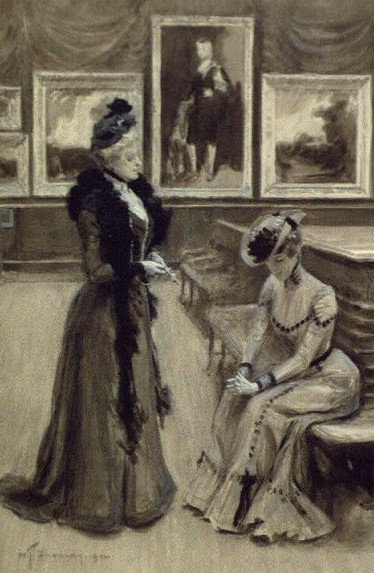
Illustration from Edith Wharton’s “The Quicksand”

Even Edith Wharton had to deal with critics. In her case, since she wrote about “Fashionable New York,” they primarily wanted to know which of her characters was which real person.

This was irritating.

But that comes with the territory when one has been lucky enough to get a book published and reviewed. People will say things; some nice, some confusing, many irritating.

Wharton counseled not worrying about it:

I long ago made up my mind that it is foolish and illogical to resent even such a puerile form of criticism. If one has sought the publicity of print, and sold one’s wares in the open market, one has sold to the purchasers of one’s books the right to think what they choose about them; and the novelist’s best safeguard is to try to put out of his mind the quality of the praise or blame likely to be meted out to him by reviewers and readers, and to write only for that dispassionate and ironic critic who dwells within the breast.

Of course, it’s a little easier to look past silly critiques when you are Edith Wharton.
Writer’s Corner: Investigate Your Characters

We have all heard the advice about listening to your characters. Maybe we should also be asking them questions.

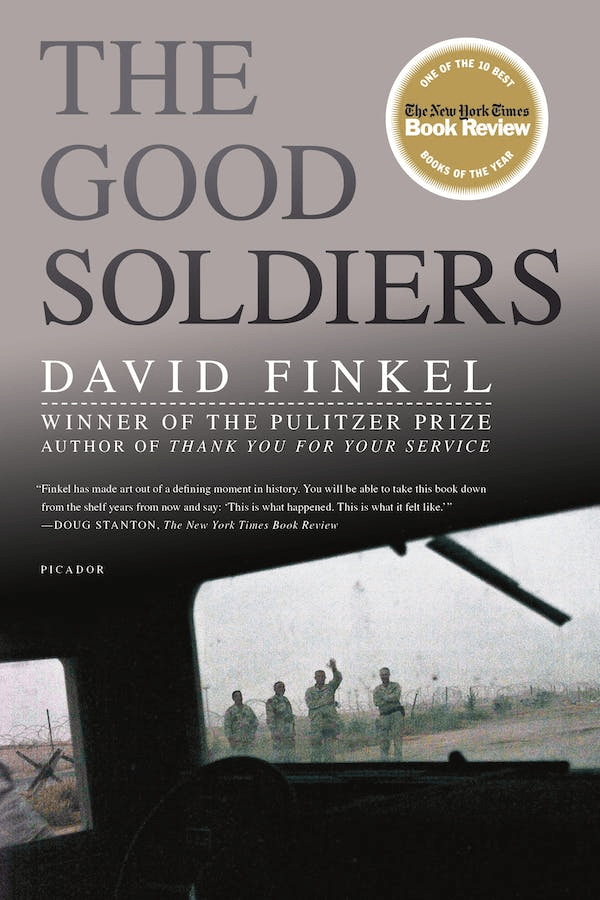
David Finkel, whose The Good Soldiers is a masterpiece of empathetic war reporting, talked about how to do this in a 2014 interview:

It’s a pretty deliberate process, and a lot of it involves working from an endpoint. But the first thing is I have to have a question I’m interested in answering … That doesn’t mean questioning all the time. All the tools we know. Learning to use silence as a reporting tool. All the things we do. Getting people to talk to each other. Trying to recede so something might occur as if it would have occurred if you weren’t there, if that’s possible. But, eventually, realizing what the story is I want to tell and then finishing the reporting to tell that story…

Start thinking about your characters like they are your subjects. Let them talk, with you and each other. Ask questions. Push them. See what happens.

Let your characters tell you both who they are and what the story is going to be.

Reader’s Corner: ‘Outrageous’

Have you heard that everyone is too easily offended these days? That way back when you could make a gag about whatever you wanted and nobody got upset? Kliph Nesteroff’s buzzy and fun (if a little all over the place) Outrageous: A History of Showbiz and the Culture Wars shows how false that narrative is.

I reviewed Outrageous for PopMatters:

American comedy and show business have been mired in anger and pushback from the jump. Much of Outrageous echoes what we see today. That’s especially the case regarding anger about how you supposedly “can’t say anything anymore”. Nesteroff doesn’t make overt comparisons to cancel culture, even explaining in the introduction that he is not going to delve into “social media age” controversies (Dave Chappelle). He doesn’t have to make the comparison because it’s right there…

Writer’s Desk: Dialogue Isn’t Real, It’s Poetry

The thing about dialogue is, it needs to sound real. It must replicate how real people talk. This is what we have been told. But what if that is just not true? George Saunders told Writer’s Digest about an experiment he did once. He hid a tape recorder under the family’s kitchen and listened later to a conversation between his mother and grandmother:

You couldn’t make a bit a sense of it. It was all sentence fragments and, “Did you get the thing under the …” “Yeah, no, no, I won’t.” “Yeah, you can, sure.” “Later, but he’s gonna …” “Yeah, he is.”

In a story, you transcribe that directly, it makes no sense. I think one of the keys, paradoxically, to good dialogue is for the writer to say to herself, “This is poetry, this is not real speech.” It’s poetry that’s going to make you think it sounds like real speech. It’s going to simulate the rhythms of actual speech…

Writer’s Desk: What Lenny Said

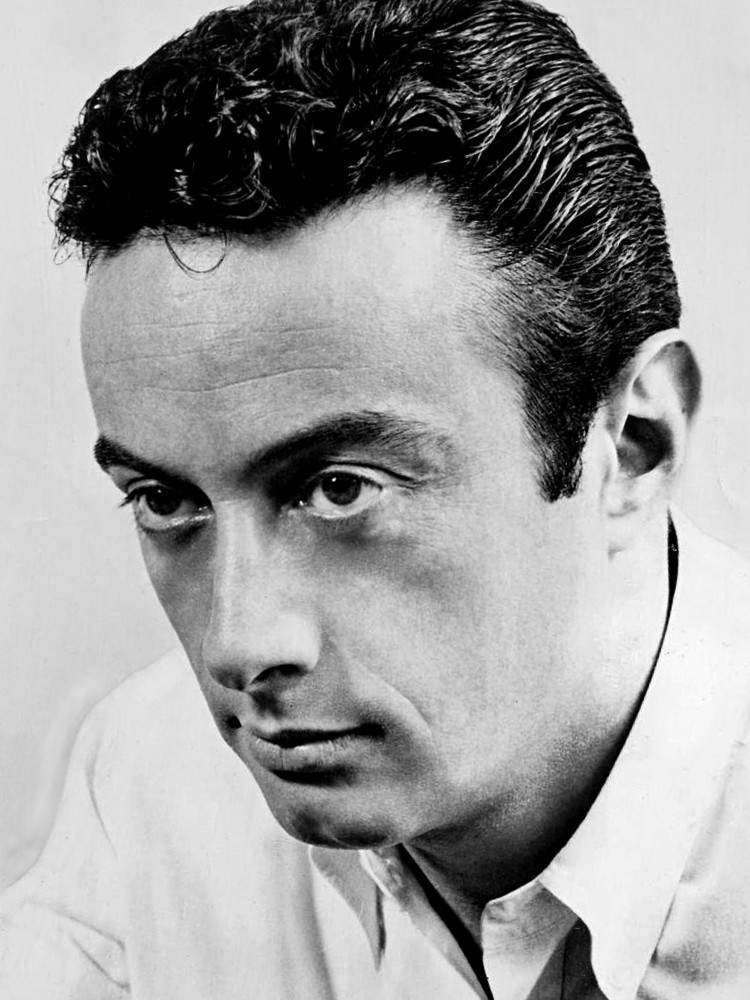
Since Lenny Bruce was a comic, he wasn’t really considered a writer. But that’s all comics do is write, even if they never put pen to paper. Every bit of their act is crafted, molded, sweated over, and knocked into shape by a grisly process they call “working it out” and your average writer just calls “editing.”

Bruce’s writerly output was thin. Too much time on stage and in jail, most likely, not to mention the chasing down of various substances. But he, or at least his spirit, still has advice to give.

Consider this scene from the end of the first episode of The Marvelous Mrs. Maisel. The title character, an aspiring standup, bails the Bruce character (played with elan by the astounding Luke Kirby) out of jail. Then, eager to know if it’s all worth it (the hours, the pay, the hecklers, the grind), Maisel asks him straight up, “Comedy. Standup. Do you love it?” Bruce responds:

Let’s put it like this: If there was anything else in the entire world that I could possibly do to earn a living, I would. Anything. I’m talking drycleaners to the Klan. Crippled kid portrait painter. Slaughterhouse attendant. If someone said to me, ‘Leonard, you can either eat a guy’s head or do two weeks at the Copa,’ I’d say, ‘Pass the f—— salt.’ It’s a terrible, terrible job. It should not exist. Like cancer. And God…

Asked by Maisel again, “Do you love it?” he shrugs and gives her a cracked madhouse grin.

Every writer knows what he means. It’s awful, this thing we do day in and day out.

But we love it.

Writer’s Desk: What’s the Deal with Writing?

It would be wonderful to think that all Jerry Seinfeld’s ideas come to him while he’s eating cereal just like that. Perhaps not “wonderful” but maybe “reassuring,” because then it would mean that is how writing might be sometimes for the rest of us.

No such luck:

I still have a writing session every day. It’s another thing that organizes your mind. The coffee goes here. The pad goes here. The notes go here. My writing technique is just: You can’t do anything else. You don’t have to write, but you can’t do anything else. The writing is such an ordeal. That sustains me…

Seinfeld later elaborated on this with Tim Ferris:

…my writing sessions used to be very arduous, very painful, like pushing against the wind in soft, muddy ground with a wheelbarrow full of bricks. And I did it. I had to do it because there’s just, as I mentioned in the book, you either learn to do that or you will die in the ecosystem.

Keep this in mind as you get ready for whatever 2024 is going to bring. The writing will not always be easy. You will probably want to give up. But this is what we signed up for the first time somebody asked us asked us what we wanted to be and we said, “a writer.”

You just have to keep pushing the wheelbarrow.

Writer’s Desk: Describe Like You’re an Alien

Stuck for how to describe a scene? Forget what you know. Don’t worry about what the reader might know. Come at it as an entirely unfamiliar thing.

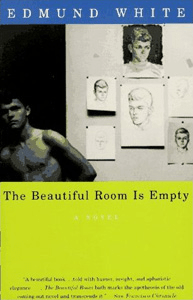
To do this, Edmund White has some advice:

One technique that the Russian Formalists use, and Nabokov and Tolstoy, is called defamiliarization. And the idea is that you describe everything as though you’re from Mars, so let’s say a girl’s first ball or going to the opera for the first time. Both of those scenes are in War and Peace. At the opera, there’s all these fat people coming on stage and screaming, and then everybody beats their hands together. It is described as though you’ve never seen it before and have no idea what it’s supposed to represent. It’s in some other language…

If it’s good enough for Nabokov and Tolstoy then it should work for you.

Reader’s Corner: Best Books of the Year

It’s that time of year when a writer’s mind turns to best-of lists.

And so we have the annual PopMatters best books feature, which compiles arguments for some of their writers’ favorite fiction and nonfiction titles of the year.

I contributed several of the books that knocked my hair back this year (The Deluge, Brooklyn Crime Story, Poverty by America, Prophet) and wrote the intro. You can read it here:

There’s a reductive, hall-of-infinitely-receding-mirrors quality to the concept of critiquing the critics. That doesn’t mean it hasn’t been done (the vastness of YouTube must contain a show wherein critics judge different episodes of Siskel & Ebert & the Movies) or isn’t worth doing, especially when there is so much rich criticism out there to devour…

Writer’s Desk: Watch Some TV

Rumaan Alam (Leave the World Behind) does not have a lot of patience for the more precious kinds of writing practices out there. He told Esquire:

I think a lot of people have this idea that you can only write if you have hours at a desk, if the conditions are right, if you have the right pencil and the right notebook. That describes an ideal that’s really far from most working writers’ lives…

So how do you work through less-than-ideal conditions? Adapt! Alam even talks about just turning the TV on:

I think it’s very common to make time, especially when you’re tired, to watch TV. Think about turning that into productive work. Turn on the TV, leave it on mute, let Friends run for 23 minutes, and write, the entire time. When it’s over, put your notebook away, fold your laundry, pay the bills, play with the kids—do whatever the demands on your time are…

You heard it. Reruns can be productive. As background flicker, at least.

Reader’s Corner: Great New Graphic Novels

I covered a quartet of great new graphic novels out this winter for the Minneapolis Star-Tribune:

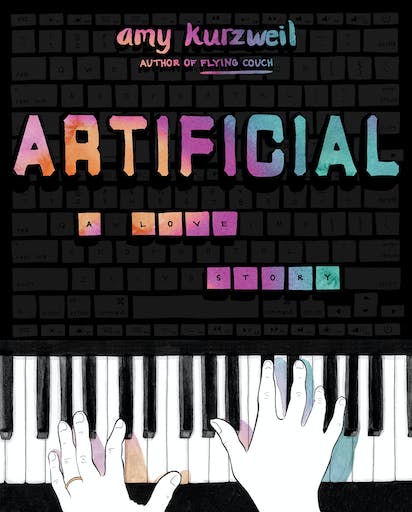
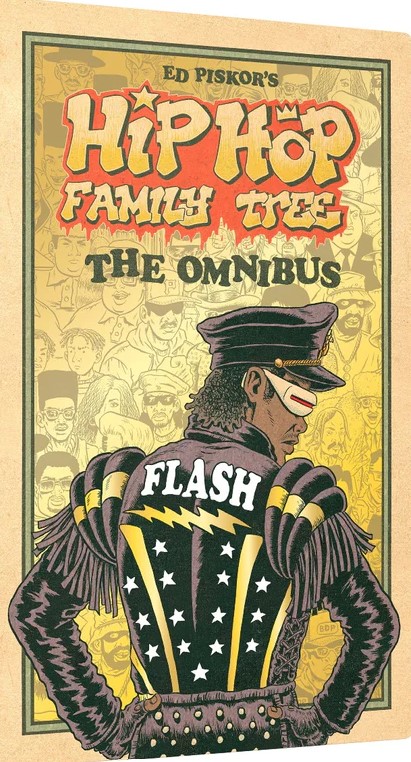
Four graphic novels, among the many fascinating titles hitting stores this winter, delve into a range of subjects: the stark politics and emotional legacy of the Mariel boatlift, a family’s fraught experiences with digital reincarnation, thrilling exploits of hip-hop’s pioneers and a graphic adaptation of a beloved Italian book series…

Writer’s Desk: Just Keep Going

Joyce Carol Oates (c. 1972)

According to Rachel Aviv’s recent portrait of Writer’s Desk favorite Joyce Carol Oates, there really isn’t that much to the author’s fantastic output:

…she has not really written that much, when you think about the fact that all it takes to write a hundred books is about two pages a day over the course of a lifetime.

Yes, Aviv’s tongue does appear firmly cheek-planted.

Writer’s Desk: Get Some Animals

Rita Mae Brown’s career has covered quite the gamut. She has written everything from gay coming-of-age novels (Rubyfruit Jungle) to slasher flick screenplays (Slumber Party Massacre!) and many lucrative mystery novels (the ones that the ingenious cat Sneaky Pie Brown has co-authored).

How, NPR once asked the prolific Brown, did she get past writer’s block? Her answer? It doesn’t happen:

I can’t afford writer’s block! I have too many mouths to feed on my farm: hounds, horses, cattle, even people — but they aren’t as important as my animals…

So there you are: Get yourself some animals who need expensive grub and you’ll never worry about motivation again.

Writer’s Desk: Hunt for Books Which Excite You

You would think that all writers read as much as they can. Not true. Some claim not to have the time. Others don’t want to be unduly influenced by somebody else’s work.

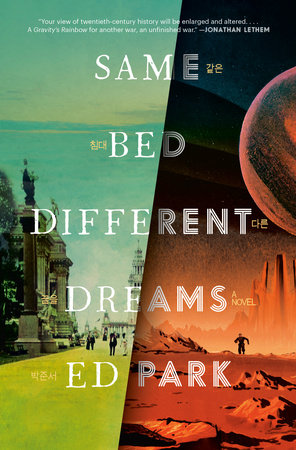
Nonsense, says Ed Park, whose raucous new novel Same Bed Different Dreams is just all kinds of amazing. According to Park:

I’ll still be strolling with my family and if there’s a bookstall I’ll be like, “Hold on.” You never know: there could be something there that will be a lot of fun to read and also change the way you think about what’s possible. My students know that my syllabi always mix in lesser-known things that I feel passionately about. If you let these books into your life, they can help you write in a way that you didn’t know you could…

If a book speaks to you, and has something to offer for your work, why not take advantage of that gift?

Writer’s Desk: Keep Challenging Yourself

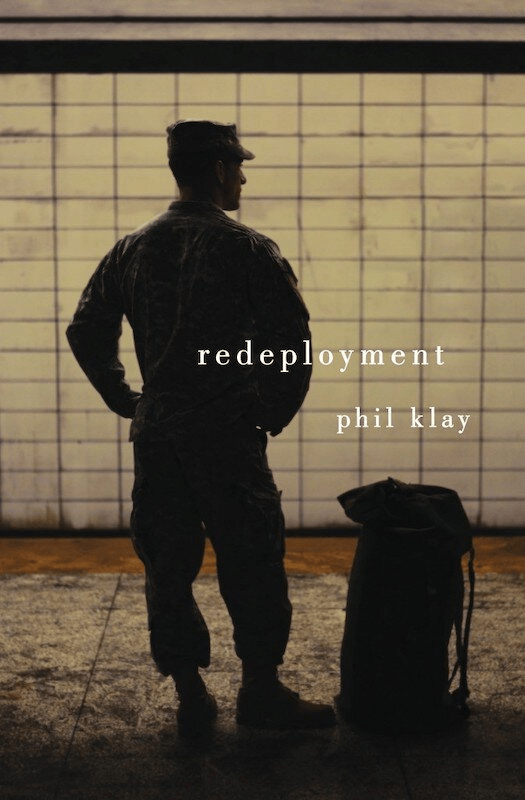
Before becoming the kind of writer who can get published anywhere from Tin House and Granta to the Wall Street Journal, Phil Klay spent several years in the Marine Corps and was deployed to Iraq. He drew on that experience to create his National Book Award-winning classic, Redeployment.

A hell of a writer who can deliver both piercing insight and gut-wrenching emotion on the same page, Klay would seem to produce his work from a place of superior confidence. But as he related in this interview, not so much:

Putting the story on the page is a product of doubt, not a product of certainty. I write because I’m troubled or confused or fascinated by something in human experience I don’t understand, and writing allows me a way to expose my own ignorance further. For me, a story begins with questions far more often than with answers. And even if I do have some very fixed notions at the outset of the story, writing usually complicates those notions or destroys them altogether…

See your uncertainty as a clue of where to start and a sign of something worth exploring, rather than a topic to be avoided. It’s like one of General Mark Milley’s favorite sayings, “Move to the sound of the guns.”