Writer’s Desk: Read in Cafes

You would think that the likes of Gabriel Garcia Marquez (born March 6, 1927) was one of those people fated to be a writer. How else to explain his golden pen? But no, as a young man in the 1940s, he was just another Columbian law student. Fortunately for the rest of us, though, he decided to waste his free time on a different pursuit: reading.

From “How I Became a Writer“:

On free afternoons, instead of working to support myself, I read either in my room or in the cafés that permitted it. The books I read I obtained by chance and luck, and they depended more on chance than on any luck of mine, because the friends who could afford to buy them lent them to me for such limited periods that I stayed awake for nights on end in order to return them on time…

He discovered Graham Greene, Aldous Huxley, and many other greats. Then came Kafka. And a challenge:

When I finished reading “The Metamorphosis,” I felt an irresistible longing to live in that alien paradise. The new day found me at the portable typewriter that Domingo Manuel Vega had lent me, trying to write something that would resemble Kafka’s tale of a poor bureaucrat turned into an enormous cockroach. In the days that followed I did not go to the university for fear the spell would be broken, and I continued, sweating drops of envy, until Eduardo Zalamea Borda published in his pages a disconsolate article lamenting the lack of memorable names among the new generation of Colombian writers, and the fact that he could detect nothing in the future that might remedy the situation. I do not know with what right I felt challenged, in the name of my generation, by the provocation in that piece, but I took up the story again in an attempt to prove him wrong…

Writer’s Desk: (Don’t Just) Write What You Know

Nathan Englander (What We Talk About When We Talk About Anne Frank) casts a little cold water on limiting your writing to what you’ve experienced personally:

I think the most famous piece of writing advice that there is is “write what you know,” and I think it’s—honestly, I think it’s the best piece of advice there is, but I think it’s the most misunderstood, most mis-taught, most misinterpreted piece of advice that there is. It’s so simple and so obvious. It used to terrify me, this idea of “write what you know.” I was dreaming, I was in suburbia, in my house, dreaming of being of a writer, and I thought, what am I going to do with “write what you know”? What I know from childhood is I was on the couch, watching TV. So I should simply rewrite a whole series of sitcoms for you. I should write a book called What’s Happening? and then I should write a book called Little House on the Prairie is on at 5 o’clock. . .

Writer’s Desk: Lie Truthfully

If writing isn’t truthful, readers can tell. That doesn’t mean it’s all pulled from real life. Writing is also about creating new realities. You have to make things up sometimes to get at the truth. It’s a contradiction that non-writers can have a hard time wrapping their heads around.

Here’s what Jamie Quatro told The Paris Review:

Fiction begins with small, lower-case truths, then translates them into a larger lie that ultimately reveals the largest truths. “None of it happened and all of it’s true,” said Ann Patchett’s mother.

And remember what Tim O’Brien wrote in “How to Tell a True War Story“:

Absolute occurrence is irrelevant. A thing may happen and be a total lie; another thing may not happen and be truer than the truth.

Writer’s Desk: Find a Group

In his great literary guide and memoir On Writing—read it now, if you haven’t already—Stephen King unpacked many secrets of the scrivening trade. Among the more salient was this:

Writing is a lonely job. Having someone who believes in you makes a lot of difference.

Finding a writers’ group helps. So does suborning your friends and family to read what you’re working on. Feedback is never a waste, even if you end up ignoring it completely.

Writer’s Desk: Keep Trying

There is almost no greater cliche in publishing than reminding aspiring writers that even Stephen King got rejection letters by the basketful early in his career. But it is still worth repeating.

To that end, here’s a few notable bestsellers that were originally considered unworthy of publication:

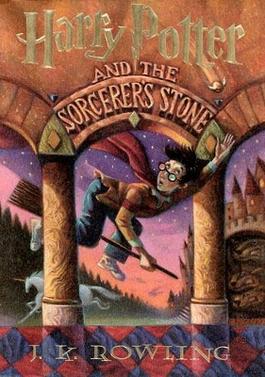
  • Harry Potter and the Sorcerer’s Stone by J.K. Rowling
  • The Diary of a Young Girl by Anne Frank
  • Lord of the Flies by William Golding
  • Lolita by Vladimir Nabokov

Writer’s Desk: Write About Cats

This one should speak for itself. Per the Times:

The author of the short story “Cat Person,” which became a viral phenomenon after appearing in The New Yorker this month, has received a seven-figure book deal, according to a person with knowledge of the deal.

A collection from Kristen Roupenian, whose debut story in The New Yorker became the magazine’s second most-read article of 2017 despite being published in the Dec. 11 issue, will be published by Scout Press in 2019.

Roupenian’s story hit just about every meme-worthy topic of the age: Cats, dating, creepy guys, social media, intellectual insecurity masked by blithe confidence. It’s all there.

This is what they call a teaching moment.

Writer’s Desk: Forget Money

Some writers have to do it in order to keep a roof over their heads. It beats getting a real job, of course. But you have to be careful that paying the rent doesn’t influence what you write.

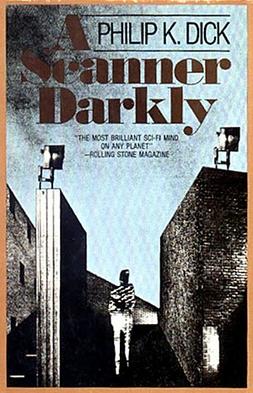
Philip K. Dick (born Dec. 16, 1928) wrote to put food on the table but never just for dollars or fame. In a letter to fellow pulp author Jim McKimmey, Dick opined:

My main reason for writing is basically simple. I want to react against society; I’m after impact, not money.

Writer’s Desk: Pull It All Apart

In his Essays in the Art of Writing, Robert Louis Stevenson—born on November 13, 1850—showed little patience with the idea that writing was some ineffable and inexplicable transmission from the Muses. But he was aware that showing people, particularly non-writers, how the sausage is made, seemed to dismay them:

There is nothing more disenchanting to man than to be shown the springs and mechanism of any art.  All our arts and occupations lie wholly on the surface; it is on the surface that we perceive their beauty, fitness, and significance; and to pry below is to be appalled by their emptiness and shocked by the coarseness of the strings and pulleys.

There’s nothing wrong with dealing with the mechanics, of course. Without the strings and pulleys, a character can never get from Point A to B without losing the reader’s interest.

Stevenson went on:

I must therefore warn that well-known character, the general reader, that I am here embarked upon a most distasteful business: taking down the picture from the wall and looking on the back; and, like the inquiring child, pulling the musical cart to pieces.

That’s what writers have to do: Pull the cart to pieces. How else can you be sure that it will run?

Writer’s Desk: Always Be Working

Writers write. That we know. But there’s a lot they have to do before writing. There’s research, for one, not to mention all those little procrastinations that they tell themselves are actually helping the creative process.

No less an authority than the great Lawrence Block said, “Writers work all the time.” But often that work doesn’t look like work.

Let Block explain:

Take the other day, for example. What did I do with myself? How did the busy little bee improve each hour? Just what action did I take to put words on the page and bring money into the house?

Well, let’s see. I read a couple of books and a magazine or two. I watched a ball game on television. I got wet in the Gulf and dried off in the sun.

What’s that? You say it doesn’t sound like work?

A lot you know.

Take the reading, for example. Now, a lot of reading is research. Sometimes it’s specific research, when I want to learn something that I need to know in order to write something I’m working on, or planning to work on. Sometimes it’s general research, like reading a book on precious and semiprecious gemstones because I frequently write books about people who steal such things. And sometimes it’s not exactly research, but it’s a matter of keeping up with what other people in my field are doing.

Mr. Block has published in excess of 100 books, so whatever he’s doing, it’s working.

Go on, keep up the “research.” You never know what will come in handy.

Writer’s Desk: Make Friends With Other Writers

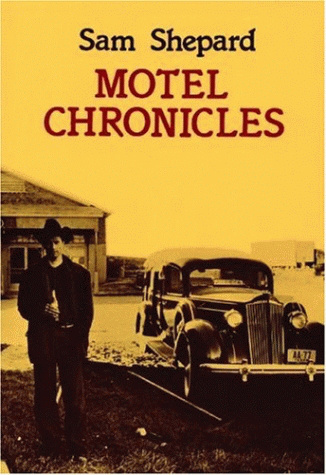
Patti Smith, remembering her friend Sam Shepard after his recent passing:

We had our routine: Awake. Prepare for the day. Have coffee, a little grub. Set to work, writing. Then a break, outside, to sit in the Adirondack chairs and look at the land. We didn’t have to talk then, and that is real friendship. Never uncomfortable with silence, which, in its welcome form, is yet an extension of conversation. We knew each other for such a long time. Our ways could not be defined or dismissed with a few words describing a careless youth. We were friends; good or bad, we were just ourselves. The passing of time did nothing but strengthen that. Challenges escalated, but we kept going and he finished his work on the manuscript. It was sitting on the table. Nothing was left unsaid. When I departed, Sam was reading Proust…

Writers should never just socialize with their own kind. The effect would be initially instructive and eventually destructive.

But writers should always make sure to have writer friends. They understand silence.

Writer’s Desk: Take the Train

Among the books listed for the Man Booker Prize 2017 were familiar names like Arundhati Roy, George Saunders, Colson Whitehead, and Zadie Smith.

New to the list was Fiona Mozley, a 29-year-old bookseller from York whose debut novel, Elmet, hasn’t even been published yet. According to her editor, Mozley wrote the story while commuting on the train.

To be longlisted is an impressive achievement for anyone but for a debut author who wrote Elmet while travelling up and down to London from York on the train is just amazing.

This might be tricky if you take the New York subway to work (fewer seats, after all), unless you’re one of those dictating writers.

Writer’s Desk: Get Fired

Even writers need money. It helps, after all, if one wants to keep the coffee pot full and the Wi-Fi humming along. There are writers who can work full jobs and still create masterpieces (Graham Greene and T.S. Eliot come to mind.) But then there are some who need to get kicked out of the world of the gainfully employed before they can really put their nose down and start knocking out pages.

Take Raymond Chandler (1888–1959), whose birthday was last week. According to The Raymond Chandler Papers, the creator of Philip Marlowe was first a shop clerk, tennis racket-stringer (?) and accountant before going off to fight in France in 1917 (volunteering with a Canadian regiment), returning to America and working his way up in the California oil business before getting sacked in 1932.

Chandler stopped drinking, moved with his wife into a cheap place in Santa Monica (still possible back then) and started submitting stories to crime magazines. His first and possibly best novel, The Big Sleep, was published in 1939. That same year, in a letter to Alfred Knopf, Chandler groused about the reactions by some to the depraved nature of his criminal characters. His explanation?

My fiction was learned in a rough school.

All the better.

Writer’s Desk: Do Your Thing

The great Chester Himes was born in Jefferson City, Missouri in 1909 and died in Spain in 1984. In between he went to prison for armed robbery, worked for the WPA, lived as an expatriate writer in Paris, and published some of the century’s best American crime fiction (Cotton Comes to Harlem, in particular).

Since his metier was hard to classify, ranging from black crime fiction to memoir and beyond, Himes’ work has been subject to less critical scrutiny than other posthumously praised writers. One of the few critics to turn their eye to Himes was Stephen F. Milliken, who noted that Himes didn’t need much help, and didn’t want it:

Chester Himes has always been above all else a man who does not take advice. His work is totally innocent of the smooth, professional polish of the writer who has been told … that you simply cannot do everything at once … His work is ferociously idiosyncratic.

When in doubt, be like Himes. Listen to your voice. Follow advice if it helps you get there. But if not, go your own way.

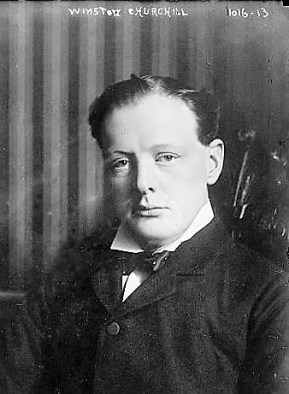
Writer’s Desk: Churchill on Brevity

Writers can be like doctors—and no, not because both write down the things you say in ways that may or may not reflect your intent. Writers, like doctors, have a proclivity to ignore their own advice.

Take Winston Churchill. In his rather extensive bibliography, you can find a four-volume biography of the 1st Duke of Marlborough which he had originally planned to be just two volumes.

Nevertheless, during the war, Churchill became enamored of brevity, likely due to all the reports he needed to read. In August 1940, he wrote a memo that called for everyone to shorten up their writing:

Let us … have an end of such phrases as these: ‘It is also of importance to bear in mind the following considerations…’ or ‘Consideration should be given to the possibility of carrying into effect…’

Most of these wooly phrases are mere padding, which can be left out altogether or replaced by a single word. Let us not shrink from using the short expressive phrase, even if it is conversational.

He went on to write a six-volume history of the Second World War and a four-volume history of the English-speaking people.