Writer’s Desk: Be a Vampire of Raging Love

How do you live a good life in a fallen world? What can writers, or really any breed of creative, do to find something worth writing, imagining, making when surrounded by so much chaos and things seemingly designed to make you give up hope?

A 13-year-old who wants to find a life in some kind of artistic field asked that question of Nick Cave. The onetime gothic troubadour, and more recently advice writer, was asked “How do I live life to its absolute fullest, and not waste my potential?”

Cave had thoughts:

Read as much as possible. Read the big stuff, the challenging stuff, the confronting stuff, and read the fun stuff too. Visit galleries and look at paintings, watch movies, listen to music, go to concerts –  be a little vampire running around the place sucking up all the art and ideas you can. Fill yourself with the beautiful stuff of the world. Have fun. Get amazed. Get astonished. Get awed on a regular basis, so that getting awed is habitual and becomes a state of being…

Cave goes on:

A little smart vampire full of raging love, amazed by the world – that will be you, my young friend, the earth shaking at your feet…

We should be little smart vampires raging with love every single day. Take in everything the world has to offer. Use that to create but also to live.

(h/t: The Marginalian)
Writer’s Desk: Tell the Truth Shamelessly

Often literary fiction is viewed as needing to be disconnected to some degree from what is happening in the world. Timelessness can be preferred to immediacy.

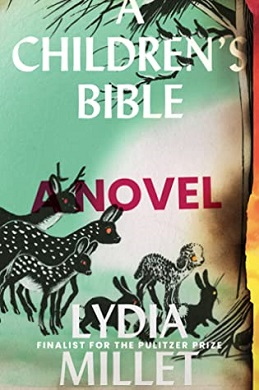
For her part, Lydia Millet (A Children’s Bible) strives to write fiction that wrestles with everything happening around us. In The Atlantic, she described the challenge of doing that without being obnoxious (“nothing breaks the spell like an explicit preaching session”).

Using The Lorax as a sublime example of making a genuine story that means something, she explains how the challenge calls for extreme candor:

My feeling is that the struggle to write well is also the struggle to write honestly, even when they seem to be at loggerheads. And that candor—elusive and sometimes rudely naked—shouldn’t be just the easy honesty of me but a more ambitious honesty of us. Not the sole purview of children’s books, but the purview of any book at all.

In the end, I think a bit of shamelessness is called for…

So if you have something to say in your fiction, say it.

Writer’s Desk: Live to Write

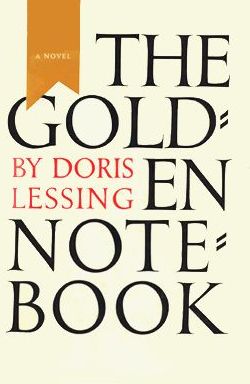
Whether the result was nuanced studies of fraught relationships, eye-opening stories of people straining to connect their political beliefs with their lives, or boundary-expanding science fiction, Doris Lessing produced books that were heavy with ideas but also clearly the result of a life fully lived.

Lessing, a British-Zimbabwean who led full lives as an anti-apartheid activist and Communist Party member before and during the years she spent building up the resume that led to her Nobel Prize once said:

You should write, first of all, to please yourself. You shouldn’t care a damn about anybody else at all. But writing can’t be a way of life, the important part of writing is living. You have to live in such a way that your writing emerges from it…

Those words have to come from somewhere.

Writer’s Desk: Just Finish It

Despite the legacy that came from from the novel that Alfred Hitchcock used as the basis for Psycho, Robert Bloch never quite achieved notice outside the world of the pulps. Nevertheless, he was a talented writer who rode just about every trend there was, from Weird Tales horror to 1960s genre television.

Bloch was also a good friend of a young writer named Ray Bradbury. Trying to convince Bradbury, who really preferred short stories, to not be intimidated by the length of a novel, Bloch advised him:

Get to work, write a book, write two–three-four books, just as a matter of course. Don’t worry about ‘wasting’ an idea or ‘spoiling’ a plot by going too fast. If you are capable of turning out a masterpiece, you’ll get other and even better ideas in the future. Right now your job is to write, and to write books so that by doing so you’ll gain the experience to write still better books later on… The danger–and I feel it is a real one–lies in waiting too long and developing an attitude about the importance or gravity of a novel-length work…

In other words, if you want to write a novel, or anything of length, don’t let the scope intimidate you. Get started. Think of it like a short story, just longer.

(h/t: Unearthly Fiction)

Writer’s Desk: Do Your Research

During COVID, Steven Soderbergh’s 2011 pandemic thriller Contagion was a surprise streaming hit. That was likely due in large part to its writer Scott Z. Burns’ dedication to research. The movie felt like a kind of documentary all those years later for the simple fact that Burns surveyed all the infectious disease experts he could find and they told him what would happen when the next big pandemic inevitably hit.

Years earlier, Burns was working on Wonderland, Peter Berg’s short-lived series about a psychiatric hospital, when he found out how much loved doing research on the subject at Bellevue. This led to a revelation:

Research really is the solution to writer’s block. That if you just continue to dig into your subject matter, it’s eventually going to reveal some cool story to you…

Not sure what to write about? Start reading.

Writer’s Desk: Go for a Walk

The answer to dealing with many different downturns or challenges is invariably quite simple: Take a walk. As Andrew McCarthy notes in the Times, this simple practice has broad benefits that have been noticed by many learned types:

Hippocrates proclaimed that walking is man’s best medicine.’ The good doctor also knew that walking provided more than mere physical benefits when he suggested: ‘If you are in a bad mood, go for a walk. If you are still in a bad mood, go for another walk’ … Soren Kierkegaard agreed when he confessed, ‘I know of no thought so burdensome that one cannot walk away from it.’ And Charles Dickens was even more direct. ‘If I could not walk far and fast,’ he wrote, ‘I think I should just explode and perish.’

The habit of taking a brisk and short, or long and rambling, walk applies more specifically to writing:

William Wordsworth swore by walking, as did Virginia Woolf. So did William Blake. Thomas Mann assured us, ‘Thoughts come clearly while one walks.’ J.K. Rowling observed that there is ‘nothing like a nighttime stroll to give you ideas,’ while the turn-of-the-20th-century novelist Elizabeth von Arnim concluded that walking ‘is the perfect way of moving if you want to see into the life of things.’

So go for a stroll. Your desk will still be there when you get back.

Writer’s Desk: Have Fun and Carry On

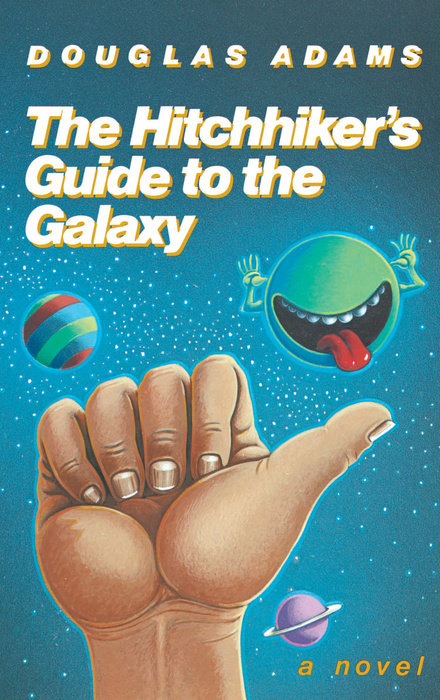
You might think that a writer like Douglas Adams, who not only wrote for Doctor Who early in his career but also collaborated with Graham Chapman and even appeared in a Monty Python sketch, would have no problem with confidence. But as Writer’s Desk has previously noted, Adams was an infamous procrastinator, the kind who send publishers into fits and makes readers impatient.

But Adams was also aware of how to avoid blockages and not stay too in your head, wrapped up with anxieties.

At one point, Adams wrote a note to self that he would apparently look at when needing a reminder about how to get on with things. It deserves repeating here:

Writing isn’t so bad really when you get through the worry. Forget about the worry, just press on. Don’t be embarrassed about the bad bits. Don’t strain at them. Give yourself time, you can come back and do it again in the light of what you discover about the story later on. It’s better to have pages and pages of material to work with and off and maybe find an unexpected shape in that you can then craft and put to good use, rather than one manically reworked paragraph or sentence. But writing can be good. You attack it, don’t let it attack you. You can get pleasure out of it. You can certainly do very well for yourself with it . . . !

Pleasure. Fun. Relaxation. Not qualities one normally associates with writing.

Try writing your own note to self. And carry on.

(h/t LitHub)

Writer’s Desk: Take Readers on a Journey

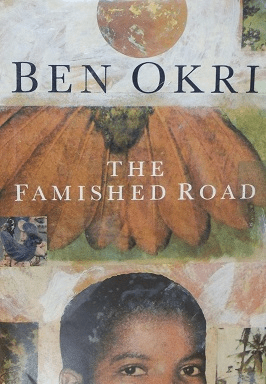
Nigerian writer Ben Okri frequently blurs lines between reality and the beyond. His breakout novel, The Famished Road, is about the spirit of a child (named for Lazarus) who has never quite left the physical world but is being enticed to do so by other spirits.

Often categorized as an African magic realist, Okri has talked about how his writing is not necessarily about just telling a story:

My writing isn’t about what is on the page, it’s intended to take you somewhere, it’s your journey to that somewhere. The journey is the point…

Many readers want plot and a satisfying ending, of course. But if you can’t take them out of their lives and into the world of what you are writing, they may be less likely to stick with it until the end.

Writer’s Desk: Read, Read, and Read Some More

At some point, the writer has to get up out of their reading chair, move to the desk, and get to work. But before they do that, maybe they could read another book?

To the untrained eye (as well as the trained, if we are being honest), this looks like procrastination. But really it is preparation.

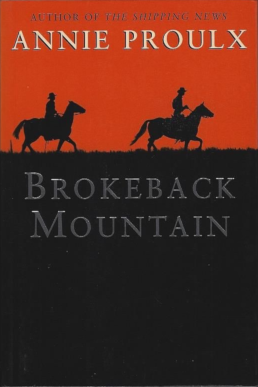
Per Annie Proulx:

You should write because you love the shape of stories and sentences and the creation of different words on a page. Writing comes from reading, and reading is the finest teacher of how to write…

Writer’s Desk: Making Up the Truth

John Rechy, who scandalized and thrilled with his vividly scabrous novel City of Night, drew heavily from his own life. That does not mean that he felt bound to the record of what actually happened or how:

When you use ‘real people’ as characters, there may come a time when the real person and the character become one; I sometimes can’t remember what I put into a book and what ‘really happened’ … I think that’s good. Narrative assumes its own life, and all ‘nonfiction’ is finally ‘a lie…

Writer’s Desk: Get Outside Yourself

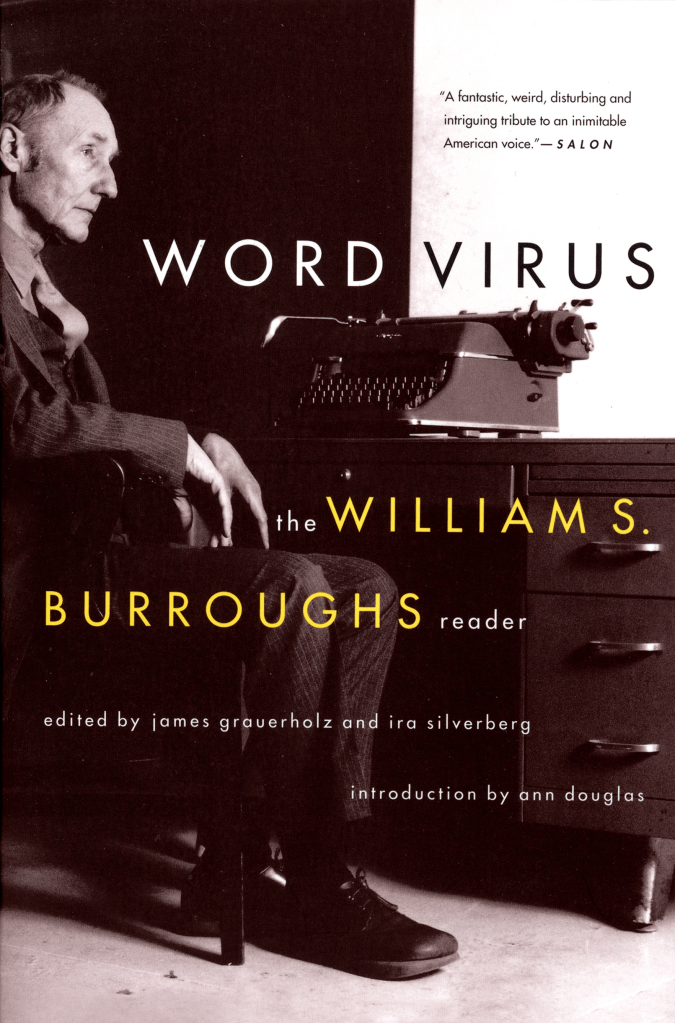
Though William S. Burroughs’ writing frequently left reality behind (Naked Lunch‘s Mugwumps and whatnot), a surprising amount of it was based on his life. The details of his Midwestern upbringing and years as a wastrel flâneur were frequently reworked in his fiction.

Still, Burroughs found it crucial for his writing to get past the limitations of self. As he once told fellow Beat and occasional collaborator Allen Ginsberg, that came with risks:

The only way I can write narrative is to get right outside my body and experience it. This can be exhausting and at times dangerous. One cannot be sure of redemption…

Reader’s Corner: Quentin Tarantino, Author

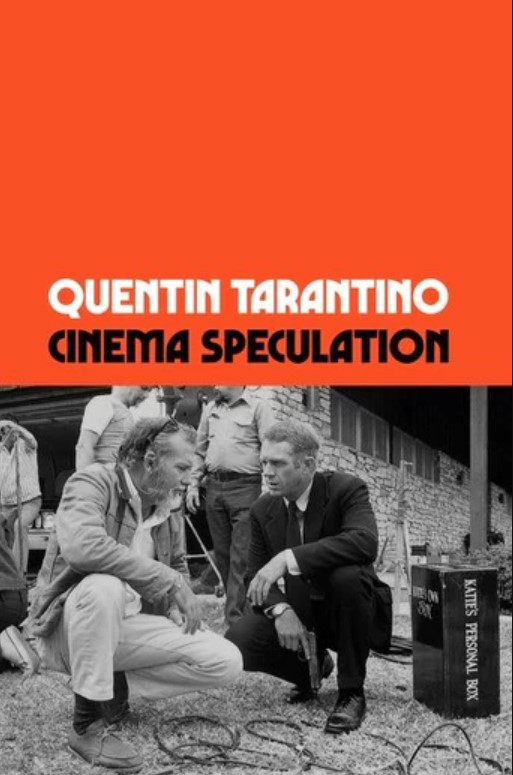
I wrote about Quentin Tarantino’s new sideline writing books for The Millions:

His first book was 2021’s Once Upon a Time in Hollywood, based on his 2019 film. Released as a mass market paperback and printed on appropriately dubious paper stock, it was made to look like the kind of quick-and-dirty film novelizations that once composed a profitable though semi-disreputable pillar of publishing, complete with back-of-the-book ads. The book is less a novelization than a remix, a self-produced work of fan fiction, or an expansion pack for the Tarantino Cinematic Universe…

Writer’s Desk: Be Spontaneous

The somewhat unsung Harlem Renaissance writer Claude McKay was a poet, novelist, and active socialist of the anti-Stalinist inclination. He channeled his passionate beliefs into an impressive series of books that showed his desire to write with spirit and truth rather than formalism.

McKay explained why in Harlem Shadows:

I have not used patterns, images and words that would stamp me a classicist or modernist … I have never studied poetics; but the forms I have used I am convinced are the ones I can work with in the highest degree of spontaneity and freedom. I have chosen my melodies and rhythms by instinct, and I have favored words and figured which flow smoothly and harmoniously into my compositions.

Choose the words that feel right for the piece. And for you. Not what you think should be chosen.

Writer’s Desk: Less, Please

Minimalist writing is generally understood as a style that pares away unnecessary words to get at a truer understanding of the story. Think of a writer using minimalism like a sculptor cleaving off marble to expose the piece of art lying underneath.

In this essay about the novelist Amy Hempel, Chuck Palahniuk (Fight Club) described the value of her approach this way:

No silly adverbs like sleepilyirritablysadly, please. And no measurements, no feet, yards, degrees or years-old…

Get to the point. Write with a minimum of editorial commentary. The reader will get it, assuming you have done your job. Adverbs only when absolutely necessary.

Writer’s Desk: First By Hand

Yes, in the 21st century, there are still writers who use pen and ink, for their first drafts, at least.

Sam Anderson, a staff writer for the New York Times Magazine, told another writer at the paper that he actually composed the first draft of most of his long pieces by pen. He liked how it slowed him down:

There’s a kind of folk craftiness to it. The first step is a very personal thing — drawing yourself out of your mind and body. Then, later, you translate that into impersonal print…

Anderson also found that the process, even though it was time-consuming and required to be typed up later, was ultimately a time saver because it stopped him from fooling around on the Internet.