Writer’s Desk: Bite Off More Than You Can Chew

Everybody expects writers to be, for the most part, miserable. This is particularly true of writers themselves. We are after all a cohort of people given not only to romanticizing what we do but at the same time highlighting just how difficult a task it is to write sentences one after the other.

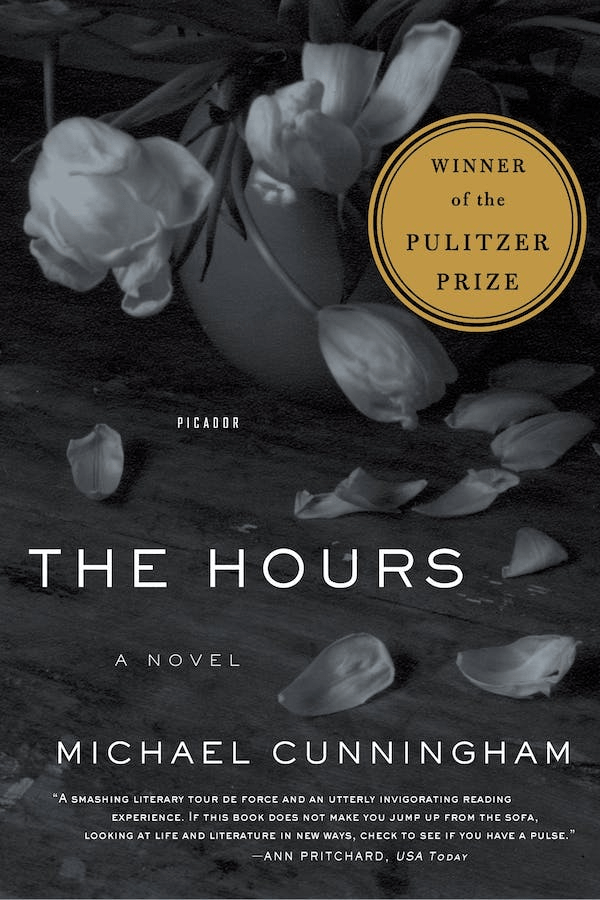
Michael Cunningham (The Hours) wrote a piece for Oprah about this predilection:

I suspect that one of the many reasons we who write tend to contemplate our troubles the way nuns finger rosaries is the fact that our sufferings are entirely invisible to everyone but us…

But while Cunningham was gently ribbing his tribe of creatives and pointing out that sometimes the act of writing can be quite enjoyable (“If an author isn’t acquainted with happiness in some form or other we don’t trust him or her”), he also pointed out that whenever the writing went a little too well, that is when the writer is in trouble:

A writer should always feel like he’s in over his head. That’s part of what makes good writing compelling—the sense that as readers we’re in the company of a writer of vast ambitions, who is always trying to do more than he or she is technically capable of…

Do you have a project that you would love to write but have been putting off because you think it’s too much for you or you don’t have the skill? Make that the next thing you write.

Writer’s Desk: Deadlines Help

Writers like to complain. It’s one of our favorite pastimes. We particularly enjoy griping about deadlines. How unreasonable they are, how foolish we were to agree to them, how we couldn’t possibly get everything done before them, and so on.

But, against our nature as it might be, there are times when we should embrace the deadline.

Consider Saturday Night Live. Every week while in season, the writers ponder, pitch, write, rewrite, throw ideas into the garbage can in disgust, fish those ideas out later and dust them off, and generally burn the candle at every possible end to put a show together by the end of the week. As anybody who has watched the show over the years can attest, the end product is not perfect. But it never could be. Because endless time can be its own kind of trap.

SNL founder and creative mind Lorne Michaels famously put it this way:

The show doesn’t go on because it’s ready; it goes on because it’s 11:30.

Be thankful for the deadline. If not for that, you might never finish writing.

Writer’s Desk: Practice, Practice, Practice

Do you know Sam Lipsyte? If not, then now is the time to get acquainted. Start off with his novel, The Ask. It’s very … well, just read it. Funny, profane, true; all the best qualities. No One Left to Come Looking For You is coming out later this year and it’s a knockout.

All of which is prelude to why you should listen to what he has to say about writing fiction; which he teaches at Columbia University.

In this interview, Lipsyte talks about the need to stay connected to what you are working on:

… the main thing is always to stay connected to a project. Even if today I might not get to it, I have to look at it—even if it’s 10 minutes or 15 minutes or 20 minutes, even if I just move a comma. An old teacher of mine said, “You pray at the altar every day.” Even if it’s just for a few minutes, you have to go into the document and mess around a little bit, read it, feel it, and then you can go on and do the thing you have to do that day, but you’ll be connected for the next big writing session.

Sometimes, if you are looking for an excuse to procrastinate, not having a couple spare hours to get some pages out is a good one. But Lipsyte is right: Don’t give yourself the out.

Keep praying at the altar.

Writer’s Desk: Leave it Loose

Who doesn’t like a tidy conclusion? Life is random. Does our art have to be? Isn’t a great part of the joy of creating and consuming art based on the possibility of finding a closure that our daily lives never offer?

Of course it is. If nobody liked neat finishes, then mystery novels would not be a thing.

But it does not always have to be that way.

In Iris Murdoch’s novel The Sea, The Sea, her playwright character has the following observation:

Then I felt too that I might take this opportunity to tie up a few loose ends, only of course loose ends can never be properly tied, one is always producing new ones. Time, like the sea, unties all knots. Judgements on people are never final, they emerge from summings up which at once suggest the need of a reconsideration. Human arrangements are nothing but loose ends and hazy reckoning, whatever art may otherwise pretend in order to console us…

Some stories lend themselves to a snappy finish. But for others, your efforts to wrestle the elements of life into something sensical and satisfying could ruin what you are trying to build. Don’t force the conclusion.

In art, as in life, things can sometimes just end.

(h/t The Marginalian)

Writer’s Desk: Rules? What Rules?

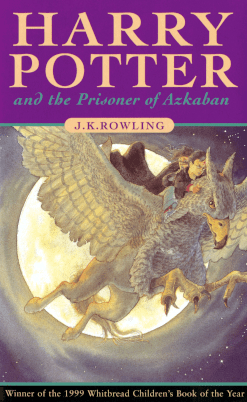
J. K. Rowling (born on this day in 1965) has sold a few books in her career. So it is somewhat refreshing to see her resisting the urge to lay down some must-follow rules for other writers to follow. In fact, in this piece from 2019, she points out that her breakthrough came largely from going in the other direction:

I found success by stumbling off alone in a direction most people thought was a dead end, breaking all the 1990s shibboleths about children’s books in the process. Male protagonists are unfashionable. Boarding schools are anathema. No kids book should be longer than 45,000 words…

Still, she presents a few common-sense rules of thumb to follow:

  • Reading: “Reading is the best way of analysing what makes a good book. Notice what works and what doesn’t, what you enjoyed and why. At first you’ll probably imitate your favourite writers, but that’s a good way to learn. After a while, you’ll find your own distinctive voice.”
  • Discipline: “Sometimes you have to write even when the muse isn’t cooperating.”
  • Independence: “By this, I mean resisting the pressure to think you have to follow all the Top Ten Tips religiously, which these days take the form not just of online lists, but of entire books promising to tell you how to write a bestseller/what you MUST do to be published/how to make a million dollars from writing.”

That does not mean if you do everything she says, success will follow. Nothing is that simple. Remember what Dumbledore said:

We must all face the choice between what is right and what is easy.

Writer’s Desk: Stick With It

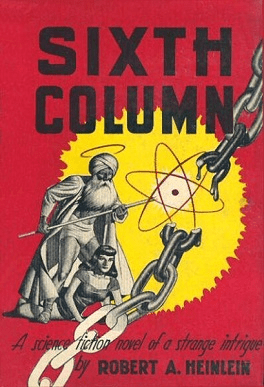
Of late Robert Heinlein’s legacy as one of the great postwar science-fiction writers has been somewhat forgotten, or overshadowed by his status as libertarian icon. But he deserves recognition not just for his great novels (Starship Troopers, Stranger in a Strange Land) but for providing us with some of the most salient writing advice ever put to paper.

In his frequently cited article, “On the Writing of Speculative Fiction,” Heinlein laid down five solid rules:

  1. You must write.
  2. You must finish what you start.
  3. You must refrain from rewriting except to editorial order.
  4. You must put it on the market.
  5. You must keep it on the market until sold.

The last is particularly helpful for writers who have a difficult time with rejection. Of which there will always be a lot.

Heinlein was also smart enough to acknowledge that he frequently broke these rules himself. But sticking to them will help instill the diligence, rigor, and stubbornness necessary to get anywhere as a writer.

Writer’s Desk: Short is Okay

It is easy to confuse length with profundity, brevity with shallowness. The reverse can also be true, of course, but readers frequently believe that an epic-length novel must have some kind of importance, even if it does not always justify its length.

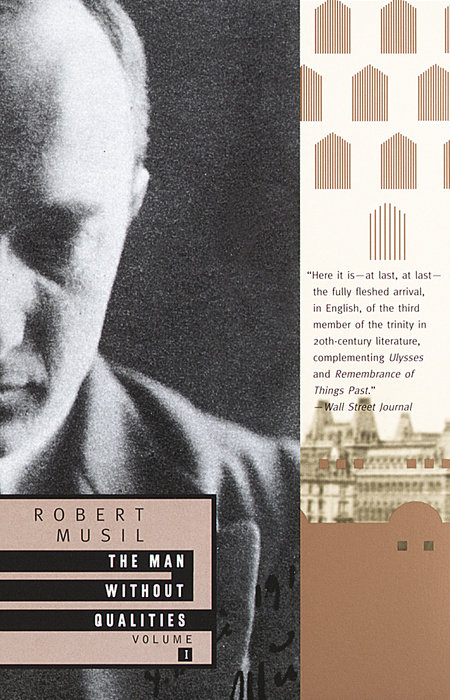
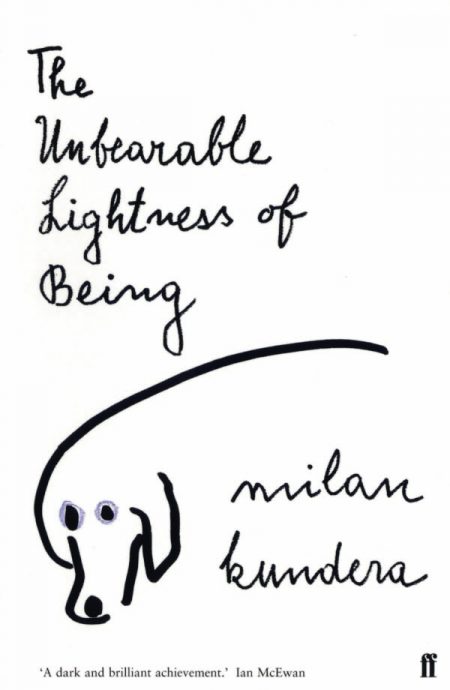
Milan Kundera (The Unbearable Lightness of Being, 320 pages, give or take) noted this in an interview with The Paris Review. He praised Robert Musil’s gargantuan yet still somehow unfinished multi-volume novel about the end of the Austro-Hungarian empire, The Man Without Qualities, calling it “one of the two or three novels that I love most.”

At the same time, he was overwhelmed by its size (one English translation runs over 1,700 pages):

But don’t ask me to admire its gigantic unfinished expanse! Imagine a castle so huge that the eye cannot take it all in at a glance. Imagine a string quartet that lasts nine hours. There are anthropological limits—human proportions—that should not be breached, such as the limits of memory. When you have finished reading, you should still be able to remember the beginning…

Take the time to tell your story. If you think the crucial conversation that highlights everything your characters have been going through needs to be forty pages, then forty pages it is.

But keep an eye on the overall work. Don’t make your readers slog through so much to get to the end that they forget the beginning.

Writer’s Desk: Try Anything

Sometimes you just cannot get started. It all feels wrong. You have a story, a poem, a whole book even, inside you. But it won’t come out.

Don DeLillo was once asked by writer Kae Tempest about the accrual of a certain kind of detail:

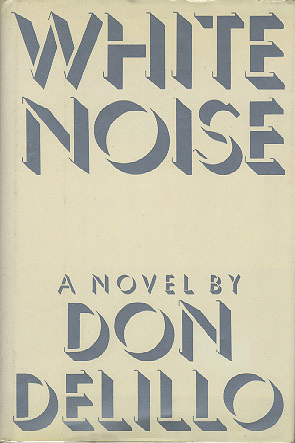
In your novels, there is a noticing of the everyday that is so perfectly, so tunefully described that something very usual becomes eerie, oppressive. For example, there’s a line from White Noise where you write ‘On telephone poles all over town there are homemade signs concerning lost dogs and cats, often in the handwriting of a child.’ Which is such a beautiful and usual thing to see, but to suddenly be reminded of it in fiction …

DeLillo tells Tempest where that came from:

I was desperate to begin a novel at that point. I guess it was 1982 or 1983. A long time had passed and I wanted to get back to work. And I just started describing streets and signs on poles. I started noticing them, they were always there, but I not only noticed them, I looked at them, thought about them and thought about the people involved. And that’s how White Noise got started…

It can be that simple. Write whatever you can. Get it down in just the right kind of detail. Keep going. Repeat.

Eventually the story will make itself known.

Writer’s Desk: Everything is Material

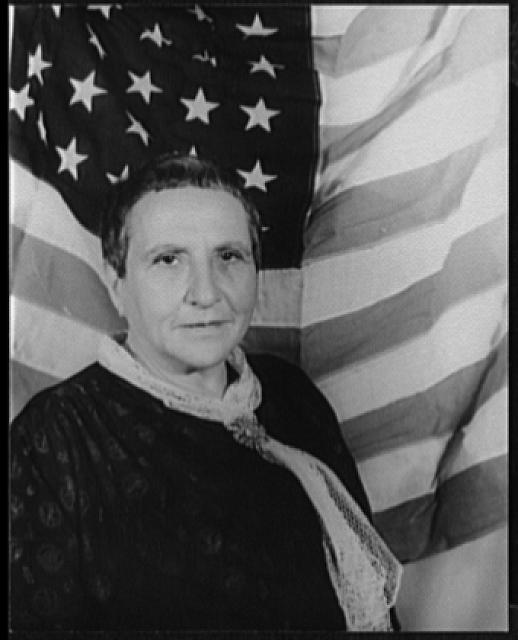
Gertrude Stein tended to be more known for who she was (holder of literary salons, quotable intellectual roustabout, knower of the famous) than what she wrote. This always bothered her.

She would be irritated that today her profile remains primarily that of an expatriate rebel. But while much of her writing was high-minded experimentation, she still has a lot to teach any scrivener.

Take this aside (and note the similarities between its straightforward simplicity and that of one Ernest Hemingway, who she once mentored) from her novel Paris France:

Familiarity does not breed contempt, anything one does every day is important and imposing and anywhere one lives is interesting and beautiful. And that is all as it should be.

In other words, nothing is inherently literary. It’s all material. Tell it well.

Writer’s Desk: Don’t Embellish

It’s easy to write more than you need to. As we come up with stories, our minds quickly fill up with material (setting, mood, backstory, interesting tangents) and it is hard not to want to put it all down on the page.

You know who does not do that? James Patterson. He’s an expert plotter and an impeccable marketer (started out in advertising, you know) who knows how not to waste reader’s time.

Plenty of us can write short. But it’s not that simple. In his new memoir, Patterson provides a simple trick:

Patterson’s breakout thriller, “Along Came a Spider” (1993), began as a full-length outline of the plot, and then essentially stayed that way. “When I went back to start the novel itself,” Patterson recounts, “I realized that I had already written it.” The short chapters and one-sentence paragraphs that became his signature style, and that are often the object of critics’ scorn, struck him as the ideal way to keep the novel “bright and hot from beginning to end”…

If the outline is your story, why embellish? Maybe readers will really want to know what color the drapes were.

But it’s not likely.

Writer’s Desk: Embrace the Unreal

One of the trickier and continually undiscovered American writers, Percival Everett specializes in a particularly elevated satirical fiction. More than a commentator on contemporary mores, he is also funny. A hard trick to pull off. From I Am Not Sidney Poitier:

People, my friend, are worse than anybody.

In this interview, Everett talks about how to maintain the illusion of realism:

If you were to find what you consider the most realistic fiction, memorized with a friend a portion of dialogue from that novel, then sat on a bus and acted it out, people would think that you are crazy. It is not realistic fiction. This is the magic of fiction. It seems the same way that you can have on a canvas that looks really three dimensional. It can’t be. Also, if you were to record the most meaningful conversation you’ve ever had with your best friend about something really important to you and wrote it down on paper, it would be the worst dialogue ever written. It’s a trick, recreating illusion. So it isn’t necessarily not realistic. It’s something else that gives us the appearance of realism. Given that, there can’t be any rules. You’ve already started from a place that is unreal…

Remember the common critique of many an annoyed high school kid struggling through Shakespeare: “Nobody talks this way!” True. But nobody talks like they do in Lee Child or Michael Chabon novels, either.

Embrace the unreality of it all.

Writer’s Desk: Work Backward

Screenwriter and playwright Aaron Sorkin (A Few Good Men, Steve Jobs, The Trial of the Chicago 7) has a trick for getting past a writing block which many of us use, or at least know that we are supposed to use: Get outside and take a walk.

But he does this not just to clear his head but to see what he picks up along the way:

Frequently if I’m really stuck I’ll go out into a public place – a diner, a bus stop, any place you might overhear a conversation. I hope that I can land in the middle of a conversation that will get me thinking, ‘What in the world was the beginning of this conversation?’ I’ll try to write that…

Think of it as a challenge or puzzle. Take this line Sorkin overheard:

I was in Jackson, Mississippi, and passed by a park bench, and two men were sitting there, and one of them said, ‘Who thought they were going to get the jump on Jesus?’ Again, I thought, ‘That’s what I’m talking about.’ He wrote the best line in the scene, now let me write the rest of it…

Give it a shot.

Writer’s Desk: Be Flexible

Writers have habits. Or they don’t, and then feel that if they did stick to a schedule, then the words would come. In the interest of enforcing discipline, routines are probably going to be helpful. That is why so many writers follow them. But hewing to very strict habits every day of one’s life can feel a little too much like work.

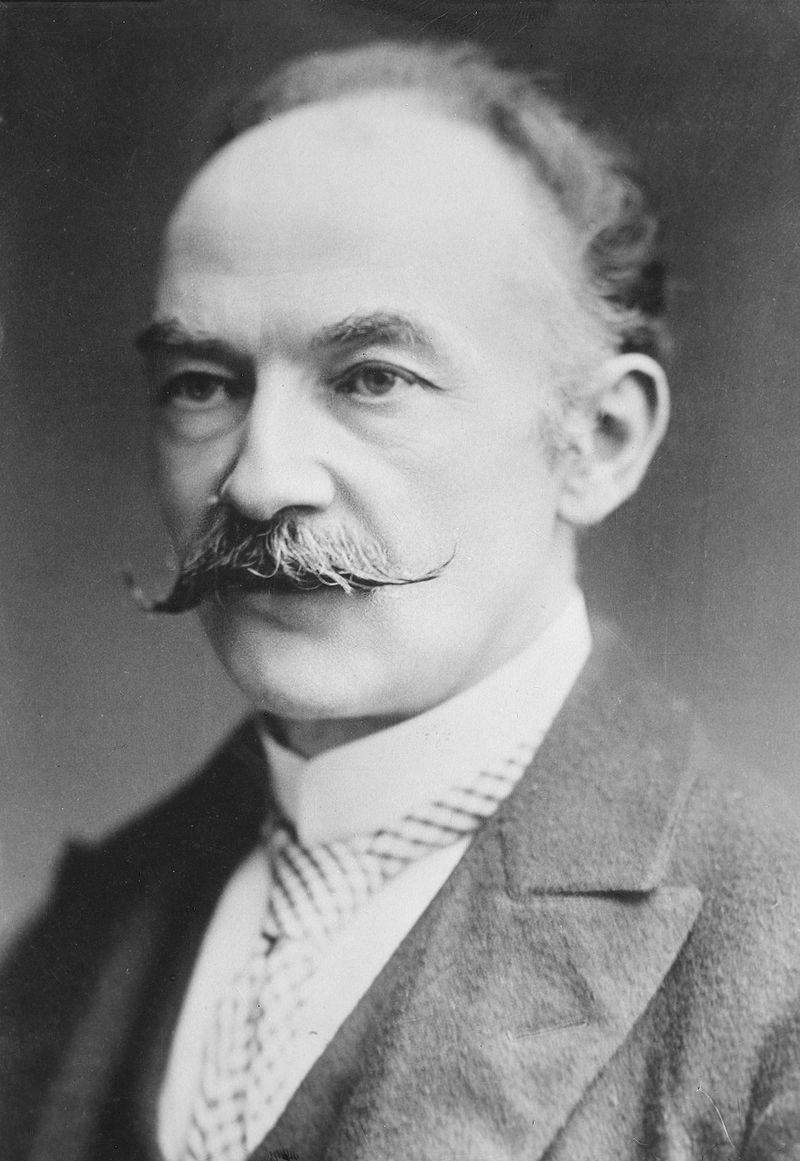
Consider the habits of Thomas Hardy (Tess of the d’Ubervilles), described in the magazine The Writer:

Thomas Hardy prefers the night for working, but finds the use of daytime advisable, as a rule. He follows no plan as to outline, and uses no stimulant excepting tea. His habit is to remove boots or slippers as a preliminary to work. He has no definite hours for writing, and only occasionally works against his will.

Excepting his ill-advised strict adherence to tea, which can be excused by his British heritage, this is all perfectly sensible advice.

Choose whatever time works best for you. And take your shoes off first.

Writer’s Desk: Know When to Walk Away

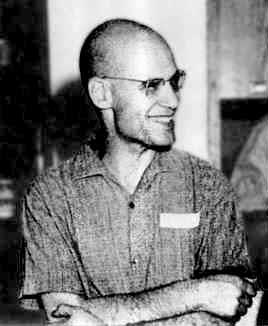
Alexander Grothendieck (1928-2014) was one of the most important mathematicians of the twentieth century. When Fermat’s Last Theorem was finally solved in 1994, it was only because of what Grothendieck had discovered about algebraic geometry.

But he was not just a numbers guy. Like many mathematicians, he was primarily a problem-solver. He loved it. Not only that, he understood it on a more fundamental level than most people ever do.

According to Rivka Galchen’s fascinating profile, Grothendieck compared problem-solving to dealing with a hard nut:

You could open it with sharp tools and a hammer, but that was not his way. He said that it was better to put the nut in liquid, to let it soak, even to walk away from it, until eventually it opened. He also spoke of “the rising sea.” One way to think of this: there’s a rocky and difficult shore, which you must somehow get your boat across. There may be a variety of ingenious engineering feats that can respond to this challenge. But another solution is to wait for the sea to rise, providing a smooth surface to cross effortlessly…

Think of this the next time you come up against a seemingly unsolvable problem in your writing. Paragraph isn’t gelling or the plot isn’t making sense? Walk away for a bit. Come back and work at it but just a little. Don’t think you can solve the problem in one big go.

Wait for the sea to rise and the answer will present itself.

Writer’s Desk: Channel Your Emotions

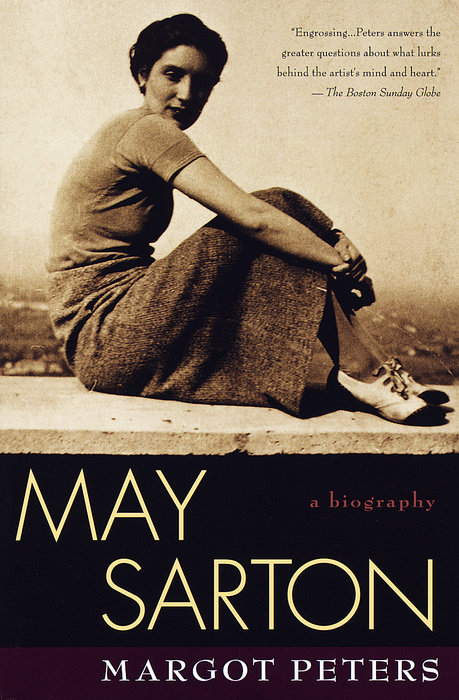
The prolific and beloved poet May Sarton was an emotive, careful writer who seemingly never published a line that had not been weighed, judged, fully understood, and buffed to a high sheen.

Given her attention to both raw inspiration and careful editing, she had a lot to say about the art of poetry that can apply to almost any kind of writing.

In Writings on Writing, she references Valery and what he said about the inspiration or “the intense feeling” that generates a piece of work. She throws a little cold water on the idea of some great rush of emotion driving the creation of art:

A true poem does not begin with a feeling, however compelling, and of course we feel a great many things that never become poems.

Instead, she argues, the writing comes from that collision of a feeling with something else:

A poem emerges when a tension that has been something experienced, felt, seen, suddenly releases a kind of anxious stirring about of words and images … the energy that was absorbed in experience itself, now becomes an energy of an entirely different kind, and all that matters is to solve the sort of puzzle, the sort of maze in which certain phrases, and a certain rhythm lie around like counters in a game of Scrabble.

Without emotional inspiration, there would be little writing, or at least not much worthwhile writing. But that inspiration needs channeling and puzzling out before it can be fully formed and live on the page.