Writer’s Desk: Remember to Live

For obvious reasons, we read writers about writing because, well, who else are you going to ask? We like to look to those we love, and maybe occasionally to those who we may not love so much but because we think: Damn, look at how he’s done, how did he do that?

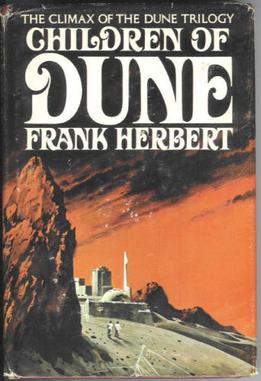
Which brings us to Frank Herbert. There are people who love just about everything he’s written and others who think that the Dune series, well, it fell off a bit after the first two. Nevertheless, given what he accomplished with the first Dune at least, many people listen to what he has to say. Like when he says this:

A writer’s job is to do whatever is necessary to make the reader want to read the next line. That’s what you’re supposed to be thinking about when you’re writing a story. Don’t think about money, don’t think about success; concentrate on the story—don’t waste your energy on anything else. That all takes care of itself, if you’ve done your job as a writer. If you haven’t done that, nothing helps…

I know what he is trying to say here. And it needs to be said. No matter what else you do and no matter how many rules you follow about exposure and making connections and studying the market and all that, none of it will mean anything if you haven’t put everything you’ve got into the work itself.

But still, telling writers, especially new writers, that nothing else matters? This feels like malpractice. Of course, the story is everything. How about the working parent who can only get an hour or so of solid writing time in between shifts and the baby? Doesn’t it make sense for them to consider focusing on what they can get done in that time and that headspace rather than putting hours and hours into a thing they may never be able to finish?

Of course the story is everything.

But money is not nothing. Neither is life.

Writer’s Desk: Listen, But Do What You Want

All writers need advice. Working in the garret of their own imagination provides the raw material, but never going outside and finding out what somebody might think will generally lead to subpar results … or a self-published novel filled with spelling errors and plot holes.

But, since nothing is easy, all writers also need to know when not to listen. Mel Brooks is a perfect example of this, though he definitely erred on the side of not. When working on Blazing Saddles, Brooks got some notes from a producer about things to change:

He said, “You can’t punch a horse.” I said, “You’ll never see it again.” I kept saying, “You’re absolutely right. It’s out!” Then, when he left, I crumpled up all his notes, and I tossed it in the wastepaper basket. And John Calley, who was running [production at] Warner Bros. at the time, said, “Good filing.” That was the end of it. You say yes, and you never do it.

Brooks’ advice might not seem applicable to people not working with movie studios or very pushy editors:

Don’t fight them. Don’t waste your time struggling with them and trying to make sense to them. They’ll never understand.

But it is a strong reminder that no matter how many notes you might get (change this character, trim that dialogue, cut the opening), don’t loose track of your original idea. It’s yours, not theirs.

Writer’s Desk: Make It Shorter

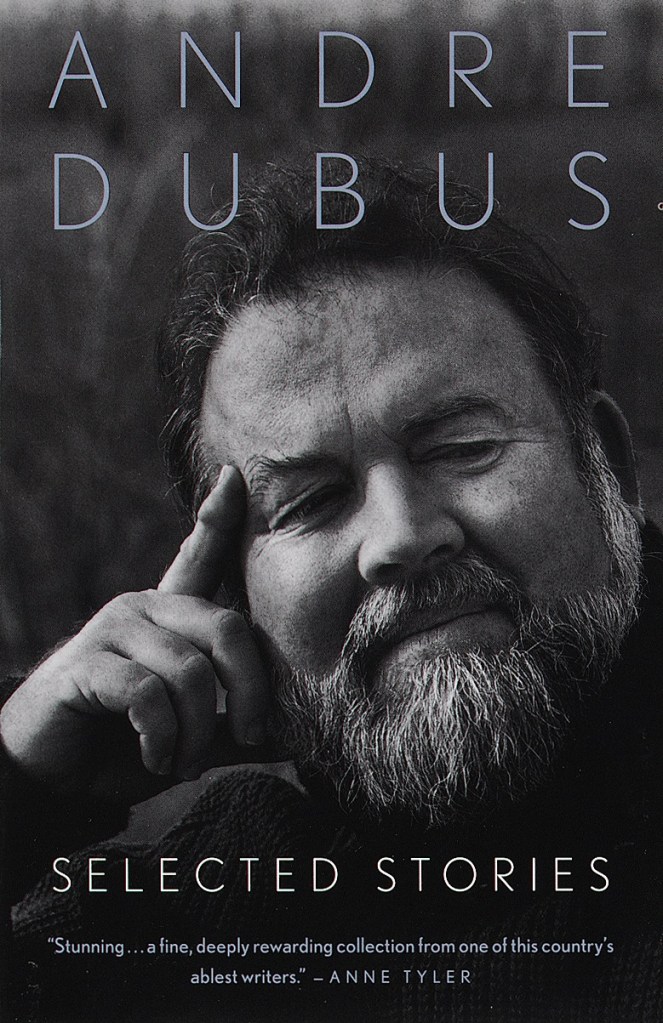
Writers like the great Andre Dubus (whose wrenching New England stories of love and agony put Raymond Carver to shame) choose a lonely and difficult road when they decide to master the short story rather than the novel. But the form does lend itself to those who prefer concision.

It is one thing to go through one’s draft to do some nipping and tucking. But Dubus was brutal:

Dubus’s prowess in narrative compression is legendary. Andre Dubus III has written that his father’s story “Waiting,” about the hollow ache experienced by a woman widowed by the Korean war, took fourteen months to write and was more than one hundred pages in early manuscript form. But when the story was published in the Paris Review, it spanned a mere seven pages…

Be prepared to dump 93 percent of what you write. At least.

Writer’s Desk: Be Intentional

There is a lot of writing in the new Wes Anderson movie The French Dispatch. After all, it is about a magazine. The editor, Arthur Howitzer Jr., played by Bill Murray, is a grumpy but accommodating sort, the sort who complains constantly while still carrying inside him a deep and abiding love not just for the written word but also for those who know what to do with it.

In the film, Howitzer (based on legendary New Yorker editor Harold Ross) does not dole out much in the way of writing advice, but what he does say about the craft on multiple occasions is nevertheless solid:

Just try to make it sound like you wrote it that way on purpose.

This is harder to accomplish than one might imagine.

Writer’s Desk: Stuck? Write Something Different

Writers are not born prolific. They work at it. More than most of us. That’s how you end up like Isaac “I lost track of how many books I wrote” Asimov.

He got blocked, like the rest of us. But in that moment, he didn’t just sit there grinding his teeth. The asymmetric approach seemed to work for him:

I don’t stare at blank sheets of paper. I don’t spend days and nights cudgeling a head that is empty of ideas. Instead, I simply leave the novel and go on to any of the dozen other projects that are on tap. I write an editorial, or an essay, or a short story, or work on one of my nonfiction books. By the time I’ve grown tired of these things, my mind has been able to do its proper work and fill up again. I return to my novel and find myself able to write easily once more…

Just make sure you always have a spare project or five on tap.

Writer’s Desk: How to Get Published

So, how do you get published? A lot of writers have thoughts about that. But it tends to derive from when they were first coming up, which is often decades ago and relevant to an entirely different industry.

In this piece from Locus magazine, science fiction author Cory Doctorow (Little Brother) talks about what he used to know about breaking in:

Thanks to online forums and writers’ groups, I could name every single major SF publication, their editors, word rates, and response times. I could tell you whether their contracts were negotiable, and, if so, which clauses could be struck out. I could name every major agent who was open to new clients and every book editor who was willing to read unsolicited novels…

But now, he acknowledges, he knows none of that. Instead, he proffers what he calls broader meta-advice:

1) Note where works that are comparable to your own were published recently;

2) Research the editorial guidelines and word rates for those markets;

3) In descending order of pay-scale, submit your stories to those markets, according to the submission guidelines for each;

4) Keep writing.

Learn the industry. Get to know people. Hope for a break. Keep trying if you don’t get one.

These principles apply regardless of the year.

Writer’s Desk: There is Always a Mystery

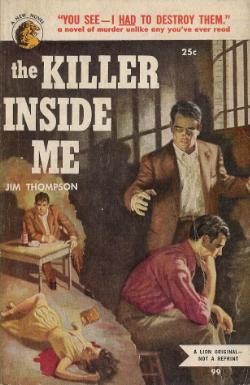
There are three kinds of readers: those who have no idea who Jim Thompson is or have never read him (that’s most people), those who think he’s just about the best crime writer America ever produced, and (this last being a group that overlaps with the second) writers who wish they could do what he did.

A master of mood, detail, tension, and stories that wore the characters down to their often quite nasty and perverse essentials, Thompson was an artist working in a very specific medium who nevertheless had forgotten more about the basics of writing than most of us ever get the hang of. To wit:

There are thirty-two ways to write a story, and I’ve used every one, but there is only one plot: Things are not as they seem.

This applies no matter what you are writing: mystery, steampunk romance, multi-generational historical saga, or even nonfiction. Things are not as they seem will get your narrative moving like almost nothing else.

Writer’s Desk: Travel, Travel, and Travel More

Consider this as advice for a post-pandemic time, whenever that day finally dawns. Some writers may never need to leave their garret in order to have all that they need to generate worlds. Others work better from life. Here’s what some authors had to say about getting out and exploring the world:

  • “I’ve always wanted to get as far as possible from the place where I was born. Far both geographically and spiritually. To leave it behind … Life is very short and the world is there to see and one should know as much about it as possible. One belongs to the whole world, not to just one part of it.” (Paul Bowles)
  • “[We] need sometimes to escape into open solitudes, into aimlessness, into the moral holiday of running some pure hazard, in order to sharpen the edge of life, to taste hardship, and to be compelled to work desperately for a moment at no matter what.” (George Santayana)
  • “Partly from passionate curiosity and partly to make a living, I kept travelling. The risky trips I took in my thirties and forties, launching myself into the unknown, astonish me now. One winter I was in Siberia. I went overland to Patagonia. I took every clanking train in China and drove a car to Tibet … All these trips, 10 of them, became books.” (Paul Theroux)

Writer’s Desk: Let Your Characters Tell the Story

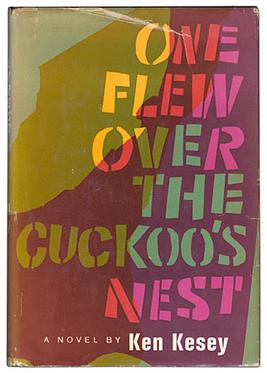
In 1987, psychedelic pied piper and one of America’s great novelists Ken Kesey taught a graduate writing class at the University of Oregon in which he and the students were to collaboratively write and publish a novel. His methods were unsurprisingly eclectic but his purpose was direct: “If we finish it and it gets published, everybody gets an A. If we don’t, you get an F.”

Much of what ultimately happened in that class, led as it was by a high-octane preacher-writer with a flair for the magical, would be difficult to reproduce in the field. However, as related in this Rolling Stone article, Kesey also had some decent wisdom to transmit:

Plot comes out of character, he explained, not the other way around. ”The trick is for us to build character in our characters,” Kesey said, ”to breathe life into them, to get them to stand up, stretch and start doing stuff. We’re not interested in pulling strings, in being puppeteers. We want these people to rise up off the page. Then we sit back and follow them through the novel.”

If you can create characters who seem interesting enough to follow around for a couple hundred pages, then what they actually do in that time may be more incidental than anything else. Person first, then plot seems like a good way to get started.

Writer’s Desk: Accept Imperfection

Despite what many might think, even the most talented writers harbor doubts about their talent. In fact, it is highly possible that self-doubt is crucial for many to succeed at their craft. A writer who just loves to death every line they slap down? That cannot be a good sign.

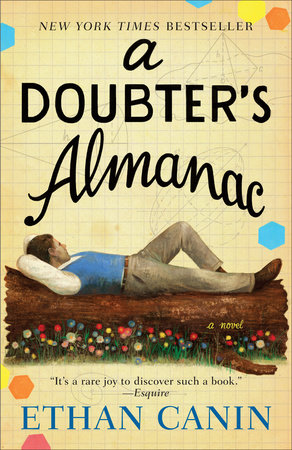
Still, it is surprising the extent to which some writers can only see the mistakes in their work. Ethan Canin (Emperor of the Air), who is about as precise a stylist as one can find in the modern American canon, seemed to say just that in this 2016 interview following the publication of A Doubter’s Almanac, which took him several years to complete:

Even when you succeed, you fail. Even when others think you succeed, you fail. I mean, how can anyone write a novel? Every novel is a failure.

While Canin is overstating the case (one can think of a number of at least nearly-perfect novels out there), what he says is potentially helpful for any number of writers who right now are frozen in their process because they just cannot let go of a flawed work.

No book or story or poem will be perfect. Let them go.

Literary Birthday: Jorge Luis Borges

The Argentine author Jorge Luis Borges (born today in 1899) has a reputation in the literary world that is almost in inverse proportion to his slim output. A painstaking stylist, he published in a wide variety of areas—short stories of various genres, poems, essays, literary criticism—but kept his pieces short: His longest story was the 14-pager “The Congress” (1971).

Nevertheless, Borges was widely revered, largely due to his influential English-language story-and-essay collection Labyrinths (1962). Highly attentive to the awards he received and did not, Borges was reportedly saddened by his failure to receive the Nobel Prize for Literature (rubbing salt in his wounded pride, reporters would gather outside his door each year on the day of the prize’s announcement).

Unlike many South American writers who gain an international following, Borges’ politics were somewhat reactionary. He praised the brutal military dictatorship that took over Argentina from the Peronists and accepted a medal from the Chilean dictator Augusto Pinochet, neither of which likely endeared him to the Nobel committee.

Writer’s Desk: Pull a Gatsby

Megan Abbott, whose newest novel The Turnout is out this month, had some good advice for how to find the right narrative perspective for your book:

I’ve always been interested in the “Gatsby structure,” which is when you don’t tell the story from the point of view of the most interesting character, though they can become the most interesting character, of course. You let Nick Carraway tell it…

You want a watcher to tell your story. Somebody with an exciting life may not have the time or focus to notice what’s happening around them.

Literary Birthday: Chester Himes

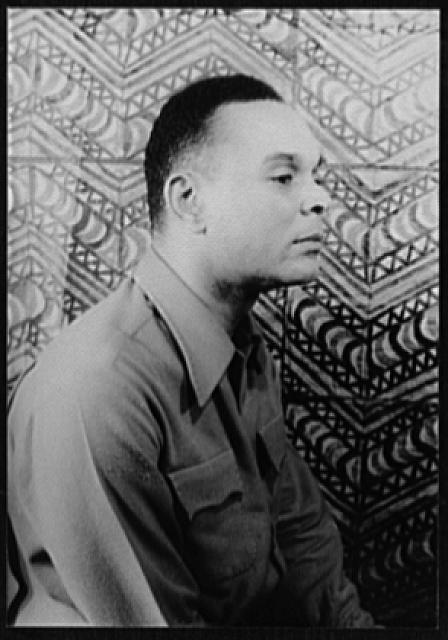
Raised in Missouri, Chester Himes (born today in 1909) began his writing career in an unlikely place. While attending Ohio State University, he started walking on the wild side. He was sent to prison for robbery at the age of 19. Buying a typewriter in part with his gambling winnings, he began writing stories from his jail cell that were published in the black press and Esquire, under the pen name 59623 (his prisoner number).

After moving to France, Himes began publishing the raucous Harlem-set noir novels that made him famous, particularly Cotton Comes to Harlem (1965). One day in Paris in 1953, Himes was at a café with Richard Wright and James Baldwin. The two rivals were sparring over petty literary slights, real and imagined. “I confess,” the street-wise Himes wrote in his autobiography, The Quality of Hurt (1972), “at this point they lost me.”

Literary Birthday: Frantz Fanon

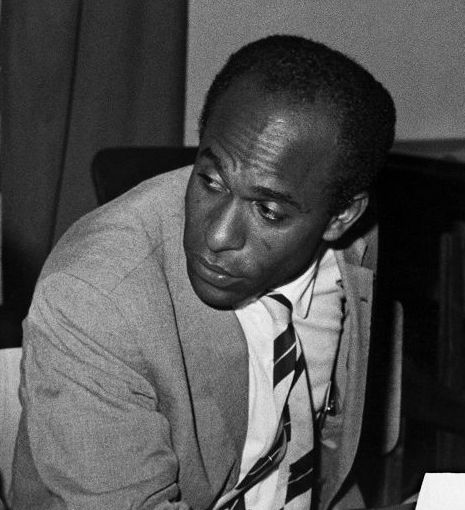
“Decolonization,” wrote Frantz Fanon (born today in 1925) at the beginning of his revolutionary-philosophical text The Wretched of the Earth (1961), “is always a violent event.” He knew what he was talking about. Born in the West Indian French colony of Martinique, Fanon studied in France to be a psychiatrist and published the pioneering work of racial consciousness, Black Skin, White Masks (1952).

Stationed at a hospital in Algeria during the civil war, he witnessed up close the effects of torture. Fanon joined the Algerian liberation movement the FLN and began writing of the need for violent overthrow of the French colonial system. Published the year he died of leukemia, The Wretched of the Earth called in stark terms for colonized peoples to not replicate Europe but instead to “turn over a new leaf … and try to set afoot a new man.”