Writer’s Desk: Watch TV and Learn

Say you have written a book. You have been lucky enough to have your book published by a major house. Maybe you have even gotten some good press. But nevertheless, the income stream is negligible. What do you do to keep writing and not have to hold down a separate job?

Maybe write a book that has a better chance of being optioned for a streaming or television adaptation. In “The Rise of Must-Read TV,” Alexander Manshel, Laura B. McGrath, and J. D. Porter note how streaming services like Netflix (which has had great success with book-sourced series like The Queen’s Gambit [pictured above]) have been on a “buying spree” of book properties.

The writers studied what makes a book more appealing to the interests of TV producers looking to populate a big, broad-appeal series. They identified a few common characteristics:

Although not every novel under contract for potential adaptation shares all of these features, they do seem to possess a consistent set of what we call “option aesthetics”: episodic plots, ensemble casts, and intricate world-building. These are the characteristics of contemporary fiction that invite a move from the printed page to the viewing queue.

These are just dramatic choices you can make. If (and only if) they work well for the story you have in mind, then run with it. Remember: Jennifer Egan modeled A Visit from the Goon Squad on The Sopranos.

Writer’s Desk: Write As Though You Are Already Gone

Sometimes the best advice can come from writers reminding you of what other writers have said. For instance, there is the 2012 speech that Jeffrey Eugenides gave in which he gave some advice via what one writer related about another writer’s advice:

In his 1988 book of essays, “Prepared for the Worst,” Christopher Hitchens recalled a bit of advice given to him by the South African Nobel Laureate Nadine Gordimer. “A serious person should try to write posthumously.”

Eugenides goes on to interpret what Hitchens/Gordimer meant, which to him boils down to writing in some sense as though one is already dead and gone:

It may inoculate you against the intellectual and artistic viruses that, as you’re exposed to the literary world, will be eager to colonize your system.

Which is all likely true. Better to accomplish, of course, without trying to finish one’s memoir or mystery while viewing it through the veil of the after life.

(h/t: The Millions)

Literary Birthday: Ann Radcliffe

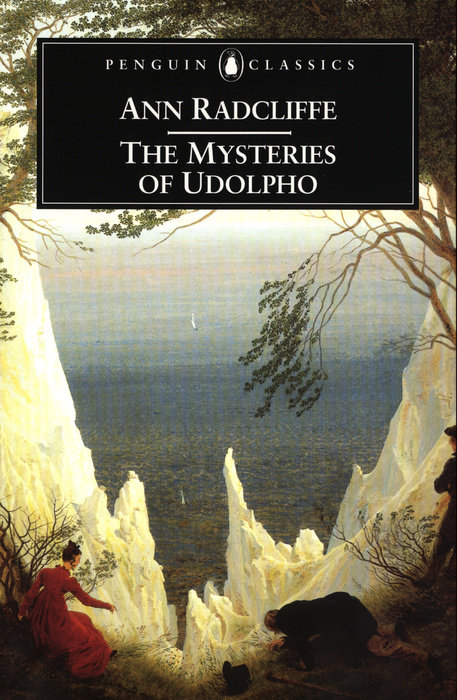
Given that she was later referred to by Sir Walter Scott as “the first poetess of romantic fiction,” it is fitting that many dramatic rumors about Ann Radcliffe (born today in 1764) swirled around her. There were stories that she had died young, gone mad (potentially being locked up in an asylum), or even arrested as a spy.

But whatever the truth of her biography, the impact that Radcliffe’s picaresque Gothic novels like The Mysteries of Udolpho (1794) had on the literary world is undeniable, influencing everyone from Coleridge to Wordsworth and Scott. She was the highest-paid writer of the 1790s and one of the most imitated. Jane Austen paid tribute to Radcliffe in her semi-comic Gothic Northanger Abbey, in which a character raves about Udolpho: “I remember finishing it in two days—my hair standing on end the whole time.” 

Writer’s Desk: Try Again, Try Harder

Writers love little more than those days when the words just arrive, streaming from your mind to the page with seemingly little to no effort on their part. It can, of course, be glorious to go from eking out a few lines to finishing five pages in a morning.

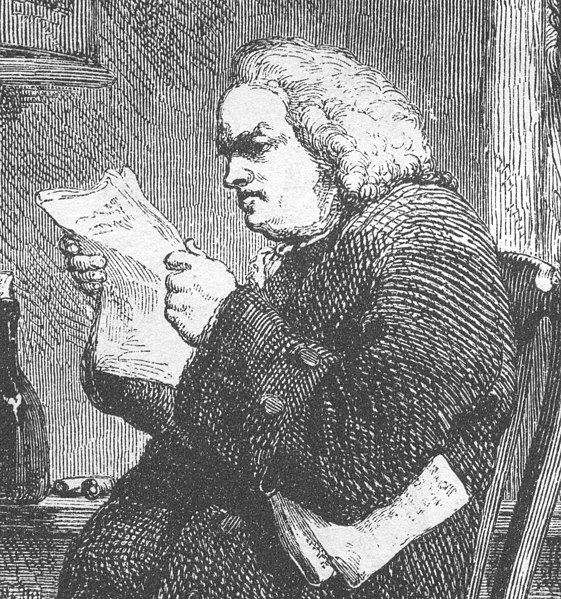
But Samuel Johnson has a warning:

What is written without effort is in general read without pleasure.

It’s good to feel the pleasure of your writing. But stay frosty.

Literary Birthday: William Shakespeare

Centuries after the passing of William Shakespeare (born today in 1564), there are almost as many superlatives appended to his writing as there have been productions of his work. Whole swaths of libraries are devoted to studies of his plays, which regularly top lists of the greatest works ever produced in the English language.

But it is possible that with his book Shakespeare: The Invention of the Human, the great critic Harold Bloom may have topped just about all of the plaudits hurled at the Bard. Bloom argues in essence that during the time that Shakespeare was writing, so little serious thought had yet been turned to the human condition without being seen through the lens of religion, that his insights about character were nearly as critical as anything conjured up by scholars and philosophers. “Shakespeare will go on explaining us,” Bloom writes, “in part because he invented us.”

Literary Birthday: Paul Theroux

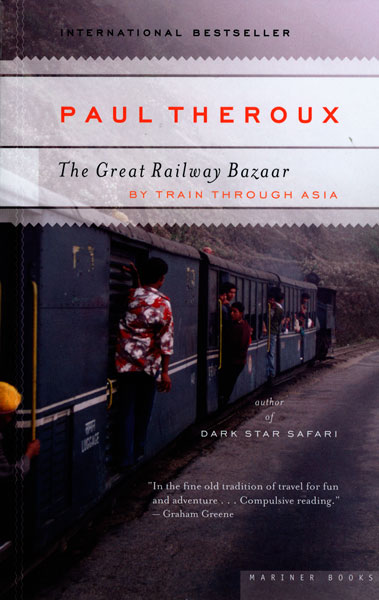
After graduating from college in 1963, Paul Theroux (born today in 1941) spent several years teaching in countries ranging from Singapore to Malawi before writing fiction, which often featured clueless Westerners getting in over their heads in foreign lands. Although some of his novels, like The Mosquito Coast (1981), met with success, it was not until Theroux turned his hand to travel writing that he became widely known. His first was The Great Railway Bazaar (1975).

A bestseller that inaugurated the modern travelogue genre, it recounted his four-month journey by train from Britain through Asia, partially on the Orient Express. Theroux spends more time describing his personal encounters than places he visits. At one point he strikes up a conversation with a sniffy British couple about Graham Greene’s new novel The Honorary Consul. “Graham sent me a copy,” the husband says off-handedly. “I always like seeing Graham,” the wife replies.

Writer’s Desk: Nothing Wrong with Imitation

You could spend a good part of your life just trying to catch up with the output of Larry McMurty, who passed away this week. Screenplays (Brokeback Mountain), essays, nonfiction, and novels galore (The Last Picture Show, Lonesome Dove). He was also one of the country’s great used book merchants.

He once gave Texas Monthly some very straightforward advice for what he would tell young writers to do:

The most important preparation for writing is reading. Certainly for me and most people I know. Trying to imitate the writers that we love to read. That’s what got us all started…. It doesn’t hurt you to read a lot. In fact, it’s better that you read a lot. You’ll find the right ones.

So if anybody reads what you have done and says that it reminds them of another writer, own up to it. Say McMurty told you to do it.

Writer’s Desk: Don’t Worry About Grammar

People make assumptions about writers. That we have some magical talent bestowed by the muses. That we have read everything under the sun. That we really want to take a look at their sheaf of poems or 30-page memoir about their “quite interesting” life and murmur encouraging things.

Assumptions are also made about our mastery of the job’s more technical aspects. They may not understand that many (alright, some; alright, myself) are often getting by more on instinct. We know what sounds correct and pleasing. But please do not ask us to explain ourselves.

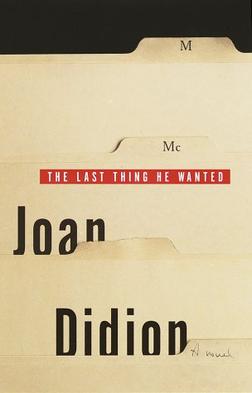
Joan Didion had a lot to say about this very specific kind of imposter syndrome. She once wrote:

Grammar is a piano I play by ear, since I seem to have been out of school the year the rules were mentioned. All I know about grammar is its infinite power. 

Which brings to mind a memory from a first-year college English class. Handing back a paper slashed to ribbons with red ink, my professor asked in a tone of baffled incredulity, “Have you ever heard of a comma splice?”

My blank expression was answer enough. I was used to playing by ear. I continue to do so today.

Writer’s Desk: Let It Rip

In his “Essentials of Spontaneous Prose,” Jack Kerouac had some ideas for how to get things down on paper. Jack being Jack, most of those ideas pivoted around identifying the smoldering ember of creativity and using that to set the kindling of your prose ablaze. Some fragments of dharma:

  • “Time being of the essence in the purity of speech, sketching language is undisturbed flow from the mind of personal secret idea-words, blowing (as per jazz musician) on subject of image.”
  • “Begin not from preconceived idea of what to say about image but from jewel center of interest in subject of image at moment of writing, and write outwards swimming in sea of language to peripheral release and exhaustion.”
  • “If possible write “without consciousness” in semi-trance.”

In short, as Dean Moriarty would say, “Blow, man! Blow!”

Writer’s Desk: Edit After You Write

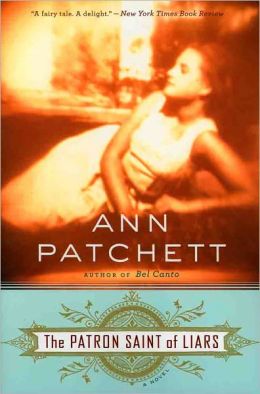
In “How to Practice,” Ann Patchett writes about what she learned when helping a childhood friend clean out her late father’s apartment, and how it reminded her of writing. In short, she says you cannot do two things at once:

I made the decision to wait until we’d finished with the entire house before trying to find a place for the things we were getting rid of. This was a lesson I’d picked up from my work: writing must be separate from editing, and if you try to do both at the same time nothing will get done.

Compare this to filmmakers, some of whom (Spielberg, Soderbergh) are known for editing as they go to save on unnecessary filming. To some degree, writers must do the same, since if you put down everything, you will never finish. Still, Patchett has a point. When you are writing, write. Let it pour out, and worry about editing later.

Within reason, of course.

Writer’s Desk: One Idea per Sentence

Though Bill Bryson takes on large subjects, including but not limited to the history of everything, he tries to keep things simple. In his Dictionary of Troublesome Words, he gave some particularly specific advice:

There is no quota on periods. When an idea is complicated, break it up and present it in digestible chunks. One idea to a sentence is still the best advice that anyone has ever given on writing.

Writer’s Desk: Create Something New

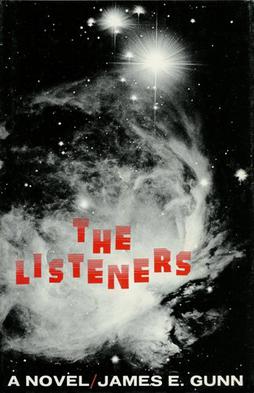
The late James Gunn, the Hugo-winning science fiction novelist and editor who passed away in December, had this to say in a 2017 interview about connecting writing with purpose:

I feel I earn my place here on Earth each day when I am able to create something that wasn’t there before, and, in turn, some of these things enter stories that influence people…

(h/t: Shelf Awareness)

Literary Birthday: Bertolt Brecht

German-born playwright Bertolt Brecht (born today in 1898) always intended to agitate as well as entertain. After World War I, he was denounced for the satirical poem, “The Legend of the Dead Soldier,” in which the Kaiser demands an inconveniently dead hero soldier be exhumed and marched right back to action. Brecht’s more famous plays, like The Threepenny Opera, used dark absurdism to deliver stinging critiques of capitalism and fascism.

Banned early on by the Nazis, Brecht went into exile in 1933. His allegorical 1941 play The Resistible Rise of Arturo Ui, used a Chicago gangster drama to illustrate how demagogues like Hitler divide their opposition to gain power. Post-2016 productions of the play have tilted the allegory toward present-day authoritarianism, finding the continued relevance in lines such as: “If we could learn to look instead of gawking, / We’d see the horror in the heart of farce.”

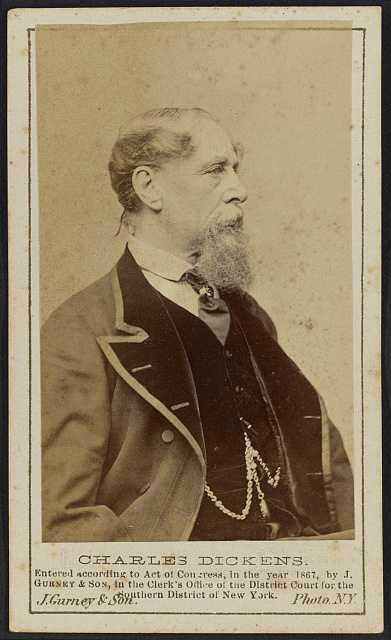
Literary Birthday: Charles Dickens

As an ambitious young man with the kind of lower-class background that limited prospects in 19th century England, Charles Dickens (born today in 1812) was not sure what he wanted to or could become. After stints as a law clerk and comic, he landed on writing.

His first piece, a fairly low-key comedic sketch titled “A Dinner at Poplar Walk,” was published in Monthly Magazine in 1833, but under the name “Boz.” One of his favorite characters in Oliver Goldsmith’s novel Vicar of Wakefield was named Moses, which was what Dickens had nicknamed his younger brother. That later became “Boses,” and then “Boz.” Dickens was never paid for his debut, having to buy a copy of the magazine in order to see his pseudonym in print. More pieces followed in the same vein. Three years later, the first collected volume of Sketches by Boz appeared. A preface to a later edition showed a self-conscious Dickens noting “their often being extremely crude and ill-considered, and bearing obvious marks of haste and inexperience.”

Writer’s Desk: Care About the Right Things

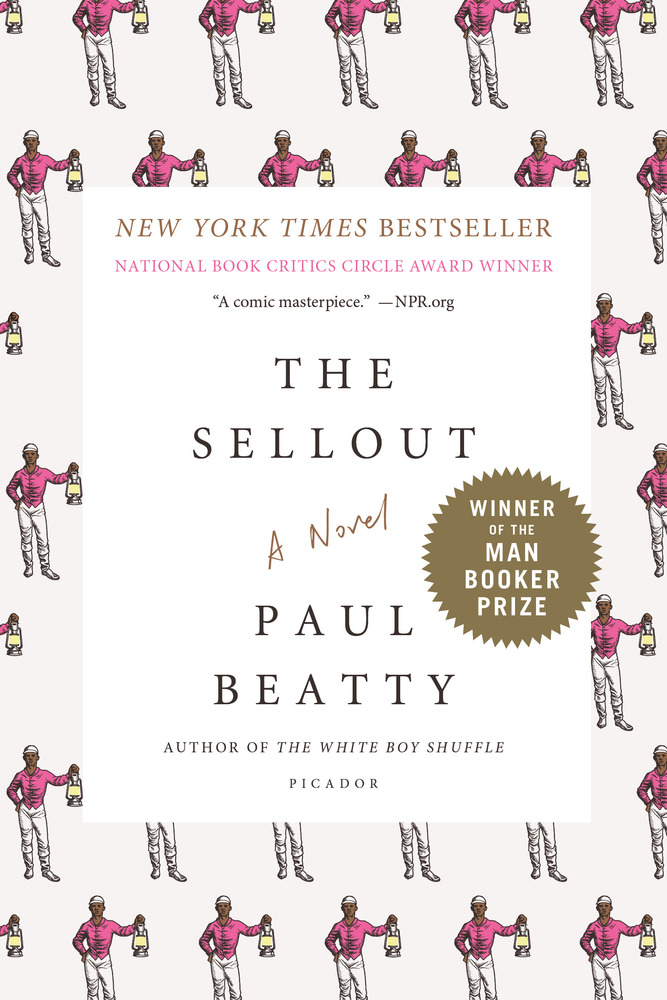
Paul Beatty, author of the incredible novel The Sellout, wrote about some things he wished he had known when he was starting out:

I felt a bit of pressure that if I wanted to be an author, I’d have be relatable, tell people what they wanted to hear, what they believed to be true about themselves, if not the world around them. Be like one to those corny Netflix stand-up comedians who win the (always overwhelmingly white) audience over by pillorying the easy target, pretending we’re all in this together, cultivating what Jerry Seinfeld calls the “we agree applause”.

He realized that worrying about everything outside the actual words on the page is mostly wasted effort:

I can’t say I’ve ever stopped worrying about becoming an author, and it’s not that I ever actively tried to become one, but I did stop thinking about trying. Reading WG Sebald’s Austerlitz and Percival Everett’s Erasure, listening to Bernadette Mayer and Rebecca Solnit talk about their forthcoming projects Helens of Troy and Infinite City, respectively, helped to remind me that the work is about the work…