Writer’s Desk: Write Like You Speak

Christopher Hitchens (Fri Tanke, 2008)

In one of his last pieces for Vanity Fair before cancer stole him from us, Christopher Hitchens wrote about the loss of his voice and how he advised writers to not just read but listen to their words:

I told them to read every composition aloud, preferably to a trusted friend. The rules are much the same: Avoid stock expressions (like the plague, as William Safire used to say) and repetitions. Don’t say that as a boy your grandmother used to read to you, unless at that stage of her life she really was a boy, in which case you have probably thrown away a better intro. If something is worth hearing or listening to, it’s very probably worth reading. So, this above all: Find your own voice…
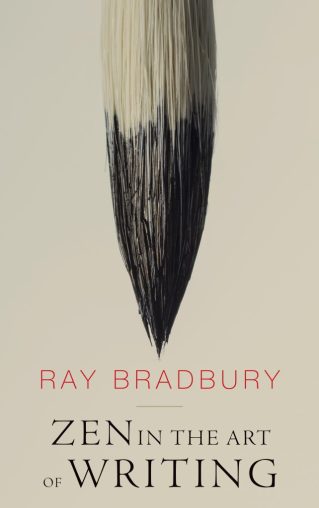
Writer’s Desk: Zen and the Art of Being Bradbury

The late, awesomely great Ray Bradbury should be remembered as not just one of the greatest voices in 20th century American fiction, but as one of the most enthusiastic writers ever anywhere.

Case in point comes from this piece in which Writer’s Digest dug into their archives and unearthed some phenomenally energetic Bradbury truisms:

Just write every day of your life. Read intensely. Then see what happens. Most of my friends who are put on that diet have very pleasant careers.

Let the world burn through you. Throw the prism light, white hot, on paper.

I always say to students, give me four pages a day, every day. That’s three or four hundred thousand words a year. Most of that will be bilge, but the rest …? It will save your life!

It has to be exciting, instantaneous and it has to be a surprise. Then it all comes blurting out and it’s beautiful. I’ve had a sign by my typewriter for 25 years now which reads, ‘DON’T THINK!’

If any of us can write with even a hint of that spark and enthusiasm, then we have nothing to worry about.

Remember, writing can save your life.

Writer’s Desk: Let the Magic Happen

When graphic novelist Alan Moore (Watchmen, League of Extraordinary Gentlemen) was asked by a fan what “happens” to him when he writes, this is in part how he replied:

I know that my consciousness, if I am immersed in writing something demanding, is moved into a completely different state than the one which I inhabit during most of my waking life…

When you descend into this level of our reality, the code of our reality if you like, then whether consciously or not; whether deliberately or not, you are working magic. So, the answer to your question as to what happens to me when I write, is the most banal and useless answer you will ever get from an author: the magic happens…

One of the secrets to writing, it would seem, is to allow yourself to descend into that fugue state and just let the magic work its way through you.

It seems to have worked for Moore.

Reader’s Corner: Don’t Give Up

Novelist, poet, and writing professor Chuck Kinder passed away recently. Known in many circles as the inspiration behind Michael Chabon’s glorious novel Wonder Boys (and its highly underrated film adaptation), Kinder sometimes had a hard time finishing things.

Per Shelf Awareness:

Chabon, who studied under him in the 1980s at Pitt and published Wonder Boys in 1995, spoke with the San Francisco Chronicle in 2001 about Kinder’s role in inspiring the character played by Michael Douglas in Curtis Hanson’s 2000 film adaptation: “I remember peering into his office and seeing this monolithic pile of white paper–the inverse of the monolith from 2001–under his desk lamp. In my memory, it was 4,000 pages long. He was proud of how big a bastard it was…

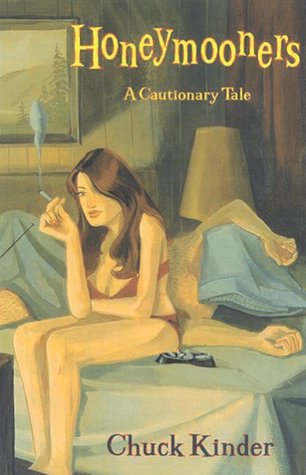
Kinder eventually wrangled the beast into the quite svelte 360-ish page novel Honeymooners after a mere two decades or so.

Never give up.

Writer’s Desk: Deadlines Can Be Your Friend

Grantland Rice, deadline writer par excellence

James Parker in The Atlantic, reviewing a collection of great sports writers, noted that sometimes being rushed isn’t a bad thing for getting good material:

We’re all on deadline, of course, at all times and in all places. The last judgment, as Kafka pointed out, “is a summary court in perpetual session.” But a print deadline—the galloping clock, the smell of the editor—is a particular concentration of mortal tension. The brain on deadline does whatever it can: It improvises, it compresses, it contrives, it uses the language and the ideas that are at hand. Inspiration comes or it doesn’t. Here the writer is an athlete—performing under pressure and, if he or she is good, delivering on demand.

Writer’s Desk: See and Tell, Don’t Define


Legendary roots record producer T. Bone Burnett (O Brother, Where Art Thou? among many many others) was on Rick Rubin and Malcolm Gladwell’s podcast Broken Record recently. During a sprawling conversation about music, recording, and the genesis of art, Burnett mused on the following:

All really that artists do is, we’re going down a road and we mark things. We say, ‘At this day I was at this place and I saw this thing and it was beautiful. So I’m going to mark this so that maybe you don’t miss it when you’re going by.’ That’s the real journey of an artist.

He also noted:

Once you define a thing, you lose it.

So there you have it. Write about what you see. Describe a beautiful thing so that it is not forgotten.

But whatever you do, don’t try and explain it.

Writer’s Desk: Quality First, Money Second

Gay Talese, 2006 (David Shankbone)

Gay Talese is a great reporter. There are not many of those. He was also a great storyteller—which is not an art that even all great reporters can ever master.

So in the middle of a delightful Men’s Journal interview (sample quote: on how he handles aging? “I go out every goddamn night of the week. Every night. And I order a martini every goddamn night of the week”) Talese explains what he learned from his father about making money as a writer:

I’m the only son of a very prideful tailor. He didn’t make a lot of money, but boy, he took pride in the suits he made. He once told me, “Son, when you look for a job, never ask what it pays.” Instead, he said, master the job, because if you become really good at what you do, the money will come. Conventional wisdom will tell you differently: Hustle, get an agent, ask for a lot, and settle for less. I never did that. And although I wasn’t a tailor, I wrote like one. I cared about every stitch and every button, and I wanted my work to hold up, fit well, and to last. Good work is never easily done…

Be good first, and the money will follow.

Usually.

Writer’s Desk: Go Deep and Go True, But Make it Good

Tom Waits, 2008 (ntoper)

Back in 2001, J. T. LeRoy was the literary world’s mysterious enfant terrible (The Heart is Deceitful Above All Things). That was not long before the transgressive little gutterpunk Bukowski facade was exposed in the most fascinating literary hoax since, well, just about ever.

Before that happened, though, Vanity Fair had Tom Waits interview the person then calling themselves LeRoy. A couple things jumped out of that exchange. First, this:

Tom Waits: The world is a hellish place, and bad writing is destroying the quality of our suffering. It cheapens and degrades the human experience, when it should inspire and elevate. You are an exception.

J. T. LeRoy: Wow, thanks. One thing I realized is that to just have merely suffered isn’t enough…. [I was given] a book by this guy who had been in prison and writing about his experiences. He had a really horrible life, but it was so horribly written that I just didn’t care.

Your experience matters, as does that you’ve just heard about, but if you can’t write about it in a way that makes anyone attention, it will never be noticed.

Make the pain count.

Writer’s Desk: What Does Mark Bowden Think?

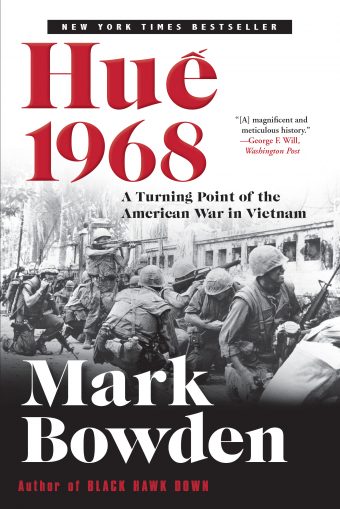
Sure, Mark Bowden is a bestselling author (Black Hawk Down, Hue 1968, among others). But for many years, he was also a regular journalistic scribe trying to spin gold out of hay. So he knows something about the daily grind and making it work for you, your editor, and your audience.

To wit, here are some tips he gave to Publishers Weekly:

  1. Know something — “Try coming up with 800 words when you have nothing to say; then try when you have just had a new experience. When you’ve learned something—anything—you’ll struggle to stay under the word count.”
  2. Understand what you are trying to do — “A clear answer to that question will help you avoid confusion and cliché.”
  3. Rewrite, rewrite, and rewrite some more — “I still listen closely to my editors and usually take their advice. They are your first readers, and they get to talk back. They can tell you if your prose is confusing, boring, boorish, or simply wrong. A writer who doesn’t listen is a fool.”
  4. Be yourself — “Young writers in particular try to sound more learned or sophisticated or official. It’s the fastest way to make a fool of yourself on the printed page.”
  5. Scenes are gold — “Think about your experience as a reader. Pages turn swiftly when we’re reading action or dialogue, while exposition and description can slow things to a crawl.”

Writer’s Desk: Let Your Characters Talk

Occasionally some notable literary discussions take place in less-notable places. Take, for one example, the MidAmeriCon, 34th World Science Fiction Convention, which took place over a few days in 1976 at the (historic) Muehlebach Hotel in downtown Kansas City. There, the great science-fiction author Alfred Bester (The Demolished Man, The Stars My Destination) was doing the sci-fi-con circuit that kept the genre afloat and buzzing in those pre-Internet days.

Bester took some time to talk to an eager fan for the noted genre magazine The Tangent about writing:

You know, Robert [Heinlein] said to me once—we were talking shop, writing techniques and stuff like that—and Robert said I’ll tell you what I do, Al. What I do is get a bunch of characters together and I get them into difficulties, and by the time I can hear them talk they’ve solved their difficulties and I’m finished.

I was absolutely flabbergasted! I can’t even start a story until I can hear my characters talking. I’ve got to know who they are, what they are…I’ve got to identify with them completely…

“I’ll tell you what to do Al…”

It’s likely that more writers are like Heinlein than Bester. For some of us, characters are stubborn things. If you waited around for them to talk, you might never get anything written.

Writer’s Desk: It’s Work, Not Inspiration

Marlon James, 2014 (Larry D. Moore)

According to Black Leopard, Red Wolf author and Macalester College professor Marlon James, the only way he can get anything put down on paper is seeing it as work:

When I sit down with my laptop, I go to work. To me, writing is work: that’s part of my process, that it’s a job. I’m a big believer in that if you establish a routine, the muses show up. I love when people say they write when they’re inspired. I’m like, “Oh my God, I haven’t been inspired to write since the Carter administration. How does that work?” I’ve got to pay bills. I can’t wait on inspiration to write a novel. I’d never write anything…

James is far from strictly pragmatic, though. Although writing might be work, it’s also practice, and it’s through practice that the magic happens:

It’s a vocation. It’s practice. Dancers, musicians, and actors know what I’m talking about—I don’t have to convince them. But writers will say things like, “I couldn’t write today because I didn’t feel inspired.” And I’m like, “That’s lovely.” It’s about doing the work—and knowing that inspiration or creativity will show up once they realize you’re serious…

Writer’s Desk: Make Mistakes, Don’t Be Afraid

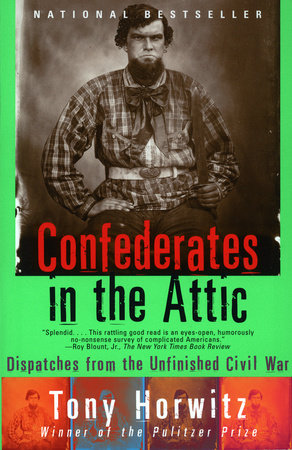
Confederates in the Attic by Tony Horwitz

The author Tony Horwitz (Confederates in the Attic, the forthcoming Spying on the South) has ranged all over the world before settling back in America (sort of) to write books. Because most writers are rightly in awe of foreign correspondents (yes, it is a romantic occupation), it’s generally worth listening to what they have to say about the craft.

Here’s some notes from his interview in Writer’s Digest:

I think you’re much more likely to find the interesting stories if you take risks and do stories other people aren’t doing. In that way, you have to trust your own instincts, not follow the advice that everyone else is giving you, your parents, your editor, who encourage you to stay on the straight and narrow. And that’s a lot more fun…

You quickly discover as a writer that the worst experiences make for the best copy. I wouldn’t know how to write about a beautiful place. I couldn’t write a story on Hawaii. I sort of try to write about bleak places and frightening events. I find that’s more compelling to write about than, say, a nice vacation in France…

I tend to notice the absurd contradictions in my reporting. Like when I’m in a biker bar and some guy’s threatening to beat me up and I notice they’re watching male figure skaters on TV. Life is tragic and funny at the same time and I think that to tell a story in just one note or the other is too monotone. I don’t like one-note books…

Writer’s Desk: We Do Language

Toni Morrison in 2008 (Angela Radulescu)

For this week’s installment, we’re providing not so much advice as a reminder of what we do when we write.

In 1993, Toni Morrison was awarded the Nobel Prize for Literature. In her acceptance speech, she said this:

Word-work is sublime … because it is generative; it makes meaning that secures our difference, our human difference – the way in which we are like no other life. We die. That may be the meaning of life. But we do language. That may be the measure of our lives…

We work in words. Sometimes, those words live on after us.

Do good work. Make Toni proud.

Writer’s Desk: It Beats Working

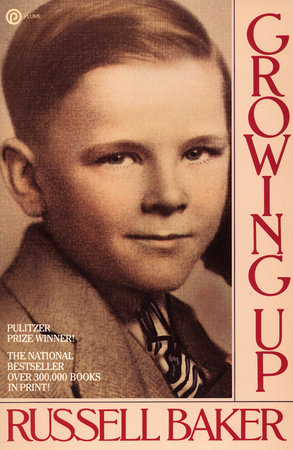
We lost the great Russell Baker this week.

An easygoing witticism factory who mined a seam of everyday observational humor without playing to the lowest common denominator, Baker once provided what might be the greatest reason of all to become a writer.
At this time I had decided the only thing I was fit for was to be a writer, and this notion rested solely on my suspicion that I would never be fit for real work, and that writing didn’t require any…
Yes, it takes work to win a couple Pulitzers like Baker did. But not work.

Writer’s Desk: Drinking vs. Yoga

Dorothy Parker didn’t do yoga.

As a general rule, writers enjoy drinking. According to Katie Herzog in The Stranger, besides the role models of Dorothy Parker, et al, there’s one very good reason for this:

…writing is easy. Have you ever tried mining coal with a hangover? Or changing a bedpan? How about convincing 30 kindergarteners that it’s time to take a nap? Writing is one of the only professions in which it’s possible to do work when your stomach is a mess and your head is an anvil. It might not feel good, but with enough Advil, you can probably type through it.

Something to consider? Maybe yoga:

Sure, it might be hard to imagine F. Scott Fitzgerald in child’s pose, but he also died before he was 50.