Writer’s Desk: Writing Solves Problems

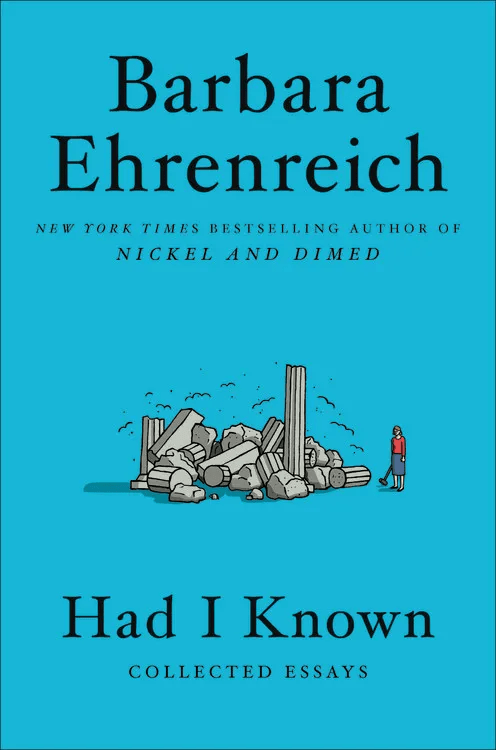
When she was a teenager, Barbara Ehrenreich (Nickel and Dimed) started journaling, as many of us do. After penning the usual things (what was happening in her life, thoughts about books she was reading), she realized there was a purpose for the journal.

It was a tool. As she wrote in Granta:

I had discovered that writing – with whatever instrument – was a powerful aid to thinking, and thinking was what I now resolved to do. You can think without writing, of course, as most people do and have done throughout history, but if you can condense today’s thought into a few symbols preserved on a surface of some kind – paper or silicon – you don’t have to rethink it tomorrow … The reason I eventually became a writer is that writing makes thinking easier…

Sometimes you have to write your way through something to understand it. You may even have to start writing without knowing your destination. Writing orders your thoughts, whatever they are.

Writer’s Desk: Keep Things Vague

In 1972, Jorge Luis Borges was a sage of literature. Seventy years old, blind, and feted around the world for his delicately phantasmagoric fiction, he was visited by Fernando Sorrentino, a dedicated fan. They talked for a week.

Here’s a piece of advice Borges gave Sorrentino, noted by Faena Aleph:

I believe that a writer should never attempt a contemporary theme or a very precise topography. Otherwise people are immediately going to find mistakes. Or if they don’t find them, they’re going to look for them, and if they look for them, they’ll find them. That’s why I prefer to have my stories take place in somewhat indeterminate places and many years ago…

Anybody who has written or tried to write fiction with specific contemporary settings which depart in any way from their lived experience knows what he is talking about. Doing such work requires a lot of work that goes beyond writing. Research, interviews, all of it.

That doesn’t mean it isn’t worthwhile. If everybody wrote like Borges, we would have no Dreiser, Wolfe, Bellow, and so on. But there is something to be gained from just writing a story of sensation, thoughts, and actions with no or little regard for where it takes place.

If nothing else, it’s liberating.

The Writer’s Year 2025 calendar is on sale now.

Writer’s Desk: Don’t Be Afraid of the Fear

Rita Dove: An American Poet (Eduardo Montes-Bradley)

At some point it gets easier. Eventually you have written enough that the panic and indecision just disappears. At that point, the words flow like fine wine. Isn’t that how it works?

Not necessarily. Consider Rita Dove. A Pulitzer-winning poet and recipient of the National Humanities Medal, she was also the U.S. Poet Laureate from 1993 to 1995. As the poetry business goes, Dove is pretty close to its peak.

In this 2016 interview, she talks about the confidence that comes from her long career:

The process has become a lot easier because even in the depths of despair—which happens more often than people might imagine—I have the example of all the other poems I’ve written and I know I’ve been through this before, so things will probably turn out fine…

But alongside that self-assurance (I can do this. I’ve done it before) is that nagging problem every writer faces now and forever (But can I?):

I’m still terrified every time I approach a fresh page…

If you are lucky enough to be successful as a writer, don’t assume that everything will suddenly become clear. It probably won’t. But that uncertainty, the not knowing, that’s where creation lives.

The Writer’s Year 2025 calendar is on sale now.

Shameless Self-Promotion: ‘The Writer’s Year 2025’ on Sale Now

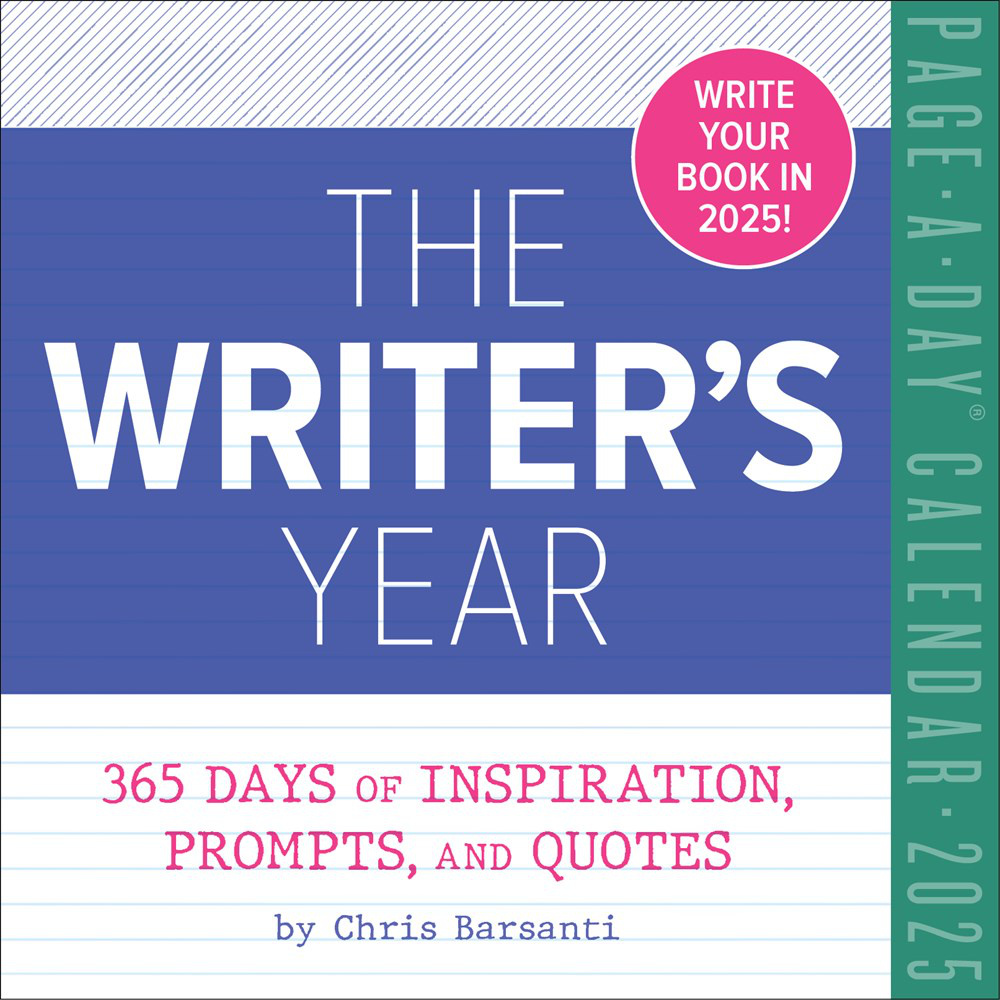
As mentioned a few weeks back, I decided it was time to put all these writing tips and quotes into printed form. Fortunately, the good folks at Workman Publishing agreed. That is why as of this week, you can now get your very own copy of The Writer’s Year: 365 Days of Inspiration, Prompts, and Quotes for 2025.

I’ll repeat what you can find inside, cool stuff like:

  • Illuminating quotes from the greats (James Baldwin, Susan Sontag, Ray Bradbury)
  • Prompts to start your story
  • Recommended reading lists
  • Handy tips on everything from cliches (easy but bad) to rewriting (annoying but good)

It’s at Amazon, Barnes & Noble, Bookshop, and a lot of other fine stores, like those kiosks that sell calendars at the mall during the holidays.

Writer’s Desk: How Do Ordinary Humans Sound?

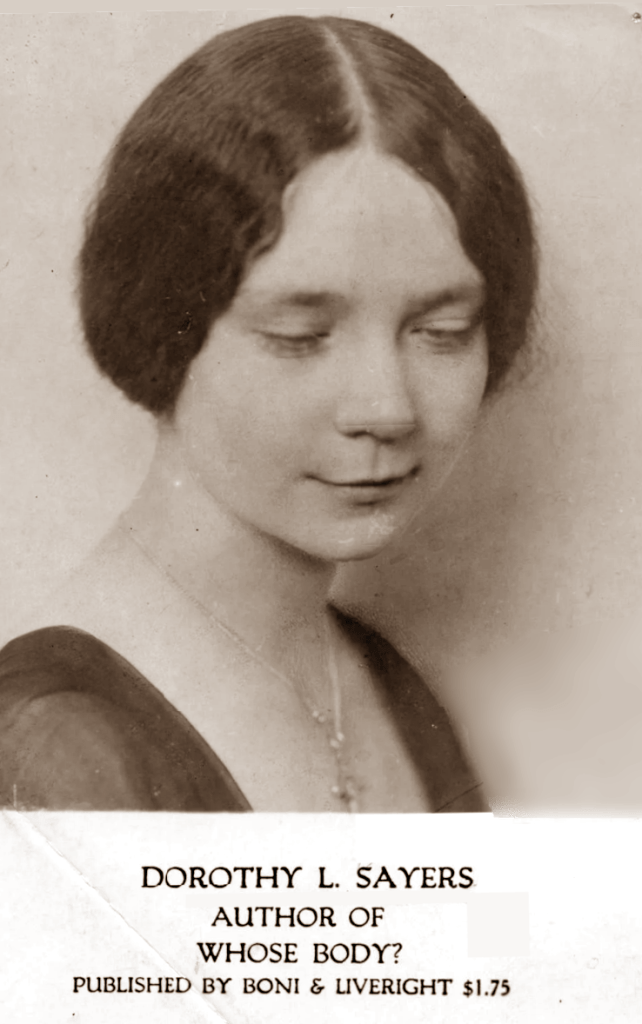
Dorothy L. Sayers, one of the great crime writers, was once asked by a man how she wrote such realistic dialogue between male characters. Did she have a big family or a lot of male friends?

Her answer was to the point:

I replied that I had coped with this difficult problem by making my men talk, as far as possible, like ordinary human beings. This aspect of the matter seemed to surprise the other speaker; he said no more, but took it away to chew it over. One of these days it may quite likely occur to him that women, as well as men, when left to themselves, talk very much like human beings also…

Sayers is being sarcastic, yet also true. Imagine what ordinary people sound like when you hear them speak. Then use that to inspire the sound and style of your dialogue.

Writer’s Desk: Imagine Your Reader

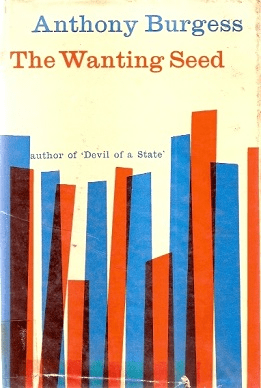
When asked by The Paris Review to describe the ideal reader of his works, Anthony Burgess came up with a highly specific characterization:

The ideal reader of my novels is a lapsed Catholic and failed musician, short-sighted, color-blind, auditorily biased, who has read the books that I have read. He should also be about my age…

After taking a moderately more serious approach to the question, Burgess admitted that yes indeed he does like to have a wide audience, but acknowledging that there are limitations:

I like to devise a plot that can have a moderately wide appeal. But take Eliot’s The Waste Land, very erudite, which, probably through its more popular elements and its basic rhetorical appeal, appealed to those who did not at first understand it but made themselves understand it. The poem, a terminus of Eliot’s polymathic travels, became a starting point for other people’s erudition. I think every author wants to make his audience. But it’s in his own image, and his primary audience is a mirror…

Reader’s Corner: Charles Burns and ‘Final Cut’

I interviewed cartoonist Charles Burns (Black Hole) about his new graphic novel Final Cut and the creative block that led up to it for Publishers Weekly:

Whenever he tried to start a new project, it fizzled out. “I went for months and years,” Burns, 68, says via phone from Philadelphia. “This is shit,” he remembers saying to himself. “I should know how to do this.” Facing what he calls the worst creative frustration of his career, he found himself thinking, “Maybe this is it. Maybe I don’t have anything at all.”

So, to prove he still had something in the tank, Burns set himself a small goal: finishing a seven-page story. If he couldn’t do that, he told himself, he’d have to start doing something else…

Final Cut comes out in September.

Writer’s Desk: Read Somebody Better

Kathryn Schulz writes in the New Yorker about “all the other options” of coping when stuck on a piece of writing:

…ignoring the problem, staring blankly at the problem, moving the problem around to see if it’s less annoying in some other location, eating all the chocolate in the house…

Then she delivers this crucial piece of advice:

I eventually do what I should have done in the first place and go read some writer who is much better at this business than I am…

Her choice for that honor is Norman Maclean. You might think that turning to a master like Maclean, who somehow packs a short story’s worth of mood and material into one sentence without it feeling overwrought, would be intimidating.

But seeing another writer, whether Maclean or not, solve the problem of making a great sentence is also inspiring.

They did it. You can, too.

Writer’s Desk: Grammar, Schrammar

As a general rule, the last person you should be consulting while writing is a grammarian. Usage guides? Certainly. But grammar? If you haven’t learned it by the time you’re starting your novel, chances are it’s too late. One goes to war with the army one has.

But in case you are still anxious about your usage, a good tonic for the nerves is Geoffrey K. Pullum’s The Truth About English Grammar. Per Steven Poole’s light-handedly scathing take in The Guardian, Pullum is not the kind of linguist who delivers finger-wagging lectures on tense or how the Internet is ruining the King’s English. Instead, his book appears to be a broadside directed at the grammatical snoots who Pullum thinks have no idea how English is used in the real world:

Readers are meanwhile reassured that there’s nothing necessarily wrong with the passive, or the split infinitive, or the dangling participle, or adverbs. Pullum is an engaging and friendly writer, always on the side of the ordinary Joe against the nitpickers. A particular delight is how he shows that many “rules” beloved of self-appointed grammar constables were simply made up quite recently by irritable ink-stained wretches…

Now, off you go. If splitting a few infinitives means you have the time to figure out what your protagonist is going to do next, then split away.

Writer’s Desk: Get Out of the Way

Prolific British playwright and screenwriter David Hare (Skylight, The Hours, Straight Line Crazy) sits right at the intersection of acclaimed and popular. (Which, let’s be honest, is where most of us wouldn’t mind being in our careers.) He is both thoughtful and economical, meaning there is a lot he has to teach.

Hare’s ten rules for writers include a number of gems, from “Never take advice from anyone with no investment in the outcome” to “The two most depressing words in the English language are ‘literary fiction’”.

But the line of advice that really jumps out and explains so much of his propulsive style is this:

Style is the art of getting yourself out of the way, not putting yourself in it.

Once your style is noticed, it can be an impediment. Focus on your story and your characters. Everything else is a distant third.

Writer’s Desk: Get It Wrong to Be Right

Last year, playwright and novelist Ayad Akhtar—Disgraced, the brilliant Homeland Elegies, the upcoming Robert Downey Jr. AI play McNeal—gave the Whiting Awards keynote address on the theme of what is expected from artists.

He talked specifically about one of his mentors, theater director Andre Gregory, and the challenges that success presented. Yes, boo-hoo, every struggling creative out there says. To have such a problem. But Gregory realized, per Akhtar, that once an artist knows what people want from them, that can be a trap:

‘It’s hard,’ Andre said, ‘when you realize that they like you. It’s hard because you don’t want to lose that…’

Every writer faces this, even if they have not yet hit any of their milestones of success. Because it is difficult not to think of approval as the gateway to success. Seeking approval (of agents, editors, critics, audiences) can lead to caution. It’s inevitable, says Akhtar:

In some cases you will not intend to be in opposition; you will have simply followed your own sense of things, more or less blindly, hoping that, by doing what you want to do, need to do, it will result in something they will want and need, too. Sometimes you’ll be right. Sometimes you won’t…

The hard thing is to maintain that spark of confidence, which Akhtar calls “the insistent inclination of your affinity,” that lights your way forward, whether you end up being right or wrong. No matter what.

Writer’s Desk: Create Characters Who Are Nothing Like You

Ayelet Waldman is not the first to note that it doesn’t make sense to only write what you know. But she does put it particularly well here:

When writers only write what they know, we end up with lots of short stories and novels about young people falling in love for the first time, often in Iowa (the site of the nation’s preeminent writing program). All well and good, but at some point even the most beautifully crafted sentences begin to grow tiresome if they describe people we’ve read about a hundred times before…

Not that there is anything wrong with a book about young people falling in love at the Iowa Writer’s Workshop.

Writer’s Desk: Have the Courage to Be Terrible

People like Anne Lamott are asked for advice on how to write all the time. It’s what happens when you inspire people.

That’s why it was so refreshing when she asked about what was the worst writing advice she had ever heard:

To know what you’re doing in the very beginning of having started something new. No one knows what they’re doing…

She is identifying the difference between confidence and certainty. The former gives you what you need to plow through and find something great. The latter leaves no room for the magic that happens when you are blundering around in the dark.

Lamott’s preferred method is something that takes a little more courage than many new writers appreciate:

You find out what you’re doing by doing it, by writing a really, really terrible first draft…

Start out that way, and afterwards it’s all smooth seas.

Writer’s Desk: Act Like You’re Working

Self-image is important for most people. Writers, being denizens of the mind, sometimes like to think we are above that. But what’s true of everybody else, is just the same with us.

Part of gaining the confidence necessary for writing is feeling like you are a writer. That can involve giving yourself pep talks, making business cards, or simply telling people you are a writer.

This helps because then you can imagine all those hours at your keyboard are not wasted. No, they are work. Because your occupation is writer.

Graham Moore (The Sherlockian, The Imitation Game) tried to trick himself this way when starting out:

When I first starting writing, and no one was paying me, in order to feel like I had a real job, I would get out of bed, put on a jacket and tie every morning and sit down at my desk … Before [writing] was actually my profession, I think I knew I had to treat it like a profession if I wanted to accomplish anything…

Act like writing is your job and one day it might be.