Writer’s Desk: Get It Wrong to Be Right

Last year, playwright and novelist Ayad Akhtar—Disgraced, the brilliant Homeland Elegies, the upcoming Robert Downey Jr. AI play McNeal—gave the Whiting Awards keynote address on the theme of what is expected from artists.

He talked specifically about one of his mentors, theater director Andre Gregory, and the challenges that success presented. Yes, boo-hoo, every struggling creative out there says. To have such a problem. But Gregory realized, per Akhtar, that once an artist knows what people want from them, that can be a trap:

‘It’s hard,’ Andre said, ‘when you realize that they like you. It’s hard because you don’t want to lose that…’

Every writer faces this, even if they have not yet hit any of their milestones of success. Because it is difficult not to think of approval as the gateway to success. Seeking approval (of agents, editors, critics, audiences) can lead to caution. It’s inevitable, says Akhtar:

In some cases you will not intend to be in opposition; you will have simply followed your own sense of things, more or less blindly, hoping that, by doing what you want to do, need to do, it will result in something they will want and need, too. Sometimes you’ll be right. Sometimes you won’t…

The hard thing is to maintain that spark of confidence, which Akhtar calls “the insistent inclination of your affinity,” that lights your way forward, whether you end up being right or wrong. No matter what.

Writer’s Desk: Create Characters Who Are Nothing Like You

Ayelet Waldman is not the first to note that it doesn’t make sense to only write what you know. But she does put it particularly well here:

When writers only write what they know, we end up with lots of short stories and novels about young people falling in love for the first time, often in Iowa (the site of the nation’s preeminent writing program). All well and good, but at some point even the most beautifully crafted sentences begin to grow tiresome if they describe people we’ve read about a hundred times before…

Not that there is anything wrong with a book about young people falling in love at the Iowa Writer’s Workshop.

Writer’s Desk: Have the Courage to Be Terrible

People like Anne Lamott are asked for advice on how to write all the time. It’s what happens when you inspire people.

That’s why it was so refreshing when she asked about what was the worst writing advice she had ever heard:

To know what you’re doing in the very beginning of having started something new. No one knows what they’re doing…

She is identifying the difference between confidence and certainty. The former gives you what you need to plow through and find something great. The latter leaves no room for the magic that happens when you are blundering around in the dark.

Lamott’s preferred method is something that takes a little more courage than many new writers appreciate:

You find out what you’re doing by doing it, by writing a really, really terrible first draft…

Start out that way, and afterwards it’s all smooth seas.

Writer’s Desk: Act Like You’re Working

Self-image is important for most people. Writers, being denizens of the mind, sometimes like to think we are above that. But what’s true of everybody else, is just the same with us.

Part of gaining the confidence necessary for writing is feeling like you are a writer. That can involve giving yourself pep talks, making business cards, or simply telling people you are a writer.

This helps because then you can imagine all those hours at your keyboard are not wasted. No, they are work. Because your occupation is writer.

Graham Moore (The Sherlockian, The Imitation Game) tried to trick himself this way when starting out:

When I first starting writing, and no one was paying me, in order to feel like I had a real job, I would get out of bed, put on a jacket and tie every morning and sit down at my desk … Before [writing] was actually my profession, I think I knew I had to treat it like a profession if I wanted to accomplish anything…

Act like writing is your job and one day it might be.

Writer’s Desk: Make Truth Out of Fantasy

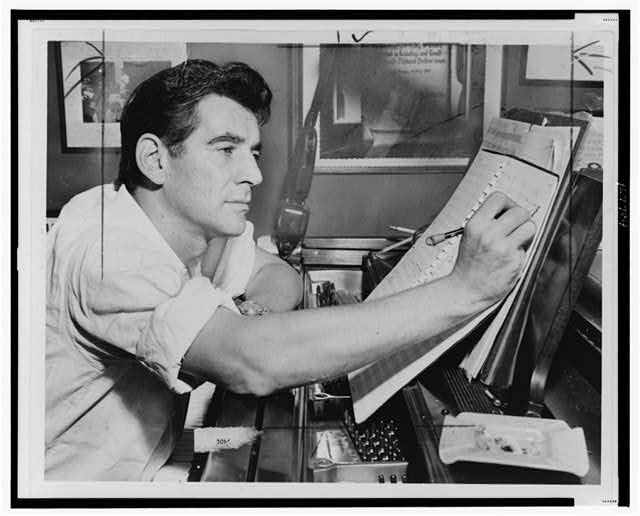
In 1980, Leonard Bernstein gave the commencement speech at Johns Hopkins. He was in the twilight of his career and life. But the composer and teacher still had lessons to deliver:

Every artist copes with reality by means of his fantasy. Fantasy, better known as imagination, is his greatest treasure, his basic equipment for life. And since his work is his life, his fantasy is constantly in play. He dreams life…

But doesn’t everyone fantasize?

Perhaps what distinguishes artists from regular folks is that for whatever reasons, their imaginative drive is less inhibited; they have retained in adulthood more of that five-year-old’s fantasy than others have. This is not to say that an artist is the childlike madman the old romantic traditions have made him out to be; he is usually capable of brushing his teeth, keeping track of his love life, or counting his change in a taxicab. When I speak of his fantasy I am not suggesting a constant state of abstraction, but rather the continuous imaginative powers that inform his creative acts as well as his reactions to the world around him. And out of that creativity and those imaginative reactions to the world around him. And out of that creativity and those imaginative reactions come not idle dreams, but truths…

Hang on to your sense of the fantastic. Use it to create art of the real.

Writer’s Desk: Keep Failing Better

When Paul Auster started publishing his New York City trilogy in the 1980s, he occupied a then-unusual space in American literature. An austere artist of deeply European instincts and a suspicion of the big gesture, he didn’t have the blustering hurly-burly of the 1970s crowd (your Mailers, Bellows, and Roths) and seemed to chart a new way forward that was cool in temperament like the New Wavers (Ellis, McInerney) but more finely chiseled.

When he passed away this week, Auster was beautifully eulogized by many, including Lucy Sante, who came up with one of the more moving renderings of

His paragraphs were a moving sidewalk — it was more comfortable to ride than to hop off — so you could read him for hours, as his plots twisted and turned…

There was a kind of fatalism to Auster’s work that called to mind the French writers whose spirit he inhabited (perhaps even more so, those adopted by France like Samuel Beckett). You can see it here, in a piece of advice for writers with ambitions:

You can never achieve what you hope to achieve. You can come close sometimes and others may appreciate your work, but you, the author, will always feel you’ve failed. You know you’ve done your best, but your best isn’t good enough. Maybe that’s why you keep writing. So you can fail a little better the next time…

Writer’s Desk: Taylor Swift’s Pens

So now that Taylor Swift is name-checking Dylan Thomas and Patti Smith, creating library-themed pop-ups, and igniting fierce debate over apostrophes, it seems time to welcome her to the literary community, yes?

In a sense, Taylor was already here, as is any songwriter who tries to write lyrics with story, character, and meaning rather than just sounds to accompany the music (looking your way, Dave Grohl).

What can Taylor teach us about writing? In her speech at the 2022 Nashville Songwriters Awards (there’s that pesky lack of an apostrophe again), she broke her lyrics down into three categories, defined by the imaginary writing instrument best suited in spirit to generating them:

  • Quill: “If the words and phrasings are antiquated.”
  • Fountain Pen: “A modern storyline or references, with a poetic twist. Taking a common phrase and flipping its meaning.”
  • Glitter Gel Pen: “Frivolous, carefree, bouncy, syncopated perfectly to the beat.”

Think of it like pseudonyms. Joyce Carol Oates likes to write mystery novels under the name Rosamond Smith, even after people found out it was her. Same with J.K. Rowling and her Robert Galbraith books. Why? One reason could be that a different writing identity helps you shape the words and imagine the story differently. Setting could be the same. You might scribble something down fast with a Bic on a napkin at a bar which will be very different from something you come up with sitting with your laptop in a quiet sun-lit room overlooking a lake.

Not everything you write will be the same. It shouldn’t be. Vary your material whenever possible.

Every now and again, reach for the glitter gel pen.

Shameless Self-Promotion: ‘The Writer’s Year’

You may have noticed those ‘Writer’s Desk‘ posts which have been appearing on this site for a few years now. Or not (lot of content out there).

In any case, a little while back I thought it made sense to try and put some of these ideas to paper. Since I’ve been doing some writing for Workman Publishing, innovators of and home to Page-A-Day calendars, I pitched them a concept for a writing inspiration calendar. They liked it and now here we are, with The Writer’s Year: 365 Days of Inspiration, Prompts, and Quotes for 2025 available for pre-order. It comes with:

  • Illuminating quotes from the greats (James Baldwin, Susan Sontag, Ray Bradbury)
  • Prompts to start your story
  • Recommended reading lists
  • Handy tips on everything from cliches (easy but bad) to rewriting (annoying but good)

The Writer’s Year publishes in August. If you place your pre-order now through May 3 and use the discount code (NEWCAL25) you can get 20% off.

Writer’s Desk: Apprentice for Life

You would think that writers like David Baldacci have it easy. Forty-something novels, a ridiculous percentage of which are bestsellers; clearly writing another one is just like rolling out of bed. Right?

Yeah, no, says Baldacci:

You have to ask yourself why you want to be a writer and you have to have passion in the belly for it. It can’t be just because you hate your day job and you want to sell the film rights, because it’s going to take a long time. It’s a craft, which means you’re going to be an apprentice for life. Nobody ever masters the art of writing…

You never stop learning to write. Which is exhilarating for some of us. If that doesn’t sound like a good way to spend your life, look elsewhere.

Writer’s Desk: Keep it Loose

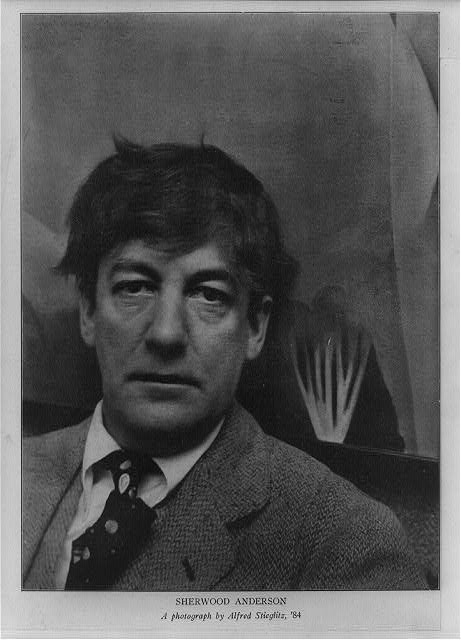
Sherwood Anderson, the roustabout journeyman who scrabbled around in manual labor and lived in a Chicago tenement before achieving fame with Winesburg, Ohio and then never managed to top himself no matter how much he wrote, had ideas about what made for subpar writing:

  • “Joyce, a gloomy Irishman, makes my bones ache. He is up the wrong tree.”
  • “[Hemingway] had got into a kind of romanticising of the so-called real . . . a kind of ecstasy over elephant dung, killing, death, etc. etc. And then he talks about writing the perfect sentence – something of that sort. Isn’t that rot?”
  • Worst of all was “cleverness” of any kind (except Thomas Wolfe)

What did Anderson approve of? Keeping it “loose.”

Nice and specific, that. Only Anderson is actually right. Once it seems like a chore, feels labored, or gives you the sensation of rolling a boulder up a never-ending slope, time to regroup. If you are feeling that way, the reader will, too.

Regroup. Circle back. Shake it off. Start over. Move fast, bring no outline, live off the land.

Keep it loose.

Writer’s Desk: Read Some Poetry

Lois Lowry does not write poetry. But she finds it useful.

Here is what she said about poetry and writer’s block:

Blocked or not (and in truth I seldom am), I begin each day by reading poetry. I’m not a poet myself. But somehow to enter that world where language is distilled and precise, and where cadence and word selection are essential…it propels me into my own work with a heightened sense of excitement and possibility…

Writer’s Desk: One Day, One Page

Back in 2017, when John Grisham had only sold a few quadrillion books, he very helpfully agreed to jot down some ideas for writing success in the New York Times.

A few of these are somewhat self-evident but nevertheless sterling pieces of advice to keep in mind:

Do: Write a page every day.
Don’t: Keep a thesaurus within reaching distance.

There’s another, however, which some people might quibble with:

Don’t: Write your first scene until you know your last.

This is fantastic when it happens. And many times you go searching for that final moment and it never comes to you. But other times, writing towards the conclusion delivers it to you. Which makes this seem overly limiting.

Still, he did write The Firm.

Writer’s Desk: Be the Reader

What poets do may not seem to have much to do with other kinds of writing. It can seem arcane and abstruse, all those rules or lack of rules and blank space and gnomic pronouncements.

Of course, that’s all nonsense. Like anything else, poetry is just the act of putting one word after another until you have something.

Which is why Robert Frost knew what he was talking about. In the preface to a 1939 Collected Poems edition, he gave the following advice:

No tears in the writer, no tears in the reader. No surprise for the writer, no surprise for the reader…

Be engaged in whatever you are writing. If you are just skipping along the surface, the reader can tell.

Writer’s Desk: Follow That Weird Idea

Against what so many people believe, there are writers who just knock out their book as they go. Outlining? Whiteboarding? Nah.

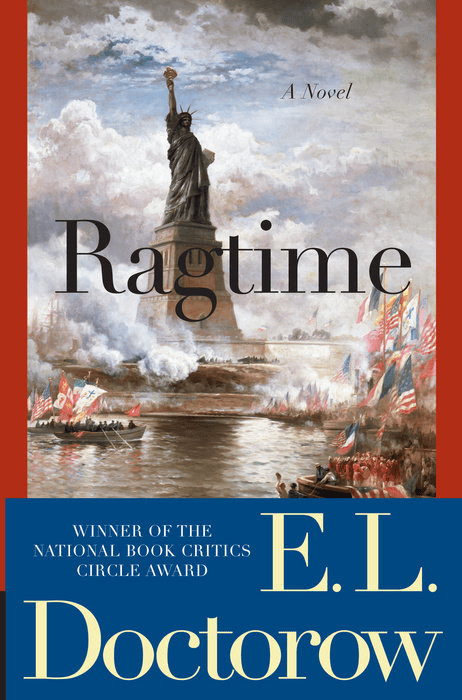
E. L. Doctorow was one of those. He told The Paris Review that Ragtime didn’t start because of deep research or a carefully plotted idea. It was really just an accident:

I was so desperate to write something, I was facing the wall of my study in my house in New Rochelle and so I started to write about the wall. That’s the kind of day we sometimes have, as writers. Then I wrote about the house that was attached to the wall. It was built in 1906, you see, so I thought about the era and what Broadview Avenue looked like then: trolley cars ran along the avenue down at the bottom of the hill; people wore white clothes in the summer to stay cool. Teddy Roosevelt was President. One thing led to another and that’s the way that book began: through desperation to those few images…

One thing leads to another, as Doctorow also enunciated with a much-clipped statement which has given heart to many a disorganized and desperate writer over the years:

Writing is like driving at night in the fog. You can only see as far as your headlights, but you can make the whole trip that way…