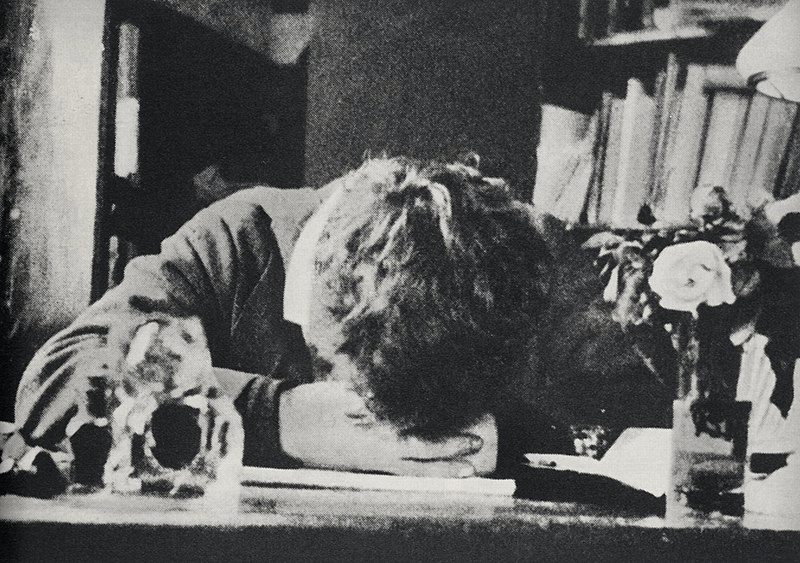
Writer’s Desk: The Morning Ritual

Some people write when they can snatch a little time during the day. Some take to it in the midnight hour when the house has gone quiet.

Others, like August Strindberg, are the morning kind. Get up, make the coffee, a brisk walk, and then to work. Per Sue Prideaux’s biography of the playwright:

And so it begins: on yellow, uncut Lessebo Bikupa paper, with Sir Joshua Mason’s 1001 nib and Antoine Fils’s violette noir ink it breaks out, accompanied by continual cigarette smoking until 12 o’clock. Then it is over. I am extinguished…

We may not all have access to “violette noir ink” but the principle remains sound. Do your work early, take the day to renew, then back to it the next morning.

(h/t: Daniel David Wallace)

Writer’s Desk: Make the Book Worth It

In Aldous Huxley’s novel Point Counter Point, a critic named Walter spends a good part of his day whacking away at the flood of literary jetsam he is assigned to cover. Huxley, through Walter, has fun mocking the mediocrity which makes up much of publishing (“bad novels and worthless verses … insignificant biographies and boring books of travel”). But there is also a sadness in the description, a sense of wasted effort:

A bad book is as much of a labor to write as a good one; it comes as sincerely from the author’s soul. But the bad author’s soul being, artistically at any rate, of inferior quality … the labour expended on the expression will be wasted…

There are a lot of Walters out there, pens drawn. Bring your best.

Writer’s Desk: Do it Because You Have To

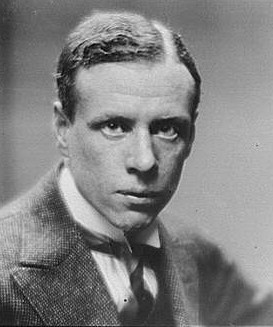
In 1940, Sinclair Lewis was in a dry spell, professionally. He was several years past his last notable work (1935’s prescient anti-fascist warning It Can’t Happen Here) and unsure about where to take his career. Visiting an old friend at the University of Wisconsin Madison, he decided to take up a teaching gig there.

In one of his more famous lectures, Lewis declared:

When you write don’t worry about whether or not it’ll sell …. Don’t want success at twenty-two. If you want fame, be a prize fighter or a movie star. If you write, write because you must write. Because you can’t help it. Write what you believe, what you know, what moves you. And always write the best you can. Be self-proud. You can fool the critics but never yourself. Remember you’re competing with the best that’s ever been written. Try to be better than the best. There’s no limit for you and there can be no writing but great writing. Possess a divine egotism. . . . And never forget that you’re competing with Shakespeare

After teaching six classes, Lewis suddenly declared he had taught everything he knew and moved back to New York.

Reader’s Corner: ‘The Great Wave’

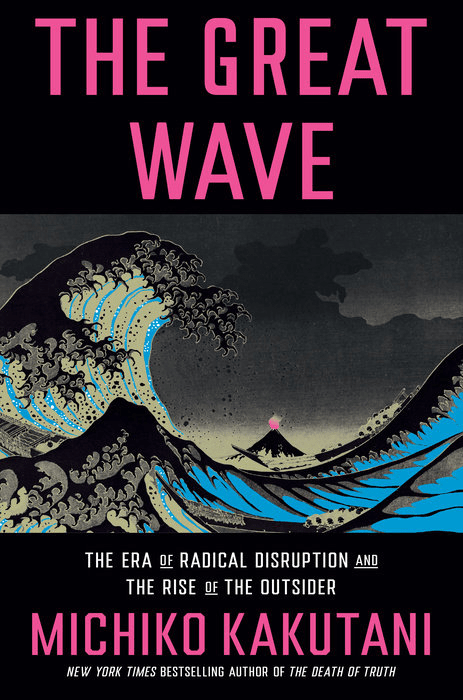
My review of The Great Wave: The Era of Radical Disruption and the Rise of the Outsider is at the Minneapolis Star-Tribune:

“It’s difficult to convey just how strange life in the third decade of the third millennium has become,” Michiko Kakutani writes in “The Great Wave,” her cultural survey of the discontented present.

The insight is truthful (the times are strange) if broad (when were they not?). She takes on a vast theme in this propulsive book. But like the storming waters in the Hokusai print on the cover of “Great Wave,” the topic of chaotic change is so powerful it comes close to overwhelming the book…

Writer’s Desk: Build Your Community

Writing is hard enough as it is. The self-doubt. The sitting. The pondering. The staring into space. The writing. The rewriting. Avoiding the reviews. Reading the reviews.

Why make writing more difficult than it needs to be by doing it alone?

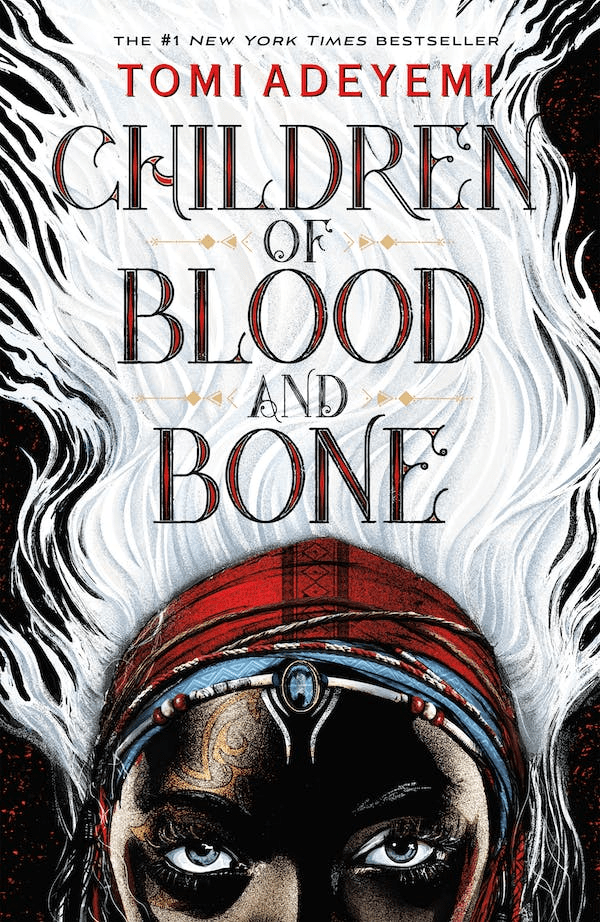
Tomi Adeyemi explains that as much as writers may think solitude is always the key, this is more of a group effort than many understand:

You need a community to succeed. In the back of every book is an acknowledgments page full of all the people it took to get that writer to the book you’re holding. With the internet, there are so many ways to connect with other writers who will be some of your best friends and best sources of support for your entire life. Push yourself out of your comfort zone and go meet them!

You heard her. Now go see if that writer’s group which meets at the local coffee shop is looking for new members.

Writer’s Desk: Ask Questions

Pulitzer Prize-winner and former Poet Laureate of the United States Tracy K. Smith isn’t the kind of versifier who aims for small targets.

As Smith told Oprah Daily, her work can generally be broken down into attempts to answer a few basic yet crucial questions:

“Who are we to one another?”
“What do we do to one another?”
“What’s the fallout from that?”

Start out interrogating any or all of those ideas and you will never run out of material.

Writer’s Desk: Edith Wharton on Critics

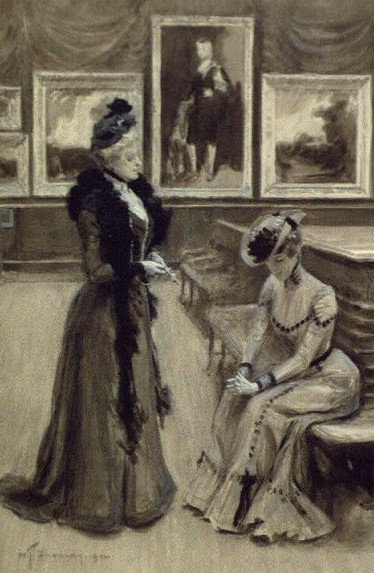
Illustration from Edith Wharton’s “The Quicksand”

Even Edith Wharton had to deal with critics. In her case, since she wrote about “Fashionable New York,” they primarily wanted to know which of her characters was which real person.

This was irritating.

But that comes with the territory when one has been lucky enough to get a book published and reviewed. People will say things; some nice, some confusing, many irritating.

Wharton counseled not worrying about it:

I long ago made up my mind that it is foolish and illogical to resent even such a puerile form of criticism. If one has sought the publicity of print, and sold one’s wares in the open market, one has sold to the purchasers of one’s books the right to think what they choose about them; and the novelist’s best safeguard is to try to put out of his mind the quality of the praise or blame likely to be meted out to him by reviewers and readers, and to write only for that dispassionate and ironic critic who dwells within the breast.

Of course, it’s a little easier to look past silly critiques when you are Edith Wharton.

Writer’s Corner: Investigate Your Characters

We have all heard the advice about listening to your characters. Maybe we should also be asking them questions.

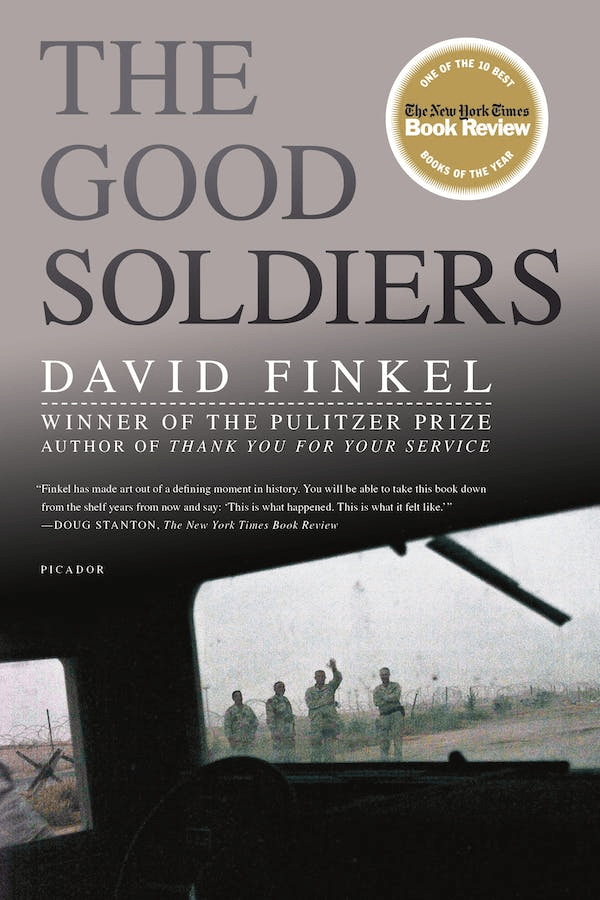
David Finkel, whose The Good Soldiers is a masterpiece of empathetic war reporting, talked about how to do this in a 2014 interview:

It’s a pretty deliberate process, and a lot of it involves working from an endpoint. But the first thing is I have to have a question I’m interested in answering … That doesn’t mean questioning all the time. All the tools we know. Learning to use silence as a reporting tool. All the things we do. Getting people to talk to each other. Trying to recede so something might occur as if it would have occurred if you weren’t there, if that’s possible. But, eventually, realizing what the story is I want to tell and then finishing the reporting to tell that story…

Start thinking about your characters like they are your subjects. Let them talk, with you and each other. Ask questions. Push them. See what happens.

Let your characters tell you both who they are and what the story is going to be.

Writer’s Desk: Dialogue Isn’t Real, It’s Poetry

The thing about dialogue is, it needs to sound real. It must replicate how real people talk. This is what we have been told. But what if that is just not true? George Saunders told Writer’s Digest about an experiment he did once. He hid a tape recorder under the family’s kitchen and listened later to a conversation between his mother and grandmother:

You couldn’t make a bit a sense of it. It was all sentence fragments and, “Did you get the thing under the …” “Yeah, no, no, I won’t.” “Yeah, you can, sure.” “Later, but he’s gonna …” “Yeah, he is.”

In a story, you transcribe that directly, it makes no sense. I think one of the keys, paradoxically, to good dialogue is for the writer to say to herself, “This is poetry, this is not real speech.” It’s poetry that’s going to make you think it sounds like real speech. It’s going to simulate the rhythms of actual speech…

Writer’s Desk: What’s the Deal with Writing?

It would be wonderful to think that all Jerry Seinfeld’s ideas come to him while he’s eating cereal just like that. Perhaps not “wonderful” but maybe “reassuring,” because then it would mean that is how writing might be sometimes for the rest of us.

No such luck:

I still have a writing session every day. It’s another thing that organizes your mind. The coffee goes here. The pad goes here. The notes go here. My writing technique is just: You can’t do anything else. You don’t have to write, but you can’t do anything else. The writing is such an ordeal. That sustains me…

Seinfeld later elaborated on this with Tim Ferris:

…my writing sessions used to be very arduous, very painful, like pushing against the wind in soft, muddy ground with a wheelbarrow full of bricks. And I did it. I had to do it because there’s just, as I mentioned in the book, you either learn to do that or you will die in the ecosystem.

Keep this in mind as you get ready for whatever 2024 is going to bring. The writing will not always be easy. You will probably want to give up. But this is what we signed up for the first time somebody asked us asked us what we wanted to be and we said, “a writer.”

You just have to keep pushing the wheelbarrow.

Writer’s Desk: Describe Like You’re an Alien

Stuck for how to describe a scene? Forget what you know. Don’t worry about what the reader might know. Come at it as an entirely unfamiliar thing.

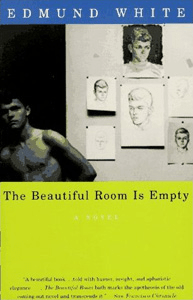
To do this, Edmund White has some advice:

One technique that the Russian Formalists use, and Nabokov and Tolstoy, is called defamiliarization. And the idea is that you describe everything as though you’re from Mars, so let’s say a girl’s first ball or going to the opera for the first time. Both of those scenes are in War and Peace. At the opera, there’s all these fat people coming on stage and screaming, and then everybody beats their hands together. It is described as though you’ve never seen it before and have no idea what it’s supposed to represent. It’s in some other language…

If it’s good enough for Nabokov and Tolstoy then it should work for you.

Writer’s Desk: Watch Some TV

Rumaan Alam (Leave the World Behind) does not have a lot of patience for the more precious kinds of writing practices out there. He told Esquire:

I think a lot of people have this idea that you can only write if you have hours at a desk, if the conditions are right, if you have the right pencil and the right notebook. That describes an ideal that’s really far from most working writers’ lives…

So how do you work through less-than-ideal conditions? Adapt! Alam even talks about just turning the TV on:

I think it’s very common to make time, especially when you’re tired, to watch TV. Think about turning that into productive work. Turn on the TV, leave it on mute, let Friends run for 23 minutes, and write, the entire time. When it’s over, put your notebook away, fold your laundry, pay the bills, play with the kids—do whatever the demands on your time are…

You heard it. Reruns can be productive. As background flicker, at least.

Writer’s Desk: Just Keep Going

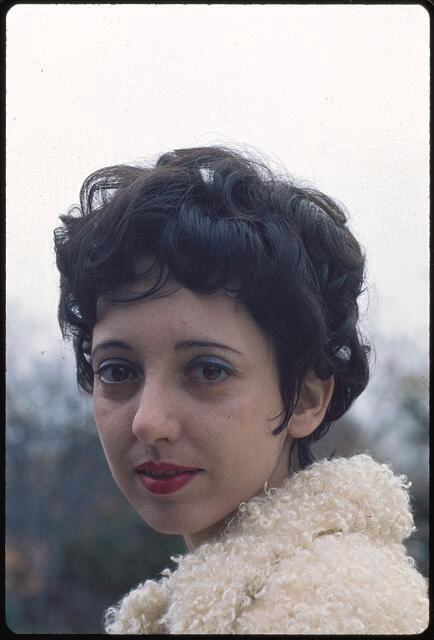
Joyce Carol Oates (c. 1972)

According to Rachel Aviv’s recent portrait of Writer’s Desk favorite Joyce Carol Oates, there really isn’t that much to the author’s fantastic output:

…she has not really written that much, when you think about the fact that all it takes to write a hundred books is about two pages a day over the course of a lifetime.

Yes, Aviv’s tongue does appear firmly cheek-planted.

Writer’s Desk: Get Some Animals

Rita Mae Brown’s career has covered quite the gamut. She has written everything from gay coming-of-age novels (Rubyfruit Jungle) to slasher flick screenplays (Slumber Party Massacre!) and many lucrative mystery novels (the ones that the ingenious cat Sneaky Pie Brown has co-authored).

How, NPR once asked the prolific Brown, did she get past writer’s block? Her answer? It doesn’t happen:

I can’t afford writer’s block! I have too many mouths to feed on my farm: hounds, horses, cattle, even people — but they aren’t as important as my animals…

So there you are: Get yourself some animals who need expensive grub and you’ll never worry about motivation again.

Writer’s Desk: Hunt for Books Which Excite You

You would think that all writers read as much as they can. Not true. Some claim not to have the time. Others don’t want to be unduly influenced by somebody else’s work.

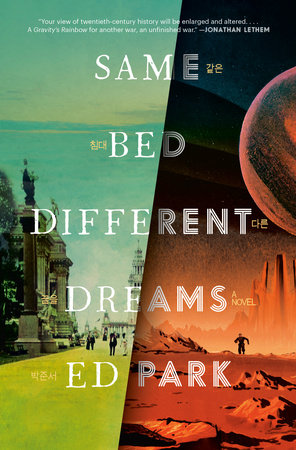
Nonsense, says Ed Park, whose raucous new novel Same Bed Different Dreams is just all kinds of amazing. According to Park:

I’ll still be strolling with my family and if there’s a bookstall I’ll be like, “Hold on.” You never know: there could be something there that will be a lot of fun to read and also change the way you think about what’s possible. My students know that my syllabi always mix in lesser-known things that I feel passionately about. If you let these books into your life, they can help you write in a way that you didn’t know you could…

If a book speaks to you, and has something to offer for your work, why not take advantage of that gift?