Writer’s Desk: Keep Challenging Yourself

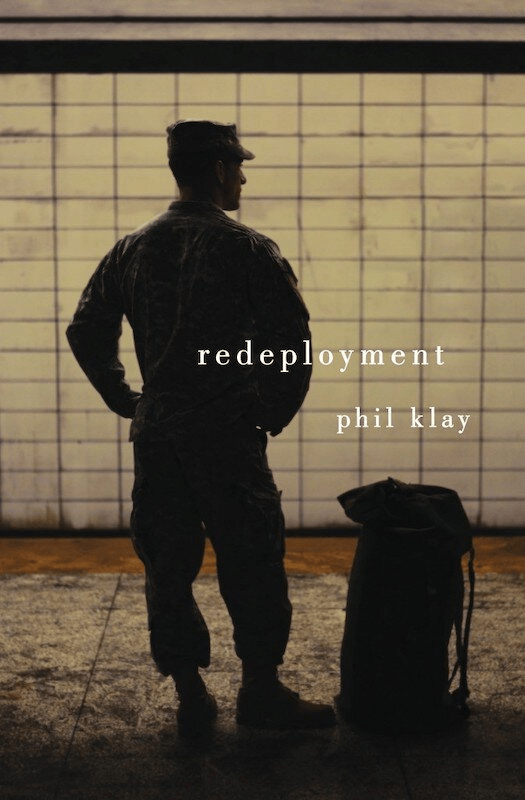
Before becoming the kind of writer who can get published anywhere from Tin House and Granta to the Wall Street Journal, Phil Klay spent several years in the Marine Corps and was deployed to Iraq. He drew on that experience to create his National Book Award-winning classic, Redeployment.

A hell of a writer who can deliver both piercing insight and gut-wrenching emotion on the same page, Klay would seem to produce his work from a place of superior confidence. But as he related in this interview, not so much:

Putting the story on the page is a product of doubt, not a product of certainty. I write because I’m troubled or confused or fascinated by something in human experience I don’t understand, and writing allows me a way to expose my own ignorance further. For me, a story begins with questions far more often than with answers. And even if I do have some very fixed notions at the outset of the story, writing usually complicates those notions or destroys them altogether…

See your uncertainty as a clue of where to start and a sign of something worth exploring, rather than a topic to be avoided. It’s like one of General Mark Milley’s favorite sayings, “Move to the sound of the guns.”
Writer’s Desk: Bad Writing Can Make Great Stories

Writers are told to focus on a lot of things: Plot, character, structure, style. But primarily they are taught as craftspeople to perfect their writing on a small scale. Word by word. Sentence by sentence. Enough good sentences and you have a great story.

Right?

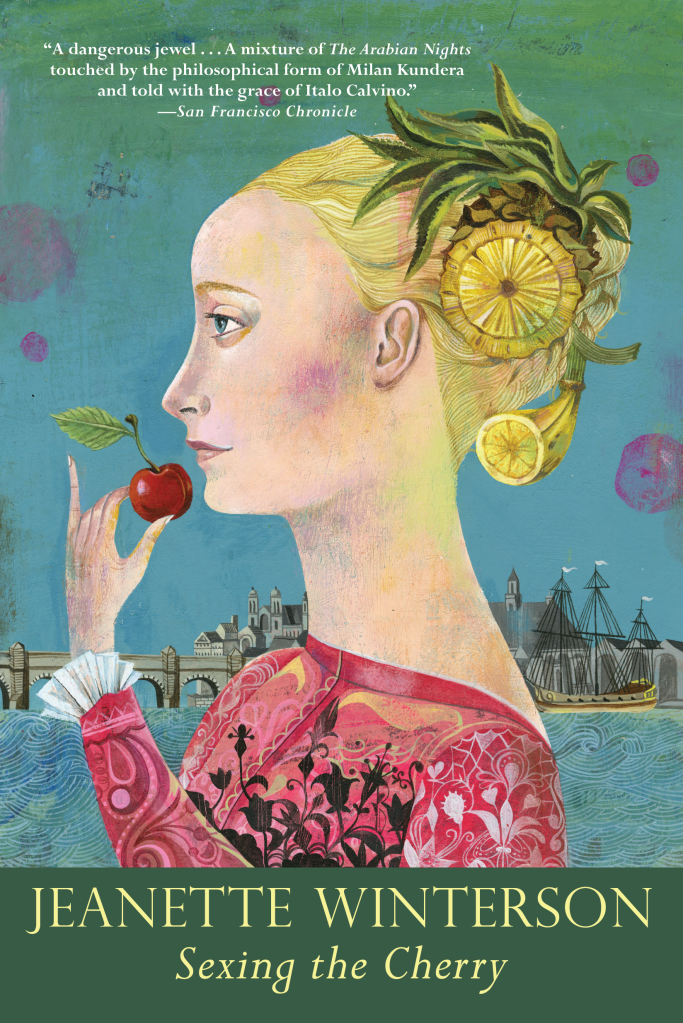
Jeanette Winterson disagrees:

When I do my courses with my students, I teach things that I don’t particularly like or enjoy. I tell the kids “Read as widely as you can. Get as much inside you as you possibly can. Don’t judge it too quickly. Learn why it interests you and why you get mad at something, why you get bored.”

For example, Philip K. Dick is a terrible writer, sentence by sentence. Something like that can be useful for students to see. We look at the sentence and we say, “Don’t do that.” But then we look at the whole story and think, Yeah, but it works…

Does that mean you have license to not care about your work? Of course not. Just be aware that if your writing is poorly crafted, unless you have a concept like A Scanner Darkly up your sleeve, nobody is going to bother with what you’ve made.

Writer’s Desk: Keep Dialogue Short, Meaningful, and Useful

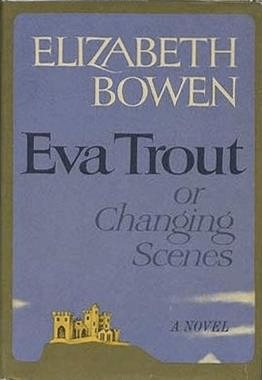
The great Irish novelist Elizabeth Bowen wrote one of the great writing essays, “Notes on Writing a Novel.” It’s particularly useful in terms of how to craft dialogue.

A few snippets:

  • Dialogue Must (1) Further Plot. (2) Express Character.
  • Dialogue must appear realistic without being so … In ‘real life’ everything is diluted; in the novel everything is condensed.
  • Short of a small range of physical acts—a fight, murder, love-making—dialogue is the most vigorous and visible interaction of which characters in a novel are capable. Speech is what the characters do to each other.
  • Characters should, on the whole, be under rather than over articulate. What they intend to say should be more evident, more striking (because of its greater inner importance to the plot) than what they arrive at saying.

Writer’s Desk: You Don’t Have to Choose Between Serious and Silly

Besides being among the more common decorations of dorm rooms for a certain brand of college student, the novels of Tom Robbins occupy an odd space in the American fiction landscape. They are big and broad comedic canvases, sweeping up oddball characters in goofball plots stippled with sharp bursts of screwball dialogue. Think of him of as a more clownish Vonnegut with less of a thing for science fiction or moral investigation.

All of which means Robbins does not take himself too seriously, no matter how well he writes. This remains true even when some critics tried to push him one way or the other:

One reviewer said I need to make up my mind if want to be funny or serious. My response is that I will make up my mind when God does, because life is a commingling of the sacred and the profane, good and evil. To try and separate them is fallacy…

Why choose? Sometimes you can have both. Just like life.

Writer’s Desk: Leave Something Worthwhile Behind

The late Clive James was a cultural student of multivarious appetites and great enthusiasms. All the great critics are (avoid the ones with too narrow an idea of what is good or worthwhile; they don’t enjoy what they do). He could also turn a mean phrase. For instance:

My idea of a fine wine was one that merely stained your teeth without stripping the enamel…

Or there is always:

All I can do is turn a phrase until it catches the light. There was a time when I got hot under the collar if the critics said I had nothing new to say. Now I realise that they had a point. My field is the self-evident. Everything I say is obvious, although I like to think that some of the obvious things I have said were not so obvious until I said them…

But in some of his best work, James talked about what really matters in all the culture we consume.

This might be best expressed in his epic poem (yes, he did verse, too) “The River in the Sky“:

Books are the anchors /
Left by the ships that rot away…

That’s the task in front of all of us. How to write something that reminds us of what was.

Or what could be.

Writer’s Desk: Get to the Next Page

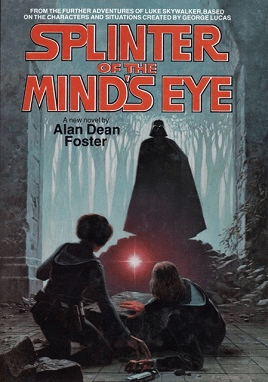
Alan Dean Foster, one of the most prolific wordsmiths of all time, does not waste a lot of time. He cannot, having written dozens of books, including many novelizations (Star Wars, Star Trek, etc.).

That is why Foster’s advice for new writers is eminently functional:

Read everything you can in your favored genre, including older work. Keep writing. Try to do a little bit every day, even if the result looks like crap. Getting from page four to page five is more important than spending three weeks getting page four perfect…

Writer’s Desk: Follow Your Inspiration

According to Illumination and Night Glare: the Unfinished Autobiography of Carson McCullers, the author frequently faced bouts of terror that she would never write again. These were the “night glares.” McCullers relied on small bits of inspiration to juice her writing. As writers know, these usually come out of nowhere and can seem like nothing.

When in the middle of writing her novel The Member of the Wedding, McCullers remembered a couple she had once seen when hanging at a bar in Brooklyn with her February House mates:

…a woman who was tall and strong as a giantess, and at her heels she had a little hunchback.

The image was so strong she had to put The Member of the Wedding aside and get started on something else. That something else was The Ballad of the Sad Cafe, and it would be one of her greatest successes.

Being inspired is one thing. Following it is another.

Writer’s Desk: Push Back the Darkness

Here is what Kate DiCamillo (Because of Winn-Dixie, The Tale of Despereaux) told the New Yorker about writing books which, emotionally if not factually, draw on dark episodes and feelings from her own life, particularly childhood:

I can never make my peace with suffering, but holding on to things doesn’t make my stories any better, it doesn’t make the people around me any happier. I feel like we all have to push against the darkness however we can. For me, it’s doing my work, writing stories that let children feel seen and to know they’re not alone in whatever they’re going through…

Writing your way through the darkness can be frightening. But it can also bring light to those who need it most.

Writer’s Desk: Be Happy with Just Creating

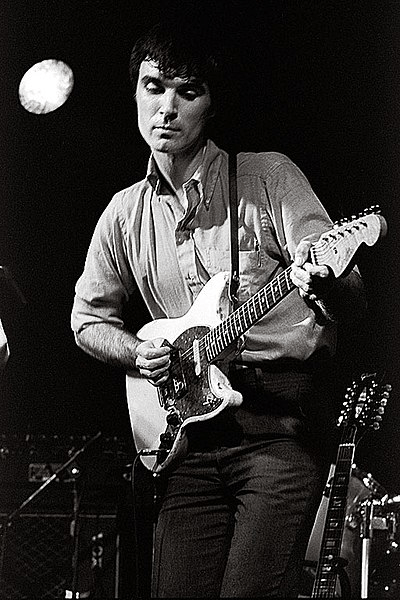
David Byrne, Minneapolis 1977 (Michael Markos)

Like a lot of celebrities, David Byrne has given a commencement address. Unlike a lot of celebrities, he had a lot to say beyond empty “you can do it!” exhortations.

Per Rachel Arons, Byrne’s 2013 address to the graduating class of the Columbia University School of the Arts was in many ways, a downer. He referenced something that actor and theatre director Paul Lazar once told him:

‘You know, there’s no guarantee of making a good living, moneywise, in [the art] world, so if that’s what you want—you know, monetary success, if that’s where the value lies—maybe you made a wrong choice quite a few years ago…

All true. Most people in the creative field—whether music, writing, art, or making gigantic papier-mâché puppets—will not and should never expect to make a good or even sustainable living through that alone.

But while delivering this cold-water splash of reality, Byrne did not aim to turn people off from the arts, merely to let them know how to adjust their expectations:

I believe that there is a way to have a very, very satisfying, enriching and creative life in the arts, but it depends on what criteria you use to look at that. But I would say that if you’re being creative, with happiness, satisfaction, all that—you’re succeeding…

Yes, an audience is preferred, as well as high amounts of remuneration. But sometimes, good work alone is all the necessary reward.

It’s more than most people can expect in this life.

Screening Room: ‘Radical Wolfe’

My review of the new documentary Radical Wolfe ran at The Playlist:

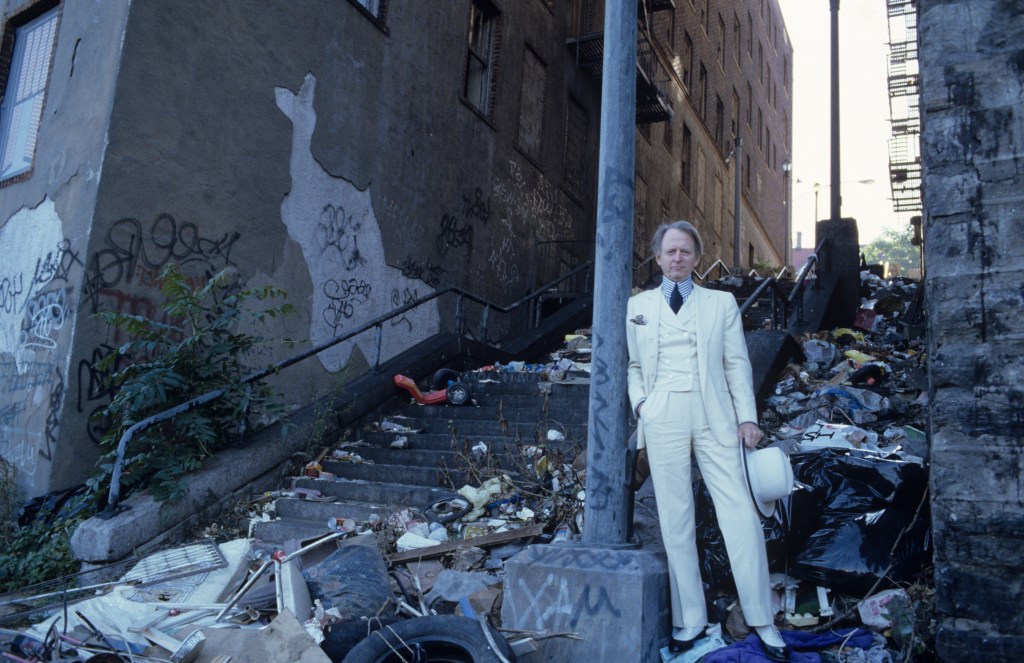
You wouldn’t want a documentary about Tom Wolfe to mimic his style. That could be challenging (just imagine all the on-screen exclamation marks!!!!!!!, idioSYNcratic CAPITALIZATION, and onomatopoeic spelling) not to mention possibly embarrassing. But it would have been gratifying to see Richard Dewey’s ‘Radical Wolfe’ show a dash of its subject’s moxie, damn-the-torpedoes bravery, and cynicism-stung wit…

Here’s the trailer:

Writer’s Desk: Don’t Be an Artist

How seriously can writers take themselves? The answer, clearly, is extremely seriously. Maybe the real question is: How seriously should writers take themselves? The unsatisfying answer? It depends.

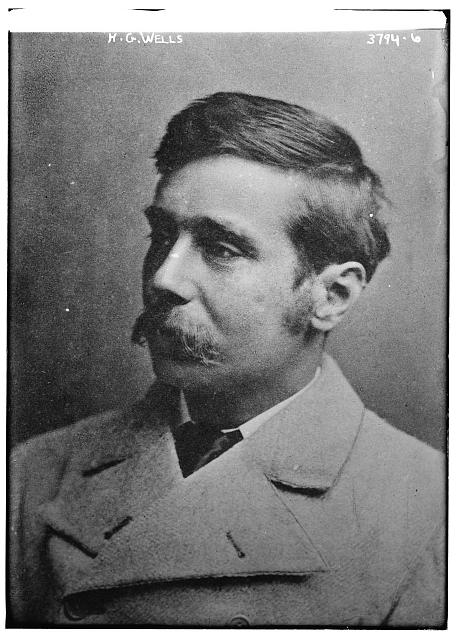
H.G. Wells had a definitive view on the subject. A spouting font of words, he produced everything from his still-beloved science fiction work to biographies, comedies, essays, you name it. Unsurprisingly, he did not want (or have time) to be too fussy about things.

In his Experiment in Autobiography, Wells declares himself proudly not an artist but a “journalist”:

If sometimes I am an artist it is a freak of the gods. I am journalist all the time and what I write goes now—and will presently die…

This may be a bit much for some people, who are not used to the ephemeral nature of journalism (copy today, fish wrap tomorrow). A more easily digestible declaration comes right after:

I write as I walk because I want to get somewhere and I write as straight as I can, just as I walk as straight as I can, because that is the best way to get there…

Henry James might disagree. But getting from Point A to Point B with a minimum of fuss is never bad advice.

Writer’s Desk: Get into Character

When trying to get into the spirit of the characters from his new novel Crook Manifesto (incredible, by the way), recurring Writer’s Desk source Colson Whitehead decided he needed to learn as much as he could about the setting of Harlem in the early 1970s.

Since his main character, Ray Carney (also the star of the preceding novel, Harlem Shuffle), was a furniture salesman who also fenced stolen goods out the back door, Whitehead told the New Yorker‘s David Remnick he learned what he could about both professions, first:

From primary sources, memoirs of gangsters, Bumpy Johnson he was a Harlem gangster in the ’50s. His wife wrote a memoir … She broke down how numbers operation works. Numbers operation is an unofficial lottery in different neighborhoods. She broke out how the numbers runner works and the bank and how they transfer the money and where else do you go but to the source. A lot of it is slang. I love getting authentic nouns and verbs, whether it was from slave narratives for Underground Railroad or for this, William Burroughs’ first book Junkie is about being a hustler in Harlem, Upper West Side, and downtown in the ’50s…

Then:

[Finding a ] Sears catalog. It’s just great language that I steal the same way I steal language from a memoir … Champagne finishes on the arms of couches and chairs…

Lest you think this involved a lot of delving through dusty archives, Whitehead reassures Remnick that he never leaves the house:

I never leave the house. Too many people outside. Yes, whatever your interest is, someone has put it on Pinterest…

Writer’s Desk: Read and Learn

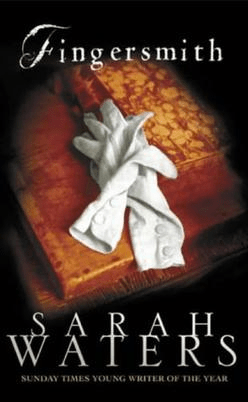
The novels of Sarah Waters (Tipping the Velvet, Fingersmith) have a typical milieu (Victorian, sensual, layered) that require a high degree of research. Her characters are always lively and well-drawn but the worlds they move through have to be very carefully constructed.

But according to Waters, learning to write as she does is about more than research. It’s about reading not just for material but for tactics:

While you’re writing, read like mad – but read analytically. You will never be able to put a book together without an understanding of how other books work. I suspect that this is more a matter of instinct than anything else – but you can nurture that instinct by looking at other texts and thinking, ‘What’s successful here? What’s failing? And why?’

If something worked for one writer (a plot twist, a manner of description, a way of getting readers to side with an unlikeable protagonist), there is no reason to think it won’t work for you.

Writer’s Desk: Be a Collector

Writers like A.S. Byatt are not the kind who simply get an idea and start banging away at the keys. They study, accrue, and consider.

In this interview, the elderly Byatt, still recovering from a recent hospitalization but full of ambition about new projects, talked about her process:

You collect the things and then you study them. And I collect ideas and then I study them. And I collect people’s lives and then I study them. And because I don’t write autobiographical fiction, I need more than one life, just as I need more than one glass ball, all the different patterns, in order to see what is the same, what is different. I feel that about real people and people in books, and people in biographies. It’s the human desire to know things…

Study leads to knowledge leads to more fully realized characters and invented stories that can feel as real as what you had been studying.