New in Theaters: ‘The Chilean Building’

Macarena Aguiló’s melancholy documentary about her childhood spent in group safe homes with other children of Chilean revolutionaries is like some home movie for the generation who thought they could change not just the government, but the very idea of family itself…
The Chilean Building is playing now in limited release; it not near you it should be available on DVD and On Demand soon. My full review is at Film Journal International.

The trailer is here:

The ‘Jefferson Lies’ That Weren’t

After selling some 20,000 books, Christian publisher Thomas Nelson is pulling all remaining copies of David Barton’s The Jefferson Lies: Exposing the Myths You’ve Always Believed About Thomas Jefferson (foreword by Glenn Beck). In his zeal to burnish Jefferson’s image, it seems Barton’s facts weren’t quite up to the argument he was making.

According to NPR, the publisher had a “loss of confidence” in the book’s accuracy:

Since its initial publication, historians have debunked and raised concerns about numerous claims in Barton’s book. In it, Barton calls Jefferson a “conventional Christian,” claims the founding father started church services at the Capitol, and even though he owned more than 200 slaves, says Jefferson was a civil rights visionary.

Additionally, Barton tried to shoo away evidence of Jefferson’s relationship with Sally Hemmings. When the book was first published earlier this year, Alan Pell Crawford had this to say about it:

A commitment to the notion that Jefferson promoted Christian orthodoxy leads Mr. Barton to misinterpret the early history of the University of Virginia. It was precisely because American colleges were created to produce clergymen that Jefferson established an institution where, he declared, “a professorship of theology should have no place.” … Clergymen who opposed Jefferson’s attempt to hire freethinkers as faculty members he dismissed as “satellites of religious inquisition.”

…No doubt Jefferson has suffered at the hands of glib revisionists. But attempting to make this complex man a simple, reassuring and unambiguously admirable figure does no service to his reputation—or to the American past.

New in Theaters: ‘Red Hook Summer’

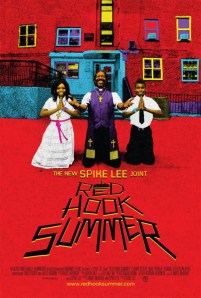
In Red Hook Summer, star Clarke Peters spends a lot of time moping his brow. Theoretically, that’s because the film is set in the middle of a hot Brooklyn summer. It soon becomes difficult, though, to imagine Peters is sweating for any reason besides the fact that he’s working overtime trying to breathe some life and purpose into this directionless work from the possibly past-his-prime Spike Lee. In the grace and power of Peters’ performance, Lee has created one of his most memorable characters. Sadly, it’s nearly all for naught…

Red Hook Summer — Spike Lee’s first narrative film since 2008’s Miracle at St. Anna — opened in limited release on Friday. My review is at Film Journal International.

Trailer is here, and is worth checking out for Peters’ singing alone:

Reader’s Corner: David Rakoff (1964-2012)

It’s been a bad few weeks — the literary world has been robbed of yet another glorious voice. David Rakoff, whose print and radio essays were some of the darkest yet most violently life-affirming things you will ever encounter, died on Thursday from the cancer that first appeared when he was just 22 years old.

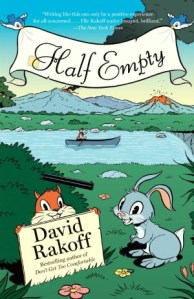
His books (Half Empty, and particularly Don’t Get Too Comfortable) are rich with life and haunted with death, like most of the best writing is. He served on the airwaves of National Public Radio and on the shelves of smarter bookstores everywhere as a kind of grumpy conscience, the mordant cousin to David Sedaris (who championed his early writing).

In this fantastic segment from a live-recorded episode of This American Life from just this past May, Rakoff talks about his youth, dance, what he termed “all this nonsense”, and getting on with life after an operation severed the nerves that controlled his left arm.

“I’m done with so many things,” he says with the glint of sadness which always gave his humor that unique sting.

Quote of the Day: Martin Amis


Martin Amis, barbed-pen satirist of the modern era and boon companion of the late Christopher Hitchens (with whom he shared a sharp impatience with lazy thinking), has taken it on the chin from the press and the literati in his home country of England for years now. Hard to say why, perhaps it was that habit of speaking his mind. But in any case, when Amis decamped from London to Brooklyn to set up home there with his (American) wife, the sniping started all over again.

In The New Republic, Amis — whose newest novel, Lionel Asbo: State of England, comes out August 21 — has a few things to say on the cult of the author and the attribution of false statements:

Backed up by lavish misquotes together with satirical impersonations … the impression given was that I was leaving because of a vicious hatred of my native land and because I could no longer bear the well-aimed barbs of patriotic journalists.

“I wish I weren’t English”: Of all the fake tags affixed to my name, this is the one I greet with the deepest moan of inanition. I suggest that the remark—and its equivalent in any language or any alphabet—is unutterable by anyone whose IQ reaches double figures. “I wish I weren’t North Korean” might make a bit of sense, assuming the existence of a North Korean sufficiently well-informed and intrepid to give voice to it. Otherwise and elsewhere, the sentiment is inconceivably null. And to say it of England—the country of Dickens, George Eliot, Blake, Milton, and, yes, William Shakespeare—isn’t even perverse. It is merely whimsical.


DVD Tuesday: ‘Clue: The Movie’

Somewhere buried deep in an email chain that’s been slung like Spider-man’s web from producer’s office to various screenwriters to yet other producers in Hollywood right now may well reside infinite variations on this question: How do we make a movie out of the board-game Clue?

It’s extremely likely that nowhere in this abstracted committee of moviemaking has anybody suggested, “Hey, how about making it into something of a sex farce that’s also an allegory for the McCarthy era?” That’s not just because it was already done but because such an idea would never fly. Except it did, in 1985. Somehow…

The Blu-ray release of Clue: The Movie hits stores today; and yes, it includes all three endings. My full review is at PopMatters.

Trailer Park: ‘The Master’

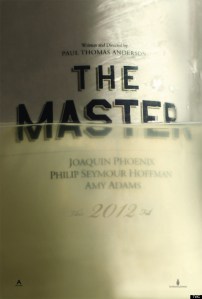
A lot of the initial buzz that’s going to swirl around Paul Thomas Anderson’s The Master will center on whether it’s inspired by Scientology. It’s easy to see why: the 1950s setting, the cultish leader who poses as a hybrid master of all disciplines, the dark threads of systematized paranoia and neurosis. But if the trailer is any indication — lush visuals, Joaquin Phoenix in full Walk the Line meltdown and Philip Seymour Hoffman owning the screen in that sulphuric Talented Mr. Ripley fashion — focusing on that subject alone could sidetrack attention from the potentially genius qualities of what could be the film of the year.

Check it out:

New in Theaters: ‘La Source’

In this short, gleaming little gem of a documentary, a Princeton janitor devotes seemingly everything to the cause of bringing fresh water to his Haitian village. It’s the rare example of an issue film that lets its subjects sell the story instead of having it thrust upon them…

The very rewarding La Source (narrated by Don Cheadle, with music by Sigur Ross) is playing now at the Docuweeks festival in New York. My full review is Film Journal International.

Here’s the trailer:

Reader’s Corner: John Keegan (1934-2012)

Another passing of a literary great was reported Friday. In short, John Keegan was the preeminent military historian of the modern era.

A believer in writing for the popular audience, Keegan bore some comparison to Niall Ferguson, particularly in staking out contentious theories, such as his support for the Iraq and Vietnam wars (thinking both were the least bad option) and his dismissal of the classic Clausewitzian definition of war as “politics by other means.” He was also a consummate gentleman to any who were lucky enough to hear him read.

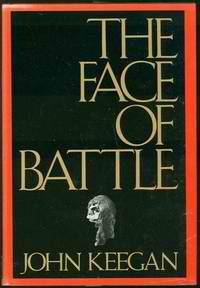
Starting with his 1976 classic, The Face of Battle, Keegan helped turn the discipline from one that cared only about mass troop movements and the decisions of great generals to one that embraced a more holistic view of conflict, in particular how it affected the individual soldiers on the ground.

In this typically vivid scene from The Face of Battle, which studied the day-to-day experiences of British soldiers in three battles: Agincourt, Waterloo, and the Somme, Keegan wrote about an officer who fell asleep the minute the march was halted:

…[he] did not think of food until later in the night, when he woke to eat some chops cooked in the breastplate of a dead cuirassier (meat fried in a breastplate was very much à la mode in the Waterloo campaign, rather as rats spitted on a bayonet were to be in 1871 or champagne exhumed from chateau gardens in 1914).