Writer’s Desk: Challenge Yourself

(Orson Welles, 1964, by Nicolas Tikhomiroff)

Orson Welles spent most of his career scrapping for money, fighting with producers, and generally trying to balance fifteen spinning plates while doing a magic card trick at the same time. It was an exhausting way to make art.

Still, when indie filmmaker Henry Jaglom was complaining to him one time about not having the time or money to finish a movie the way he wanted, Welles had a tart response:

The enemy of art is the absence of limitations.

This doesn’t mean you should intentionally impoverish yourself to invent challenges. But Welles has a point in that a piece of work can benefit from the creator having something to push against. Set yourself some difficult parameters (it must be this long, I must finish it by this date, if I don’t sell it by this point then I will move on to something else, etc.). The discipline required in overcoming even minor obstacles can give you practice in overcoming the challenges presented by your writing.

Don’t get too comfortable, in other words. Push yourself.
Writer’s Desk: Avoid Interruptions

It seems so obvious and yet turns out to be so difficult in practice. Finding a good writing space is one thing. Carving out the time on a regular basis is another. Ensuring an uninterrupted run of minutes and hours is always harder than you think. But without those blocks of time, creating something new is next to impossible.

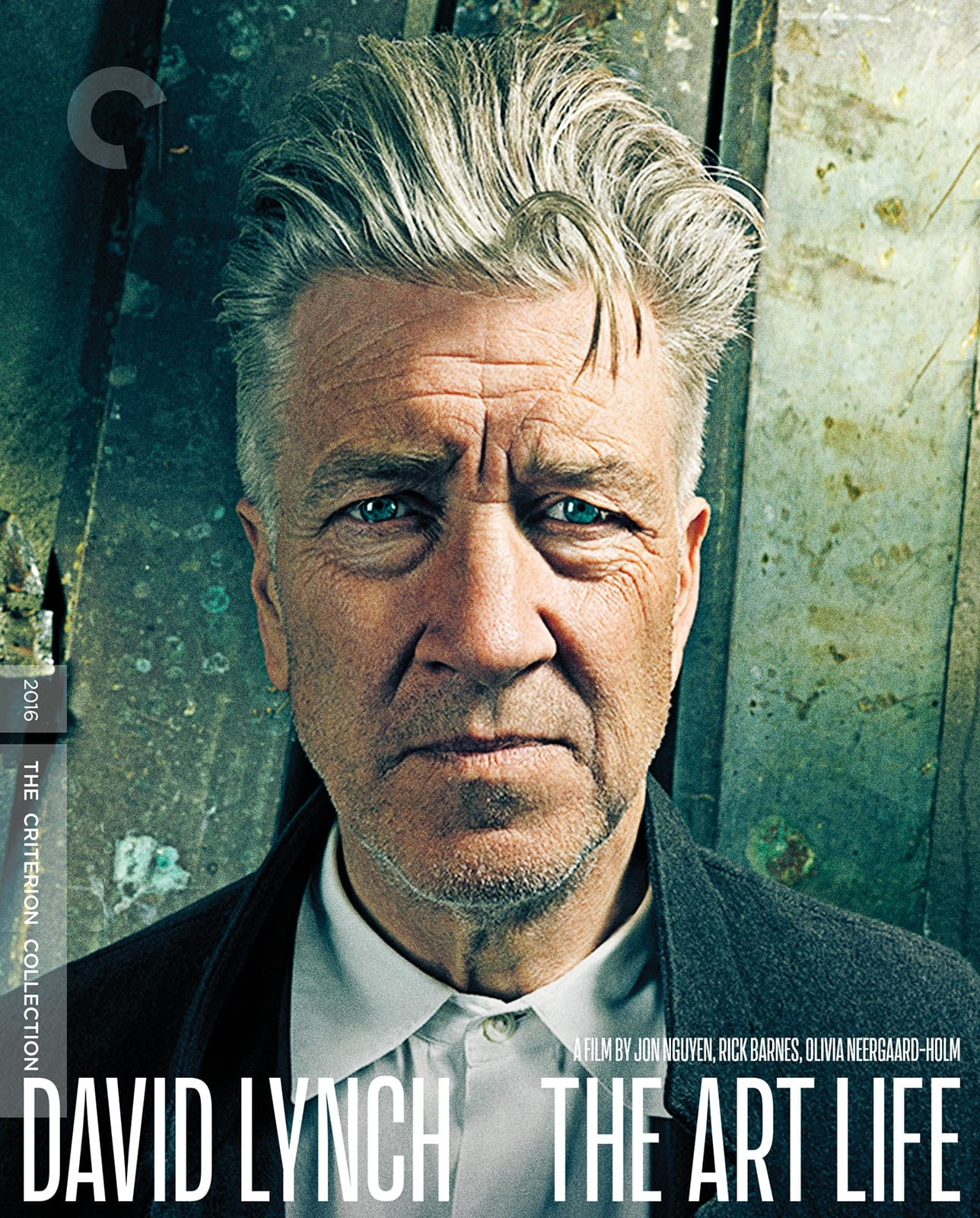
Again, let’s go to David Lynch:

Every interruption just is like a knife stab in the middle of a thought. And you gotta start again. You start again. It’s horrible. These days, there’s interruptions around every corner, almost every second. You have to be somewhat selfish…

And if anybody asks why you are acting so withdrawn, just say that Lynch told you so.

Writer’s Desk: Make Truth Out of Fantasy

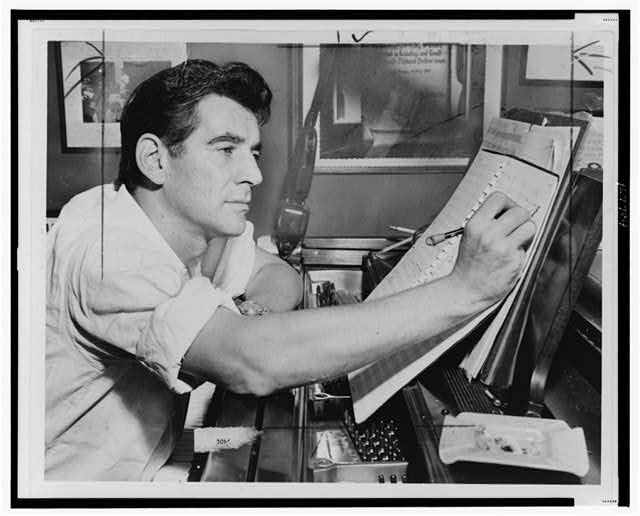
In 1980, Leonard Bernstein gave the commencement speech at Johns Hopkins. He was in the twilight of his career and life. But the composer and teacher still had lessons to deliver:

Every artist copes with reality by means of his fantasy. Fantasy, better known as imagination, is his greatest treasure, his basic equipment for life. And since his work is his life, his fantasy is constantly in play. He dreams life…

But doesn’t everyone fantasize?

Perhaps what distinguishes artists from regular folks is that for whatever reasons, their imaginative drive is less inhibited; they have retained in adulthood more of that five-year-old’s fantasy than others have. This is not to say that an artist is the childlike madman the old romantic traditions have made him out to be; he is usually capable of brushing his teeth, keeping track of his love life, or counting his change in a taxicab. When I speak of his fantasy I am not suggesting a constant state of abstraction, but rather the continuous imaginative powers that inform his creative acts as well as his reactions to the world around him. And out of that creativity and those imaginative reactions to the world around him. And out of that creativity and those imaginative reactions come not idle dreams, but truths…

Hang on to your sense of the fantastic. Use it to create art of the real.

Writer’s Desk: Be Happy with Just Creating

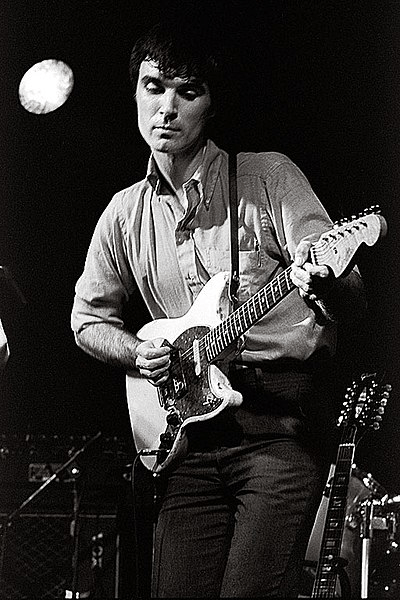
David Byrne, Minneapolis 1977 (Michael Markos)

Like a lot of celebrities, David Byrne has given a commencement address. Unlike a lot of celebrities, he had a lot to say beyond empty “you can do it!” exhortations.

Per Rachel Arons, Byrne’s 2013 address to the graduating class of the Columbia University School of the Arts was in many ways, a downer. He referenced something that actor and theatre director Paul Lazar once told him:

‘You know, there’s no guarantee of making a good living, moneywise, in [the art] world, so if that’s what you want—you know, monetary success, if that’s where the value lies—maybe you made a wrong choice quite a few years ago…

All true. Most people in the creative field—whether music, writing, art, or making gigantic papier-mâché puppets—will not and should never expect to make a good or even sustainable living through that alone.

But while delivering this cold-water splash of reality, Byrne did not aim to turn people off from the arts, merely to let them know how to adjust their expectations:

I believe that there is a way to have a very, very satisfying, enriching and creative life in the arts, but it depends on what criteria you use to look at that. But I would say that if you’re being creative, with happiness, satisfaction, all that—you’re succeeding…

Yes, an audience is preferred, as well as high amounts of remuneration. But sometimes, good work alone is all the necessary reward.

It’s more than most people can expect in this life.

Writer’s Desk: Deadlines Help

Writers like to complain. It’s one of our favorite pastimes. We particularly enjoy griping about deadlines. How unreasonable they are, how foolish we were to agree to them, how we couldn’t possibly get everything done before them, and so on.

But, against our nature as it might be, there are times when we should embrace the deadline.

Consider Saturday Night Live. Every week while in season, the writers ponder, pitch, write, rewrite, throw ideas into the garbage can in disgust, fish those ideas out later and dust them off, and generally burn the candle at every possible end to put a show together by the end of the week. As anybody who has watched the show over the years can attest, the end product is not perfect. But it never could be. Because endless time can be its own kind of trap.

SNL founder and creative mind Lorne Michaels famously put it this way:

The show doesn’t go on because it’s ready; it goes on because it’s 11:30.

Be thankful for the deadline. If not for that, you might never finish writing.

Writer’s Desk: Take Your Time

In 1991, comedic legend and sometime albatross vendor John Cleese gave a lecture on creativity, a topic he’s been somewhat obsessed with over the years (and in fact just published a short book about it). In that lecture, he gave examples of how to create what he called the “open mood” that allows ideas to come.

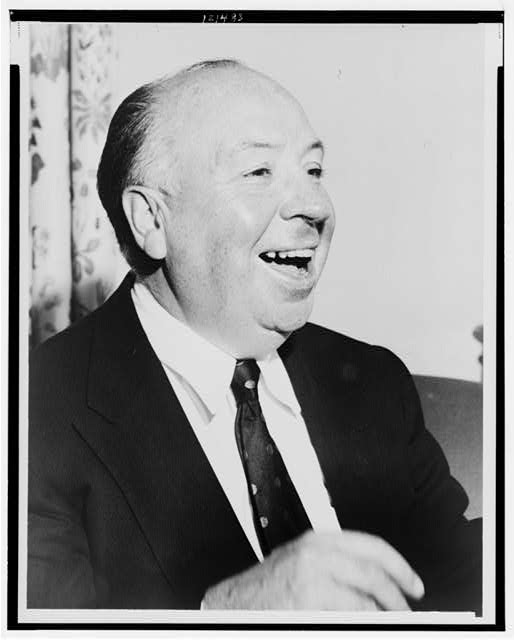
One example came from Alfred Hitchcock:

One of Alfred Hitchcock’s regular co-writers has described working with him on screenplays. He says, “When we came up against a block and our discussions became very heated and intense, Hitchcock would suddenly stop and tell a story that had nothing to do with the work at hand. At first, I was almost outraged, and then I discovered that he did this intentionally. He mistrusted working under pressure. He would say ‘We’re pressing, we’re pressing, we’re working too hard. Relax, it will come.’ And, says the writer, of course it finally always did.”

It’s a difficult balance. On the one hand, you have to keep to your writing schedule. Otherwise nothing gets done. On the other hand, pressing against a closed door rarely works.

When nothing is coming to you, sit back, take a breath, go for a walk, and think about something else. The muse is still there, you may just have to wait for her to circle back around to you.

Writer’s Desk: Carrie Fisher Said Stay Scared

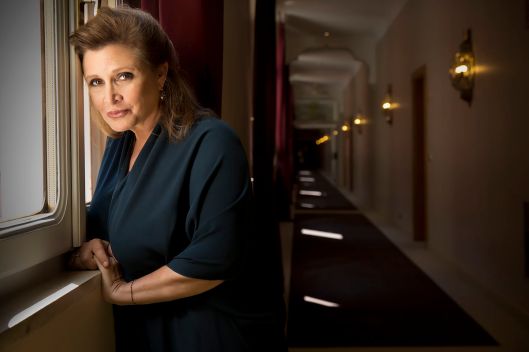
Carrie Fisher at the 2013 Venice Film Festival (Riccardo Ghilardi)

Carrie Fisher was one of the vanishingly few actors to ever come out of the gate as a massive star at an early age and then later transition to a writing career that would have been respected all on its own. As someone who struggled with mental and addiction issues throughout her life in a business that is basically engineered to maximize a writer’s insecurity, she knew what it was like to doubt every one of your own creative instincts.

This is what Fisher had to say about people with mental illness who were afraid to pursue their dreams. But it applies equally to just about anybody who has ever been nervous about putting their work out there into the world.

Stay afraid, but do it anyway. What’s important is the action. You don’t have to wait to be confident. Just do it and eventually the confidence will follow.

Writer’s Desk: Stay Excited

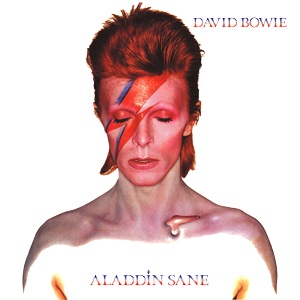
Roughly ten years ago, novelist Michael Cunningham (The Hours) received one of those calls very few of us civilians ever receive: “This is David Bowie. I hope I’m not calling at an inconvenient time.”

davisbowiealaddinsaneThe collaboration that followed was for a never-realized musical about an alien marooned on Earth. Cunningham was to write the book and Bowie the songs. Given that Cunningham was a somewhat obsessed fan and Bowie a little sketchy on the details of what he wanted to do, things started off a little slowly, but their relationship grew.

For Cunningham, as he describes in this piece for GQ, to work with Bowie, he needed to humanize him. That became very simple for him after something great happened:

How starstruck, after all, can anybody feel after the object of one’s veneration says, early on, without a trace of irony, that he was excited to start a new project because: “Now I get to do one of my favorite things. Go to a stationery store and get Sharpies and Post-its!” Yes, the Space Oddity, the Thin White Duke, was excited about picking up a few things at Staples.

If you’re a writer these days, there isn’t much in the way of office supplies one needs to start a new article, story, essay, or book.

But, there is still that tingle one gets one first embarking on something new, the thrill of exploring new territory and knowing you could find great success or utter failure but wouldn’t know which until it was far too late to turn back.

If you don’t feel that sense of excitement the next time you’re sitting at the keyboard, maybe try Staples. Get a new notebook and some nice pens (the good ones that have some heft, nothing that says Bic). Open it up. Look at that expanse of empty pages. Get started.

Writer’s Desk: Look Around, Write That

nina_simone14
Nina Simone, c. 1982 (photo by Roland Godefroy)

Nina Simone famously said this:

An artist’s duty, as far as I’m concerned, is to reflect the times … We will shape and mold this country, or it will not be molded and shaped at all anymore … How can you be an artist and not reflect the times?

There are writers whose hackles will bristle at the mere suggestion that they have a “duty” of any kind. That idea has been abused, of course. Some would make writers produce only government-glorifying propaganda. Others would snark that any writing which falls outside strict revenue-producing genre parameters is navel-gazing artsy nonsense.

But listen to Miss Simone. When she talks about an artist’s duty, that could be taken as reflecting an activist’s sensibility. Which is obviously not everybody’s cup of tea—though it would be difficult to argue that our society needs more escapist entertainment.

What she’s saying here is keep your damn eyes open. It matters. Look around. Listen. Feel. Use that when you write, not just what’s in your head.

Because if your writing doesn’t reflect the world around us in some small way, then truly what is the point? As Capote sniped at Kerouac, that’s not writing, that’s typing.

(h/t: Jenna Wortham)