Writers’ Room: Elmore Leonard on Writing Well

Harper-Trade-Covers---32

Elmore Leonard died last week at the age of 87. He wrote dozens of books and innumerable short stories in a variety of genres, but was best remembered for his best-selling crime novels. He was a master of clean prose and a mechanic of plot; so much so that his justly famous “10 Rules of Writing Well” should be checked out by any writer, crime or not.

Here you go:

  1. Never open a book with weather.
  2. Avoid prologues.
  3. Never use a verb other than ”said” to carry dialogue.
  4. Never use an adverb to modify the verb ”said” . . .
  5. Keep your exclamation points under control.
  6. Never use the words ”suddenly” or ”all hell broke loose.”
  7. Use regional dialect, patois, sparingly.
  8. Avoid detailed descriptions of characters.
  9. Don’t go into great detail describing places and things.
  10. Try to leave out the part that readers tend to skip.

Always, always follow the last one. Read the original piece here for his explanations of the various rules. (“You are allowed no more than two or three [exclamation marks] per 100,000 words of prose. If you have the knack of playing with exclaimers the way Tom Wolfe does, you can throw them in by the handful.”)
Screening Room: Dennis Farina (1944-2013)

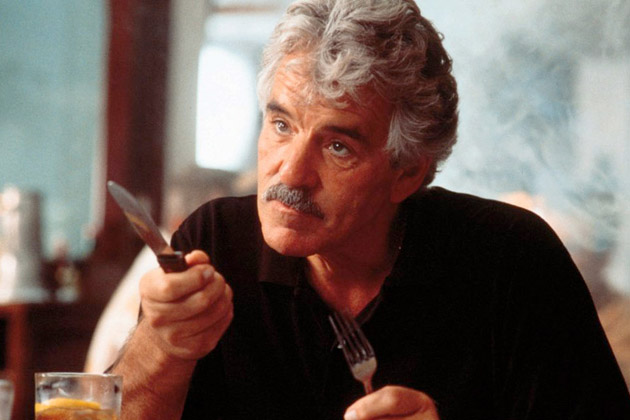
Not sure where that knife is destined to go.

All appreciators of the great and usually unsung character actors who make so many good movies great and so many lousy movies watchable took a hit last week when news came out of Dennis Farina’s passing.

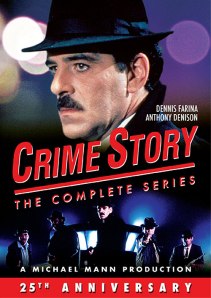
crimestory1My piece on Chicago’s own Farina (Get ShortyCrime Story, Saving Private Ryan, and others) ran today at Short Ends & Leader:

Farina, who died on July 22 at the age of 69, was a detective in a Chicago Police Department burglary unit when he was introduced to Chicagoan Michael Mann, who was making his first feature, 1981’s Thief. Farina was hired as an advisor for the film and even got himself on screen for a few seconds; he gets shot rather unceremoniously at the film’s end along with some other anonymous henchmen. He worked some small roles for the next few years, mostly TV, but also polishing his craft on the Chicago stage with the likes of Steppenwolf vets like Terry Kinney. Supposedly, he even left the CPD a couple years before making his pension in order to pursue acting. It was a gutsy move, but one that paid off long before he ended up donning a trenchcoat and storming the streets of Manhattan on Law and Order

And now, Crime Story: