Writer’s Desk: Your Life is Literature

In her classic graphic memoir Fun Home: A Family Tragicomic (the book which, more than any other, introduced the graphic novel into the literary canon), Alison Bechdel uses numerous literary references (Proust, Henry James, Greek mythology) and allusions when describing her upbringing and members of her family.

As Bechdel explains in the book, this was not a tactic for distancing or adding importance to mundane matters. Viewing her life through an artistic framework was just what came naturally:

I employ these allusions to James and Fitzgerald not only as descriptive devices, but because my parents are the most real to me in fictional terms…

Reader’s Corner: Charles Burns and ‘Final Cut’

I interviewed cartoonist Charles Burns (Black Hole) about his new graphic novel Final Cut and the creative block that led up to it for Publishers Weekly:

Whenever he tried to start a new project, it fizzled out. “I went for months and years,” Burns, 68, says via phone from Philadelphia. “This is shit,” he remembers saying to himself. “I should know how to do this.” Facing what he calls the worst creative frustration of his career, he found himself thinking, “Maybe this is it. Maybe I don’t have anything at all.”

So, to prove he still had something in the tank, Burns set himself a small goal: finishing a seven-page story. If he couldn’t do that, he told himself, he’d have to start doing something else…

Final Cut comes out in September.

Reader’s Corner: Great New Graphic Novels

I covered a quartet of great new graphic novels out this winter for the Minneapolis Star-Tribune:

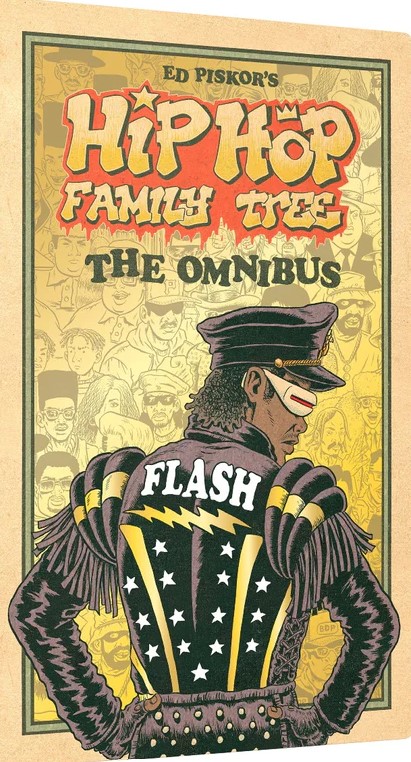
Four graphic novels, among the many fascinating titles hitting stores this winter, delve into a range of subjects: the stark politics and emotional legacy of the Mariel boatlift, a family’s fraught experiences with digital reincarnation, thrilling exploits of hip-hop’s pioneers and a graphic adaptation of a beloved Italian book series…

Reader’s Corner: Talking with David Simon

I recently had the great honor of talking with the great David Simon (The Wire, Treme, Generation Kill) about policing, writing, crime, and the graphic novel adaptation of his classic study of a Baltimore detective unit, Homicide: A Year on the Killing Streets.

A part of my interview with Simon is at Publishers Weekly:

… They took a vote and only three guys wanted me to be there. The rest thought it was a terrible idea. But, it not being a democracy, they put me in the unit anyway. Nobody was hostile. They got used to me. One guy, Terry McLarney, we were drinking at the bar and he said, “I see what you’re doing. This isn’t really about the cases. This is about us.” I said, “Don’t tell anyone” …

Quote of the Day: Martin Luther King, Jr. Day Edition

march-johnlewisThis is what Evan McMullin (yes, a Republican) had to say about the president-elect’s attacks on Rep. John Lewis:

On this Martin Luther King Jr. weekend, let it be clear that John Lewis is an American patriot. Trump’s attacks on him further confirm it.

Now, go and buy yourself the March trilogy of graphic historical novels that Lewis co-wrote.

If you can find a copy, that is.

Readers’ Corner: The Scary Printed Word

From the Duke Chronicle, regarding the school’s decision to have students read Alison Bechdel’s graphic memoir Fun Home:

Several incoming freshmen decided not to read “Fun Home” because its sexual images and themes conflicted with their personal and religious beliefs. Freshman Brian Grasso posted in the Class of 2019 Facebook page July 26 that he would not read the book “because of the graphic visual depictions of sexuality,” igniting conversation among students. The graphic novel, written by Alison Bechdel, chronicles her relationship with her father and her issues with sexual identity.

“I feel as if I would have to compromise my personal Christian moral beliefs to read it,” Grasso wrote in the post.

funhome1And from a report by the American Association of University Professors on “trigger warnings” and letting students opt out of materials they find offensive or troubling:

The presumption that students need to be protected rather than challenged in a classroom is at once infantilizing and anti-intellectual. It makes comfort a higher priority than intellectual engagement and … it singles out politically controversial topics like sex, race, class, capitalism, and colonialism for attention. Indeed, if such topics are associated with triggers, correctly or not, they are likely to be marginalized if not avoided altogether by faculty who fear complaints for offending or discomforting some of their students.

Granted, some of us who are great fans of Bechdel’s work will object to these objections on strictly aesthetic grounds. But it could also be seen as a troubling trend toward absolving students of dealing with any subject matter which they would prefer to ignore. True reading, true intellectual discovery comes frequently from the new, the unusual, and even the disturbing. Coziness should never be confused with education.

Now Playing: ‘Avengers: Age of Ultron’

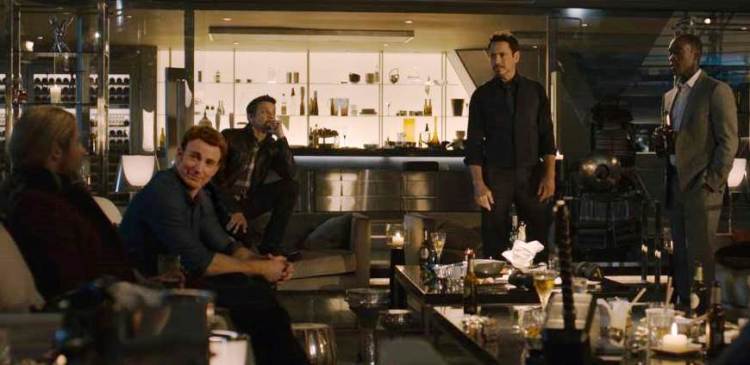
The Avengers, in a moment of friendly contemplation, sans outfits (Marvel Studios)
Some Avengers, in a moment of friendly contemplation, sans outfits (Marvel Studios)

The band gets back together in Joss Whedon’s Avengers: Age of Ultron, which is now playing everywhere throughout the Multiverse.

My review is at PopMatters:

A sturdy piece of inessential workmanship, The Avengers: Age of Ultron begins where it ends, with Joss Whedon shooting the works. In “Sokovia,” another made-up slice of the Balkans, the Avengers are assaulting a mountain fortress controlled by Hydra. That would be the world-spanning network of bad dudes discovered at the end of the last Captain America to have infiltrated the S.H.I.E.L.D. network. It’s not entirely clear what their motivations are besides being evil. Perhaps they’re ticked off at not having quite as cool a name as Cobra Command…

Here’s the trailer, in case you haven’t already seen it two dozen times:

The Graphic Report: Zombie Pixies and Frank Black’s New Graphic Novel

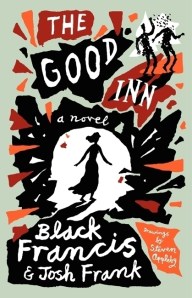
Thegoodinn-coverIn a development that would seem highly overdue, the Pixies’ frontman Frank Black wrote (or co-wrote at least) a graphic novel. Called The Good Inn, it’s something of a laundry list of his likes, particularly Surrealism and early French cinema.

My essay on The Good Inn and the Pixies is at Avidly:

Why did Black Francis take this long to write a graphic novel? Sure, he’s been busy of late with reunion tours of both the actual Pixies and their more recent and inexcusably Kim Deal-less zombie incarnation (in that one, audiences must suffer not just listless performances but the travesty of hearing somebody not Kim sing “Gigantic”)…

There’s an excerpt of it over at the A.V. Club.

Reader’s Corner: Best Books of 2013


Best-of lists are particularly absurd when it comes to books, with thousands of titles being released in 2013 alone and easily hundreds of them most likely being worth forking over $25 for. But nevertheless it’s helpful to pull notable ones out of the stacks of new releases; otherwise where would you even get started?

To that end, I published a piece over at PopMatters with short writeups on my 15 favorite books of 2013. It’s a good collection with something for everybody, fantasy to military history, graphic novels to current affairs, Thomas Pynchon to Scientology. You can read it here.

New in Theaters: ‘Chicken with Plums’


Anybody seeking a well-rounded love story featuring emotionally secure individuals should stay far, far away from Chicken with Plums. Marjane Satrapi and Vincent Paronnaud’s adaptation of Satrapi’s graphic novel focuses on Nasser-Ali (Mathieu Amalric), a violinist living in late 1950s Iran. He plays like an angel, but suffers from an overwhelming moodiness. In the film’s first few scenes, he buys a violin and returns it almost immediately, screaming at the shop owner that he’s been cheated. In fact, life has cheated him…

Chicken with Plums is playing now, and makes for a certain kind of fantastic date movie. My full review is at PopMatters.

The trailer is here:


Reader’s Corner: New Edition of ‘Stardust’

Even though he hits the Times bestseller list on a regular basis these days with novels like American Gods and The Graveyard Book, back in the 1990s Neil Gaiman was not on the mainstream reading public’s radar. He was still mostly known on the fanboy circuit as the guy who created the stunning, magical graphic novel series Sandman (which, reports now have it, he’ll be returning to in 2013).

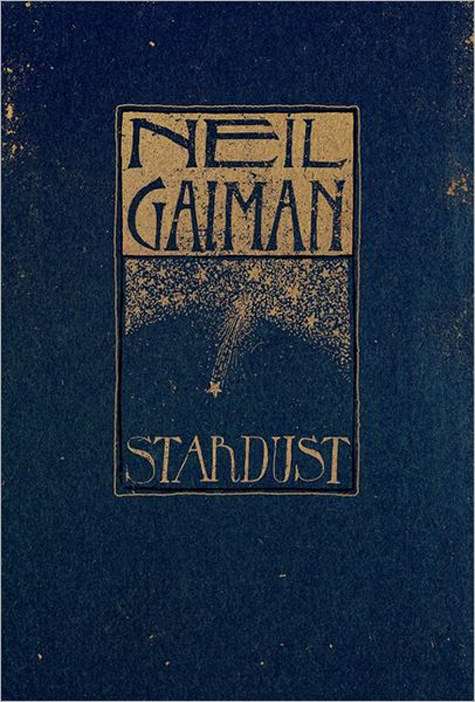
Then in 1998, Gaiman published Stardust, a beautiful fable about love, other worlds, and — most importantly, and like all good fairy tales — the dangers of magic. It also came with these gorgeous, early 20th century-style illustrations by Charles Vess that aren’t available in every edition. Fortunately, this fall you will be able to buy a nifty gift edition with new artwork and a gorgeous new cover that was designed to Gaiman’s specifications:

I wanted it to look and feel like something from 90 years ago, like the books I treasured as a kid that I found in the school library (the ones I’d buy for a penny in the school library sales, and loved ever after).

Gaiman (aka “British Fonzie” when he had his cameo on The Simpsons) has done plenty of great and magical writing since then, but decades from now this novel (you can read an excerpt here) — and the collected volumes of Sandman — might well end up being the works that endure.