Writer’s Desk: Attention is Good

If a writer publishes and nobody notices, did it actually happen? To the writer, absolutely. That’s weeks, months, or years of gnashed-teeth labor in those pages. But to the rest of the world, not so much.

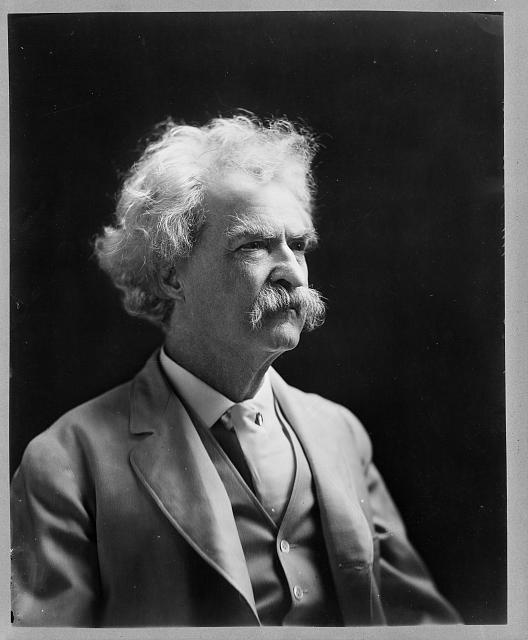
Ron Chernow’s mammoth new biography of Mark Twain shows how the great American humorist, sentimentalist, lecturer, anti-imperialist scold, and failed entrepreneur got people to read what he wrote. First, he lived a hell of a life:

Mark Twain discarded the image of the writer as a contemplative being, living a cloistered existence, and thrust himself into the hurly-burly of American culture, capturing the wild, uproarious energy throbbing in the heartland…

Brimming with material, Twain then grabbed the nation by its lapels:

A protean figure who played the role of printer, pilot, miner, journalist, novelist, platform artist, toastmaster, publisher, art patron, pundit, polemicist, inventor, crusader, investor, and maverick, he courted controversy and relished the limelight. A ferocious bargainer and shameless self-promoter, he sought fame and fortune without hesitation and established the image of the author as celebrity…

There are limits to this approach, of course, as any writer whose publisher has anxiously inquired about their social media reach knows.

But what Twain knew is that people are busy. They have a lot of things they would rather do than read what you wrote. Harlan Ellison wrote stories in bookstore windows.

Do what you have to do.

Literary Birthday: Harlan Ellison

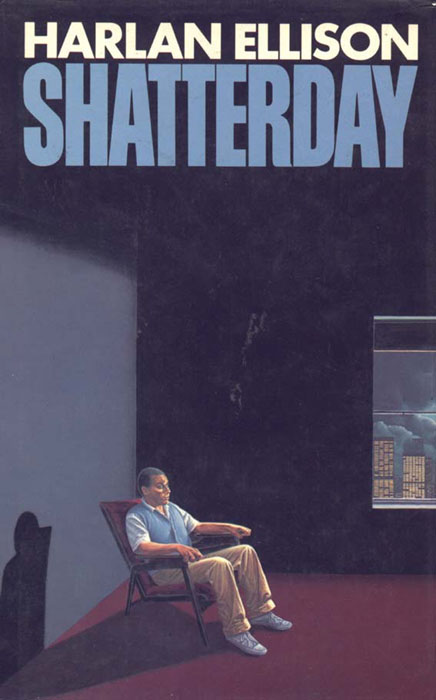
A motormouthed, frantically productive science-fiction writer who made a decent living in the pulps before finding his voice in the genre’s boundary-smashing New Wave period of the 1960s, Harlan Ellison (born today in 1934)—who preferred being called a “fantasist,” thank you very much—had almost as many as opinions as published works.

In college, he punched out a professor who critiqued his writing. To express his displeasure with a publisher, Ellison mailed them an odiferous gopher corpse. For others who incurred his irritation, he used a form letter that began: “Dear Sir (or Madam), Clearly some brain-damaged moron is writing letters and signing your name. I suggest you do something about this.” After Ellison’s death in 2018, George R. R. Martin described his late friend as a “temperamental, exhausting, raging, loving, roaring giant” who started so many feuds that his antagonists actually formed a club: Enemies of Ellison.

Writer’s Desk: Don’t Sell Yourself Short

In the documentary Dreams with Sharp Teeth, the late and astoundingly great Harlan Ellison told a story about the time a film company asked to use a clip from an interview he’d given about Babylon 5 (a show he’d worked on). Ellison said, sure, just pay me. This took the caller by surprise.

Per Open Culture, Ellison responded thus:

Do you get a paycheck? Does your boss get a paycheck? Do you pay the telecine guy? Do you pay the cameraman? Do you pay the cutters? Do you pay the Teamsters when they schlep your stuff on the trucks? Would you go to the gas station and ask them to give you free gas? Would you go to the doctor and have them take out our spleen for nothing?

There are many reasons besides money to write. But it’s also intensely time-consuming, frequently frustrating work that almost never gets the recognition or remuneration that it deserves.

Don’t be taken advantage of. Writing is a calling. It is also a job. Don’t be a sucker and give everything away for free just because you’re asked.

Writer’s Desk: Writing in Plain Sight

Most writers prefer practicing their craft alone. There are the occasional ones who can get good word count on the bus or in cafes. But in the main, it’s the sort of thing best done in solitary, by guttering candlelight if you can manage the stagecraft.

DangerousVisions1Then there’s Harlan Ellison. Over the years he’s written everything from gangland fiction to dystopian comedy to TV and film criticism. And he’s done it not just from the comfort of his study, but sometimes in plain sight of the public.

From time to time, Ellison accepts the challenge to write, as a sort of literary improv, a story or a number of stories, in the window of a bookstore. Usually it’s for charity or just to help promote the store.

From a 1981 TV interview with Ellison:

I do it because I think particularly in this country people are so distanced from literature, the way it’s taught in schools, that they think that people who write are magicians on a mountaintop somewhere. And I think that’s one of the reasons why there’s so much illiteracy in this country. So by doing it in public, I show people it’s a job of work like being a plumber or and electrician…

The best part about this quote is that when Ellison compares being a writer to a plumber or electrician, he means it as a good thing.

(h/t Mental Floss)