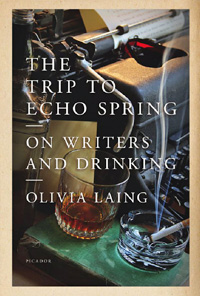
 Late last year, the British writer Olivia Laing published The Trip to Echo Springs: On Writers and Drinking. It’s a rambling and discursive but smart portrait of a half-dozen writers and their struggles with the devil’s brew (Ernest Hemingway, Tennessee Williams, John Berryman, John Cheever, Raymond Carver, F. Scott Fitzgerald). Laing takes her title from a line in Cat on a Hot Tin Roof and indulges in more than a few Williams-ian flights of writerly fancy along the way. Given her twinned love of these writers’ work and her impatience with the romanticism of the drunk author, it’s well earned.
My essay on the book and the author-alcohol phenomenon, “The Drowning Pool,” is at PopMatters:
More than anything else, this is a book of pain and beauty, the former constant and the latter fleeting. It’s awash in water and the attendant metaphors, from the lapping waters of Carver’s rough-and-tumble Pacific Northwest towns to the rivers of glorious and damning booze all of her subjects sluiced down their throats. Laing stabs at and occasionally hits the subject that lies behind it all: Why write and read, after all? Reading the passages left behind in a notebook that lies by Carver’s modest grave, she is awed and lets the reader be awed by “All these anonymous suffering strangers… putting their faith in stories, in the capacity of literature to somehow salve a sense of soreness, to make one feel less flinchingly alone”…
You can read an excerpt from The Trip to Echo Springs here.


 Chris Barsanti
You must be logged in to post a comment.