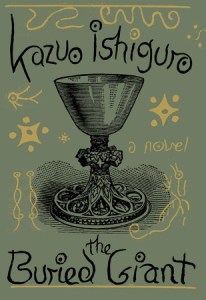
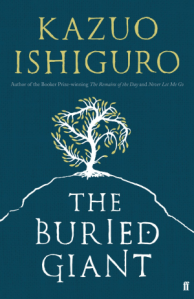
 In Kazuo Ishiguro’s new novel The Buried Giant, the author of Remains of the Day takes on a different kind of period setting: A fantastical yesteryear in which ogres roam the land, King Arthur is only recently departed, and a great dragon threatens the land.
It’s not the easiest fit for Ishiguro, who never quite seems comfortable in his own setting. He continually holds the reader’s hand, taking them aside for background notes on what they are witnessing instead of just letting the story flow. The flatness of his language, which was more appropriate to the subject of a novel like Never Let Me Go and its story of stunted humanity, here keeps the reader from ever engaging with his deeper, fascinating-in-theory themes of memory and selective amnesia.
When Ishiguro was interviewed about working in a different metier than he was used to, he seemed uneasy that readers might think of the novel as being fantasy. Which, of course, it was. You wouldn’t think that authors would still hold such prejudices against genre, given how porous the borders between literary fiction and fantasy and science fiction have become. Just see the reaction to Cormac McCarthy’s post-apocalyptic novel The Road a few years back. Now everybody can play.
Ursula K. Le Guin (The Left Hand of Darkness) took exception with Ishiguro’s defensiveness, as well as his seeming nervousness, “Are they going to say this is fantasy?”
I respect what I think he was trying to do, but for me it didn’t work. It couldn’t work. No writer can successfully use the ‘surface elements’ of a literary genre — far less its profound capacities — for a serious purpose, while despising it to the point of fearing identification with it. I found reading the book painful. It was like watching a man falling from a high wire while he shouts to the audience, “Are they going say I’m a tight-rope walker?”
Le Guin is right in her judgment. Ishiguro’s inability to commit to the wild strangeness of his story kills any joy or mystery the reader might have found in it. Perhaps the natural chilliness of Ishiguro’s prose makes it a better fit for certain other types of genre writing (again, like he was able to deliver much more powerfully in the mournful science fiction of Never Let Me Go).
The Buried Giant is fantasy. It’s just not very good fantasy.
There’s an excerpt from the novel here. You can also see Ishiguro reading from it here.


 Chris Barsanti
You must be logged in to post a comment.