Writer’s Desk: Throw Most of It Away

There are times when your writing project takes forever. You head to the keyboard each day, knowing that you will emerge on the other side with naught but a few sentences, as fought-over as a few square yards of Flanders mud during an interminable battle in the First World War. But that can be worth it in the end.

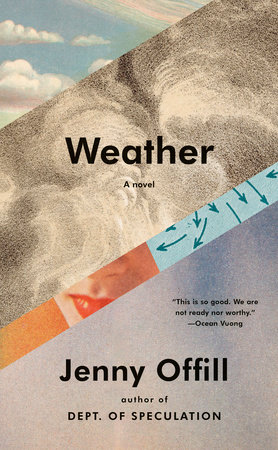
There are other times when the fight means that you’re not going where you need to go. In that instance, consider the “inspired demolition job” Jenny Offill did on her novel Dept. of Speculation:

After spending years on a longer, more traditional novel that refused to come together, Offill stopped trying to force it; instead, she wrote out what she considered the best bits on index cards, then shuffled them around until she arrived at something she was happy with. The streamlined version, made up of elliptical yet propulsive fragments, many of them no more than a sentence long, tells the story of a marital crisis with the efficiency of a comic strip. Suggestive snippets of dialogue and description are juxtaposed with surreal factoids and literary quotes; Offill trusts the reader will know how to put these pieces together.

Giles Harvey, The New York Review of Books

Trust the reader. Trust yourself. Leave out everything you do not absolutely need and let the reader figure it out.

Screening Room: ‘Books: A Documentary’

booksdoc

This is the killer Kickstarter pitch for a new proposed film project with the can’t-go-wrong title of Books: A Documentary:

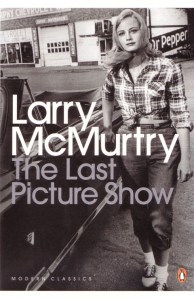
This past August over 300,000 antiquarian books from Larry McMurtry’s Booked Up were sold at auction: This is the story of those Books.

Color us intrigued.

For those not already in awe of the man, Lonesome Dove and Brokeback Mountain author McMurtry also owns one of the nation’s great used-book emporiums. He told the tale of last fall’s great blowout sale at the New York Review of Books.

booksdoc2

According to Publishers Weekly, the filmmakers (husband-and-wife Sara Ossana and Mathew Provost) have already shot about half of the doc and need $50,000 to finish it up. Ossana notes that the film, which uses McMurtry’s sale to explore the modern book landscape, might be expected to be a downbeat tale about an industry and way of life in decline:

“We weren’t sure if the film would be a moratorium, or more uplifting,” Ossana said. “It’s turning out to be more uplifting.” That, she thinks, is due to a larger cultural shift afoot in America—brought on by the country’s economic need to develop a stronger foothold in the production of goods and in manufacturing—that is driving more people to ask where the objects they have come from, whether it’s the food on their table, or the hardcover novel on their shelf. “There is a cultural awakening happening now,” Ossana explained, “around what people find valuable. I think the book is a large part of that,” she said. And, with that, Ossana thinks physical bookstores are becoming more important as “cultural centers” on the community level.

Here’s to hoping that she’s right.

Dept. of Literary Commerce

When novelist/screenwriter/storeowner Larry McMurtry announced The Last Book Sale, he didn’t really know how many people would trek down to his retail emporium in Archer City, Texas to buy up some of the 300,000+ titles that were on offer. In the end, he reported in the New York Review of Books, “everything sold but the fiction … I was irritated to discover that I still had 30,000 novels to sell.”

The auction went well, overall, particularly in regards to this title:

The star item on the first day was typescript of some twenty-nine story-ettes of an erotic nature. These had been commissioned in the 40s by the oilman in Ardmore, Oklahoma; among the writers who wrote these trifles were Henry Miller, Anais Nin, Lawrence Durrell and others. The late G. Legman knew the oil man’s name but never revealed it. I have owned this curiosity for more than twenty years; it went to Between the Covers for $2,750.