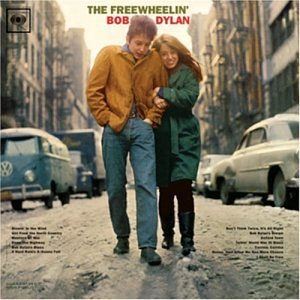
Writer’s Desk: Dylan Says

bob_dylan_-_the_freewheelin_bob_dylanSince Bob Dylan has been honored with a Nobel Prize for Literature, we may as well welcome the man into the community of those practiced in the art of belles lettres. Good to have you, Bob!

Here’s some advice from Mr. Zimmerman contained in Paul Zollo’s Songwriters on Songwriting, which could apply to most any writers:

It’s nice to be able to put yourself in an environment where you can completely accept all the unconscious stuff that comes to you from your inner workings of your mind. And block yourself off to where you can control it all, take it down…

If you follow his often stream-of-consciousness lyrics, that approach makes sense. It’s harder to do, of course, than it sounds. Be open to the muse, but direct it.

Writers’ Corner: Seamus Heaney

seamusheaney11995 Nobel literature laureate Seamus Heaney passed last week into the realm of writerly immortals. Called by some the greatest Irish poet since Yeats, he never quite indulged in W.B.’s profound Celtic mysticism. Nevertheless, you could certainly smell the peat bogs in his poetry’s earthy rhythms. He also recognized the island’s bloody sectarian history without being trapped by it.

Check out the first line of the first poem, “Digging,” in his first collection, 1966’s Death of a Naturalist:

Between my finger and my thumb

The squat pen rests; snug as a gun.

Given that Heaney was a Catholic from Northern Ireland, those lines weren’t just a statement of intent, they were thick with danger; something that the vast majority of poetry eschews. Not that Heaney was any ideologue; he was too thoughtful for both sides during the Troubles and made enemies all around, as good writers should.

beowulf1

And for anybody who has painful school memories of the glum verses of Beowulf, go try out Heaney’s verse translation of it from 2000. Gloriously melodramatic and lyrical at the same time, it’s meant to be read aloud by a campfire to a ring of rapt listeners. It’s how more writers should aim to sound.