In Philip Roth’s 2004 novel The Plot Against America, it’s 1940 and Hitler is rampaging across Europe. Only in America, Franklin Roosevelt is facing serious political competition: fascist sympathizer and popular hero Charles Lindbergh. A Jewish family in Newark, drawn in part from Roth’s childhood, starts realizing they may have to chose between fleeing to Canada or facing pogroms in New Jersey.
My review of HBO’s The Plot Against America, a six-part adaptation by David Simon (The Deuce, The Wire), ran at PopMatters:
in 1940, the idea of a white supremacist president in league with a fascist foreign power was hard for many to contemplate. Even a fully-fledged racist like Woodrow Wilson had not colluded with enemies abroad. And nobody truly imagined the likes of Donald Trump as president until The Simpsons Moviein 2007. It was a different time. The Wire was only in Season 3.
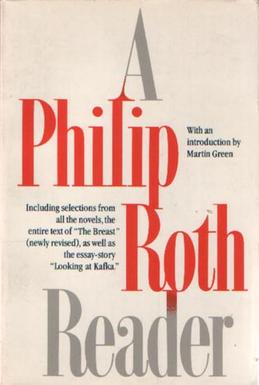
Philip Roth spent about a half of a century writing. In the process, he produced one of the greatest and weirdest bodies of work in American letters. How did he do it? Sitting down and plugging away, for one:
The day-by-day repertoire of oscillating dualities that any talent withstands — and tremendous solitude, too. And the silence: 50 years in a room silent as the bottom of a pool, eking out, when all went well, my minimum daily allowance of usable prose…
Set yourself a goal and get to it. Every great book starts with the first word, it’s true. But there’s a lot of words that have to follow. A daily allowance of usable prose is a good place to start.
S.J. Perelman specialized in a particularly adroit style of urbane humor, which he deployed for decades at the New Yorker and in the occasional Marx Brothers script (the latter of which earns him automatic inclusion in any writers’ Hall of Fame).
He also had some salient advice for writers, not necessarily about the act of writing itself, but what writers had to look forward to in their choice of such a “shabby-genteel” career:
My vocation, it may have leaked out to you, is that of a writer, which means that I sit in a hot little room stringing words together like beads at so many cents per bead. It’s shabby-genteel work and, on the whole, poorly paid, but I’m too fragile to drive a brewery truck and I’m too nervous to steal … In the poolrooms I frequent, it has often reached my ears that the chief advantage of being a writer is that it allows you to sleep late in the morning. Don’t believe it. You can enjoy the same privilege as a night counterman in a cafeteria, and, what’s more, in that job you can always bring home stale Danish pastries for the kiddies…
That comes courtesy of a book called In My Opinion: The Seventeen Book of Very Important Persons. Apparently back in 1966, Seventeen magazine had an advice column frequented by the likes of Perelman, Philip Roth, Pete Seeger, and Joan Crawford (?!). Maybe teenagers read back then.
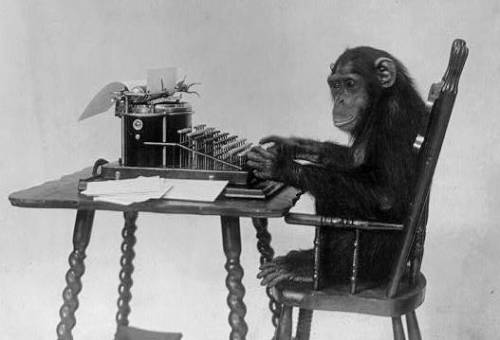
There are writers who don’t need a system to get their work done. They can go with what one could term the Stephen King method: Read a lot and write a lot. Sometimes, though, that straight-out approach doesn’t hack it. You’re blocked, you’re uninspired, you just don’t want to do it. That’s when writers resort to tricks and hacks to force themselves into productivity. Some need solitude, some need noise, some use a particular kind of writing software, some have a program on their laptop that doesn’t let them waste time on the Interwebs… The ever-precious Jonathan Franzen writes with:
noise-canceling headphones, on which I can blast frequency-shifted white noise (“pink noise”) that drowns out even the most determined woofing of a neighbor’s television set…
It goes on.
One other thing writers like to do (besides procrastinate and read their own reviews while claiming they never do so) is read or listen to more successful writers go on about their methods. The idea being, well, if it worked for Joyce Carol Oates, maybe I should try it out.
Novelist Ben Dolnick has a sharp essay about this in the New York Times called “Stupid Writer Tricks,” where he talks about his not-exactly helpful obsession with gleaning tips from writer interviews. Reading that Philip Roth likes to write at a standing desk or Hemingway always kept a small notebook on him seems like the sort of thing that might work out … until it doesn’t:
I had, for a long time, a profound vulnerability to hearing about these sorts of routines. Of course I knew that writing was terrifically hard work, and that there was no secret code, as in a video game, that would unlock Tolstoy-mode, enabling me to crank out canon-worthy novellas before lunch. But I persisted in believing that I might one day come upon some technique, some set of tricks, that would vault me irreversibly onto the professional plane. I didn’t have a working printer, but I agreed wholeheartedly with Joan Didion that I needed to be sleeping in the same room as my manuscript, so as never to lose touch with it. It would be years before I’d written so much as a single chapter of a novel, but I knew that when I finished a book, I would, like Anthony Trollope, begin my next one on the very same day.
Dolnick doesn’t chuck the whole idea of writing techniques, finding them to have their purpose. But he decides it’s ultimately more about how you approach writing than your technique; calmness is key:
If, though, you can reach out from a position of calm, as a swimmer reaches out for a kickboard before turning to begin his next lap, then you might find yourself feeling what all the tricks and tips are finally pointing toward: freedom. You might surprise yourself — roll onto your back, do a flutter kick, or just float for a while. The water, after all, is the point, and not how you scratch away at it.
Some of us might at times write more lucidly and energetically in a state of great agitation and nerve. But in the end, doesn’t it flow better when you’re actually enjoying the process? Write with joy, in other words. Unless you’re blocked, in which case, do whatever you must to make the words come.




 Chris Barsanti
You must be logged in to post a comment.