
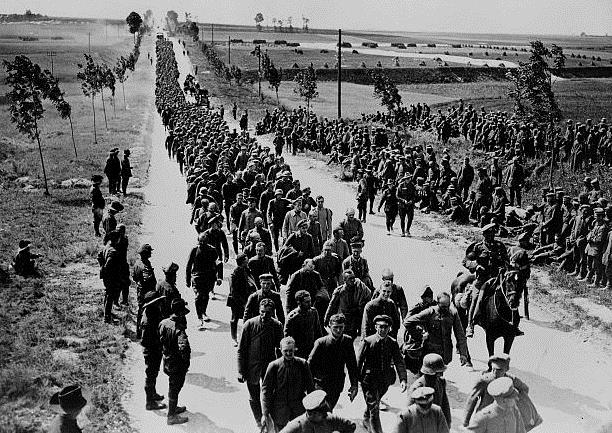
This Saturday June 28 marked one of the year’s uglier anniversaries: 100 years since the Archduke Franz Ferdinand was gunned down in Sarajevo, helping to topple that teetering Rube Goldberg contraption of treaties and animosities that started World War I.
More books will be written about the causes of the war, the way it was fought, the aftermath, and so on. Relatively few of those books’ pages will have much to do with one of the war’s most important aspects: What it was like for the soldiers unlucky enough to have fought it.
For that, we could do worse than to look back at the great Wilfred Owen, a young British officer with the Lancashire Fusiliers who was killed in action just one week before the Armistice. From his mournful, furious Dulce et Decorum Est, about a soldier dying from a gas attack:
If you could hear, at every jolt, the blood
Come gargling from the froth-corrupted lungs,
Obscene as cancer, bitter as the cud
Of vile, incurable sores on innocent tongues,—
My friend, you would not tell with such high zest
To children ardent for some desperate glory,
The old Lie: Dulce et decorum est
Pro patria mori.
The Latin in the last two lines is usually translated as “it is sweet and seemly to die for one’s country.” It’s a rather odious line from Horace that has often been taken seriously, most often by the sort of propagandists who like to get young men exited about going off to war.
 Chris Barsanti
You must be logged in to post a comment.