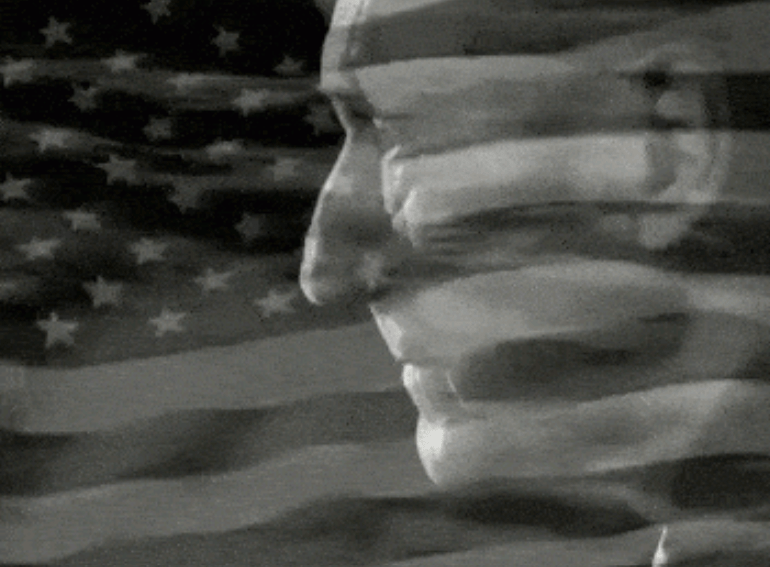
From William S. Burroughs’ “A Thanksgiving Prayer”:
Thanks for the last and greatest betrayal
of the last and greatest of human dreams.
A film of his reading the full piece, from Gus Van Sant:

From William S. Burroughs’ “A Thanksgiving Prayer”:
Thanks for the last and greatest betrayal
of the last and greatest of human dreams.
A film of his reading the full piece, from Gus Van Sant:
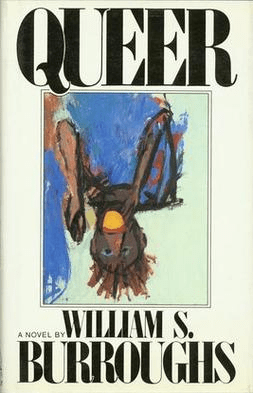
Sometimes when stuck for inspiration, or just as a way of jump-starting things, William S. Burroughs liked to use something he and his friend, painter Brion Gysin, developed called the “cut-up method.” It’s not difficult, per Burroughs:
Take any poet or writer you fancy. Heresay, or poems you have read over many times. The words have lost meaning and life through years of repetition. Now take the poem and type out selected passages. Fill a page with excerpts. Now cut the page. You have a new poem. As many poems as you like…
Is that cheating? If you listen to most media theorists, we have been in the age of collage for a few decades now. Give it try. You never know what might come through.

When trying to get into the spirit of the characters from his new novel Crook Manifesto (incredible, by the way), recurring Writer’s Desk source Colson Whitehead decided he needed to learn as much as he could about the setting of Harlem in the early 1970s.
Since his main character, Ray Carney (also the star of the preceding novel, Harlem Shuffle), was a furniture salesman who also fenced stolen goods out the back door, Whitehead told the New Yorker‘s David Remnick he learned what he could about both professions, first:
From primary sources, memoirs of gangsters, Bumpy Johnson he was a Harlem gangster in the ’50s. His wife wrote a memoir … She broke down how numbers operation works. Numbers operation is an unofficial lottery in different neighborhoods. She broke out how the numbers runner works and the bank and how they transfer the money and where else do you go but to the source. A lot of it is slang. I love getting authentic nouns and verbs, whether it was from slave narratives for Underground Railroad or for this, William Burroughs’ first book Junkie is about being a hustler in Harlem, Upper West Side, and downtown in the ’50s…
Then:
[Finding a ] Sears catalog. It’s just great language that I steal the same way I steal language from a memoir … Champagne finishes on the arms of couches and chairs…
Lest you think this involved a lot of delving through dusty archives, Whitehead reassures Remnick that he never leaves the house:
I never leave the house. Too many people outside. Yes, whatever your interest is, someone has put it on Pinterest…
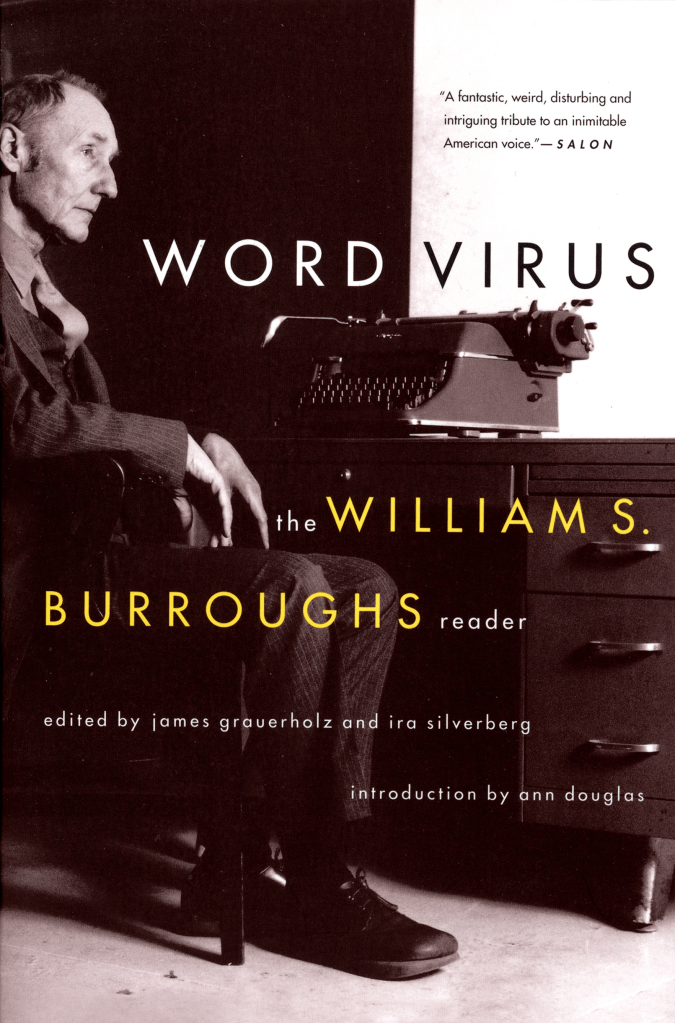
Though William S. Burroughs’ writing frequently left reality behind (Naked Lunch‘s Mugwumps and whatnot), a surprising amount of it was based on his life. The details of his Midwestern upbringing and years as a wastrel flâneur were frequently reworked in his fiction.
Still, Burroughs found it crucial for his writing to get past the limitations of self. As he once told fellow Beat and occasional collaborator Allen Ginsberg, that came with risks:
The only way I can write narrative is to get right outside my body and experience it. This can be exhausting and at times dangerous. One cannot be sure of redemption…

Somewhere in the great cultural ferment of 1960s New York, a band came together that changed the face of rock and roll. Nobody really noticed but other musicians. But to paraphrase the old saying, every one of those musicians who loved the Velvet Underground went off and formed their own band.
My review of Todd Haynes’ The Velvet Underground, playing now on Apple TV+, ran at PopMatters:
To recreate the crashing symphony of experimentation that birthed the Velvet Underground, Haynes turns his documentary into something that looks like it could have been projected on a bedsheet tacked to the wall of a rat-trap art gallery below New York City’s 14th Street. It’s an immersive bricolage of frame-within-frame visuals and overlapping dialogue and audio clips occasionally studded with reminders that you are watching a documentary about a rock ‘n’ roll band when something like “Venus in Furs” comes blasting out of the speakers with a banshee howl…
Here’s the trailer:
 This is Patti Smith at a Louisiana literature festival in 2012:
When I was really young William Burroughs told me – I was really struggling we never had any money – and the advice that William gave me was built a good name and keep your name clean. Don’t make compromises. Don’t worry about making a bunch of money or being successful. Be concerned with doing good work and make the right choices and protect your work. And if you build a good name eventually you know that name will be its own currency…
We don’t all get to be like Smith and receive personal advice from El Hombe Invisible at an age when we’re young and struggling and wondering if any of the combat we’re suffering just to create something will ever be worth it. But her distillation of it is useful nonetheless.
Protect your work at all costs. Don’t sign up for anything you don’t believe in. Refuse to sell yourself cheap. And if you have to … use a pseudonym.
 Not long after Jack Kerouac and his friends were wrapped up in the David Kammerer murder, he started work on a World War II novel called The Haunted Life. He only made it a little ways into the story (which was to have been a multi-volume work) before losing it, supposedly in a cab. The pages were rediscovered a few years back and have just been published; here’s a few lines:
“You’’ve been reading John Dewey.”
Dick moved off down the hall: “It’s fact. What the hell good is life if you don’t live it to the bone? Jack London was a great liver, Halliburton, even Herodotus . . . there was a man! To hell with college! Did I ever advise you to go to college?”
Peter grinned.
“No,” said Dick. “you let circumstances drag you along. Be like Hamlet . . . baffle circumstances.”
It’s hard to imagine Kerouac writing a war story, and what has survived looks more conventional and clunky than his later speedy improvisations — somewhat like how Williams S. Burroughs moved from the Hemingway-like prose of Junky to the surrealisms of Nova Mob.
There’s an excerpt here.
Language is a virus from outer space.
—William S. Burroughs
Burroughs, who would have turned 100 yesterday, liked to repeat this quote and variations on its theme in his speaking and writing. Like with much else that he put out there, it’s not meant to be taken with complete seriousness, but he certainly believed in the metaphor of words and ideas as a virus that can spread with disease-like rapdity.
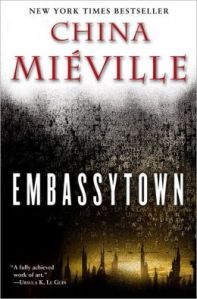 Along those lines, check out China Mieville’s science-fiction novel Embassytown, in which (among other oddities) he invents an alien race which is actually sickened by words and the transmission thereof. I wrote about the book for The Millions.
 Chris Barsanti
You must be logged in to post a comment.