

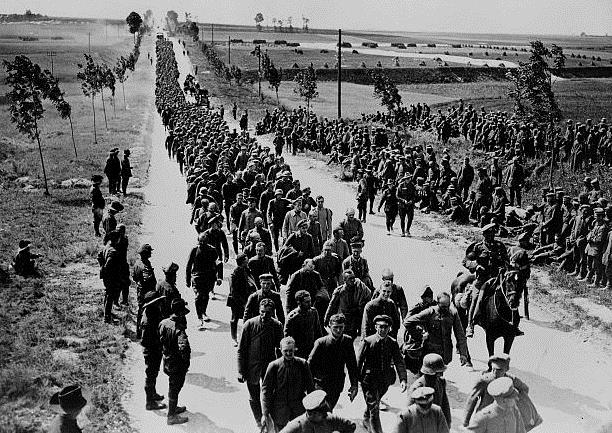
In 1916, a 24-year-old J.R.R. Tolkien went off to fight for his country. He arrived in France just as the Battle of the Somme was about to erupt. At the end of the first day of fighting, almost 20,000 British soldiers were dead. The butchery went on for months. It would be a transformative experience for the young scholar.
 Joseph Loconte writes in the Times that Tolkien actually started writing The Lord of the Rings by candlelight at the front. It’s not hard to see the inspiration of the Somme’s blasted landscape, reek of poison gas, and corpses, in his descriptions of the Siege of Gondor and particularly Mordor.
Of course, the battles of Tolkien’s trilogy were quite different from what he saw at the Somme. His alliance of hobbits, elves, dwarves, and men were combating a complete and all-encompassing evil that threatened the entire world. The German soldiers being faced by all those young men in the muddy trenches cut through the devastated French countryside were closer to mirror images than existential threat.
Loconte concludes:
Tolkien used the language of myth not to escape the world, but to reveal a mythic and heroic quality in the world as we find it. Perhaps this was the greatest tribute he could pay to the fallen of the Somme.
 Chris Barsanti
You must be logged in to post a comment.