Writer’s Desk: Write to Write

In 1953, writer Aidan Higgins sent Samuel Beckett one of his short stories, hoping for some feedback. Beckett sent a long, constructive, and very generous critique.

As part of his response, Beckett included this aside:

Work, work, writing for nothing and yourself, don’t make the silly mistake we all make of publishing too soon.

Publishing too soon might seem like a small price to pay for getting one’s work out there—what struggling writer would complain? But Beckett’s advice is solid, nonetheless: Best to first be satisfied with what you’ve written before you send it out into the world.

Writer’s Desk: Go Shopping?

themall

So there are lots of different kinds of writing programs out there. Depending on your location and availability, most are worth applying to because we could all stand to get paid to hang out somewhere and write on our own for a little while.

But how about shopping? As part of its twenty-fifth birthday, that great temple of consumerism, Legos, and fried walleye, the Mall of freaking America, is now sponsoring its very own Writer-in-Residence program.

According to the Mall folks:

The Writer-in-Residence Contest will give a special scribe the chance to spend five days deeply immersed in the Mall atmosphere while writing on-the-fly impressions in their own words. The contest winner will stay in an attached hotel for four nights, receive a $400 gift card to buy food and drinks and collect a generous honorarium for the sweat and tears they’ll put into their prose.

“Deeply immersed in the Mall atmosphere”? Hotel? Gift card for the food court? “Generous honorarium”? Sounds like a no-brainer. Let’s just say that the impressions garnered from people-watching, whether it be the packs of teenagers roaming the amusement park or the busloads of foreigners wandering dazedly about, are likely worth their weight in gold. Or cheese curds.

Applications are due March 10th.

Writer’s Desk: Writing During Wartime

In this Sunday’s New York Times Book Review, Tim Parks reflects on the sense of “heroism” that can come with readers and writers identifying with a greater cause in dark times. We’re seeing that now with the ways in which the literary community has been galvanized against the harbingers of reactionary authoritarianism and potential censorship in America.

But, he also cautions that this moral agency shouldn’t be indulged in for the wrong reasons:

Let us by all means defend our freedom of speech when and if it is threatened; but let us never confuse this engagement with our inspiration as writers or our inclination as readers. Above all, let us not get off on it.


Writer’s Desk: Own the Fear

Plenty of writers out there are anxious about what kind of physical and spiritual damage is going to be wrought on America and the world by the short-fingered vulgarian currently inhabiting the White House (or not).

Many (like Stephen King, Salman Rushdie, and Junot Diaz) are agitating and speaking their minds, and some are protesting. They know that civil rights, basic freedoms, and great swathes of the social safety net are already in jeopardy.

But the arts are threatened as well—what with plans already afoot to privatize the Corporation for Public Broadcasting and completely eliminate the National Endowment for the Arts (so apply now for those Creative Writing Fellowships, just in case).

With all that going on, the temptation is certainly there to just play ostrich and pretend the next four years isn’t going to happen. There’s plenty that one could write which doesn’t engage with the current crisis at all. In the Village Voice, Aleksandar Hemon argues for something different:

What I call for is a literature that craves the conflict and owns the destruction … Never should we assume the sun will rise tomorrow, that America cannot be a fascist state, or that the nice-guy neighbor will not be a murderer because he gives out candy at Halloween.

So recognize that ignoring what’s coming might briefly make you happier but it probably won’t make you a better writer. As Hermon says, to write about America, we must be ready “to fight in the streets and in our sentences.”

If your writing truly engages with that fear and uncertainty, it’ll be grueling and possibly frightening. But it’ll make for a hell of a story.

Writer’s Desk: How Speechwriters Do It

fdr-speaking

With the election, and (who knows?) maybe a gut-punch to democracy itself, just around the corner, it seems like the right time to get some writing advice from people who have to churn out a lot of words on demand at high velocity and with extreme precision: Speechwriters.

Scholastic gathered together a bunch of them, from Paul Begala to Bob Shrum, and boiled down their advice to a few points, explained at length here. Here’s the upshot:

  • Get to the Point — Quick!
  • Make It Look Easy
  • Make ’em Laugh
  • Get Them on Your Side
  • The Meat and Potatoes (what you actually are there to say)

There’s no writer out there who couldn’t stand to get to the point quickly and effectively while making it seem effortless. And the occasional gag never hurt anybody.

Writer’s Desk: It’s Going to Take Some Time

men-explain-things-to-me

Rebecca Solnit, author of Men Explains Things to Me, has a few tips at LitHub for the aspiring, or just plain struggling, writer. Her advice is less aspirational and more hard-working than most. In short, don’t pretend it’s going to be easy:

It takes time. This means that you need to find that time. Don’t be too social. Live below your means and keep the means modest (people with trust funds and other cushions: I’m not talking to you, though money makes many, many things easy, and often, vocation and passion harder). You probably have to do something else for a living at the outset or all along, but don’t develop expensive habits or consuming hobbies. I knew a waitress once who thought fate was keeping her from her painting but taste was: if she’d given up always being the person who turned going out for a burrito into ordering the expensive wine at the bistro she would’ve had one more free day a week for art.

Remember the rule that Malcolm Gladwell popularized about needing 10,000 hours to master something? That’s what you’ll need to do for writing, at the very least.

Writer’s Desk: Cleese Says Steal It

johncleese1

And now for something completely different…

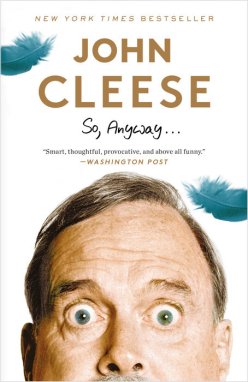
John Cleese was one of the hardest working members of Monty Python. Outside the troupe, he had a brisk sideline in other writing gigs, not to mention advertisements, and his side business in business training films (weird, but true). Eric Idle said that Cleese used to say that he’d do anything for money, so Idle offered him a pound to stop talking. Cleese took it.

Given Cleese’s work ethic, it’s fair to assume he’s a good fellow to listen to about writing. Even when his advice is counter-intuitive:

I tell [young comedy writers] to steal, because comedy is extraordinarily difficult. It’s much, much harder than drama. You only have to think of the number of great dramatic films and then compare that with the number of great comic films … and realize that there’s very, very few great comedies and there are lots and lots of very great tragedies, or dramas. That tells you, really, which is the hard one to do. So at the very beginning, to try to master the whole thing is too difficult, so pinch other people’s ideas and then try to write them yourself, and that’ll get you started…

In other words, comedy is hard. Learn from those who went before you.

Writer’s Desk: It Beats Working, or Does It?

The late David Carr (Night of the Gun) was the kind of writer who reminded writers why they loved their jobs. He suffered for the job, but also thought it was a blast, and tore poseurs to pieces.

Here’s Carr being interviewed by a magazine at Boston University, where he taught a class:

The dirty secret: journalism has always been horrible to get in; you always have to eat so much crap to find a place to stand. I waited tables for seven years, did writing on the side. If you’re gonna get a job that’s a little bit of a caper, that isn’t really a job, that under ideal circumstances you get to at least leave the building and leave your desktop, go out, find people more interesting than you, learn about something, come back and tell other people about it—that should be hard to get into. That should be hard to do. No wonder everybody’s lined up, trying to get into it. It beats working.

Writer’s Desk: Don’t Be Afraid of the Block

hitchhikersguideEvery writer gets blocked. The words don’t flow. Or they do, and you simply can’t stand them. Nothing works out.

But you have to work through it. There is no other option. Except, well, giving up writing. And since no writer ever wants to become a civilian, when the block sits in your head like a slug of granite, there’s nothing for it but to chisel your way around it.

Douglas Adams had one of the more infamous (and consistent) cases of writer’s block ever witnessed. It became one of his running jokes: “I love deadlines. I love the whooshing noise they make as they go by.” After spending seven years not writing a contracted manuscript called Starship Titanic, he called up his old Monty Python writing buddy Terry Jones and asked him whether he could help out. Sure, Jones replied, how much time do you have left? Five weeks, Adams replied.

In a more famous case, Adams spent years not writing the fourth Hitchhiker’s book, So Long and Thanks for All the Fish. His publisher, Sonny Mehta, finally came up with a solution: Lock Adams in a hotel room and not let him out until he produced pages. Mehta kept him on a schedule—a swim in the morning, write, room service lunch, write, dinner around the corner, sleep, repeat—that went on for days, Mehta said:

Douglas would sit down at this small desk with a typewriter, and I would sit in an armchair at 45 degrees from that, my back facing him, and I’d read a manuscript. I’d wait for the sound of those fingers on his typewriter keys–which sometimes would kind of happen, sporadically, and then there’d be long periods of silence, and I’d turn around to check him out and see that he hadn’t croaked on me or something. He’d be sitting up, staring out the window at this roof terrace. And every now and then I’d say, ‘How’s it going?’ And he’d say, ‘Fine–fine.’ And you’d hear paper being crumpled and thrown into a dustbin.

Each of us have to figure out our anti-blocking tools. Because we don’t all have a big contract to fulfill and Mehta there to help us do it.

Writer’s Desk: Updike on Scheduling

updike1One of the hardest things to deal with as a writer can be figuring out how much you have to do. Is it pages or hours of writing in a day that mark achievement? John Updike, who wrote a few books in his time, had a good answer:

Since I’ve gone to some trouble not to teach, and not to have any other employment, I have no reason not to go to my desk after breakfast and work there until lunch. So, I work three or four hours in the morning, and it’s not all covering blank paper with beautiful phrases. You begin by answering a letter or two. There’s a lot of junk in your life as a writer and most people have junk in their lives. But, I try to give about three hours to the project at hand and to move it along. There’s a danger if you don’t move it along steadily that you’re going to forget what it’s about, so you must keep in touch with it I figure. So once embarked, yes, I do try to stick to a schedule.

“Most people have junk in their lives.” That seems like almost the best part of what he says. Don’t pretend that you can perfectly shut the world out and be in your little writing cocoon. Deal with the noise, bring it in, and move past it to get on with your work. That seems key.

(h/t: Open Culture)

Writer’s Desk: Get It Down

MakeGoodArt_Hardback_1359996371

This series has been visited by the great Neil Gaiman more than once. There’s a reason for that. In between all his other work, the guy manages to keep up a regular torrent of thoughts and advice on the witchy craft of writing that are rarely short of inspirational.

Recently, he’s been doing this on Tumblr. Here’s his response to a question from a fan who’s been having a hard time getting their “amazing ideas” down on paper:

Write the ideas down. If they are going to be stories, try and tell the stories you would like to read. Finish the things you start to write. Do it a lot and you will be a writer. The only way to do it is to do it.

Gaiman goes on to tell the real way to write; it involves five golden berries, five white crows, and reciting the whole of Fox on Sox. Who knows? Maybe that way works, too.

(h/t: Galley Cat)

Writer’s Desk: Merton on Ignoring Criticism

Thomas Merton, who was born this day in 1915, was one of the 20th century’s only mystics whose voluminous writings on spirituality and philosophy were read with as much eagerness by the general public as by his fellow Catholics. As a prominent Catholic who directly engaged with Eastern religions and philosophies later in his life, and an eager debater, Merton was used to criticism as well as acclaim.

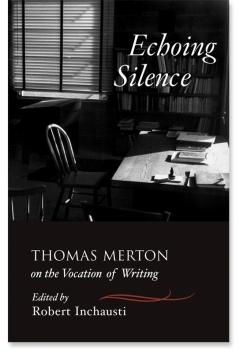
merton1A note of warning about being too cautious comes from Merton’s New Seeds of Contemplation, collected in Echoing Silence: Thomas Merton on the Vocation of Writing:

If a writer is so cautious that he never writes anything that cannot be criticized, he will never write anything that can be read. If you want to help other people you have got to make up your mind to write things that some men will condemn.

Note Merton’s focus on service. He is saying that if you’re going to write anything worthwhile, you have to ignore your inner censor, but in addition to that he sees worthy writing as being something that helps others. Whether he meant that in the strict sense, of advocating for people’s rights, or in the broader definition of expanding minds and perceptions (even just a little) with your art, the message seems to be the same: If nobody hates your writing, you might be doing something wrong.

Writer’s Desk: Edith Wharton and Breaking Hearts

Edith Wharton's place at Pavilion Colombe, St. Brice-sous-Forêt, France -- not a bad little writing spot.
Edith Wharton’s place at Pavilion Colombe, St. Brice-sous-Forêt, France; not a bad little writing spot.
writingoffictionIt’s common knowledge that the stinging jolt of painful experience can be spun into gold by the great writers. (And let’s be honest here—a mediocre writer is possible of creating greatness with the right material.) But there’s a catch to that truism.

Edith Wharton, who was born on this day in 1862, pointed it out in her book The Writing of Fiction:

As to experience, intellectual and moral, the creative imagination can make a little go a  long way, provided it remains long enough in the mind and is sufficiently brooded upon. One good heart-break will furnish the poet with many songs and the novelist with a considerable number of novels. But they must have hearts that can break.

(h/t: Roxane Gay)

Writer’s Desk: Every Damn Day

If you’re a writer with an unusually generous bent, it’s great to hear about those writers who can just hurl the stuff out, like Ray Bradbury tossing off Fahrenheit 451 in just nine days on a rented typewriter. But the rest of us have to work at it, and it’s hard then to be generous of mind when you’re on your fifth day in a row of absolutely nothing.

waltermosley1Still, that doesn’t mean there’s any way around it. As Walter Mosley said, writing is an everyday avocation. That’s particularly true if you’re trying to get that novel done:

This is the first important lesson that the writer must learn. Writing a novel is gathering smoke. It’s an excursion into the ether of ideas. There’s no time to waste. You must work with that idea as well as you can, jotting down notes and dialogue.

The first day the dream you gathered will linger, but it won’t last long. The next day you have to return to tend to your flimsy vapors. You have to brush them, reshape them, breathe into them and gather more.

It doesn’t matter what time of day you work, but you have to work every day because creation, like life, is always slipping away from you. You must write every day, but there’s no time limit on how long you have to write…

And try to remember, it was probably hard even for Bradbury at times.