Writer’s Desk: Apprentice for Life

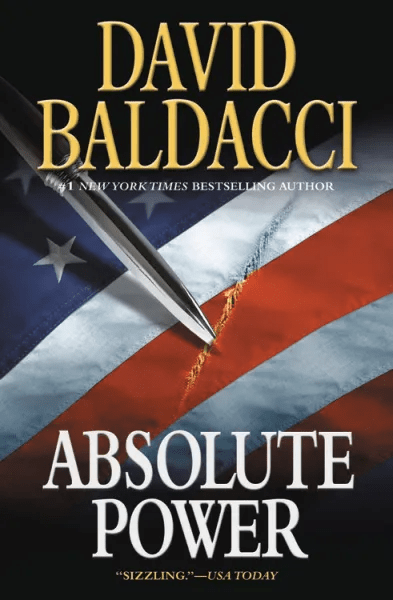
You would think that writers like David Baldacci have it easy. Forty-something novels, a ridiculous percentage of which are bestsellers; clearly writing another one is just like rolling out of bed. Right?

Yeah, no, says Baldacci:

You have to ask yourself why you want to be a writer and you have to have passion in the belly for it. It can’t be just because you hate your day job and you want to sell the film rights, because it’s going to take a long time. It’s a craft, which means you’re going to be an apprentice for life. Nobody ever masters the art of writing…

You never stop learning to write. Which is exhilarating for some of us. If that doesn’t sound like a good way to spend your life, look elsewhere.

Writer’s Desk: Keep it Loose

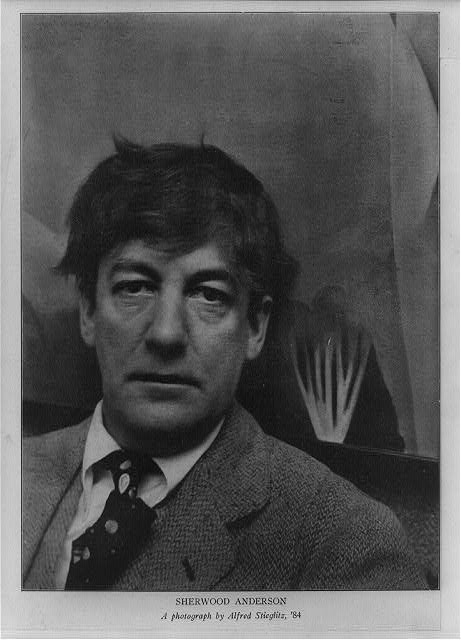
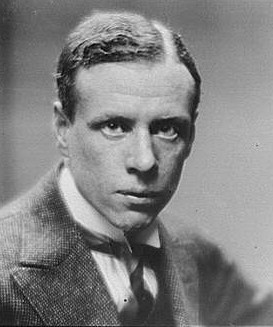
Sherwood Anderson, the roustabout journeyman who scrabbled around in manual labor and lived in a Chicago tenement before achieving fame with Winesburg, Ohio and then never managed to top himself no matter how much he wrote, had ideas about what made for subpar writing:

  • “Joyce, a gloomy Irishman, makes my bones ache. He is up the wrong tree.”
  • “[Hemingway] had got into a kind of romanticising of the so-called real . . . a kind of ecstasy over elephant dung, killing, death, etc. etc. And then he talks about writing the perfect sentence – something of that sort. Isn’t that rot?”
  • Worst of all was “cleverness” of any kind (except Thomas Wolfe)

What did Anderson approve of? Keeping it “loose.”

Nice and specific, that. Only Anderson is actually right. Once it seems like a chore, feels labored, or gives you the sensation of rolling a boulder up a never-ending slope, time to regroup. If you are feeling that way, the reader will, too.

Regroup. Circle back. Shake it off. Start over. Move fast, bring no outline, live off the land.

Keep it loose.

Writer’s Desk: Read Some Poetry

Lois Lowry does not write poetry. But she finds it useful.

Here is what she said about poetry and writer’s block:

Blocked or not (and in truth I seldom am), I begin each day by reading poetry. I’m not a poet myself. But somehow to enter that world where language is distilled and precise, and where cadence and word selection are essential…it propels me into my own work with a heightened sense of excitement and possibility…

Writer’s Desk: One Day, One Page

Back in 2017, when John Grisham had only sold a few quadrillion books, he very helpfully agreed to jot down some ideas for writing success in the New York Times.

A few of these are somewhat self-evident but nevertheless sterling pieces of advice to keep in mind:

Do: Write a page every day.
Don’t: Keep a thesaurus within reaching distance.

There’s another, however, which some people might quibble with:

Don’t: Write your first scene until you know your last.

This is fantastic when it happens. And many times you go searching for that final moment and it never comes to you. But other times, writing towards the conclusion delivers it to you. Which makes this seem overly limiting.

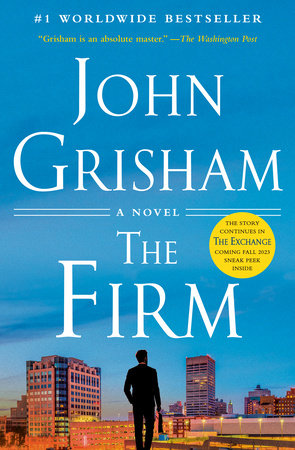
Still, he did write The Firm.

Writer’s Desk: Be the Reader

What poets do may not seem to have much to do with other kinds of writing. It can seem arcane and abstruse, all those rules or lack of rules and blank space and gnomic pronouncements.

Of course, that’s all nonsense. Like anything else, poetry is just the act of putting one word after another until you have something.

Which is why Robert Frost knew what he was talking about. In the preface to a 1939 Collected Poems edition, he gave the following advice:

No tears in the writer, no tears in the reader. No surprise for the writer, no surprise for the reader…

Be engaged in whatever you are writing. If you are just skipping along the surface, the reader can tell.

Writer’s Desk: Follow That Weird Idea

Against what so many people believe, there are writers who just knock out their book as they go. Outlining? Whiteboarding? Nah.

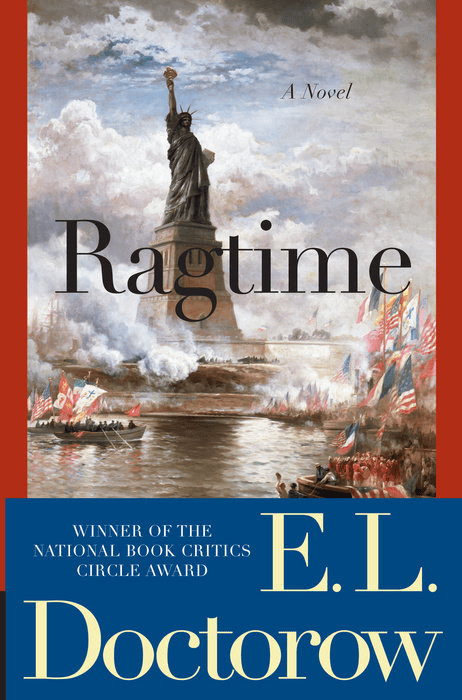
E. L. Doctorow was one of those. He told The Paris Review that Ragtime didn’t start because of deep research or a carefully plotted idea. It was really just an accident:

I was so desperate to write something, I was facing the wall of my study in my house in New Rochelle and so I started to write about the wall. That’s the kind of day we sometimes have, as writers. Then I wrote about the house that was attached to the wall. It was built in 1906, you see, so I thought about the era and what Broadview Avenue looked like then: trolley cars ran along the avenue down at the bottom of the hill; people wore white clothes in the summer to stay cool. Teddy Roosevelt was President. One thing led to another and that’s the way that book began: through desperation to those few images…

One thing leads to another, as Doctorow also enunciated with a much-clipped statement which has given heart to many a disorganized and desperate writer over the years:

Writing is like driving at night in the fog. You can only see as far as your headlights, but you can make the whole trip that way…

Writer’s Desk: The Morning Ritual

Some people write when they can snatch a little time during the day. Some take to it in the midnight hour when the house has gone quiet.

Others, like August Strindberg, are the morning kind. Get up, make the coffee, a brisk walk, and then to work. Per Sue Prideaux’s biography of the playwright:

And so it begins: on yellow, uncut Lessebo Bikupa paper, with Sir Joshua Mason’s 1001 nib and Antoine Fils’s violette noir ink it breaks out, accompanied by continual cigarette smoking until 12 o’clock. Then it is over. I am extinguished…

We may not all have access to “violette noir ink” but the principle remains sound. Do your work early, take the day to renew, then back to it the next morning.

(h/t: Daniel David Wallace)

Writer’s Desk: Make the Book Worth It

In Aldous Huxley’s novel Point Counter Point, a critic named Walter spends a good part of his day whacking away at the flood of literary jetsam he is assigned to cover. Huxley, through Walter, has fun mocking the mediocrity which makes up much of publishing (“bad novels and worthless verses … insignificant biographies and boring books of travel”). But there is also a sadness in the description, a sense of wasted effort:

A bad book is as much of a labor to write as a good one; it comes as sincerely from the author’s soul. But the bad author’s soul being, artistically at any rate, of inferior quality … the labour expended on the expression will be wasted…

There are a lot of Walters out there, pens drawn. Bring your best.

Writer’s Desk: Do it Because You Have To

In 1940, Sinclair Lewis was in a dry spell, professionally. He was several years past his last notable work (1935’s prescient anti-fascist warning It Can’t Happen Here) and unsure about where to take his career. Visiting an old friend at the University of Wisconsin Madison, he decided to take up a teaching gig there.

In one of his more famous lectures, Lewis declared:

When you write don’t worry about whether or not it’ll sell …. Don’t want success at twenty-two. If you want fame, be a prize fighter or a movie star. If you write, write because you must write. Because you can’t help it. Write what you believe, what you know, what moves you. And always write the best you can. Be self-proud. You can fool the critics but never yourself. Remember you’re competing with the best that’s ever been written. Try to be better than the best. There’s no limit for you and there can be no writing but great writing. Possess a divine egotism. . . . And never forget that you’re competing with Shakespeare

After teaching six classes, Lewis suddenly declared he had taught everything he knew and moved back to New York.

Writer’s Desk: Build Your Community

Writing is hard enough as it is. The self-doubt. The sitting. The pondering. The staring into space. The writing. The rewriting. Avoiding the reviews. Reading the reviews.

Why make writing more difficult than it needs to be by doing it alone?

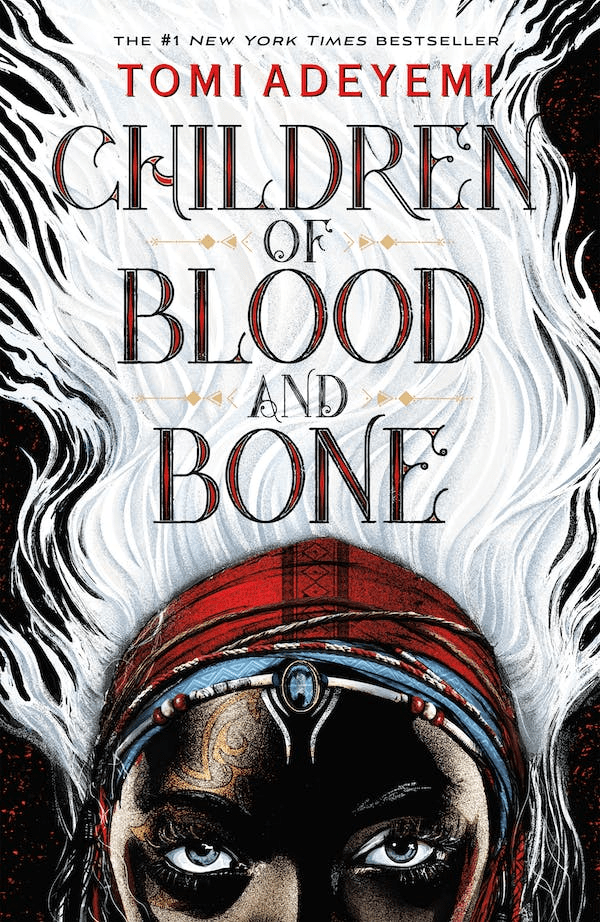
Tomi Adeyemi explains that as much as writers may think solitude is always the key, this is more of a group effort than many understand:

You need a community to succeed. In the back of every book is an acknowledgments page full of all the people it took to get that writer to the book you’re holding. With the internet, there are so many ways to connect with other writers who will be some of your best friends and best sources of support for your entire life. Push yourself out of your comfort zone and go meet them!

You heard her. Now go see if that writer’s group which meets at the local coffee shop is looking for new members.

Writer’s Desk: Ask Questions

Pulitzer Prize-winner and former Poet Laureate of the United States Tracy K. Smith isn’t the kind of versifier who aims for small targets.

As Smith told Oprah Daily, her work can generally be broken down into attempts to answer a few basic yet crucial questions:

“Who are we to one another?”
“What do we do to one another?”
“What’s the fallout from that?”

Start out interrogating any or all of those ideas and you will never run out of material.

Writer’s Desk: Edith Wharton on Critics

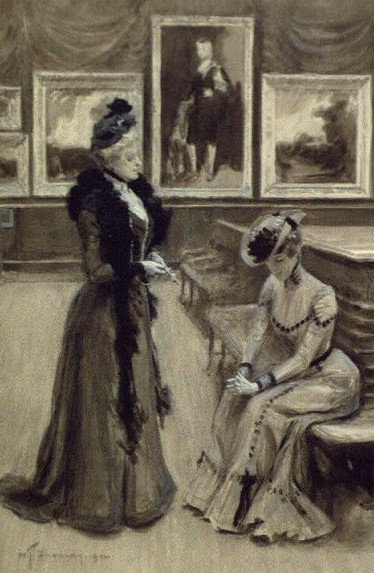
Illustration from Edith Wharton’s “The Quicksand”

Even Edith Wharton had to deal with critics. In her case, since she wrote about “Fashionable New York,” they primarily wanted to know which of her characters was which real person.

This was irritating.

But that comes with the territory when one has been lucky enough to get a book published and reviewed. People will say things; some nice, some confusing, many irritating.

Wharton counseled not worrying about it:

I long ago made up my mind that it is foolish and illogical to resent even such a puerile form of criticism. If one has sought the publicity of print, and sold one’s wares in the open market, one has sold to the purchasers of one’s books the right to think what they choose about them; and the novelist’s best safeguard is to try to put out of his mind the quality of the praise or blame likely to be meted out to him by reviewers and readers, and to write only for that dispassionate and ironic critic who dwells within the breast.

Of course, it’s a little easier to look past silly critiques when you are Edith Wharton.

Writer’s Corner: Investigate Your Characters

We have all heard the advice about listening to your characters. Maybe we should also be asking them questions.

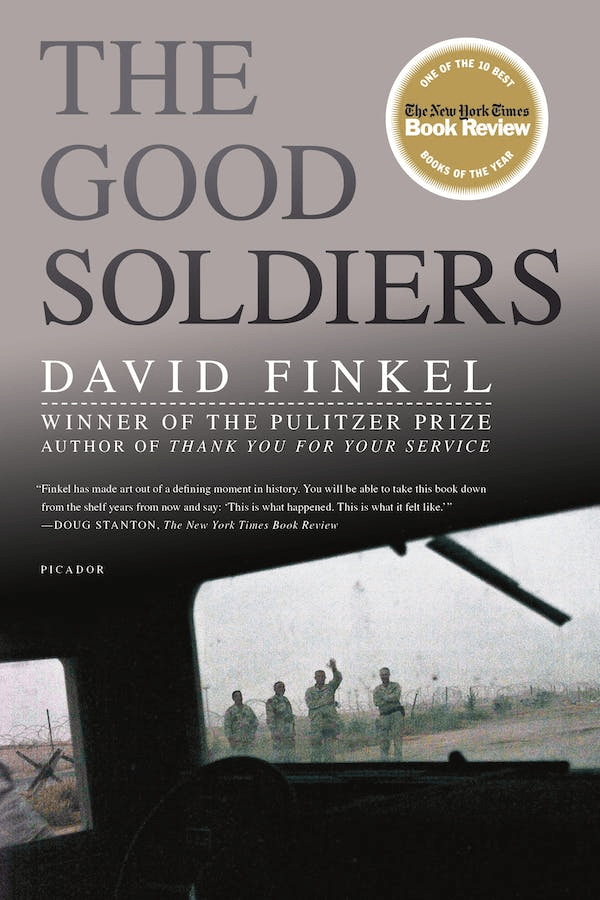
David Finkel, whose The Good Soldiers is a masterpiece of empathetic war reporting, talked about how to do this in a 2014 interview:

It’s a pretty deliberate process, and a lot of it involves working from an endpoint. But the first thing is I have to have a question I’m interested in answering … That doesn’t mean questioning all the time. All the tools we know. Learning to use silence as a reporting tool. All the things we do. Getting people to talk to each other. Trying to recede so something might occur as if it would have occurred if you weren’t there, if that’s possible. But, eventually, realizing what the story is I want to tell and then finishing the reporting to tell that story…

Start thinking about your characters like they are your subjects. Let them talk, with you and each other. Ask questions. Push them. See what happens.

Let your characters tell you both who they are and what the story is going to be.

Writer’s Desk: What Lenny Said

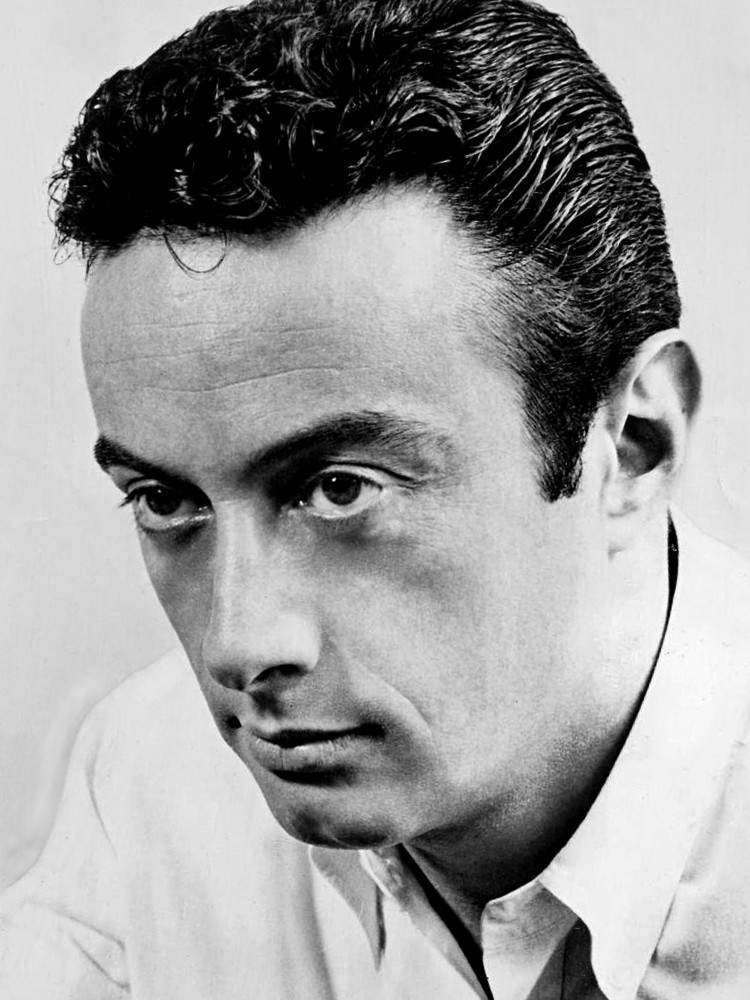
Since Lenny Bruce was a comic, he wasn’t really considered a writer. But that’s all comics do is write, even if they never put pen to paper. Every bit of their act is crafted, molded, sweated over, and knocked into shape by a grisly process they call “working it out” and your average writer just calls “editing.”

Bruce’s writerly output was thin. Too much time on stage and in jail, most likely, not to mention the chasing down of various substances. But he, or at least his spirit, still has advice to give.

Consider this scene from the end of the first episode of The Marvelous Mrs. Maisel. The title character, an aspiring standup, bails the Bruce character (played with elan by the astounding Luke Kirby) out of jail. Then, eager to know if it’s all worth it (the hours, the pay, the hecklers, the grind), Maisel asks him straight up, “Comedy. Standup. Do you love it?” Bruce responds:

Let’s put it like this: If there was anything else in the entire world that I could possibly do to earn a living, I would. Anything. I’m talking drycleaners to the Klan. Crippled kid portrait painter. Slaughterhouse attendant. If someone said to me, ‘Leonard, you can either eat a guy’s head or do two weeks at the Copa,’ I’d say, ‘Pass the f—— salt.’ It’s a terrible, terrible job. It should not exist. Like cancer. And God…

Asked by Maisel again, “Do you love it?” he shrugs and gives her a cracked madhouse grin.

Every writer knows what he means. It’s awful, this thing we do day in and day out.

But we love it.

Writer’s Desk: What’s the Deal with Writing?

It would be wonderful to think that all Jerry Seinfeld’s ideas come to him while he’s eating cereal just like that. Perhaps not “wonderful” but maybe “reassuring,” because then it would mean that is how writing might be sometimes for the rest of us.

No such luck:

I still have a writing session every day. It’s another thing that organizes your mind. The coffee goes here. The pad goes here. The notes go here. My writing technique is just: You can’t do anything else. You don’t have to write, but you can’t do anything else. The writing is such an ordeal. That sustains me…

Seinfeld later elaborated on this with Tim Ferris:

…my writing sessions used to be very arduous, very painful, like pushing against the wind in soft, muddy ground with a wheelbarrow full of bricks. And I did it. I had to do it because there’s just, as I mentioned in the book, you either learn to do that or you will die in the ecosystem.

Keep this in mind as you get ready for whatever 2024 is going to bring. The writing will not always be easy. You will probably want to give up. But this is what we signed up for the first time somebody asked us asked us what we wanted to be and we said, “a writer.”

You just have to keep pushing the wheelbarrow.