Writer’s Desk: Describe Like You’re an Alien

Stuck for how to describe a scene? Forget what you know. Don’t worry about what the reader might know. Come at it as an entirely unfamiliar thing.

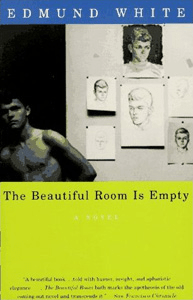
To do this, Edmund White has some advice:

One technique that the Russian Formalists use, and Nabokov and Tolstoy, is called defamiliarization. And the idea is that you describe everything as though you’re from Mars, so let’s say a girl’s first ball or going to the opera for the first time. Both of those scenes are in War and Peace. At the opera, there’s all these fat people coming on stage and screaming, and then everybody beats their hands together. It is described as though you’ve never seen it before and have no idea what it’s supposed to represent. It’s in some other language…

If it’s good enough for Nabokov and Tolstoy then it should work for you.

Writer’s Desk: Watch Some TV

Rumaan Alam (Leave the World Behind) does not have a lot of patience for the more precious kinds of writing practices out there. He told Esquire:

I think a lot of people have this idea that you can only write if you have hours at a desk, if the conditions are right, if you have the right pencil and the right notebook. That describes an ideal that’s really far from most working writers’ lives…

So how do you work through less-than-ideal conditions? Adapt! Alam even talks about just turning the TV on:

I think it’s very common to make time, especially when you’re tired, to watch TV. Think about turning that into productive work. Turn on the TV, leave it on mute, let Friends run for 23 minutes, and write, the entire time. When it’s over, put your notebook away, fold your laundry, pay the bills, play with the kids—do whatever the demands on your time are…

You heard it. Reruns can be productive. As background flicker, at least.

Writer’s Desk: Just Keep Going

Joyce Carol Oates (c. 1972)

According to Rachel Aviv’s recent portrait of Writer’s Desk favorite Joyce Carol Oates, there really isn’t that much to the author’s fantastic output:

…she has not really written that much, when you think about the fact that all it takes to write a hundred books is about two pages a day over the course of a lifetime.

Yes, Aviv’s tongue does appear firmly cheek-planted.

Writer’s Desk: Get Some Animals

Rita Mae Brown’s career has covered quite the gamut. She has written everything from gay coming-of-age novels (Rubyfruit Jungle) to slasher flick screenplays (Slumber Party Massacre!) and many lucrative mystery novels (the ones that the ingenious cat Sneaky Pie Brown has co-authored).

How, NPR once asked the prolific Brown, did she get past writer’s block? Her answer? It doesn’t happen:

I can’t afford writer’s block! I have too many mouths to feed on my farm: hounds, horses, cattle, even people — but they aren’t as important as my animals…

So there you are: Get yourself some animals who need expensive grub and you’ll never worry about motivation again.

Writer’s Desk: Hunt for Books Which Excite You

You would think that all writers read as much as they can. Not true. Some claim not to have the time. Others don’t want to be unduly influenced by somebody else’s work.

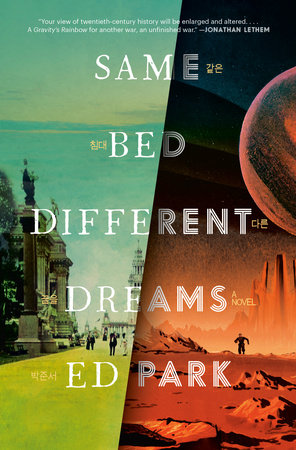
Nonsense, says Ed Park, whose raucous new novel Same Bed Different Dreams is just all kinds of amazing. According to Park:

I’ll still be strolling with my family and if there’s a bookstall I’ll be like, “Hold on.” You never know: there could be something there that will be a lot of fun to read and also change the way you think about what’s possible. My students know that my syllabi always mix in lesser-known things that I feel passionately about. If you let these books into your life, they can help you write in a way that you didn’t know you could…

If a book speaks to you, and has something to offer for your work, why not take advantage of that gift?

Writer’s Desk: Keep Challenging Yourself

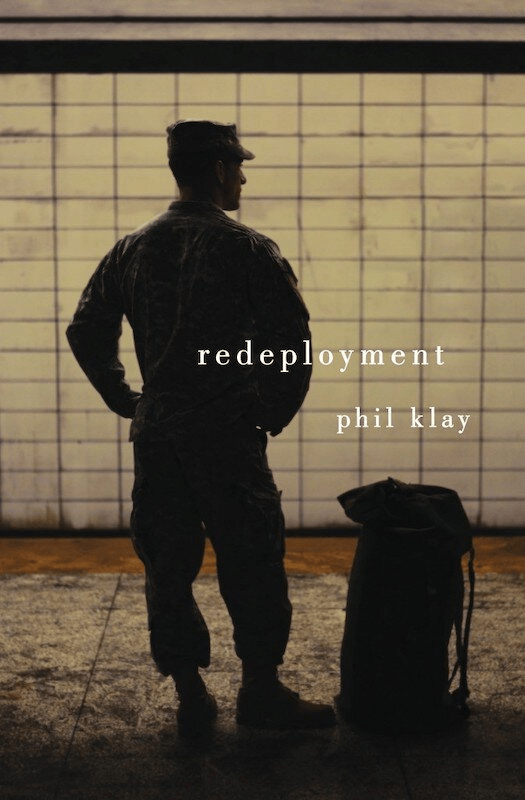
Before becoming the kind of writer who can get published anywhere from Tin House and Granta to the Wall Street Journal, Phil Klay spent several years in the Marine Corps and was deployed to Iraq. He drew on that experience to create his National Book Award-winning classic, Redeployment.

A hell of a writer who can deliver both piercing insight and gut-wrenching emotion on the same page, Klay would seem to produce his work from a place of superior confidence. But as he related in this interview, not so much:

Putting the story on the page is a product of doubt, not a product of certainty. I write because I’m troubled or confused or fascinated by something in human experience I don’t understand, and writing allows me a way to expose my own ignorance further. For me, a story begins with questions far more often than with answers. And even if I do have some very fixed notions at the outset of the story, writing usually complicates those notions or destroys them altogether…

See your uncertainty as a clue of where to start and a sign of something worth exploring, rather than a topic to be avoided. It’s like one of General Mark Milley’s favorite sayings, “Move to the sound of the guns.”

Writer’s Desk: Bad Writing Can Make Great Stories

Writers are told to focus on a lot of things: Plot, character, structure, style. But primarily they are taught as craftspeople to perfect their writing on a small scale. Word by word. Sentence by sentence. Enough good sentences and you have a great story.

Right?

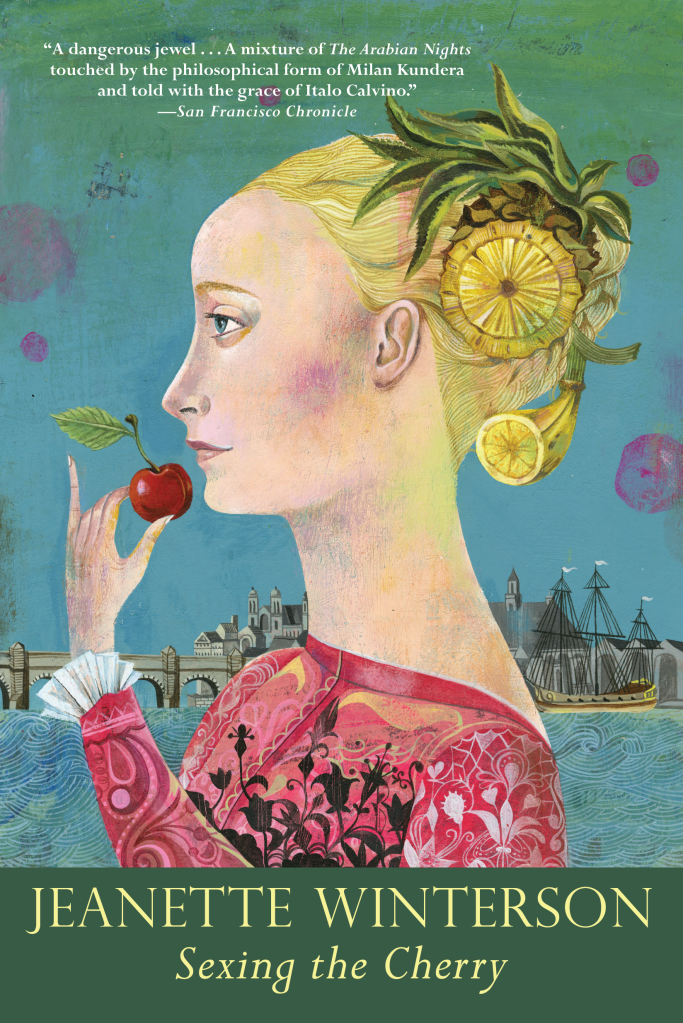
Jeanette Winterson disagrees:

When I do my courses with my students, I teach things that I don’t particularly like or enjoy. I tell the kids “Read as widely as you can. Get as much inside you as you possibly can. Don’t judge it too quickly. Learn why it interests you and why you get mad at something, why you get bored.”

For example, Philip K. Dick is a terrible writer, sentence by sentence. Something like that can be useful for students to see. We look at the sentence and we say, “Don’t do that.” But then we look at the whole story and think, Yeah, but it works…

Does that mean you have license to not care about your work? Of course not. Just be aware that if your writing is poorly crafted, unless you have a concept like A Scanner Darkly up your sleeve, nobody is going to bother with what you’ve made.

Writer’s Desk: Keep Dialogue Short, Meaningful, and Useful

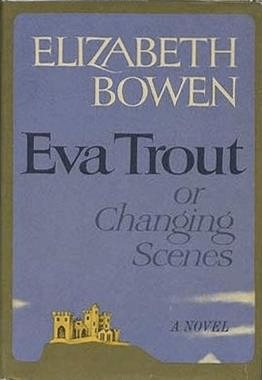
The great Irish novelist Elizabeth Bowen wrote one of the great writing essays, “Notes on Writing a Novel.” It’s particularly useful in terms of how to craft dialogue.

A few snippets:

  • Dialogue Must (1) Further Plot. (2) Express Character.
  • Dialogue must appear realistic without being so … In ‘real life’ everything is diluted; in the novel everything is condensed.
  • Short of a small range of physical acts—a fight, murder, love-making—dialogue is the most vigorous and visible interaction of which characters in a novel are capable. Speech is what the characters do to each other.
  • Characters should, on the whole, be under rather than over articulate. What they intend to say should be more evident, more striking (because of its greater inner importance to the plot) than what they arrive at saying.

Writer’s Desk: You Don’t Have to Choose Between Serious and Silly

Besides being among the more common decorations of dorm rooms for a certain brand of college student, the novels of Tom Robbins occupy an odd space in the American fiction landscape. They are big and broad comedic canvases, sweeping up oddball characters in goofball plots stippled with sharp bursts of screwball dialogue. Think of him of as a more clownish Vonnegut with less of a thing for science fiction or moral investigation.

All of which means Robbins does not take himself too seriously, no matter how well he writes. This remains true even when some critics tried to push him one way or the other:

One reviewer said I need to make up my mind if want to be funny or serious. My response is that I will make up my mind when God does, because life is a commingling of the sacred and the profane, good and evil. To try and separate them is fallacy…

Why choose? Sometimes you can have both. Just like life.

Writer’s Desk: Leave Something Worthwhile Behind

The late Clive James was a cultural student of multivarious appetites and great enthusiasms. All the great critics are (avoid the ones with too narrow an idea of what is good or worthwhile; they don’t enjoy what they do). He could also turn a mean phrase. For instance:

My idea of a fine wine was one that merely stained your teeth without stripping the enamel…

Or there is always:

All I can do is turn a phrase until it catches the light. There was a time when I got hot under the collar if the critics said I had nothing new to say. Now I realise that they had a point. My field is the self-evident. Everything I say is obvious, although I like to think that some of the obvious things I have said were not so obvious until I said them…

But in some of his best work, James talked about what really matters in all the culture we consume.

This might be best expressed in his epic poem (yes, he did verse, too) “The River in the Sky“:

Books are the anchors /
Left by the ships that rot away…

That’s the task in front of all of us. How to write something that reminds us of what was.

Or what could be.

Screening Room: ‘The Pigeon Tunnel’

My review of Errol Morris’ new documentary about master spy novelist and professional faker John le Carré, The Pigeon Tunnel, which premieres on Apple TV this Friday, is at PopMatters:

A run-of-the-mill con artist steals from you with a clever ruse or when you look the other way. The top-notch con artist can look you in the eye, explain he is about to deceive you, and then get away with it anyway. After watching Errol Morris’ sleekly enrapturing John le Carré documentary The Pigeon Tunnel, you cannot help but think what a clever truth-telling chap the film’s subject is, with all his talk about the fungibility of truth and the art of deception and forget he might be pinching your wallet at that moment…

Here is the trailer:

Writer’s Desk: Get to the Next Page

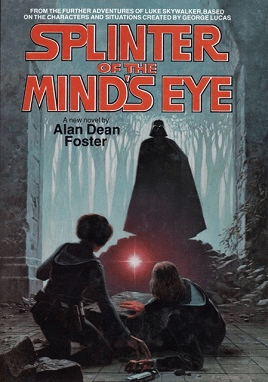
Alan Dean Foster, one of the most prolific wordsmiths of all time, does not waste a lot of time. He cannot, having written dozens of books, including many novelizations (Star Wars, Star Trek, etc.).

That is why Foster’s advice for new writers is eminently functional:

Read everything you can in your favored genre, including older work. Keep writing. Try to do a little bit every day, even if the result looks like crap. Getting from page four to page five is more important than spending three weeks getting page four perfect…

Writer’s Desk: Follow Your Inspiration

According to Illumination and Night Glare: the Unfinished Autobiography of Carson McCullers, the author frequently faced bouts of terror that she would never write again. These were the “night glares.” McCullers relied on small bits of inspiration to juice her writing. As writers know, these usually come out of nowhere and can seem like nothing.

When in the middle of writing her novel The Member of the Wedding, McCullers remembered a couple she had once seen when hanging at a bar in Brooklyn with her February House mates:

…a woman who was tall and strong as a giantess, and at her heels she had a little hunchback.

The image was so strong she had to put The Member of the Wedding aside and get started on something else. That something else was The Ballad of the Sad Cafe, and it would be one of her greatest successes.

Being inspired is one thing. Following it is another.

Writer’s Desk: Push Back the Darkness

Here is what Kate DiCamillo (Because of Winn-Dixie, The Tale of Despereaux) told the New Yorker about writing books which, emotionally if not factually, draw on dark episodes and feelings from her own life, particularly childhood:

I can never make my peace with suffering, but holding on to things doesn’t make my stories any better, it doesn’t make the people around me any happier. I feel like we all have to push against the darkness however we can. For me, it’s doing my work, writing stories that let children feel seen and to know they’re not alone in whatever they’re going through…

Writing your way through the darkness can be frightening. But it can also bring light to those who need it most.