Writer’s Desk: Sondheim on Quantity

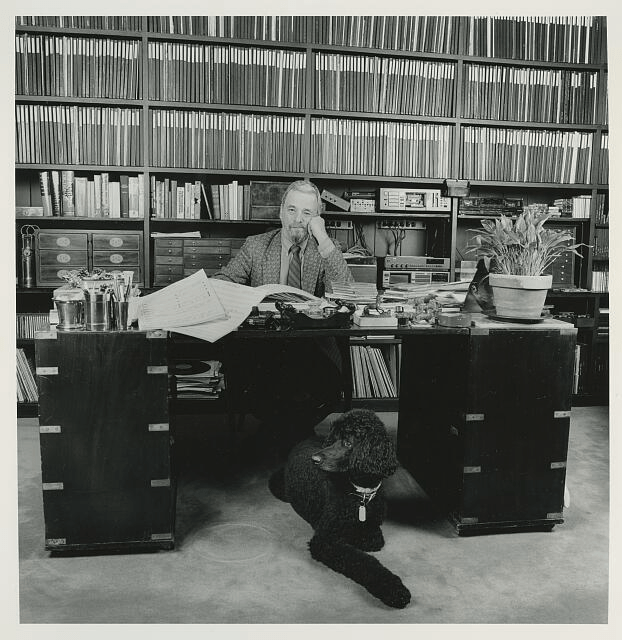
Stephen Sondheim at work

Some people work and work even if nobody else can understand why. Interviewed not long before he passed away in 2021 at the age of 91, Stephen Sondheim talked about productivity:

George Bernard Shaw kept writing plays until he was ninety-four. Of course, the last fifteen years they were terrible plays, but he did write them…

One could always just watch TV, of course. But in the end even writing a terrible play (or novel or poem or agitated essay about the state of modern literature) will make you feel better than most other things.

Writer’s Desk: Write What You Love

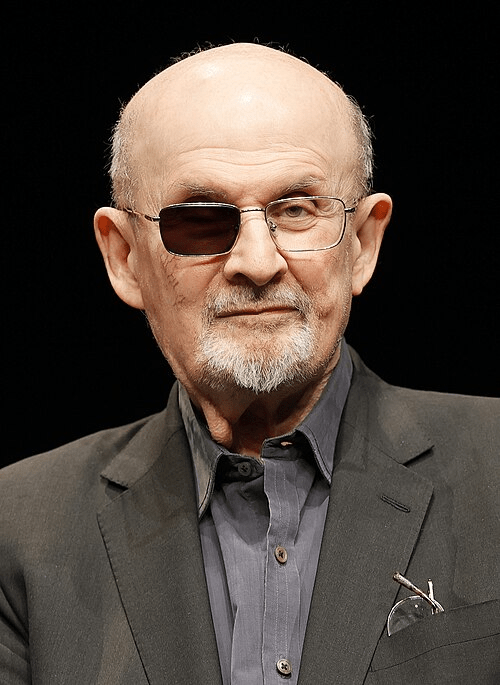
Salman Rushdie (Elena Ternovaja)

We’ve all had the problem. You read something and it hits you on some level. Still, there is something missing. It has some elements that work but it never quite gets there. You may even think, If I was writing this…

Follow that instinct. Listen to the voice of your inner reader. This is what Salman Rushdie tries to do:

I write books I’d enjoy reading, I’m the reader standing behind my shoulder…

TV Room: ‘Mountainhead’

Jesse Armstrong’s new movie Mountainhead premieres on HBO May 31. I reviewed it for Slant Magazine:

By following Succession with another acid-singed comedy about a slightly different subset of 0.01 percenters, Armstrong is sticking to a kind of satire he knows well. Mountainhead’s tech bros have many pathologies familiar from the Roy family in Succession, but even though just two years have passed since that show’s finale, the landscape of wealth and power mapped by Armstrong has changed immensely—though it feels more like devolution than progress. Vicious and powerful as the Roys were, the bros of Mountainhead would have annihilated that old-tech clan’s business and net worth with the flick of an algorithm, followed by laughter…

Here’s the trailer:

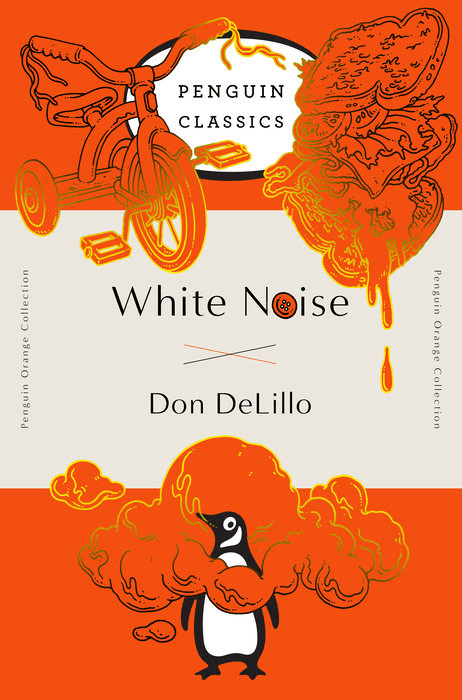
Writer’s Desk: Don DeLillo on Not Wasting Time

Don DeLillo has famously regimented writing habits. Every day at the desk, with two long segments broken up by a run to clear his mind. Not a bad way of going about things, for anybody who has the ability to maintain that kind of 9-5 schedule, but also not the sort of thing that every writer has the time for.

In this Paris Review interview, though, DeLillo points out something he strives for which every writer can try for:

No snack food or coffee. No cigarettes—I stopped smoking a long time ago. The space is clear, the house is quiet. A writer takes earnest measures to secure his solitude and then finds endless ways to squander it. Looking out the window, reading random entries in the dictionary…

Staring out the window is nice but doesn’t put words on the page. Time is a commodity. Don’t waste it.

Snacks are nice, though.

Screening Room: ‘Mission: Impossible – The Final Reckoning’

(Paramount Pictures)

The newest (and maybe last?) Tom Cruise outing as Ethan Hunt is out next week.

My review of Mission: Impossible – The Final Reckoning is at Eyes Wide Open:

Over the course of Final Reckoning, Hunt hurls himself into seemingly certain death so many times it’s hard not to wonder whether he even wants to survive. His eagerness to save the world is presented as a crusade with nearly religious overtones: the film’s main McGuffin is a cruciform key, Hunt is described as “the best of men in the worst of times” as well as “the chosen one,” and at one point nearly dies before being resurrected…

Here’s the trailer:

Writer’s Desk: Attention is Good

If a writer publishes and nobody notices, did it actually happen? To the writer, absolutely. That’s weeks, months, or years of gnashed-teeth labor in those pages. But to the rest of the world, not so much.

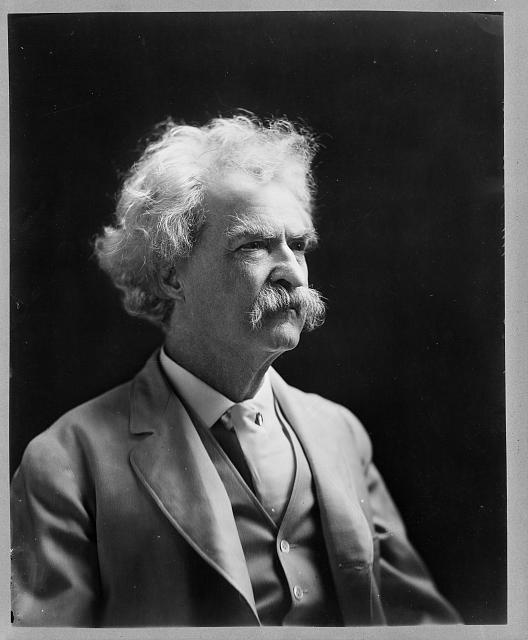
Ron Chernow’s mammoth new biography of Mark Twain shows how the great American humorist, sentimentalist, lecturer, anti-imperialist scold, and failed entrepreneur got people to read what he wrote. First, he lived a hell of a life:

Mark Twain discarded the image of the writer as a contemplative being, living a cloistered existence, and thrust himself into the hurly-burly of American culture, capturing the wild, uproarious energy throbbing in the heartland…

Brimming with material, Twain then grabbed the nation by its lapels:

A protean figure who played the role of printer, pilot, miner, journalist, novelist, platform artist, toastmaster, publisher, art patron, pundit, polemicist, inventor, crusader, investor, and maverick, he courted controversy and relished the limelight. A ferocious bargainer and shameless self-promoter, he sought fame and fortune without hesitation and established the image of the author as celebrity…

There are limits to this approach, of course, as any writer whose publisher has anxiously inquired about their social media reach knows.

But what Twain knew is that people are busy. They have a lot of things they would rather do than read what you wrote. Harlan Ellison wrote stories in bookstore windows.

Do what you have to do.

Reader’s Corner: Spring 2025 Graphic Novels

My round-up of four fascinating new graphic novels just ran in the Minnesota Star-Tribune:

Four new graphic novels cover a gamut of subjects, from a serious-minded study of Charles M. Schulz’s artistic legacy to the quiet, creatively turbulent life of Jane Austen and a pair of memoirs, one about a trauma-haunted love life and the other about growing up in Wisconsin’s ginseng capital…

Writer’s Desk: Keep Going, Even When It’s Terrible

Junot Diaz spent five years trying to write a novel. Five. But try as he did every single day, nothing worked. It was stuck at the 75-page point and refused to budget.

So he decided to give it another go. He dug out the manuscript and tasked himself with finding something, anything, good in it that he could salvage. What happened?

Spent the whole night reading everything I had written, and guess what? It was still terrible. In fact with the new distance the lameness was even worse than I’d thought…

With nothing else to do except became what he calls “a normal” (no bookstores, no hanging out with writer buddies, definitely no reading the Times Sunday book section), Diaz just went back at it:

There were no sudden miracles. It took two more years of heartbreak, of being utterly, dismayingly lost before the novel I had dreamed about for all those years finally started revealing itself. And another three years after that before I could look up from my desk and say the word I’d wanted to say for more than a decade: done.

Sometimes dedication and time are all you have to throw at the book. But eventually it can work. Dedication will win out, not a burst of inspiration.

Keep going.

Writer’s Desk: There Are So Many Worse Jobs Out There

Mike Royko, the Chicago columnist who set the template for pugnacious yet thoughtful commentary and deft political satire, wasn’t sure what he wanted to be when growing up. In his March 16, 1990 Chicago Tribune column, “Why Be a Writer? Think of Your Feet” (collected in One More Time: The Best of Mike Royko) he described being a seven-year-old and helping his dad at work:

Watching my father dashing up those steps at 5 a.m., sweat pouring down his face, I learned two things: 1. Being a milkman was hard work. 2: I didn’t want to be a milkman.

Royko learns about other professions like house painting (“Housepainters drank a lot. My grandfather and his cronies said that was because fumes from the paint were hazardous but shots and beers were an effective antidote”) and many other menial jobs (bowling alley, landscaping, machine shop). Rather than declare that this was the true and honest kind of labor, he came to a simple conclusion: “They made my flat feet hurt.”

Then Royko read an article about Ernest Hemingway’s typical day:

He would arise, have a bit of breakfast, and write until about noon. Then he and a pal or two would get in his cabin cruiser and spend the rest of the afternoon sipping tall cool ones and fishing … This impressed me as a sensible way to earn a living, and that was when I began thinking about becoming a writer…

We don’t all get the Hemingway life. But no writer ever said their work was murder on the knees or involved inhaling toxic fumes.

Screening Room: ‘Warfare’

My review of the new film Warfare just ran at PopMatters:

A tight and terrifying docudrama combat procedural, Ray Mendoza and Alex Garland’s Warfare tracks just one engagement in the Iraq War. The firefight was unremarkable enough to have almost certainly been forgotten by anybody not there. For the soldiers and civilians involved, however, it was likely a singular moment of their lives…

Here’s the trailer:

Writer’s Desk: Get Out of the Way

It’s hard for writers to avoid making themselves the subject. They do, after all, spend most of their time with just themselves and the page. Theoretically, they think of the reader. But they’re not around. The writer is. Always.

This can cause you to be just a little too present in the work. Noticeable. Drawing attention. John McPhee had some thoughts on this, which can be guessed from the title of his piece, “Omission“:

When you are deciding what to leave out, begin with the author. If you see yourself prancing around between the subject and reader, get lost…

The reader might like you. They may even have chosen your work because of other things you have written. But fundamentally they are there because they want to know what you have to tell them.

Get to it.

Screening Room: ‘Death of a Unicorn’

My review of Death of a Unicorn is at PopMatters:

If you find yourself wondering at any point during Alex Scharfman’s Grand-Guignol fantasy satire Death of a Unicorn, “Wait, how come there are unicorns in the Canadian Rockies which nobody has seen before?” then this is not the film for you. However, if some part of you is thinking, “I hope those vile ultra-wealthy despoilers of all that good and pure get what’s coming to them,” then you are in luck. One thing this fitfully fun but often pandering splatter of a film keeps its focus tightly pinned on is the importance of comeuppance for the baddies…

Here’s the trailer:

Writer’s Desk: Listen to Advice

When Gary Shteyngart met Philip Roth, the unofficial dean of American letters had some advice for him:

He told me not to eat butter…

This may not seem that helpful at first glance. But Shteyngart saw a silver lining:

I’m not sure that counts as “writing” advice, but it’s kept me squarely in the 128-132 pound zone, which has made me super-hungry as a writer…

Listen to what the Roths of the world tell you if you’re lucky enough to be around them when they dispense their advice.

Even when it makes no sense.