Screening Room: ‘Collective’

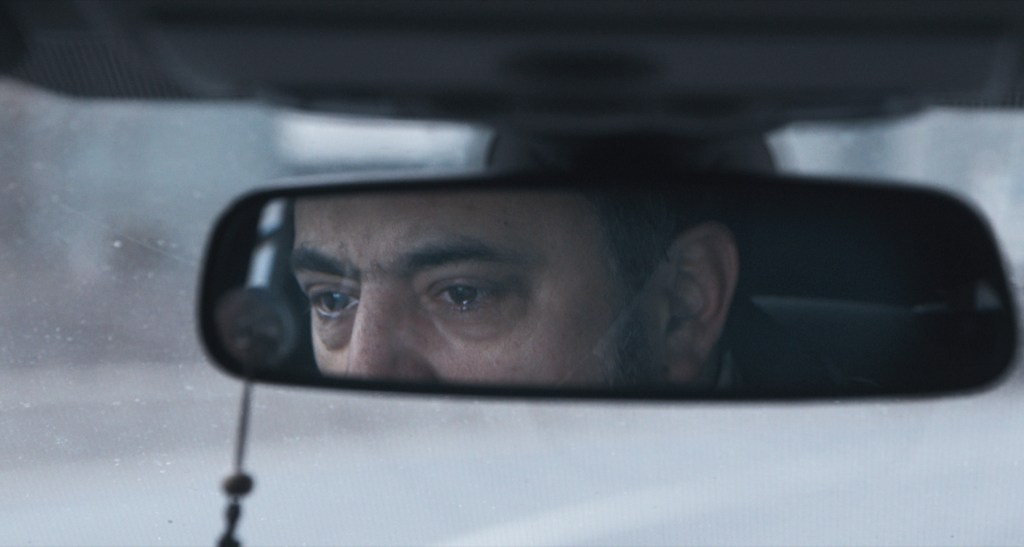
One of the greatest movies of the year, and a true classic of cinematic shoe-leather journalism, Collective is a riveting documentary about a wide-ranging corruption investigation in Romania.

My review is at The Playlist:

A common political cliché says that it’s not the scandal that gets you; it’s the cover-up. Alexander Nanau’s coruscating documentary “Collective” supersizes that formulation. Nanau begins with a terrible tragedy, which is likely enough of a subject on its own: the 2015 fire at Bucharest nightclub Colectiv, which killed 26 people. But in this movie, the fire—skin-crawling footage of which plays just before the credits—is just the beginning…

Here’s the trailer:

Screening Room: ‘Wojnarowicz’

In Chris Kim’s new documentary on David Wojnarowicz, he paints a vivid portrait of the artist in the tumult of the 1970s-80s New York art scene, where he was almost less making art than fighting for survival. My review of Wojnarowicz is at The Playlist:

Like many artists who built the scaffolding of the underground New York art world in the 1970s, Wojnarowicz was enamored of outlaw writers like Genet, Rimbaud, and Burroughs. (One of his earliest series involved self-portraits at various places in New York wearing a mask made from a portrait of Rimbaud.) When he started producing his own work—photography, painting, and writing—it drew on those writers’ outsider sensibility, mixing anger and dislocation with unapologetically aggressive sexuality. It was hardly surprising that Wojnarowicz would later become the target of homophobic conservative crusaders; Rimbaud never had to defend receiving NEA funding…

Screening Room: DOC NYC 2020

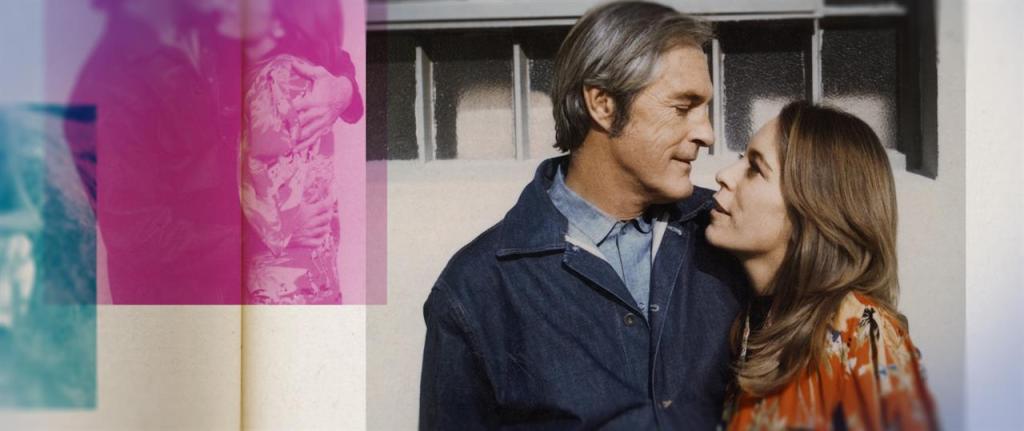
Starting tomorrow and running for a week, this year’s all-virtual edition of the annual non-fiction film festival DOC NYC is showing over a hundred documentaries, including the ones very likely to be nominated for Oscars. There are movies about crooked cops, Timothy Leary (above), the FBI’s war on the civil rights movement, amoral but charismatic PR flacks, and the scariest movie of 1983. All in all, quite good stuff.

My coverage is up at PopMatters:

So, like most film festivals, DOC NYC 2020 is now all-virtual. (And, no, the virtual experience is not the same as being in a buzzing crowd waiting with bated breath to catch the next Frederick Wiseman, rather than just cueing it up on your laptop. Participating in this annual event person is the documentary equivalent of seeing a movie in Cinemascope rather than on VHS.)

Unlike some other fests, though, the DOC NYC bookers do not appear to have trimmed their sails. They are showing 107 feature documentaries, plus dozens of shorts and events, over eight jam-packed days. Since virtual delivery has made the idea of opening and closing night movies somewhat pointless, it’s now more of a buffet, with viewers free to decide what they think are the most noteworthy entries…

TV Room: ‘City So Real’

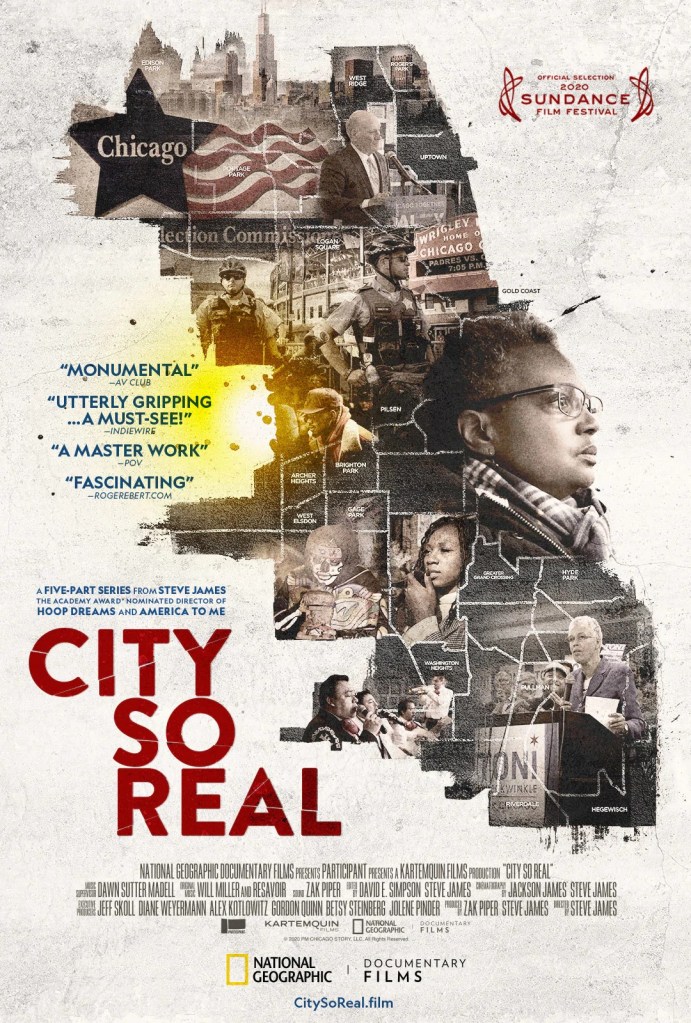
The latest documentary project from the great Steve James (Hoop Dreams) is a five-part miniseries that tracks the tumult of a Chicago mayoral campaign.

City So Real is streaming now on Hulu. My review is at The Playlist:

It’s a noble, heartfelt, and eye-opening look at the American city, matching the scope of Frederick Wiseman’s recent scoping of a similarly fractious Boston in “City Hall,” but giving it more of a warmly human pulse…

Here’s the trailer:

Screening Room: ‘Belushi’

For a few years in the 1970s, John Belushi was one of if not the biggest name in American comedy. Then he blew it all up.

The new Showtime documentary Belushi tells the story in dramatic, well-rounded fashion. My review is at The Playlist:

“Belushi” can be seen as something of a riposte to Bob Woodward’s 1984 biography “Wired.” The book is seen by people in Belushi’s circle as a cold, scathing, and exploitative take on their friend’s drug-related death in 1982 that ignores his talent and warmth. Cutler’s version is definitely sympathetic and somewhat of a family affair; resembling at times nothing so much as an Irish wake…

Screening Room: ‘Kingdom of Silence’

In Rick Rowley’s documentary Kingdom of Silence, a bevy of diplomats, security experts, and fellow writers come forward to tell the story of Jamal Khashoggi, the Saudi journalist murdered by the Saud royal family after his critical columns in the Washington Post.

My review of Kingdom of Silence, which starts on Showtime tonight, ran at The Playlist:

While Khashoggi’s presence brings an unusually impactful human touch—particularly the aching style of his writing, read in soulful beats during a few more mournful segments that seem to carry in them all the tragedy and thwarted promise of the modern Middle East—where “Kingdom of Silence” is most effective is using his story as a personal mirror to the geopolitical dramas that crash all through this movie…

Here’s the trailer:

Screening Room: ‘Epicentro’

In Hubert Sauper’s new documentary Epicentro, he explores the in-between world of Cuba, where utopian dreams meet cinematic propaganda amidst rotting infrastructure and tourist fantasia. It makes for a fascinating mix, even if the result is more essay than movie.

My review is at Slant:

Epicentro explores some of the filmmaker’s favorite topics, particularly colonialism, apocalypse, and the law of unintended consequences. But while some of his previous films, most notably Darwin’s Nightmare, showed a developing world careering toward catastrophe, this one illustrates something closer to a feedback loop. Although the Cuba he shows here is actively embracing a tourist economy that seems antithetical to the ideals of the 26th of July Movement, that pivot appears to signal less a capitalist future than a return to the island nation’s colonized past…

Here’s the trailer:

Screening Room: ‘Coup 53’

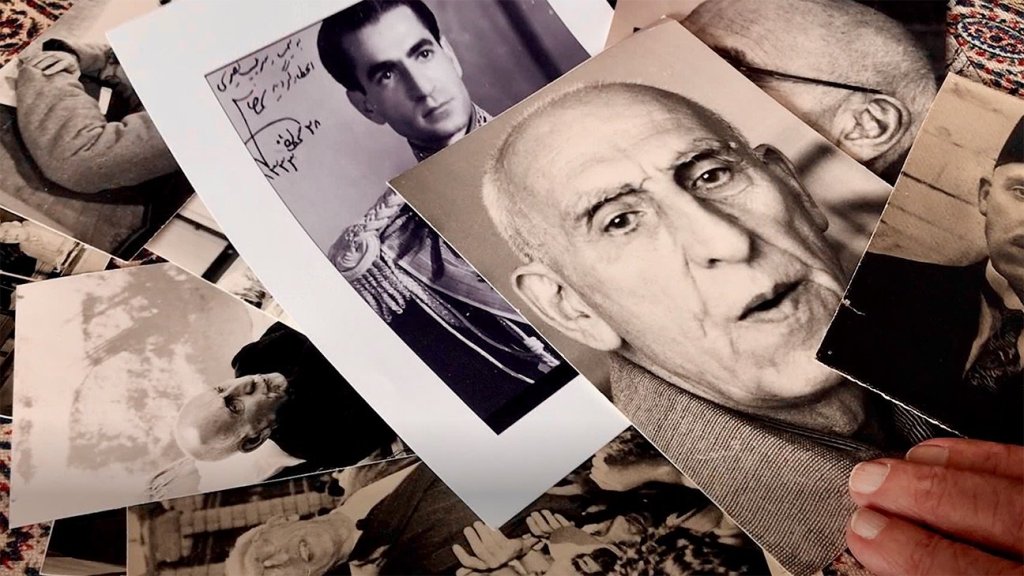
The crackerjack documentary Coup 53 opens this week, with a revealing new angle on the infamous Anglo-American overthrow of Iran’s democratic government in 1953.

My review is at Slant:

When something is an open secret, does confirmation matter? Coup 53, director Taghi Amirani’s crackling, if somewhat hyperbolic, documentary about the overthrow of Iranian Prime Minister Mohammed Mossadegh during a 1953 coup d’état, argues loudly in the affirmative. Amirani spends too much of the film recounting his dogged years-long pursuit of this or that document in trying to affirm British involvement in what was usually described as a C.I.A.-led operation. But once he finds the goods, the filmmaker engineers a highly dramatic coup of his own that snaps everything into focus: a long-buried interview in which MI6 agent Norman Darbyshire details with petulant pride how His Majesty’s Government demolished a functioning democracy that wouldn’t play ball…

Here’s the trailer:

Screening Room: ‘Apocalypse ’45’

In the new documentary Apocalypse ’45, director Erik Nelson mixes gloriously restored color footage from the Pacific Theater during World War II to illustrate the memories of veterans who witnessed some of that harrowing conflict. It makes for a beautiful and shivery experience.

My review is at PopMatters:

Nelson is paying homage to a vanishing generation of soldiers and includes their yearning for a time when it seemed the US could still unify around a cause. Still, this is not a burnished Veterans Day nostalgia reel. “Golden Gate in ’48, bread line in ’49” is how one Marine remembers their attitudes about how long it would take for the war to end and what would become of them immediately afterward. “Greatest generation,” humphs another when asked about the label, “Goddamn propaganda”…

Here’s the trailer:

Screening Room: ‘The Con’

In the five-part miniseries The Con, the filmmakers lay out a convincing case that the causes behind the Great Recession were far simpler, easily avoidable, further reaching, and more likely to repeat themselves than most stories of the crisis have previously said.

The Con is available for streaming now.

My review is at The Playlist:

The series provides a grand unified theory of the cause of the Great Recession that begins and ends with government—deregulating banks in the 1980s and ‘90s, refusing to imprison or even charge the heads of investment banks once the market imploded even after seemingly clear illegality, and bailing the institutions out to do it all over again—and fueled all along by a gusher of greed and criminality that makes it seem like there is not a single honest mortgage broker in the entire United States…

Screening Room: ‘The Pruitt-Igoe Myth’

Chad Freidrichs’ 2011 documentary The Pruitt-Igoe Myth challenged some long-unchallenged myths of the debate over public housing, not to mention the systemic racism embedded in some of the more infamous complexes, such as St. Louis’ Pruitt-Igoe (seen here being demolished in 1972). It is still an incredibly relevant piece of work.

My article on The Pruitt-Igoe Myth is at Eyes Wide Open:

As Freidrichs shows, the lessons supposedly learned from this ignominious episode weren’t entirely wrong but they certainly weren’t all correct, either. As usual, it was the poor and powerless who received the blame, while the powers that be escaping censure and pointing fingers back at those whom they were to have been helping…

You can stream the movie for free this month at Vimeo:

Screening Room: Docs to Watch Out For

Last week’s online edition of the AFI DOCS film festival featured premieres of several documentaries that will be worth keeping your eyes peeled for later in the year when they hit broader release. I reviewed two of them for The Playlist.

  • 9to5: The Story of a Movement (pictured above): “Even in our supposedly more enlightened times, when people hear the word ‘labor,’ they are likely to conjure up a predictable set of mental images: Burly white guys in hard hats…”
  • White Noise: “A queasily riveting documentary that puts the audience far closer than comfort to some of the worst people in the world…”

Screening Room: ‘John Lewis: Good Trouble’

To celebrate Juneteenth, and also to act as a kind of counter-programming for tomorrow’s Trump rally, Dawn Porter’s new documentary about civil rights legend John Lewis (who will be also the subject of a new biography by Jon Meacham coming out this fall) is having a free screening in Tulsa today.

John Lewis: Good Trouble opens elsewhere on July 3. My review is at The Playlist:

Like any successful politician, John Lewis has a supply of anecdotes and applause lines to pull out whenever he is needed. One of the go-to bits we hear in the movie involves a memory from his childhood on a farm where, as a deeply religious and studious boy, he would preach to the family chickens. They would nod along, he says, but could never quite get to “Amen.” He more frequently pulls out a line that serves as his call to action. Arrested dozens of times over his career, Lewis cites the need for people to get into what he calls “Necessary trouble. Good trouble” in order to enact change…

Here’s the trailer:

Screening Room: Human Rights Watch Film Festival

The 2020 edition of the always worthwhile Human Rights Watch Film Festival is going virtual this year, like everything else. It’s a shorter than normal list of documentaries, but still contains some sharp and unforgettable work.

The movies range from Coded Bias (pictured above), which studies the ways white male coders can embed prejudice in seemingly impartial algorithms, to Welcome to Chechnya, a harrowing nonfiction thriller about the activists fighting to get LGBTQ people out of Chechnya before they are tortured and killed, to Radio Silence, a taut story about a Mexico City journalist being hounded by a government that cares more about investigating her than actual criminals.

My coverage of the festival is at PopMatters:

In a time when specialty movie events have been ever more narrowly targeted (festivals devoted to food, puppetry, and so on down the rabbit hole of monomania), the HRWFF went large. It served as a global snapshot of how humanity was faring in the fight to uphold basic standards of freedom and decency for its people. The unsurprising answer tends to be a variant on: Not well…

Screening Room: ‘The Painter and the Thief’

A shapeshifter of a documentary, The Painter and the Thief follows the surprising aftermath of a gallery break-in. After losing two of her paintings in the theft, the artist connects with one of the men who stole them and begins painting him.

The Painter and the Thief opens Friday. My review is at The Playlist:

“The Painter and the Thief” is best not watched by more than one person at the time. After all, it is opening during the pandemic as a ‘Virtual Cinema’ release. This means that if it is watched by multiple individuals, they will most likely be in close and extended confinement. That confinement could become uncomfortable very fast after seeing the movie, which will elicit responses ranging from “That’s incredible” to “What was she thinking?” Director Benjamin Ree (‘Magnus’) has trained his camera on a colorfully chimeric story that will shift in meaning depending on the viewer…

Here’s the trailer: