So what do you do, if you’re Motörhead’s Lemmy and you need to unwind? You’re 69 years old, an aging metal icon, with a string of furiously guitar-slashing albums behind you and the status of somebody whose like will never be seen again. As The Atlantic‘s James Parker puts it, what you do “cannot be counterfeited or repeated“:
Lemmy once roadie’d for Jimi Hendrix; these days, retiring postshow to his tour-bus bunk, he reads P. G. Wodehouse.
We should all be so smart. Jeeves will take care of all. Even after the evening’s encore…
What I’m trying to say is: Yes, fine, I am a snob. I revere the formal achievement of the first and most recent “Mad Max” movies. I sneer at most biopics and costume dramas. I like my pleasures slow and difficult. I would rather watch a mediocre film from South America or Eastern Europe about the sufferings of poor people than a mediocre Hollywood comedy about the inconveniences of the affluent. I look up in admiration at models of artistic perfection, sound judgment and noble achievement, and I look down on what I take to be the stupid, cheap and cynical aspects of public discourse…
Sometimes a snob is a person enjoying certain things for their cachet, for what they believe it will say about them.
Other times, a snob is somebody with very definitive tastes that happen to not agree with the majority of people. This tends to make the majority annoyed and defensive about their own tastes.
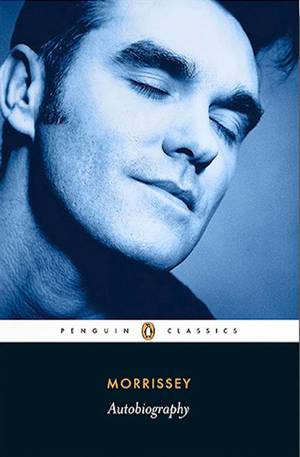
Somehow Morrissey went from the crooning pseudo-Wildean frontman for The Smiths to the first modern writer to have their book made into an instant Penguin Classic. For all that we love about him, his fey and aloof humor and those jabbing little daggers of surreality in his lyrics, it didn’t seem quite proper at the time that his life’s story would be in the catalog right there next to Montaigne.
But, then, as the publisher apparently argued, “it is a classic in the making.” That could be said about pretty much any book, but fair enough. It went to sell scads of copies, so good on them.
Success breeds success, it would appear, as news comes that Morrissey is now going to be releasing a second book, a novel called List of the Lost. Let it contain lines like this from the Autobiography:
All human activity is fruitless when pitted against the girls and boys singing on pop television, for they have found the answer as the rest of us search for the question. I will sing, too. If not, I will have to die.
Please, please, please let us get what we readers want.
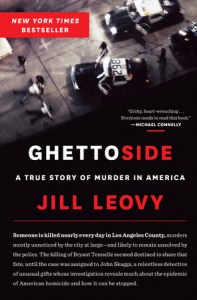
One of the most surprising entries on the nonfiction bestseller lists now, in between all the diet and self-help and comedy tell-alls and breathless Bill O’Reilly assassination tomes, is Jill Leovy’s gritty Ghettoside: A True Story of Murder in America. It’s a true-crime potboiler and an X-Ray of a dysfunctioning city and a cry for help all at once. Her writing is sharp, her reporting true.
Ghettoside is on sale now and is very worth your seeking out. My review is at PopMatters:
As the Los Angeles Timereporter who created the newspaper’s blog, The Homicide Report, Jill Leovy understands all too well the numbing cycle of violence that typifies most poor minority neighborhoods in America. The Homicide Report was simple in concept but gargantuan in practice: Cover every murder in Los Angeles. That meant finding out who was killed, who they were, how it happened, and if possible why. By the time the blog started in 2007, the country’s early-‘90s homicide peak had passed, but the murders kept coming. Each one was a story; another human life gone, and a space that couldn’t be filled left behind…
In the late-1970s, a couple decades before measles was declared officially eliminated in the United States—and before Rand Paul and the rest of the anti-science crowd got busy bringing it back—the government felt it needed some help convincing parents to give their children the measles vaccine that had been first introduced in 1968.
What better allies in the fight against easily-stoppable communicable diseases than a couple of droids from a galaxy far, far away?
At right you’ll see the poster that the Centers for Disease Control and the Department of Health, Education, and Welfare used at the time to make their case. Perhaps it’s time to bring them back?
Steve Almond is one of those overly talented writers whose style ranges from the literary short story to pop cultural/ethical commentary in the Chuck Klosterman vein. So, in one sense, the fact that Almond has written a book on sports shouldn’t be surprising. On the other hand, it’s a passionate work about a subject he cares deeply about. That’s the thing about football fanatics; they hide in plain sight.
My essay on his newest book, “To Hell with All That Guilty Love: On Steve Almond’s ‘Against Football’,” ran in The Millions yesterday:
Like most of us, Almond thought he was immune from modern sports mania’s entanglements. We all know (and some of us resemble) the type, eyes scouring for the nearest screen showing SportsCenter, phones lit up by fantasy scores and trash-talk, ears always full of the angry drone of sports talk radio. No matter the mountains Almond would move to watch his Raiders lose time after catastrophic time, he thought he could stay above the fray.
In the preface, Almond describes a newspaper article he pasted to the wall of his office, which contains a quote from running back Kevin Faulk after he took a head-rattling hit. Faulk’s words were clearly those of a man who had suffered a significant blow to the brain. Almond writes, “I thought it was funny”…
Here’s Almond debating football with the great Greg Easterbrook at the Politics and Prose bookstore:
Somewhere in Southern California (Library of Congress)
Today’s bit of perception about one of America’s most over-analyzed, unloved, and misunderstood “cities” comes courtesy of surrealist pie-thrower and comic raconteur Terry Southern (Candy, Dr. Strangelove). Interviewed at length for The Paris Review‘s occasional series on screenwriters (the interview took place in 1967 but wasn’t published until 2012) the Texas-born Southern expounded on that great Southern California sinkhole of creative energy and dashed dreams:
Hollywood, that is to say, Los Angeles, is not, of course, a city, and its sinister forces are very oblique. There’s no public transportation system whatever, so the people drive around as though they were living in Des Moines, and it has all the rest of the disadvantages of a small town, only filled with displaced persons. On the other hand, life there has an engaging surrealist quality, an almost exciting grotesqueness.
The cultural scene there in general is sped up, sort of concentrated. Southern California is a mecca for all manner of freakishness, beginning on the most middle-class level—hot-dog stands in the shape of a hot dog. If you go there, you’ll immediately see a carnival, Disneyland aspect that is different from any other place in America.
Southern also notes the differences between the ladies of Hollywood and those of the East Coast:
… girls who want to be writers come to the Village and girls who want to be actresses go to Hollywood.
Once upon a time, before science fiction (in the form of monster movies and comic-book franchises) took over the cineplex, anthology shows on radio and television provided a steady diet of short tales of the fantastic.
Case in point was the short-lived NBC radio program Dimension X, which ran from 1950 to 1951 and advertised itself as “adventures in time and space, told in future tense.”
During the show’s tenure, they broadcast work by some of the genre’s greatest practitioners, from Isaac Asimov and Robert Bloch to Ray Bradbury and Robert A. Heinlein. Now, thanks to the memory machine that is the Internet, you can listen to some of those programs at the Internet Archive. Make sure to check out Bradbury’s “There Will Come Soft Rains,” originally collected in The Martian Chronicles and one of the greatest, saddest testimonies ever penned on the folly of war.
Joe Strummer, playing with the Pogues (photo by Masao Nakagami)
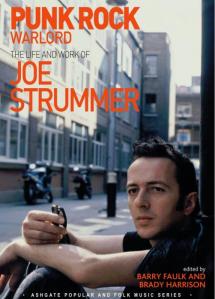
There’s a great new collection of essays about the inestimable Joe Strummer (1952–2002) that came out last month from Ashgate Publishing called Punk Rock Warlord: The Life and Work of Joe Strummer. I was lucky enough to be asked to contribute a chapter.
Strummer wanted to be a lot of things: writer, artist, revolutionary, world-champion cigarette smoker. But what was probably most important to him was communication, whether about racial equality, how consumerism was crap, or just whatever was running through his roiling mind that week. He wanted to use his songs to get the word out. Rock stars can get the word out; they have a megaphone louder than that of the street-corner busker or pub-rocker that Joe started out as. If he was going to be a rock star, he needed a proper stage name…
Just for kicks, here’s a New York local news report from when Joe and the Clash barnstormed through the city in 1981:
In the last bit of coverage from the Dublin Writers Festival, we have a story from Ireland’s fraught past and cautiously optimistic future.
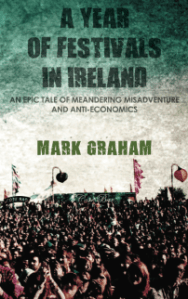
First there was a marvelous spoken-word show from Mark Graham, who had decided not long before to buy a used camper and go attend three festivals a week around Ireland for an entire year. Apparently every town of more than two houses has a festival, so it worked.
Next up was “Where They Lie,” an investigation into the search for justice on the part of those who were “disappeared” by the IRA during The Troubles (that horrid euphemism) in the north for supposedly collaborating with the British or Unionists. It was a tough evening, with no easy answers for those in attendance.
“Where the Disappeared Lie” is here at PopMatters.
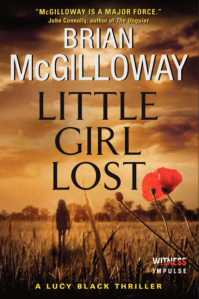
One of the more interesting panel discussions at the Dublin Writers Festival was titled “The State of Crime”. In it, crime novelists Arne Dahl, Sinead Crowley, and Brian McGilloway held forth on everything from the state of Swedish society to whether or not they did any research with the police before writing their first books.
As with many events at the Festival, the talk turned to writing mechanics. Moderator [Declan] Burke suggested that aspiring writers not try to put everything into a first draft. He preferred just banging it all out once, messy or not, and then going back and fixing anything from plot to characterizations on multiple later passes. Dahl suggested writing one short story a year in addition to novels, since the compressed space “sharpens your pen”. He also thought it helpful, and possibly even necessary, for crime writers to read Macbeth once a year…
The annual Dublin Writers Festival, which just concluded this past Sunday, was an enjoyably low-key but nevertheless enthusiastic affair, mixing up writing workshops with talks and Q&As with authors and the occasional performance piece.
I covered a few days of it for PopMatters; here’s part:
This is Dublin, after all, which proudly carries its status as UNESCO City of Literature, and where the odd plaque on an undistinguished townhouse near St. Stephen’s Green reminds you that Bram Stoker lived there, and the Gate Theatre just happens to be staging An Ideal Husband by the Dublin-raised and -educated Oscar Wilde. The event locations were mostly clustered within an easy walk of Temple Bar, making one conveniently never far from a restorative tipple. The offerings ran the gamut from workshop-like conversations with would-be writers to themed readings and music and poetry galas. By the end of even just one day, if you didn’t already have a novel or cycle of poems in the works, you would feel as though you were somehow missing out…
Belfast, where learning the Irish language was a sign of solidarity with the anti-British cause.
For tomorrow’s celebration of St. Patrick’s Day, a note on the Irish, language, and stubbornness:
If you want to make any sort of Irishman do something, the surest way is to tell him it is forbidden; and if the learning of the Irish language is a bad thing (I’m not sure that it is…) … forbidden it under pressure will stimulate it to such an extent that the very dogs in Belfast … will bark in Irish.
—Lord Charlemont, cabinet minister in Northern Ireland, 1933
After having gone from being the rare gangsta rapper who had actually lived the life instead of just rapping about it to loud monotone fixture on Law & Order: SVU and too many horrendous movies to count, Ice-T has a new gig: Recording audiobooks. It makes sense, given his clear, bottom-heavy voice. But according to Paste, he talked on a recent podcast about running into some trouble recording an unnamed Dungeons & Dragons novel. Just realizing the depths of nerd-dom that he’d gotten into (“They were talking about ‘pegasuses’ and ‘pegasi.’ That’s horses with wings”) was an education in itself:
It took Ice three-and-a-half hours to record 25 pages of the book, whose title he does not reveal. But, he added, he will slay the fantasy-lingo dragon and let fans know when the audiobook goes on sale.
“It’ll be a treat to watch me, with my South Central-educated ass, trying to read some Dungeons & Dragons shit,” he promises.
The O.G. further notes that “Considering the way music is right now, you’re better off listening to a book … Honestly, it’s more entertaining.”
“It’s crazy,” she’d said, “but I’d be perfectly happy if I could sit looking at the same half dozen paintings for the rest of my life. I can’t think of a better way to go insane.”
—The Goldfinch, Donna Tartt
Think about what six paintings you wouldn’t mind looking at forever.

 So what do you do, if you’re Motörhead’s Lemmy and you need to unwind? You’re 69 years old, an aging metal icon, with a string of furiously guitar-slashing albums behind you and the status of somebody whose like will never be seen again. As The Atlantic‘s James Parker puts it, what you do “cannot be counterfeited or repeated“:



 A much shortened, adapted version of that essay ran at PopMatters under the title “

 Chris Barsanti
You must be logged in to post a comment.