- Small-batch whiskies to the sinfulness of weak pours: A guide to Southern drinking.
- More dictatorial bad taste: the abandoned Yanukovych mansion.
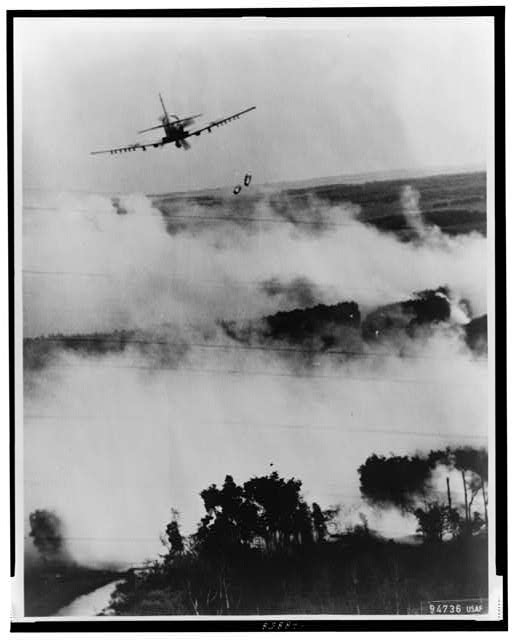
- Women make better combat pilots; stories of the “night witches.”
- GOP: Keep the children fat.
- Too bad about Bitcoin.
- The legend of Shakey’s Pizza and other adventures of American brands overseas.
- The “academic suicide” that is the mysterious Voynich manuscript.
- In memory of the late, wonderful Harold Ramis: An oral history of Ghostbusters.
- New E.L. Doctorow novel to George Will on Wrigley Field: Books to look for in 2014.
- First book from New Pope, The Church of Mercy, in stores by Easter.
- Print and read: “It is the cure for the dog that bit you, and how easily you forget it is also the dog;” Roger Ebert, addict.
- Bonus print and read: Max Boot on Robert Gates, one angry bureaucrat.
Category: Omnium Gatherum
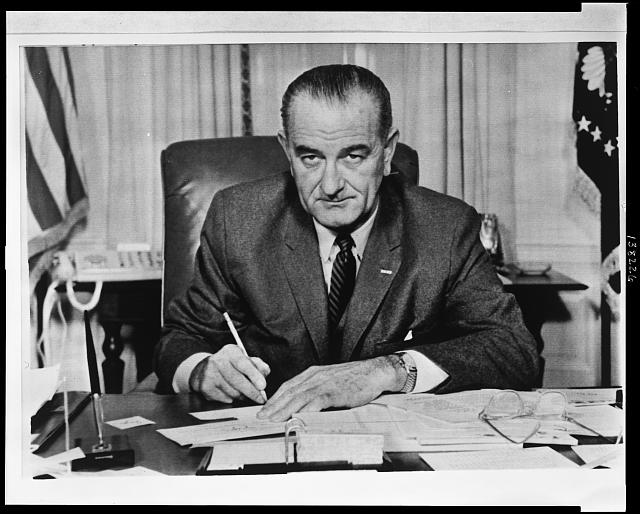
Quote of the Day: LBJ’s Rules of Life
A few select items from Lyndon Baines Johnson’s Rules of Life:
- Remember the CIA is made up of boys whose families sent them to Princeton but wouldn’t let them into the family brokerage business.
- Never trust a man whose eyes are too close to his nose.
- The fact that a man is a newspaper reporter is evidence of some flaw of character.
- When things haven’t gone well for you, call in a secretary or a staff man and chew him out. You will sleep better and they will appreciate the attention.
These rules might be tough to follow for those of us who are not leaders of the free world, but many are just plain good sense.
(h/t Conor Friedersdorf)
Department of Weekend Reading: February 21, 2014
- After Michael Dunn and another killing of a black teenager: “My son has a father and mother. We cannot protect him from our country, which is our aegis and our assailant.”
- Reasons not to want Hillary Clinton to get the nomination.
- Both parties in Kansas City agree that sometimes “protecting religious values” is just discrimination.
- More fracking, more earthquakes.
- When politicians care more about German shareholders than American workers.
- In the 1870s, half of Boston burned down and the US Cavalry was fighting on foot because of an outbreak of horse influenza.
- The great Pandora vote-determinator.
- Sudan to Syria: Don’t bother with cease-fires.
- Print and read: When the CIA sponsored creative writing programs.
- Bonus print and read: The eternal darkness of Dick Cheney: “If I had to do it over again, I’d do it in a minute.”
Department of Weekend Reading: February 14, 2014
- In the 1920s, Soviet athletic competitions (they were barred from the Olympics until 1952) featured no winners or losers, but equality between the genders and cool modernist outfits.
- Western Catholics still think the Catholic Church is wrong on just about everything, but African and Asian Catholics are more amenable.
- Zirin: NFL owners “sound like scared children when they talk about the prospect of drafting a player of the character of Michael Sam.”
- Nap-time to weddings: IKEA in China.
- Marco Rubio and the inhaling question.
- Genetically decoding Richard III.
- One step closer to nuclear fusion power.
- Ceasefire on Capitol Hill?
- Ernest Hemingway had an awesome burger recipe.
- Will Forte is … the Last Man on Earth.
- Print and read: Play as freedom.
Department of Shameless Self-Promotion: ‘Eyes Wide Open 2013’

Just in time for the upcoming Academy Awards but way too late for the SAG Awards, Golden Globes, and just about every movie awards ceremony that means anything, here comes the newest iteration of my now-annual Best-Of and Worst-Of compilation: Eyes Wide Open 2013: The Year’s 25 Greatest Movies (and 5 Worst).
The title should be basically self-explanatory, but here’s the gist of it: I pulled together what I thought were the 25 best films from 2013—trying best as I could to cover the gamut from the awards magnets that actually deserved the accolades like 12 Years a Slave to lesser-seen fare like Stories We Tell, Upstream Color, and A Touch of Sin. I also threw in some other odds and ends like notable DVD reviews, shorter appreciations of great movies that didn’t get into the top 25, great quotes, and of course, the year’s 5 worst films.
2013 was a good year all in all, so the 25 best was much harder to compile than the 5 worst. A nice surprise, for once.
You can buy the book now either in handy-dandy ebook formats here and here. There’s also a paperback edition available here.
Department of Holiday Cheer: Edition 2013
It’s been an eventful year, not necessarily in a bad way. But nevertheless the start of 2014 is welcome. Any day now.
In the meantime, a bit of holiday doggerel from Calvin Trillin:
I’d like to spend next Christmas in Qatar,
Or someplace else that Santa won’t find handy.
Qatar will do, although, Lord knows, it’s sandy.
Also, one shouldn’t get through the holiday season entirely without anything from David Sedaris‘s memories of working as a store elf:
The woman grabbed my arm and said: You there, elf. Tell Riley here that if he doesn’t start behaving immediately, then Santa’s going to change his mind and bring him coal for Christmas.
I said that Santa changed his policy and no longer traffics in coal. Instead, if you’re bad, he comes to your house and steals things. I told Riley that if he didn’t behave himself, Santa was going to take away his TV and all his electrical appliances and leave him in the dark.
The woman got a worried look on her face and said: All right. That’s enough. I said, he’s going to take your car and your furniture, and all of your towels and blankets and leave you with nothing. The mother said, No, that’s enough – really.
Go on, take a Snow Day; you all deserve it:
Department of Holiday Reading: November 28, 2013
- This year, Thanksgiving falls on the first day of Hanukkah … which essentially never happens.
- Washington, D.C. as Instagram feed.
- Tom Stoppard’s new play is about Pink Floyd.
- Gateway theories: Once you buy into the first conspiracy theory, the rest come quite easily.
- Oceans are getting more acidic; be thankful you’re not a fish.
- New Pope to everybody: Stop being greedheads.
- Short films with Cate Blanchett and 10 of the year’s other great actors.
- Dole/Kemp ’96 and other ancient but still-functioning websites.
- Did Oswald assassinate JFK just to impress Castro?
- Immortality devices to OJ.com; the strangest sites on the Web.
- Print and read: Where to move over 100,000 Pacific Islanders whose nation is about to be drowned?
Readers’ Corner: ‘This Town’ and the Gilded Trough
Almost the best thing about Mark Leibovich’s new Washington, DC tell-all This Town: Two Parties and a Funeral—Plus, Plenty of Valet Parking!—in America’s Gilded Capital is what’s not in it. He didn’t include an index, thusly avoiding the tendency of Beltway types to cruise into bookstores and flip instantly to the index for any reference to themselves. Given the high-pitched response to his book from the corridors of power, a surprising number of those people have actually been reading the thing. It’s worth it.
My review is at PopMatters:
Mark Leibovich’s This Town is angry but funny, hitting big targets with ease while somehow avoiding the shrill tone of the screed. As the New York Times’ chief national correspondent, he has spent more time covering politics in the American capital than any human being should have to, unless serving time for a horrific crime. After 16 years covering the circular grip n’ grin of Washington politics, Leibovich has served up a heaping platter of disgust, but he’s done it with a smiley-face emoticon. After all, he’s still got to work in the place he calls “a city of beautifully busy people constantly writing the story of their own lives”…
You can watch Leibovich on The Daily Show here.
Readers’ Corner: The English Major
Many will disagree with Mark Edmundson’s popular essay in The Chronicle of Higher Education: “The Ideal English Major.” Edmundson, a professor of English at the University of Virginia, argues that college students should choose the English major over the pecuniary rewards of degrees in econ or business.
In a weak job market, where the crushing burden of student debt makes attending college an increasingly fraught choice, it’s welcome to see somebody beating the drum for the English degree as path towards becoming an educated person.
There may, however, only be so much one can take of Edmundson’s soaring, hard-to-choke-down conclusion:
To me an English major is someone who has decided, against all kinds of pious, prudent advice and all kinds of fears and resistances, to major, quite simply, in becoming a person. Once you’ve passed that particular course of study—or at least made some significant progress on your way—then maybe you’re ready to take up something else.
One imagines there are a few M.B.A.’s out there who vaguely resemble people (frequent evidence to the contrary).
But Edmundson’s essay remains a worthy defense of reading, study, and all-around curiosity (“Love for language, hunger for life, openness and a quest for truth: Those are the qualities of my English major in the ideal form”) in an ever-more mercantile and results-oriented age. He understands the transformative nature of reading in its most ecstatic form:
There are people who read to anesthetize themselves—they read to induce a vivid, continuous, and risk-free daydream. They read for the same reason that people grab a glass of chardonnay—to put a light buzz on. The English major reads because, as rich as the one life he has may be, one life is not enough. He reads not to see the world through the eyes of other people but effectively to become other people.
Quote of the Day: Loathsome Exercise

Are baseball players smarter than other athletes, or just more quotable? The Negro Leagues (and later Major League Baseball) great Satchel Paige is a case in point. In 1948, at the supposed age of 42—nobody really knows when he was born—he became the oldest man ever to start in the major leagues.
How did Paige remain a viable athlete into middle age? That’s obvious:
Avoid running, at all times.
—Satchel Paige
Who are we to argue with the guy that Joe DiMaggio called the best and fastest pitcher he ever faced and who titled his autobiography Maybe I’ll Pitch Forever?
The Art of Drinking and Writing: Amis / Hitchens Edition
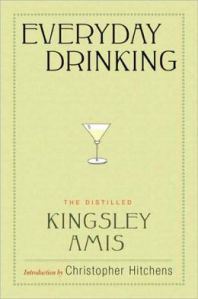
A couple items of note from Christopher Buckley’s essay on “Booze as Muse” … and other temptations and illusions of the lit’ry kind, in which he quotes from his departed friend Christopher Buckley’s introduction to Kingsley Amis’s deathless book, Everyday Drinking:
…the “Muse of Booze,” as Christopher Hitchens calls Mr. Amis … gives us recipes for Paul Fussell’s Milk Punch (“to be drunk immediately on rising, in lieu of eating breakfast”) and Evelyn Waugh’s Noonday Reviver (“1 hefty shot gin, 1 bottle Guinness, ginger beer … I should think two doses is the limit”).
Also:
[Hitchens] and I once had a weekday lunch that began at 1 p.m. and ended at 11:30 p.m. I spent the next three weeks begging to be euthanized; he went home and wrote a dissertation on Orwell. Christopher himself was a muse of booze, though dipsography and fancy cocktails were not his thing. Christopher was a straightforward whiskey and martini man…
“Alcohol makes other people less tedious,” he writes, “and food less bland, and can help provide what the Greeks called entheos, or the slight buzz of inspiration when reading or writing.”
Quote of the Day: Selling Out
It’s easy to maintain your integrity when nobody is offering to buy it out.
—Marc Maron
Writers’ Corner: The Grammar Cops
One of America’s more multitalented fictionalists (is that a word? Why not?), Sherman Alexie, contributed mightily to the sanity of many struggling writers the other day when he delivered the following tweet:
Grammar cops are rarely good writers. Imagination always disobeys.
You could argue that this attitude is just plain laziness, a disinclination on the part of frazzled scriveners already overburdened with dicta from various seminars (“Show, don’t tell,” and so on) who don’t want to be bothered with yet more rules impeding their creative flow. Clearly, there are many writers who scrupulously follow their Strunk & White and turn out some damn good books.
When it comes to writing, particularly fiction, rules are there for a reason: to guide to less-talented (or just less successful) of us through the mires of our own procrastination and indecision. But when you’re good enough, it all goes out the window. In other words, if you are going to disobey, disobey well.
GalleyCat has some of the better responses to Alexie here.
Quote of the Day: Veterans’ Edition
To generalize about war is like generalizing about peace. Almost everything is true. Almost nothing is true. Though it’s odd, you’re never more alive than when you’re almost dead. You recognize what’s valuable. Freshly, as if for the first time, you love what’s best in yourself and in the world, all that might be lost. At the hour of dusk you sit at your foxhole and look out on a wide river turning pinkish red, and at the mountains beyond, and although in the morning you must cross the river and go into the mountains and do terrible things and maybe die, even so, you find yourself studying the fine colors on the river, you feel wonder and awe at the setting of the sun, and you are filled with a hard, aching love for how the world could be and always should be, but now is not.
– Tim O’Brien, The Things They Carried


You must be logged in to post a comment.