Writer’s Desk: Don’t Limit Yourself

Best known for his titanic five-novels-in-one omnibus 2666, Chilean writer Roberto Bolaño was prolific enough that even after his death in 2003, his bibliography continues to grow.

In “Advice on the Art of Writing Short Stories,” he suggested one reason for that prodigious output. Never stick to just one piece at a time:

Never approach short stories one at a time. If one approaches short stories one at a time, one can quite honestly be writing the same short story until the day one dies.

Of course, Bolaño also warns to be careful:

The temptation to write short stories two at a time is just as dangerous as attempting to write them one at a time.

But it seems clear which approach he followed.

Writer’s Desk: Make a Schedule

Annihilation by jeff vandermeer.jpg

The great and highly prolific sci-fi author Jeff VanderMeer (best known for his eco-apocalyptic Southern Reach trilogy) gave an interview to the Chicago Review of Books a couple years back which was just packed with fantastically clear, actionable writing tips.

One of my favorites had to do with timing and productivity, two of the great obstacles for writers who have to juggle schedules:

People sometimes misunderstand the nature of writing, in that writing and revision are ongoing processes that are intertwined and don’t necessarily happen in two distinct consecutive phases. That said, inasmuch as you do work solely on a rough draft, do that work when you are fresh and energized. This may seem like commonsense, but I’ve known many writers who never really examined their processes, just kept on with the same habits they started out with…

The point is to organize your writing days or weeks around what you know about yourself—and about diminishing returns.

Writer’s Desk: Pay Attention

If writing were just stringing words together, literally anybody could do it. Because there is more to it, would-be writers spend many thousands of hours pondering how to do it better, and even read books and take classes to learn how to do something that seemingly anyone can do once they’re in elementary school.

In his superb guide First You Write a Sentence, English professor Joe Moran did his best to illuminate all the “intangible” ways that a sentence becomes more than the sum of its parts, and how he imparted that understanding to his students. His insight is simple but profound:

What I have learned is that trainee writers do not need to be able to parse every sentence into its parts. They just have to learn to care. Van Gogh, in a letter to his brother Theo, wrote that ‘what is done in love is well done.’ The purest form of love is just caring…. The purest form of praise is to pay attention. This is how we offer up the simplest of blessings to the world around us and to the lives of others. ‘Attention,’ wrote the French thinker Simone Weil, ‘is the rarest and purest form of generosity.’ Give your sentences that courtesy and they will repay you.

Put another way, you have rarely written a sentence that would not be improved by another pass. Pay attention.

Writer’s Desk: What Hamill Said

When Pete Hamill died last Wednesday, we lost one of the greats. Once called “a two-fingered typist with miraculous powers,” he knocked out poetic tabloid prose for pretty much all the newspapers worth working for in New York, even editing a couple of them. He wrote novels, a killer memoir, and was old enough to have attended the funeral of Diego Rivera (who he wrote about) and to remember early Sinatra (you know, before the really good stuff).

A complicated Irish guy from Brooklyn who tilted toward but didn’t abandon himself to either of those cliches, he embodied that old city progressive spirit but still knew when to draw out his stiletto. Read his 1969 piece, “The Revolt of the White Lower Middle Class,” for everything you need to know about the country’s “ethnics” and their curdled embrace of conservatism over the past half-century.

In the end, though, Hamill’s rule for writing was short and sweet. A couple years back, at an NYU event with James McBride, he said you needed to do the following:

Imitate, emulate, equal, surpass…

Do as the man says. Go forth.

Writer’s Desk: Don’t Write Your Pandemic Book … Yet

Writers are already a solitary lot. Even when there is not a pandemic. Those of us who pay the bills through teaching or other gigs that require contact with people have been even more isolated than usual. We also tend to respond to what is around us. So it’s more than likely than many of us have that COVID-related project that we have been tinkering around with.

However, Bill Morris warned in The Millions that we should maybe think about holding off. Not just because the market is about to be flooded with similar books, but because it’s probably better to let it sit for a while:

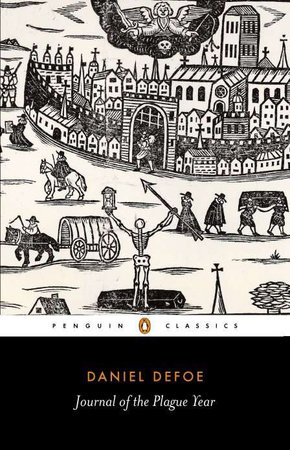
Daniel Defoe took his time before writing about his era’s horrific calamity, publishing A Journal of the Plague Year almost 50 years after the bubonic plague ravaged London in 1665. The book purports to be a first-person account of that grim year, and its rich detail and plausibility led many readers to regard it as a work of nonfiction rather than what it was—a deeply researched work of imaginative historical fiction. (Defoe was five years old during the plague.) The Nobel laureate Orhan Pamuk has spent the past four years researching and writing an historical novel called Nights of Plague about an outbreak of bubonic plague that killed millions in Asia in 1901, more than a century ago. Before putting pen to paper, Defoe and Pamuk had the good sense to let time do its work of giving traumas context and perspective…

There is no rush. Let it sit. Get it right.

Nota Bene: Patricia Highsmith and Stan Lee

During World War II, Marvel Comics impresario Stan Lee was working as an in-house writer for the U.S. Army (training movies about organizing your footlocker or field-stripping your rifle). He was still moonlighting for Marvel (then called Timely Comics), where the editor who replaced him, Vince Fago, was intrigued by another of their writers: Patricia Highsmith.

According to Highsmith’s biographer Joan Schenkar:

Vince Fago took Lee up to Pat’s apartment “near Sutton Place,” hoping to make a “match” between Pat and Stan Lee. But the future creator of the talented Mr. Ripley was not fated to go out on a date with the future facilitator of Spider-Man. “Stan Lee,” said Vince Fago, “was only interested in Stan Lee,” and Pat wasn’t exactly admitting where her real sexual interests lay…

Which raises the question: Who would win in a showdown: Captain America or Tom Ripley? Discuss.

Writer’s Desk: Story Over Style

The late graphic designer Milton Glaser was respected not just for his iconic creations (everything from DC Comics’ “bullet” logo to “I Heart New York”) but for what he had to say about creativity.

One of his best-known advice essays was a talk he gave called “10 Things I Have Learned.” While some are likely more relevant to the design business than other creative endeavors, lesson six is one that writers will want to keep in mind: “Style is Not to be Trusted”:

It’s absurd to be loyal to a style. It does not deserve your loyalty.

There are many writers who may unthinkingly box themselves in. Because they have always written narrative essays, they may think they cannot try fiction. Or a writer of cozy mysteries may not follow an idea for an autobiographical sketch dealing with family trauma because that is not “their style.”

Glaser’s point was more about not chasing trends, which is also valuable advice for any artist.

But in the end, it’s the story that counts, not your style.

Writer’s Desk: It’s All Material

A writer is someone who tells you one thing so someday he can tell his readers another thing: what he was thinking but declined to say, or what he would have thought had he been wiser. A writer turns his life into material, and if you’re in his life, he uses yours, too.

Walter Kirn, Blood Will Out

There is one rule that should be learned by everybody who knows or is related to a writer: Beware. Everything that happens and is said is fodder for the printed page.

Reader’s Corner: Another Prize for Colson Whitehead

This must be some kind of record. But after winning the Pulitzer Prize for Fiction as well as the Orwell award, Colson Whitehead (The Nickel Boys) was just awarded the Library of Congress Prize for American Fiction. In a statement, Whitehead said:

I hope that right now there’s a young kid who looks like me, who sees the Library of Congress recognize Black artists and feels encouraged to pursue their own vision and find their own sacred spaces of inspiration…

In related Whitehead news, Barry Jenkins’ adaptation of his alternate historical novel The Underground Railroad is supposedly still set to air at some point on Amazon.

Writer’s Desk: Write Like it Matters

New York, New York. Library of the New York Times newspaper. Editors and writers can look up every conceivable subject and get information not available in the "morgue"

This week, Harper’s published a piece from a list of writers ranging from J.K. Rowling to Malcolm Gladwell, Todd Gitlin, Dexter Filkins, and Dahlia Lithwick – as well as a range of other public intellectuals and artists (Zephyr Techout to Bill T. Jones and Gloria Steinem) – titled “A Letter on Justice and Open Debate.”

Here’s the gist:

We refuse any false choice between justice and freedom, which cannot exist without each other. As writers we need a culture that leaves us room for experimentation, risk taking, and even mistakes. We need to preserve the possibility of good-faith disagreement without dire professional consequences. If we won’t defend the very thing on which our work depends, we shouldn’t expect the public or the state to defend it for us…

Harper’s

Remember your Ray Bradbury: “If teachers and grammar school editors find my jawbreaker sentences shatter their mushmilk teeth, let them eat stale cake dunked in weak tea of their own ungodly manufacture.”

Don’t think about what people will think. Use your judgement. Be thoughtful, yet unsparing. Write what is true. Put your soul into it.

If not, why bother?

Writer’s Desk: Start a Fight

Perhaps not literally. But writing is perception. And one way to test your perception is to try out multiple takes on the same thing and see the result.

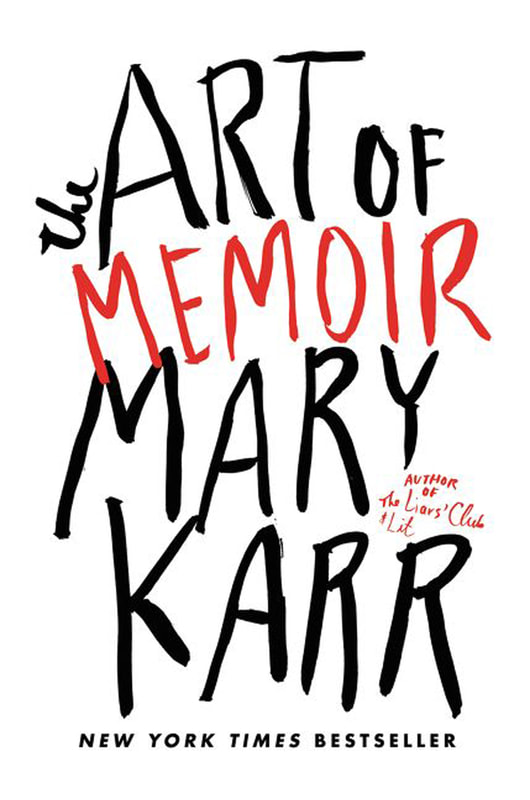
Mary Karr (The Liar’s Club) has an approach she uses in her memoir-writing class:

…these are young, very smart people who are very confident about their memories and mostly should be. But I stage a fight, either with a colleague or with a student. And then I ask them to write what happened.

The result is often humbling, as the students write their accounts and then discover just how much they get wrong.

Maybe instead of a fight, you can try going to a place at a particular time of day, spend a quarter-hour there, leave and write about your memory of it. Then return a week later at the same time of day and see how close you were.

Writer’s Desk: Create a Manifesto

When you are in doubt about your next steps — whether as an artist or just as a person — it cannot hurt to lay out your goals.

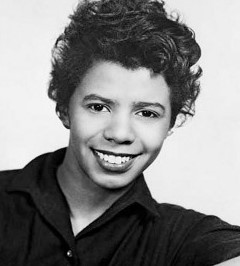
Witness Lorraine Hansberry. After moving to New York from Chicago and before storming Broadway with A Raisin in the Sun, she was writing poetry and journalism, finding her way. She was determined to get somewhere, though. Imani Perry’s biography Looking for Lorraine, quotes from a letter Hansberry sent to her boyfriend:

1. I am a writer. I am going to write.
2. I am going to become a writer.
3. Any real contribution I can make to the movement can only be the result of a disciplined life. I am going to institute discipline in my life.
4. I can paint. I am going to paint.
The END

Manifestos can clarify your intentions. They also keep you accountable later. Write your own. Pin it up by your desk. Look at it every day. Except maybe Sunday. That day can be for reading.

Writer’s Desk: It’s Not That Serious

In “James Taylor Marked for Death” the great rock critic Lester Bangs had this to say about art, creativity, and their appreciation:

Number one, everybody should realize that all this “art” and “bop” and “rock-’n’-roll” and whatever is all just a joke and a mistake, just a hunka foolishness so stop treating it with any seriousness or respect at all and just recognize the fact that it’s nothing but a Wham-O toy to bash around as you please in the nursery … The first mistake of Art is to assume that it’s serious.

Remember the same is true about writing. Unless it is time to take it seriously.

If you can tell the difference between the two, you have a shot at making it.

Writer’s Desk: Create Dangerously

Albert Camus did not approach the act of writing lightly. Although he gets lumped in with a certain class of French intellectuals whose headiness got in their way, Camus used a clean and light touch in his work. Any of us who have gone back to his unnervingly relevant novel The Plague these last few weeks have rediscovered just how brisk and energetic he can be.

But Camus also thought risk was a necessary part of the writing life. In his lesser-known 1958 tract Create Dangerously, Camus stated that the role of the artist was to place themselves directly in the toss and tumult of modern life. To invite rather than shy away from risk and critique:

Every publication is a deliberate act, and that act makes us vulnerable to the passions of a century that forgives nothing.

If that was true in the 20th century, it is doubly so now.

Write like nothing else matters. What else makes sense?

Writer’s Desk: Throw Most of It Away

There are times when your writing project takes forever. You head to the keyboard each day, knowing that you will emerge on the other side with naught but a few sentences, as fought-over as a few square yards of Flanders mud during an interminable battle in the First World War. But that can be worth it in the end.

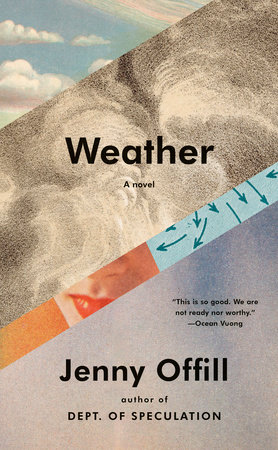
There are other times when the fight means that you’re not going where you need to go. In that instance, consider the “inspired demolition job” Jenny Offill did on her novel Dept. of Speculation:

After spending years on a longer, more traditional novel that refused to come together, Offill stopped trying to force it; instead, she wrote out what she considered the best bits on index cards, then shuffled them around until she arrived at something she was happy with. The streamlined version, made up of elliptical yet propulsive fragments, many of them no more than a sentence long, tells the story of a marital crisis with the efficiency of a comic strip. Suggestive snippets of dialogue and description are juxtaposed with surreal factoids and literary quotes; Offill trusts the reader will know how to put these pieces together.

Giles Harvey, The New York Review of Books

Trust the reader. Trust yourself. Leave out everything you do not absolutely need and let the reader figure it out.