Writer’s Desk: Be Honest, But Within Reason

In the preface to his pointedly titled Unreliable Memoirs, critic Clive James laid out his approach to writing about oneself:

Most first novels are disguised autobiographies. This autobiography is a disguised novel. . . . So really the whole affair is a figment got up to sound like truth. All you can be sure of is one thing: careful as I have been to spare other people’s feelings, I have been even more careful not to spare my own. Up, that is, of course, to a point…

You want to be honest with the reader. That’s where the good stuff is. But at the same time, remember to hold things back. That’s where the artistry is. It’s a memoir, not therapy.

Writer’s Desk: Let Yourself Go

Even though the late, great playwright and script doctor Tom Stoppard was known for dense, gorgeously ornate works that tangled with politics, philosophy, physics, and eternity, he did not go in for self-examination or navel-gazing.

Instead, he once told The Guardian, he preferred just letting himself rip on the page:

A writer ought to be the best possible source about their work, but the writing instinct doesn’t come out of self-examination. That part of yourself in your work is expressed willy-nilly, without your cooperation, motivation or collusion. You can’t help being what you write and writing what you are…

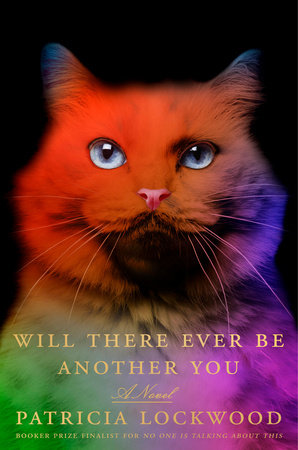
Writer’s Desk: Get a Cat

Per one of the characters in Muriel Spark’s A Far Cry from Kensington, concentration correlates to having a cat around:

Alone with the cat in the room where you work, I explained, the cat will invariably get up on your desk and settle placidly under the desk-lamp.  The light from a lamp, I explained, gives a cat great satisfaction. The cat will settle down and be serene, with a serenity that passes all understanding. And the tranquility of the cat will gradually come to affect you, sitting there at your desk, so that all the excitable qualities that impede your concentration compose themselves and give your mind back the self-command it has lost. You need not watch the cat all the time. Its presence alone is enough. The effect of a cat on your concentration is remarkable, very mysterious…

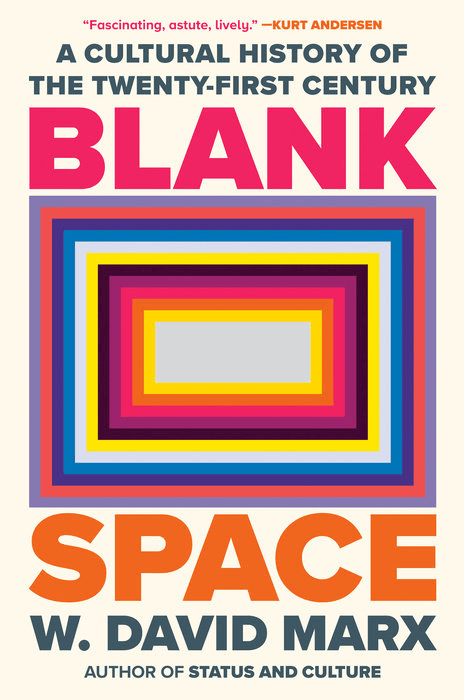
Reader’s Corner: ‘Blank Space: A Cultural History of the 21st Century’

I reviewed Blank Space, which is not a Taylor Swift song but the new “Cultural History of the 21st Century” from the insightful and ever-cranky W. David Marx (Status and Culture) for the Minnesota Star-Tribune:

The phrase “Time is a flat circle” often refers to how the manic post-pandemic news cycle makes comprehension of the recent past impossible. A similarly dazed bafflement is explored in W. David Marx’s lucid and entertaining —yet despairing — book about the new millennium’s flattening of culture…

Writer’s Desk: Building Your Book

The books of Mark Z. Danielewski (House of Leaves, especially) are complex, dense, and thrillingly visual. He tells BOMB that his process is a lot like construction:

Writing is so much about laying down brick after brick, and yet you can’t just stack bricks, because then you’re making a tomb. There has to be this mortar, and that mortar, as we can see for ourselves, right now even, is the space between words…

Writer’s Desk: Coffee, Roaming, and TV

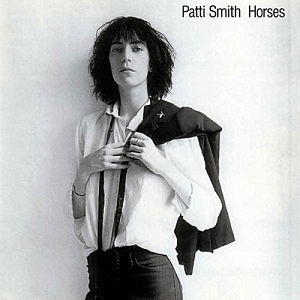
Patti Smith on her morning writing routine:

I get up and if I feel out of sorts I’ll do some exercises. I’ll feed my cat, then I go get my coffee, take a notebook, and write for a couple of hours. Then I just roam around. I try to take long walks and things like that, but I just kill time until something good is on TV…

Good ideas come when walking. Or watching shows, preferably ones with detectives. Thinking of better ways you could have solved the crime might be self-flattery but it also gets ideas percolating.

Writer’s Desk: Get Yourself an Office

Alain de Botton (The Consolations of Philosophy) had a problem, as many do, with insomnia and focus. So he decided to go to work at an office. It allowed him to escape:

 One of the most welcome aspects of office work is that you do not need to be fully yourself. It demands that those who participate in it behave “professionally”, which means that you are not asked to bring the entirety of your character to the fore…

As a result, he could bear down, put certain thoughts away, and get to writing:

It can be the greatest freedom, sometimes, to have to repress some of what you are. I sit quietly for hours. I’ll have a sandwich at the desk. I can’t sink into despair, scream or act all poetic: other people are watching. At the office, there’s a chance to edit yourself, thankfully. That’s why I go there…

Writer’s Desk: Try Sounding Like Somebody Else

When Paul McCartney had trouble working through a song (hard to imagine, but yes it happened), he found simply invoking another songwriter helped limit the anxiety of production. Per American Songwriter:

It frees you up,’ he writes. In the end, though you put on the mask of another artist (in the case of this song it was Ray Charles), you’ll find it was your song all along: ‘The song takes on its own character.’

This way, if what you are writing doesn’t work out, it’s not on you but the writer you’re imitating. If it does, well, you can always thank them in the acknowledgements.

Writer’s Desk: Your Life is Literature

In her classic graphic memoir Fun Home: A Family Tragicomic (the book which, more than any other, introduced the graphic novel into the literary canon), Alison Bechdel uses numerous literary references (Proust, Henry James, Greek mythology) and allusions when describing her upbringing and members of her family.

As Bechdel explains in the book, this was not a tactic for distancing or adding importance to mundane matters. Viewing her life through an artistic framework was just what came naturally:

I employ these allusions to James and Fitzgerald not only as descriptive devices, but because my parents are the most real to me in fictional terms…

Writer’s Desk: Lie Well

When being interviewed by The Paris Review (as all the greats were, once upon a time), John Cheever was asked about how to be true to reality in fiction. His response:

It seems to me that falsehood is a critical element in fiction. Part of the thrill of being told a story is the chance of being hoodwinked or taken. Nabokov is a master at this. The telling of lies is a sort of sleight of hand that displays our deepest feelings about life…

Make things up. That is fiction. But you can, and should, base your fictions in truth.

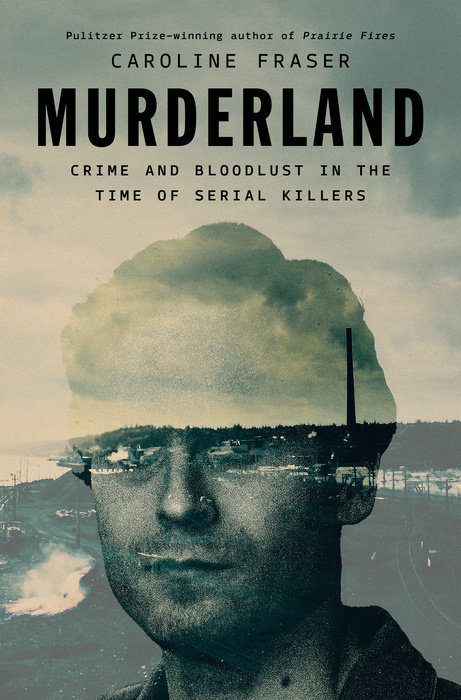
Reader’s Corner: ‘Murderland’

I reviewed Caroline Fraser’s new book Murderland: Crime and Bloodlist in the Time of Serial Killers for the Fall 2025 edition of Rain Taxi Review of Books:

We don’t live in a time when a single book can create a galvanizing moment, but if we did, Caroline Fraser’s Murderland could be a Silent Spring for serial killing. Ostensibly about the surge of lurid slayers who plagued the Pacific Northwest in the 1970s and ’80s, her narrative is also about the landscape that birthed them. In the award-winning Fraser’s hands, the region’s depressive atmospherics of gloomy rain-sodden forests and isolated company towns serve as backdrop to something even larger: the crime which gave rise to the crimes…

Writer’s Desk: Two Pages a Day

S.E. Hinton was just eighteen years old when her first novel, The Outsiders, was published. Though in some ways a dream come true, having that kind of success so young proved daunting.

While in college, Hinton was hit with writer’s block. She thought she needed to produce another masterpiece, she told Writer’s Digest. “And I knew I didn’t have no masterpiece.”

The solution, Hinton said, was relatively simple:

My boyfriend, who is now my husband, was saying ‘I don’t care if you never get published again, but you’ve got to start writing again. Enough of this gloom and doom stuff.’ He said, ‘Write two pages a day. Nobody’s every dropped dead of two pages.’ And he’d come over to take me out, and if I hadn’t done my two pages we wouldn’t go out. So that was a great motivation for writing…

Eventually those two pages turned into her second novel, That Was Then, This is Now:

When I had a stack about the size of a book, I sent it off…

Writer’s Desk: Ignore This Advice

Richard Bausch (editor of multiple Norton anthologies) has spent his time in the trenches of literary academia and seen the number of how-to books on writing proliferate while the number of readers keeps falling.

His advice for those aspiring to life of the pen?

Put the manuals and the how-to books away. Read the writers themselves, whose work and example are all you really need if you want to write …

Which is a superb suggestion. If you cannot learn from the well-crafted sentences of the masters, then How to Write Your Novel in 30 Days (helpful though it may be for working out certain knots in your plot) will not substitute.

Bausch goes on to remind us why we get up each day to do this thing:

This work is not done as a job, ladies and gentlemen, it is done out of love for the art and the artists who brought it forth, and who still bring it forth to us, down the years and across ignorance and chaos and borderlines … Let me paraphrase William Carlos Williams, American poet: literature has no practical function, but every day people die for lack of what is found there…

Writer’s Desk: Procrastinate Well

Finding ways not to write is a skill shared by all in the profession. But what if there was a way to delay your work productively? Miranda July has an idea:

It’s best to procrastinate with other things I don’t want to do. The amount of business emails and household chores I’ve gotten done while not writing! The best part of this is that when you finally do get down to writing, and then eventually stop for the day, you discover that the bills have been magically paid, the floors washed…

Like anything else in life, if you are going to procrastinate, do it well.

Writer’s Desk: Make It Make Sense

Canadian author Miriam Toews (Women Talking, All My Puny Sorrows) lost both her father and her sister Marjorie to suicide. She was not sure the loss was something she could ever write about.

“I had no words,” she told Kristen Martin. But then after a couple of years, Toews had a realization:

No, I’m a writer. This is what I do, take stuff and work it into something that makes sense to me…