Dept. of Literary Expatriates: Henry James

Although Henry James remains today one of America’s most celebrated novelists, and his most famous characters were usually American, he was never precisely enamored of his home country. Much like how T. S. Eliot decamped from St. Louis quickly as he could for the more rarefied airs of London intellectual life, James didn’t see much of value in his home country—though, unlike Eliot, he would frequently write as an American abroad in the wider world.

Novelist Colm Toibin, in reviewing Michael Gorra’s new book Portrait of a Novel: Henry James and the Making of an American Masterpiece, pulls out this interesting bit from a piece James wrote about Nathaniel Hawthorne just before The Portrait of a Lady. In it, a sweepingly dismissive James lists the things he sees as missing from American life that he sees as necessary for the novelist:

…no sovereign, no court, no personal loyalty, no aristocracy, no church . . . no palaces, no castles, nor manors, nor old country-houses . . . nor thatched cottages nor ivied ruins; no cathedrals . . . no Oxford . . . no novels, no museums, no pictures, no political society, no sporting class . . . no Epsom nor Ascot.

To a baroque and class-obsessed stylist like James, the country’s comparative lack of history makes for a thin existence. To a degree, James is right, without that weight of civilization which he lists, it is difficult to create a certain kind of literary figure: i.e., those like himself. America did ultimately export the likes of Twain, Hemingway, Kerouac, Bradbury, and Bellow, who all did just fine without thatched cottages or cathedrals—but never could have written The Portrait of a Lady (whether or not that’s a good thing depends on your taste).

Trailer Park: ‘The Girl’

Alfred Hitchcock had his issues, no question about that. But although his obsessions with guilt, control, and particularly various of his leading ladies have been well documented in print, outside of the cineaste world those proclivities are not well known. That might change somewhat with the release of The Girl.

Premiering in late October on HBO, The Girl is about the legendary campaign of intimidation that Hitch waged against his star Tippi Hedren on the set of The Birds.  Hedren herself has talked about what a miserable experience it was, calling him an “unusual, genius, and evil” filmmaker.

The film about the film stars Sienna Miller as Hedren and (applause) the great Toby Jones as Hitch himself. The director is Julian Jarrold, who directed the first and best of the Red Riding films back in 2009.

Check out the trailer here:

Reader’s Corner: David Foster Wallace

When David Foster Wallace took his life in 2008, among other painful echoes he left behind a gaping void in the American literary landscape. He was arguably the brightest star in that roughly defined gaggle of writers like Jonathan Franzen, William T. Vollmann, and Jeffrey Eugenides who broke through in the 1990s with styles that were entirely different and yet felt of a piece with all their emotional chaos and stylistic verve. (Check out Evan Hughes’s fantastic piece on that group here.)

For many readers, of that group, Wallace was the guy who people would still be reading in a hundred years. As one of Wallace’s editors said afterwards about the devastation so many people felt, “A lot of people are really sad for all the books we’re not going to get to read.” That’s not an entirely selfish thought, it’s more of a mourning for the beauty and intelligence that had gone out of the world with that shocking act.

D.T. Max’s biography on Wallace, Every Love Story is a Ghost Story, is coming out later this year. There’s an excerpt from the book over at The Daily Beast, which includes this vivid scene about Wallace’s courtship of the memoirist Mary Karr (The Liar’s Club), when he was wracked by writer’s block and indecision, and was just coming out of rehab:

Wallace did not hear subtle variations in no; he knew only one way to seduce: overwhelm. He would show up at Karr’s family home to shovel her driveway after a snowfall, or come unannounced to her recovery meetings. Karr called the head of the halfway house and asked her to let Wallace know his attentions were not welcome. Wallace besieged her with notes anyway…. One day, she remembers, he arrived at a pool party she was at with her family with bandages on his left shoulder. She thought maybe he had been cutting himself and wouldn’t show her what was underneath—a tattoo with her name and a heart. He clearly felt he had made a commitment there was no retreating from. The details of the relationship were not clear to others though: Wallace told friends they were involved; Karr says no. She too steered Wallace to a new course in his fiction. “His interest in cleverness was preventing him from saying things,” she remembers. She told him not to be such a show-off, to write more from the heart. One time when he told her that he put certain scenes into his fiction because they were “cool,” she responded: “That’s what my f–king five year old says about Spiderman.”

Later, Wallace would write Infinite Jest and many other novels and shorter pieces in which he showed off as much as possible, but still managed to write from the heart.

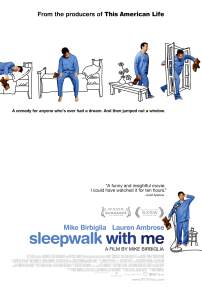
New in Theaters: ‘Sleepwalk with Me’

With its can-you-believe-this? story, slacker protagonists, and rueful gravitas, Sleepwalk With Me could easily have been This American Life: The Movie. That it’s not, even though writer, star, and co-director Mike Birbiglia is a longtime favored TAL performer, is a testament to his multifaceted appeal. The movie doesn’t quite translate that appeal, just as it doesn’t translate the original bit’s conversational stage format to a narrative…

Sleepwalk with Me is playing now in (very) limited release; it should be expanding much wider through the fall. My review is at PopMatters.

You can see the trailer here:

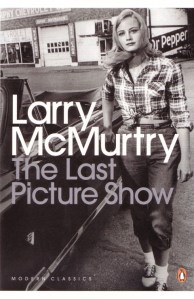
Dept. of Literary Commerce

When novelist/screenwriter/storeowner Larry McMurtry announced The Last Book Sale, he didn’t really know how many people would trek down to his retail emporium in Archer City, Texas to buy up some of the 300,000+ titles that were on offer. In the end, he reported in the New York Review of Books, “everything sold but the fiction … I was irritated to discover that I still had 30,000 novels to sell.”

The auction went well, overall, particularly in regards to this title:

The star item on the first day was typescript of some twenty-nine story-ettes of an erotic nature. These had been commissioned in the 40s by the oilman in Ardmore, Oklahoma; among the writers who wrote these trifles were Henry Miller, Anais Nin, Lawrence Durrell and others. The late G. Legman knew the oil man’s name but never revealed it. I have owned this curiosity for more than twenty years; it went to Between the Covers for $2,750.

New in Theaters: ‘2016: Obama’s America’

Dinesh D’Souza’s documentary makes the case that Barack Obama is a man obsessed with fulfilling the “dream” of his dead father, a staunch anti-colonialist, so much so that he is actively working to degrade America as a world power. While this goal has been camouflaged thus far, the film contends, were Obama to be reelected, his true radicalism would be unleashed. To underline this threat, near its end, the film features a picture of Founding Father Ben Franklin, set aflame…

2016: Obama’s America is playing now in limited release, but is due to expand wider in the coming weeks after a stronger-than-expected opening run. My full review is at PopMatters.

You can see the trailer here:

Film Flashback: ‘True Romance’

One of the late Tony Scott’s films that broke free of his glossy Top Gun / Beverly Hills Cop 2 template was 1993’s True Romance. Scripted by Quentin Tarantino and his old running buddy Roger Avary, it featured Clarence (Christian Slater), an Elvis-worshipping Tarantino-esque comic-book geek who goes on the run with the proverbial golden-hearted hooker Alabama (Patricia Arquette) after killing her pimp (Gary Oldman). Everything ends up in a feather-strewn and John Woo-esque shootout with mobsters, movie producers, and the FBI. With its glossy cinematography and crowded cast of stars who wanted in on the next big thing, this was a turning point for Scott and Tarantino in specific, and Hollywood in general…

My article “What ‘True Romance’ Did for Tony Scott and Hollywood” is up at PopMatters.

The original trailer is here:

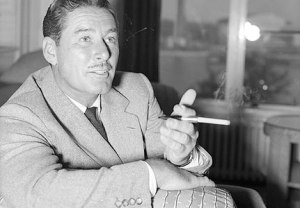
Quote(s) of the Day: Erroll Flynn

Besides acting in too many great films to mention—only one of which, 1938’s The Adventures of Robin Hood, would be enough for any actor to achieve immortality—the ever-enthusiastic Erroll Flynn was also an author of sorts.

Just a few months after his death in 1959, Flynn’s “autobiography” My Wicked, Wicked Ways was published, instantly scandalizing Hollywood for its brazen cynicism and warts-and-all attitude. Of course, it’s never been out of print since. 

Crafted mostly by Earl Conrad and a team of stenographers and allegedly cribbed in parts from other sources (including even Thoreau’s Walden), the book is full of pithy declamations about the good life lived hard. Among them:

I have been in rebellion against God and Government ever since I can remember … But I had my vodka—and had faith in that. It came in cases. I got up in the morning and reached. I hawked, coughed around a while, took another drink, started the day.

And also this:

Living I have done, enormously, like a gourmand eating the world, and I don’t suppose it is egotism, but only fact, to suggest that few others alive in the present century have taken into their maw more of the world than have I.

Well, it works for some.

DVD Tuesday: ‘A Separation’

The metaphor doesn’t get any clearer than this. As battling spouses shout at an invisible judge sitting where the camera is, the message is undeniable: they’re not just fighting over a relationship, but over a country, one that has both abandoned and entrapped them. The wife doesn’t want to stay with her husband, but it’s more their circumstances that she’s fighting to escape from with their daughter. Not that she, or Ashgar Farhadi’s film, comes out and says this. Iranian writer-director Farhadi’s subtle but explosive domestic crime story, dancing nimbly around censorship rules, makes a ringing statement as clear as the injustice witnessed in each of the main characters’ eyes…

A Separation comes out today on DVD; it was one of the most potent, unforgettable films to hit screens in 2011—foreign or domestic. My full review is at AMC Movie Database.

You can see the trailer here:

New in Theaters: ‘The Anderson Monarchs’

In the Philadelphia neighborhood where the Anderson Monarchs girls’ soccer team plays, the bright wall murals exhorting a positive outlook (“Dare to Dream”) exist in stark relief to the limited opportunities available to those who grow up there. The practice field itself is a patchy thing, something of a Charlie Brown Christmas tree compared to the verdant greens where they play games against teams from wealthier suburban neighborhoods. During one practice, police cars and ambulances race past, lights flashing; the camera zooms in but the girls, likely used to it all, pay almost no heed. But Eugene Martin’s film about the Monarchs isn’t much interested in delivering another tale of urban woe, preferring instead to accentuate the positive…

The Anderson Monarchs is playing now as part of the Docuweeks festival in New York, but should expand to more cities later. My full review is at Film Journal International.

The trailer is here:

New in Theaters: ‘Chicken with Plums’


Anybody seeking a well-rounded love story featuring emotionally secure individuals should stay far, far away from Chicken with Plums. Marjane Satrapi and Vincent Paronnaud’s adaptation of Satrapi’s graphic novel focuses on Nasser-Ali (Mathieu Amalric), a violinist living in late 1950s Iran. He plays like an angel, but suffers from an overwhelming moodiness. In the film’s first few scenes, he buys a violin and returns it almost immediately, screaming at the shop owner that he’s been cheated. In fact, life has cheated him…

Chicken with Plums is playing now, and makes for a certain kind of fantastic date movie. My full review is at PopMatters.

The trailer is here:


New in Theaters: ‘Cosmopolis’

Adapted by David Cronenberg from Don DeLillo’s prescient 2003 novel, Cosmopolis is set in a fantastical New York of the present or near-future, a nebulous universe that feels like a recent William Gibson novel—this might be the future, but it’s barely five minutes hence. Robert Pattinson plays Eric Packer, a 28-year-old wizard of some species of speculative, quantitative finance who has made his billions and now can’t seem to wait to set his entire universe on fire. He drifts through the city in a white limo that looks outside like all the others, but inside is a fully wired and soundproof command center that keeps him wired to his empire while sitting in traffic on the way to get a haircut…

The deadpan, crazed Cosmpolis opens tomorrow in limited release; seek it out when it comes to your town, there’s nothing else like it.

My full review is at Film Journal International.

The trailer is here:

DVD Tuesday: ‘The Snowtown Murders’

For a film about John Bunting, one of the most infamous serial killers in Australia’s history, The Snowtown Murders comes at its subject stealthily and almost wholly without sensationalism. Creating a slow-burning portrait of its depressed South Australian suburban milieu and the layers upon layers of dysfunction found therein, Justin Kurzel’s assured feature debut approaches its themes with care. Even when the story shifts more towards Bunting’s murderous exploits, the tone remains even. It’s as though what’s happening is no surprise at all, just the natural outgrowth of this toxic brew of poverty, rage and sickening abuse…

The Snowtown Murders gets released on DVD today. My full review is at Film Journal International.

The trailer is here:

New in Theaters: ‘2 Days in New York’

If you’re looking to improve box office, it might make sense to replace Adam Goldberg with Chris Rock. As a leading man opposite co-star/writer/director Julie Delpy in her romantic comedy 2 Days in Paris, Goldberg chiseled a bit of comic gold, but he was hardly a draw for most moviegoers. Rock, who replaces him in 2 Days in New York, is a star with proven appeal, even if his on-screen timing has always been a poor cousin to his stage persona. But, as it turns out, this tradeoff is costly…

2 Days in New York opened last Friday; my full review is at PopMatters.

Trailer is here: