In Mustang, France’s official entry for this year’s Academy Awards, five sisters living in a remote Turkish village strain against the prison-like limits put on them by a local male culture terrified of allowing them even the slightest hint of freedom.
Wild, exuberant, and altogether masterful, Mustang is playing now in limited release; make sure to seek it out. My review is at PopMatters:
The view from the family home of five sisters living in a remote Turkish village on the Black Sea is the kind of vista for which wealthy travelers pay dearly. Nearby mountains are covered in lush forests and the ocean slaps musically into sandy beaches below.
This panorama is also a taunt, because the sisters will never be allowed anywhere near it unless a male guardian accompanies them. Even then, they won’t be allowed to play and run and laugh, but instead will be expected to follow like docile sheep in shapeless dresses…
German soldiers march through Paris, June 1940 (German Federal Archive)
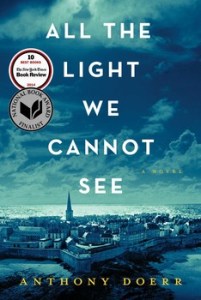
Sometimes it can just take you a while to get around to that book that everybody has been reading. Anthony Doerr’s fairly beloved novel All the Light We Cannot See has been hanging around on the bestseller lists pretty much since it was published last summer, and for good reason. It’s not just the France-during-the-occupation setting or the gorgeous language, though both of those attributes help, of course. It has a magic to it, plain and simple.
All the Light We Cannot See is available in hardcover everywhere, with a paperback edition scheduled for this December; my review is at PopMatters:
Like many great novels of the Second World War and other epic clashes of civilizations, Anthony Doerr’s All the Light We Cannot See is a story of the grandeur of terror. At least it begins that way. It’s August 1944 in Saint-Malo, a venerable seaside town on the northwestern coast of France. The Allies have landed and are steadily punching their way out of Normandy. The war is nearing another crescendo of death…
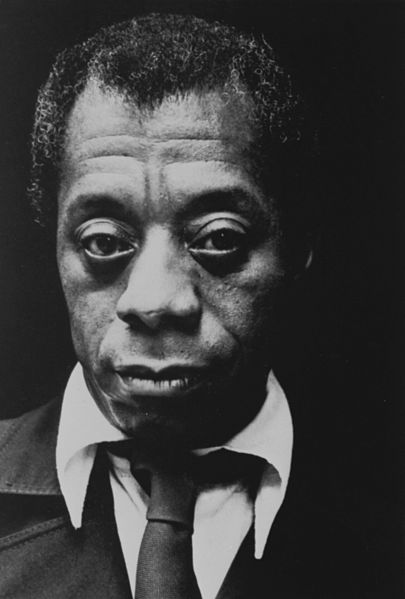
By the time James Baldwin gave this interview to The Paris Review in 1984, his time was past as one of the writers whose voice was loudest in the great postwar arguments over what America would and should be. He was living in semi-exile in France at the time of the interview, heading into his 60s, but still full of burnt truths and hard-fought advice. Such as:
“The whole language of writing for me is finding out what you don’t want to know, what you don’t want to find out. But something forces you to anyway.”
“Painters have often taught writers how to see. And once you’ve had that experience, you see differently.”
[On starting out reviewing books for small change] “I had to read everything and had to write all the time, and that’s a great apprenticeship.”
“I doubt whether anyone—myself at least—knows how to talk about writing.”
“I do a lot of rewriting. It’s very painful. You know it’s finished when you can’t do anything more to it, though it’s never exactly the way you want it.”
Anybody seeking a well-rounded love story featuring emotionally secure individuals should stay far, far away from Chicken with Plums. Marjane Satrapi and Vincent Paronnaud’s adaptation of Satrapi’s graphic novel focuses on Nasser-Ali (Mathieu Amalric), a violinist living in late 1950s Iran. He plays like an angel, but suffers from an overwhelming moodiness. In the film’s first few scenes, he buys a violin and returns it almost immediately, screaming at the shop owner that he’s been cheated. In fact, life has cheated him…
Chicken with Plums is playing now, and makes for a certain kind of fantastic date movie. My full review is at PopMatters.



 Chris Barsanti
You must be logged in to post a comment.