
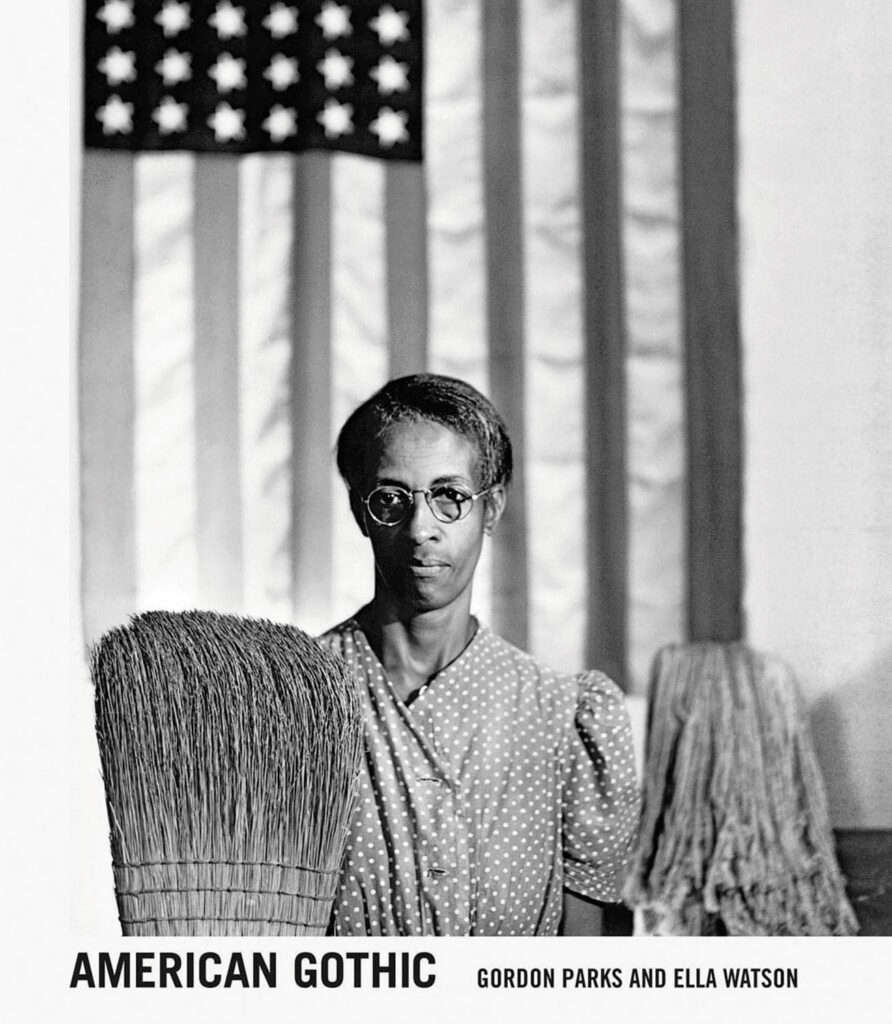
I wrote about the exhibition and book “American Gothic: Gordon Parks and Ella Watson” for Rain Taxi Review of Books:
Like many great collaborations, the iconic partnership of Gordon Parks and Ella Watson was an accident. In 1942, only a couple of years after the Kansas-born and Minnesota-seasoned Parks had left the Twin Cities, he started a photography fellowship with the Farm Security Administration (FSA) in Washington, D.C. In his autobiography A Choice of Weapons, Parks described talking to FSA head Roy Stryker about the challenges of “using my camera effectively against intolerance.” Stryker, whose agency was tasked with fighting poverty and had already hired the likes of Walter Evans and Dorothea Lange to visualize the devastation wrought by the Great Depression, had some advice for Parks: Pointing to a Black “charwoman” mopping the hallway, Stryker said, “See what she has to say about life and things. You might find her interesting.” Parks spent four months with Watson at her work and home. The result is one of the most visually striking and quietly charged photo series of the twentieth century…
 Chris Barsanti
You must be logged in to post a comment.