Screening Room: ‘Jimmy’s Hall’

'Jimmy's Hall' (Sony Pictures Classics)
‘Jimmy’s Hall’ (Sony Pictures Classics)

Ken Loach’s latest slice of life from the British isles is based on the true story of Jimmy Gralton, an activist deported from Ireland  for political agitation who returns in 1932 to reopen his community hall. Trouble, with “mother church” and other forces of oppression, follows.

Jimmy’s Hall is opening this week in limited release. My review is at Film Racket:

Wearing a big progressive heart on its union-made sleeve, Jimmy’s Hall could easily have been a carefree lark about good times and toothless rebellion, if it had been directed by somebody besides Ken Loach. Another filmmaker, one without a political vertebrae to speak of, could have conjured up a piece of twee Irish fun that would have been twice as fun to watch but several times more pointless. Loach does have a thing for speeches. While they drag the film to a halt more than once, there’s a bright and touching sincerity running throughout that makes that wandering stodginess not matter so much…

Here’s the trailer:

Writer’s Corner: Do the Work

Roddy Doyle (photo by Jon Kay)

When an author’s resume includes such masterpieces as the Barrytown trilogy (The Commitments, The Snapper, The Van), it’s generally best to listen to what they have to say…at least when it comes to writing.

Herewith some rules for writers from the great Roddy Doyle about calming down and getting on with it when you’re blocked:

Do be kind to yourself. Fill pages as quickly as possible; double space, or write on every second line. Regard every new page as a small triumph — Until you get to Page 50. Then calm down, and start worrying about the quality. Do feel anxiety — it’s the job.

Now Playing: A Johnny Cash of the Soul in ‘Calvary’

Kelly Reilly and Brendan Gleeson in 'Calvary' (Fox Searchlight)
Kelly Reilly and Brendan Gleeson in ‘Calvary’ (Fox Searchlight)

Back in 2011, Brendan Gleeson played a cynical, caustic cop on the remote western coast of Ireland for John Michael McDonagh’s crackling black comedy The Guard. In Calvary, the two reteam for another dark-hued story about violence, morality, and modern depravity. There’s gags aplenty, but this is no comedy.

Calvary is playing now in limited release. My review is at PopMatters:

In Calvary, Father James (Brendan Gleeson) begins the worst and possibly last week of his life when he’s threatened in the confessional. An anonymous penitent tells James that he was repeatedly raped by a priest starting at the age of seven. That priest is now dead, but the man wants to a kill a priest anyway. He prefers his victim be a good and innocent priest, like Father James, because that would make people pay attention. James has a week to live. “Killing a priest on a Sunday,” the voice muses with the jangled amusement of the insane. “Now that’d be something.”…

You can see the trailer here:

Quote of the Day: St. Patrick’s Edition

Belfast, where learning the Irish language was a sign of solidarity with the anti-British cause.

For tomorrow’s celebration of St. Patrick’s Day, a note on the Irish, language, and stubbornness:

If you want to make any sort of Irishman do something, the surest way is to tell him it is forbidden; and if the learning of the Irish language is a bad thing (I’m not sure that it is…) … forbidden it under pressure will stimulate it to such an extent that the very dogs in Belfast … will bark in Irish.

—Lord Charlemont, cabinet minister in Northern Ireland, 1933

New in Books: Roddy Doyle’s ‘The Guts’

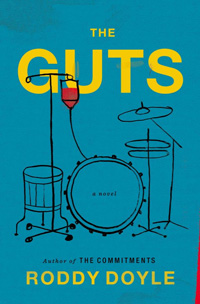
book-guts-roddy-doyle-cvr-200 Roddy Doyle’s The Commitments was one of the great music novels of the past few decades. Published in 1989 and serving as the start for Doyle’s unofficial “Barrytown Trilogy” (also comprising The Van and The Snapper), it followed knockabout Dubliner Jimmy Rabbitte’s attempt to put together a great soul/R&B band with nothing but Irishmen. Doyle’s newest novel, The Guts, picks up with Jimmy many years on, still working with music but saddled with middle-aged responsibilities and a new problem: Cancer.

My review of The Guts is at PopMatters:

Jimmy’s reflexive fear of sentiment is a powerful force in the book, and it works both for and against what Doyle is trying to achieve. In refusing to turn Jimmy into some sad, caterwauling victim baying at the moon, Doyle keeps the book from being just another sickness story. It’s Jimmy’s story through and through. Within a few dozen pages, he has pushed on past the cancer and is concerned more with the other matters that will not wait; family, the bills, what to do about that old female friend he just ran into who seems keen. Most problematic is work at the small excavatory Irish music site he started (“Finding old bands and finding the people who loved them”) whose fortunes were as bitterly unforgiving as any 21st century creative enterprise…

Reader’s Corner: ‘Ulysses’ and Slack-Jawed Dubliners

James Joyce and Sylvia Beach at Shakespeare and Company, 1920

ulysses1

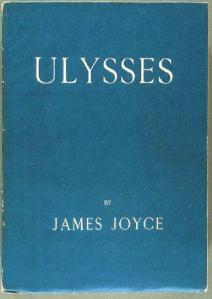
Sylvia Beach was one of those fantastic Lost Generation figures who worked diligently in the spaces between literary figures like Hemingway and Fitzgerald but doesn’t get remembered nearly as often. Likely that’s because booksellers —she ran Paris’ famous Left Band expat hangout Shakespeare and Company—never quite get the same attention that book authors do.

Beach was also a smart businesswoman. Trying to drum up some sales for in James Joyce’s forthcoming Ulysses, she wrote to George Bernard Shaw in 1921, asking whether he as a fellow Irishman, would be interested in pre-ordering a copy. Shaw’s negative response was swift, definite, and for the ages:

To you possibly [Ulysses] may appeal as art … but to me it is all hideously real: I have walked those streets and know those shops and have heard and taken part in those conversations. I escaped from them to England at the age of twenty; and forty years later have learnt from the books of Mr. Joyce that Dublin is still what it was, and young men are still driveling in slack-jawed blackguardism just as they were in 1870. It is however, some consolation to find that at last somebody has felt deeply enough about it to face the horror of writing it all down and using his literary genius to force people to face it….

I must add, as the prospectus implies an invitation to purchase, that I am an elderly Irish gentleman, and if you imagine that any Irishman, much less an elderly one, would pay 150 francs for such a book, you little know my countrymen.

(Hat-tip: Steve King)


New in Books: ‘What’s the Matter with White People?’

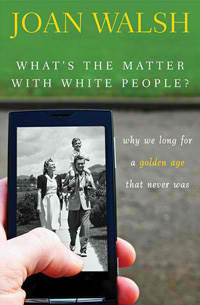
The new book What’s the Matter with White People? falls prey to the desire for clever/provocative titles that don’t necessarily have much to do with the subject matter at hand; it’s not quite the racial jeremiad that one might imagine. My review is up now at PopMatters:

Salon editor-at-large and MSNBC analyst Joan Walsh grew up a working-class Irish Catholic on Long Island in the ‘60s, with plenty of cops and firemen and construction workers in her extended family. It was a good vantage point to study what she terms the “destruction” of that decade. Walsh was perched on the verge of a rapidly imploding city, surrounded by relatives who fled the boroughs’ increasing crime. She uses her relatives as examples of what were once termed “white ethnics”, taking shelter from the societal chaos in the assurance of something that felt more concrete and protecting than the wispy liberalism that they blamed for it all. In other words: Nixon…

What’s the Matter with White People? is now available in finer bookstores everywhere.