Writer’s Corner: Selling Your Book

(Library of Congress)

Ted Thompson’s first novel, The Land of Steady Habits, will hit stores in January. In his funny, honest essay for Salon, “I Sold My Book for $25,000,” he talks (a little) about the process and (a lot) about what he learned. It should be required reading for anybody new to the publishing game who’s got a novel in their head or hard drive and wants to know what awaits them.
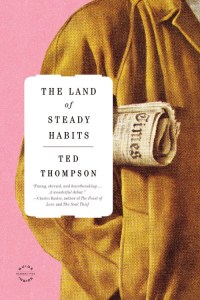
tedthompsoncover1Firstly, Thompson brings a well-needed slap of reality to new writers’ often starry-eyed wishes, particularly the notion among many writers and lovers of quality work that a book is only as good as its writing:

Subject matter matters … Once a manuscript leaves your desk, subject matter is the primary (and often only) way it is discussed. So if you haven’t figured out a quick way to answer that cringe-inducing question “What’s your book about?” in a way that interests other people, somebody else will.

Though you wouldn’t know it from hearing all the self-publishing fanatics (the Hugh Howey types who insist that self-publishing is the only way to go) foam at the mouth about elitist publishers, Thompson insists quite correctly that the average publisher wants to like your book:

Every book they publish, especially if it’s by a first-time writer, is a risk to them and their reputation, and it’s one they take because they personally responded to the book. This was a revelation to me, the fact that the grand faceless facade of New York publishing turned out to be a collection of surprisingly normal people, all of whom were looking to fall in love with a manuscript.

And lastly, a point that can’t be made enough: Don’t expect to strike it rich. Thompson signed with a major publisher and even sold some foreign rights. Still, he made about $75,000, and that’s before agent and other fees.

So, even if you’re one of the chosen few who actually gets published by one of the major houses, it’s probably wiser to splurge a little on a new laptop and a few weeks at a writer’s colony for the next book, and bank the rest. In other words: Don’t quit the day job.
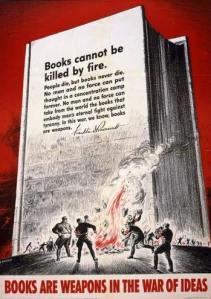
Readers’ Corner: The Death (and Life) of the Novel

U.S. Government Printing Office, 1942 (Library of Congress)

Point / counterpoint in the latest round of hand-wringing over the long rumored death of the novel.

First, Will Self in The Guardian, “The novel is dead (this time it’s for real)“:

I believe the serious novel will continue to be written and read, but it will be an art form on a par with easel painting or classical music: confined to a defined social and demographic group, requiring a degree of subsidy, a subject for historical scholarship rather than public discourse.

Granted, Self is taken the opinions of his teenaged son (his “canary” in the cultural coal mine, as it were) perhaps too seriously. Also, he seems to be arguing for the death of something that was already long dead. The novel as the primary cultural artifact was supplanted decades hence by movies, television, what have you. And today, yes, all the cultural elites reading The Goldfinch at the same time as all their friends are often just waiting to start nattering on about Game of Thrones.

goldfinch1David Ulin had a brief riposte to Self’s critique in The Los Angeles Times, that was notable for its lack of patience:

I’m tired of reading about the death of the book. It’s not true, in the first place, and in the second, it’s a lazy signifier, a way of addressing cultural import (or risk) that’s not really justified.

In other words, when people stop reading completely, then we have something to worry about. Nearly 200,000 copies of The Goldfinch have been sold so far this year. Say what you will about it, that’s a book that clocks in at nearly 800 pages and goes for $30 a pop in hardcover. Somebody is still reading out there.

In Books: ‘Shotgun Lovesongs’

shotgunlovesongs1One of the more gushed-about fiction debuts of the season has been Nickolas Butler’s Shotgun Lovesongs. Inspired in part by the story of Bon Iver recording an album in a remote Wisconsin cabin, Butler’s story is a nostalgic, idealized paen to small-town life structured around a plot about four buddies growing up and growing apart.

My review is at PopMatters:

There are quiet hymns to the quiet life still published today. You find them scattered here and there amidst the angsty blank urban snarkscape of modern literature, like eager and well-behaved students in a classroom of smartasses and showoffs. These books usually fly below the radar, hidden in plain sight in the ranks of less-reviewed novels that might rack up honorable sales figures, but are barely noticed from a critical perspective. But sometimes this less attitudinal literature makes its presence known. You’re barely a page into Nickolas Butler’s debut novel, the breathlessly anticipated Shotgun Lovesongs, and already the choirs have sucked in their breath for a great big holler…

In Books: ‘The Grapes of Wrath’ 75th Anniversary

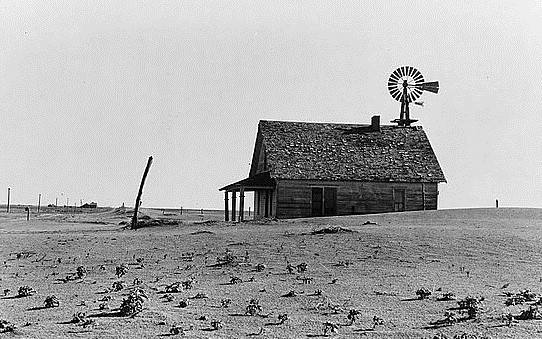
Dust Bowl farm, June 1938, by Dorothea Lange (Library of Congress)

Seventy-five years ago this month, John Steinbeck published The Grapes of Wrath. The anniversary is as good an excuse as any to go back and crack open this gorgeous, painful, Biblical epic.

grapesofwrath-cover1I wrote about The Grapes of Wrath and its continuing power and relevance for the The Barnes & Noble Review:

Freedom in America has always been entwined with freedom of movement. The freedom to immigrate, the freedom to relocate from one state to the next, the freedom to wander without being hassled. That’s one of the reasons John Steinbeck’s coruscating epic of exodus, The Grapes of Wrath, hit bestseller lists like a bomb when it was published in 1939. It wasn’t a novel about people taking wing and transforming themselves in new settings. Steinbeck showed Americans heading west to better themselves like waves of people before them, only to be blocked, harried, fenced in, run off, denied. 

Seventy-five years later, the novel still speaks to us for this same reason…

In Memorium: Gabriel Garcia Marquez (1927-2014)

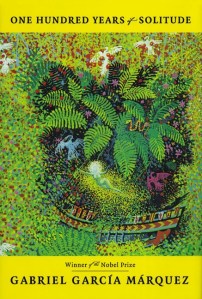
onehundredyearssolitudeThe Nobel Prize-winning novelist, journalist, fabulist, realist, radical, magical Gabriel Garcia Marquez passed away today at his home in Mexico City, at the age of 87.

You will read many books in your life without coming across one with a more perfect beginning than that of Marquez’s One Hundred Years of Solitude, fragrant as it was with the promise of the wild and ravishing pages to follow:

Many years later, as he faced the firing squad, Col. Aureliano Buendía was to remember that distant afternoon when his father took him to discover ice. At that time Macondo was a village of 20 adobe houses built on the bank of a river of clear water that ran along a bed of polished stones, which were white and enormous, like prehistoric eggs. The world was so recent that many things lacked names, and in order to indicate them it was necessary to point.

Many novelists from Isabel Allende to Mark Helprin worked from a similarly evocative template as Marquez’s, what became known as magic realism. But almost none were able to marry as Marquez did the ravishing heights of imaginative leaps with that bone-deep fatalism born out of his study of Latin American history and politics.

In other words, Marquez proved that in fiction sometimes a flight of fantasy tells the truth better than purported realism. The fact that he wrote like his life depended on it was just a bonus for us readers.

Reader’s Corner: Algren’s Rules

walkonthewildsideThere was always plenty to be learned in the Chicago novels of the great Nelson Algren—particularly in a negative sense, as in what not to do. One of Algren’s more memorable passages comes from 1956’s A Walk on the Wild Side:

But blow wise to this, buddy, blow wise to this: Never play cards with a man called Doc. Never eat at a place called Mom’s. Never sleep with a woman whose troubles are worse than your own. Never let nobody talk you into shaking another man’s jolt. And never you cop another man’s plea. I’ve tried ‘em all and I know. They don’t work.

Life is hard by the yard, son. But you don’t have to do it by the yard. By the inch it’s a cinch. And money can’t buy everything. For example: poverty…

A Walk on the Wild Side isn’t Algren’s most memorable work—that honor probably goes to his scabrously funny novella/essay Chicago: City on the Make or the story cycle The Neon Wilderness—but it does contain dark, sharp wisdom.

Reader’s Corner: The Fiction Pulitzer

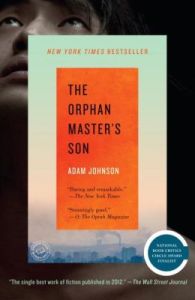
orphanmaster1So the wise folks over at the Pulitzer committee gave out their 2013 awards and there was a nice surprise there in the fiction column. The winner was Adam Johnson’s brilliantly perverse black comedy of North Korean mind tricks, The Orphan Master’s Son. 

I reviewed the book for PopMatters when it first came out in early 2012, here. It’s available now in paperback.

And since we’re in that brave new world of video book publicity, here’s the novel’s trailer:

New in Books: ‘The Dinner’

book-dinner-hermankoch-200 (1)Herman Koch’s nasty surprise novel The Dinner was first published in his native Netherlands back in 2009. Since then, it’s been published in about twenty-five countries and been compared to everything from Gillian Flynn’s Gone Girl to Yasmin Reza’s God of Carnage. The American edition hit shelves this month.

You can read my review at PopMatters:

It begins with blank effect, as though listening to your none-too-interesting friend relate a perfectly ordinary evening filled with ordinary grievances. The narrator, Paul, grouses about this and that, with a chipper flatness that suggests one of those quiet, empty books about ennui and social conventions. Before it’s all over, though, Herman Koch’s serenely malicious little mousetrap of a novel, The Dinner, will have revealed some deadly shadows behind the bright-mannered griping of its opening pages…