Writer’s Desk: Just Finish It

Despite the legacy that came from from the novel that Alfred Hitchcock used as the basis for Psycho, Robert Bloch never quite achieved notice outside the world of the pulps. Nevertheless, he was a talented writer who rode just about every trend there was, from Weird Tales horror to 1960s genre television.

Bloch was also a good friend of a young writer named Ray Bradbury. Trying to convince Bradbury, who really preferred short stories, to not be intimidated by the length of a novel, Bloch advised him:

Get to work, write a book, write two–three-four books, just as a matter of course. Don’t worry about ‘wasting’ an idea or ‘spoiling’ a plot by going too fast. If you are capable of turning out a masterpiece, you’ll get other and even better ideas in the future. Right now your job is to write, and to write books so that by doing so you’ll gain the experience to write still better books later on… The danger–and I feel it is a real one–lies in waiting too long and developing an attitude about the importance or gravity of a novel-length work…

In other words, if you want to write a novel, or anything of length, don’t let the scope intimidate you. Get started. Think of it like a short story, just longer.

(h/t: Unearthly Fiction)

Writer’s Desk: Zen and the Art of Being Bradbury

The late, awesomely great Ray Bradbury should be remembered as not just one of the greatest voices in 20th century American fiction, but as one of the most enthusiastic writers ever anywhere.

Case in point comes from this piece in which Writer’s Digest dug into their archives and unearthed some phenomenally energetic Bradbury truisms:

Just write every day of your life. Read intensely. Then see what happens. Most of my friends who are put on that diet have very pleasant careers.

Let the world burn through you. Throw the prism light, white hot, on paper.

I always say to students, give me four pages a day, every day. That’s three or four hundred thousand words a year. Most of that will be bilge, but the rest …? It will save your life!

It has to be exciting, instantaneous and it has to be a surprise. Then it all comes blurting out and it’s beautiful. I’ve had a sign by my typewriter for 25 years now which reads, ‘DON’T THINK!’

If any of us can write with even a hint of that spark and enthusiasm, then we have nothing to worry about.

Remember, writing can save your life.

TV Room: ‘Fahrenheit 451’

Michael B. Jordan in ‘Fahrenheit 451’ (HBO)

Indie director Ramin Bahrani (Goodbye Solo, 99 Homes) takes a detour into the land of splashy classic literature adaptations with his take on the great Fahrenheit 451, which premieres on HBO this Saturday.

My review is at The Playlist:

There’s a lot left out in this noisy and luridly shot but thin adaptation of Ray Bradbury’s novel. A prescient fable about the death of the imagination and individuality in the postwar war, it imagines a world where the houses have all been fireproofed and firemen race through nighttime streets looking for books to burn..

Here’s the trailer:

Weekend Reading: April 22, 2016

readingroom1

Writer’s Desk: Every Damn Day

If you’re a writer with an unusually generous bent, it’s great to hear about those writers who can just hurl the stuff out, like Ray Bradbury tossing off Fahrenheit 451 in just nine days on a rented typewriter. But the rest of us have to work at it, and it’s hard then to be generous of mind when you’re on your fifth day in a row of absolutely nothing.

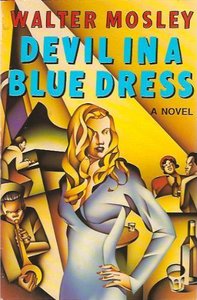
waltermosley1Still, that doesn’t mean there’s any way around it. As Walter Mosley said, writing is an everyday avocation. That’s particularly true if you’re trying to get that novel done:

This is the first important lesson that the writer must learn. Writing a novel is gathering smoke. It’s an excursion into the ether of ideas. There’s no time to waste. You must work with that idea as well as you can, jotting down notes and dialogue.

The first day the dream you gathered will linger, but it won’t last long. The next day you have to return to tend to your flimsy vapors. You have to brush them, reshape them, breathe into them and gather more.

It doesn’t matter what time of day you work, but you have to work every day because creation, like life, is always slipping away from you. You must write every day, but there’s no time limit on how long you have to write…

And try to remember, it was probably hard even for Bradbury at times.

Writer’s Corner: Getting Under the Skin

Sometimes you write a piece, a poem, a scribble, a book, and that’s all it is. Just the thing there, no more and no less. There is of course, absolutely nothing wrong with that. The world would be far too complex to live in if we spent our time looking for nuance in every bit of text that we came across.

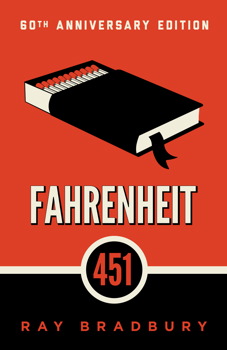
fahrenheit451But there’s writing and then there’s writing. It’s that second kind which some of us are aiming for. That’s the kind that acts like glue, or a song you can’t get out of your head, an itch under the skin.

As Neil Gaiman wrote in his introduction to Bradbury’s ode to the written word and the life of the mind, Fahrenheit 451:

If someone tells you what a story is about, they are probably right. If they tell you that that is all the story is about, they are probably wrong.

Something more that goes beyond the words on the page. That’s the key to sticking in the reader’s mind. How to do it? Aye, there’s the rub.

Soundbooth: Dimension X

Ray Bradbury (NASA)
Ray Bradbury (NASA)

Once upon a time, before science fiction (in the form of monster movies and comic-book franchises) took over the cineplex, anthology shows on radio and television provided a steady diet of short tales of the fantastic.

Case in point was the short-lived NBC radio program Dimension X, which ran from 1950 to 1951 and advertised itself as “adventures in time and space, told in future tense.”

During the show’s tenure, they broadcast work by some of the genre’s greatest practitioners, from Isaac Asimov and Robert Bloch to Ray Bradbury and Robert A. Heinlein. Now, thanks to the memory machine that is the Internet, you can listen to some of those programs at the Internet Archive. Make sure to check out Bradbury’s “There Will Come Soft Rains,” originally collected in The Martian Chronicles and one of the greatest, saddest testimonies ever penned on the folly of war.

(h/t to Jacket Copy)