Reader’s Corner: Surround Yourself With Books

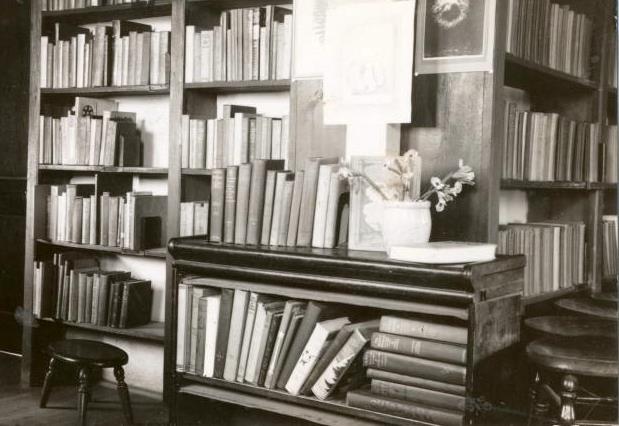
Umberto Eco (1932–2016) was famous for having one of the world’s great libraries. It contained about 30,000 volumes and knocked the socks off pretty much everybody who saw it. (There’s a video here of the Foucault’s Pendulum author wandering through it.)

Did he read all those books? Of course not. As Nassim Nicholas Taleb pointed out in The Black Swan, that’s a good thing. Here’s Taleb quoted by Maria Popova:

The writer Umberto Eco belongs to that small class of scholars who are encyclopedic, insightful, and nondull. He is the owner of a large personal library (containing thirty thousand books), and separates visitors into two categories: those who react with “Wow! Signore professore dottore Eco, what a library you have! How many of these books have you read?” and the others — a very small minority — who get the point that a private library is not an ego-boosting appendage but a research tool. Read books are far less valuable than unread ones. The library should contain as much of what you do not know as your financial means, mortgage rates, and the currently tight real-estate market allows you to put there.

Keep collecting those books, as long as space and money allow. You’ll get to them. Eventually.
Writer’s Desk: Read It and Wing It

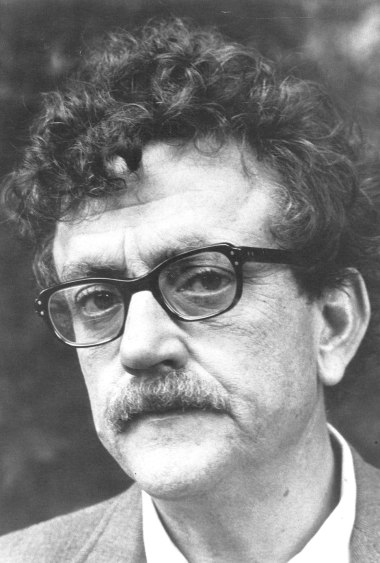
A notable anti-academic observation on the writing life from Kurt Vonnegut, collected in George Plimpton’s The Writer’s Chapbook:

I grew up in a house crammed with books. But I never had to read a book for academic credit, never had to write a paper about it, never had to prove I’d understood it in a seminar. I am a hopelessly clumsy discusser of books. My experience is nil…

Reader’s Corner: Afghanistan Book Business Booms

Only two out of five Afghans can read. But those who can are snapping up as many books as they can. In a country where foreign aid budgets and cheap imports have destroyed many local businesses, publishing is flourishing. Kabul alone has at least 60 bookstores and close to two dozen publishers (up from a mere two during the Taliban years).

Per the Times recent dispatch from the frontlines of Afghan bookselling:

In a turbulent, troubled society, curling up with a book has become the best tonic around.

“I think in any environment, but perhaps especially places at war, book reading creates a pause from day-to-day life and isolates a reader from their surroundings while they’re buried in a book,” said Jamshid Hashimi, who runs an online library and is a co-founder of the Book Club of Afghanistan. “This is powerful anywhere, but in a place like Afghanistan, it can be a means of emotional survival.”

Interestingly, many recent bestsellers have been Afghan translations of books by Westerners about Afghanistan, such as Steve Coll’s Ghost Wars and The Envoy, Zalmay Khalizad’s memoir about serving as American ambassador in Kabul.

Reader’s Corner: ‘Heather, the Totality’

In this novel from Mad Men creator Matthew Weiner, the lives of a spiritually deadened uptown Manhattan family intersect with the downward trajectory of a New Jersey convict who never had a chance.

My review of Heather, the Totality is at PopMatters:

Nobody will finish this novel remembering a sublime fillip of dialogue or splash of lovely description. They are more likely to snap the book shut about three or so hours after picking it up—and they almost certainly will fly through it at that speed, because this thin blade of a book has a wicked magnetic pull—and pour themselves a couple fingers of something strong. To steady the nerves…

You can read an excerpt here.

Reader’s Corner: Decolonize the Shelves

Junot Diaz (The Brief Wonderous Life of Oscar Wao) spoke to a packed crowd of booksellers and other literary business folk at this year’s Winter Institute in Memphis. The Dominican-born Diaz, whose latest book Islandborn will be out this March, talked about the importance of books to an immigrant like him:

… [arriving] in the United States completely illiterate, if it hadn’t been for the kindness of librarians,” he probably wouldn’t have found books. But he did. “Books became my shelter against the white world that sometimes felt like it was trying to destroy me.”

He stressed the need for book curators to help “decolonize the shelves”:

Bookstore owners and librarians are on the front line. It’s the smallest intervention that can sometimes create the most important, lasting change … I wrote my children’s book, Islandborn, because I believe there are things immigrants can teach that we all need to hear without which we will never understand this stolen land we inhabit.

Reader’s Corner: ‘Extreme Cities’

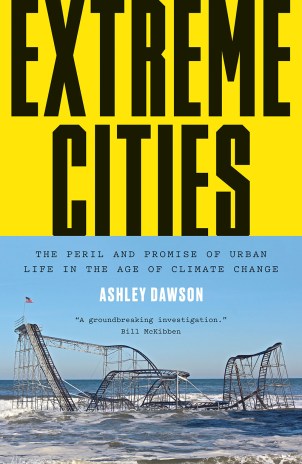
My review of Ashley Dawson’s Extreme Cities: The Peril and Promise of Urban Life in the Age of Climate Change, was published in the Winter 2017–2018 edition of RainTaxi Review of Books:

[E]ven though logic would dictate transforming low-lying shorelines into storm surge-absorbing wetlands, planners in cities like New York and Miami continue building right up to the water line. Meanwhile, even conservative modeling has seas rising over six feet by 2100. Set against that inexorable future, Dawson’s description of a “feckless capitalist culture of ruinous growth” has the ring of truth…

Reader’s Corner: Home Decor for People Who Don’t Read

People put up many pointless pictures on the self-reflecting pool of impending cultural demise known as Instagram. Food they ordered for its look instead of taste. Their feet in front of some gorgeous place they want you to know they’ve visited. Here’s a new one:

The social media chattering classes have spent the past few days rolling their eyes at #backwardsbooks, an Instagram-perfect interior design trend that takes the idea that books are pretty to look at and flips it 180 degrees. See, their unadorned pages, actually, can be pleasingly neutral and minimalistic when shelved in a row.

Good luck actually finding the book you want to read, of course.

Nota Bene: Weird Tales from the Yiddish Press

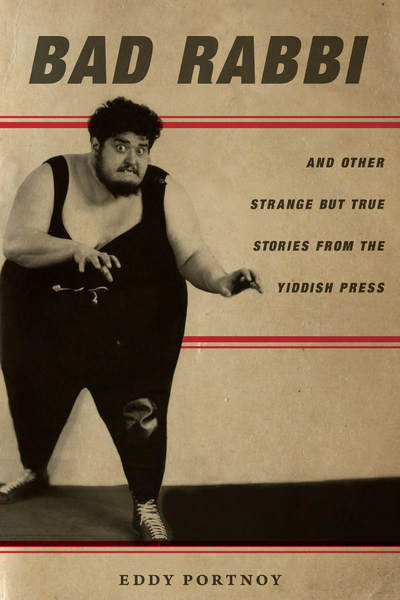
Eddie Portnoy’s book Bad Rabbi: And Other Strange But True Stories from the Yiddish Press is chock-full of goodies printed in prewar Yiddish-language papers in New York and Warsaw. The New York Times review approvingly noted Portnoy’s collection of stories about “vengeful lovers, demented blackmailers and unscrupulous abortionists.”

Here’s a good one, per David Mikics:

Portnoy spends some time on the story of Martin (Blimp) Levy, a professional wrestler who in his heyday weighed more than 600 pounds. Levy, who started his career in 1937, was, according to his manager, “a freak with class.” He was flexible, even agile: Bad Rabbi contains a photo of him doing the splits. Levi was also a bona fide chick magnet. He was married at least three times, always to young, svelte women. (In one divorce case, Levy testified that his spouse physically abused him; the judge ruled in his favor.) In 1946 he married an 18-year-old fan. That same year, he was barred from wrestling in the United States because doctors feared he would drop dead in the ring. A few years later he was reduced to playing the fat man in a circus. Levy, who ended up weighing 900 pounds, died at age 56 in an Alabama motel…

Reader’s Corner: ‘Fire and Fury’

My review of Michael Wolff’s Fire and Fury, currently on backorder at bookstores around the country and potentially turning into the president’s Harvey Weinstein moment, is up now at PopMatters:

Here we are, just 12 months into the presidency of Donald J. Trump and already just about every writer in the nation has sharpened their pens into knives. But despite the reams of Trump denunciations that have hit screens and bookshelves, none will probably be seen to have cut as deep as Michael Wolff’s Fire and Fury…

Nota Bene: A President Who Reads

In this year’s annual New Year’s address, Chinese president Xi Jingping sat in front of a wide array of bookshelves, as always. And as always, viewers scoured the shelves to see what the president is reading. To wit:

Xi is said to be a voracious reader, and other books spotted on his shelf this year included a growing collection of Western classics (from War and Peace and The Old Man and the Sea to The Odyssey and Les Misérables), economic texts like Money Changes Everything by William N. Goetzmann and Michele Wucker’s The Grey Rhino, and numerous titles on Chinese history and military strategy.

Apparently, per his remarks at a Seattle speech in 2015, Xi is also a Hemingway fan:

He said in his younger years he read Alexander Hamilton, Thomas Payne, and…

” ‘I was most captivated by Ernest Hemingway’s The Old Man and the Sea,’ Xi said.

“And that’s not all. When he visited Cuba, the Chinese president said, ‘I dropped by the bar Hemingway frequented and ordered his favorite rum with mint on rocks.’

Interesting. A president who reads. Books.

(h/t: MobyLives!)

Nota Bene: What’s Soderbergh Reading/Watching?

So every year, Steven Soderbergh—the polymath film/theater/TV director who just can’t quit the movies—puts out a list of everything he watched (TV and movies) and books and stories he read the previous year. He also includes the dates of when he watched/finished reading said objects.

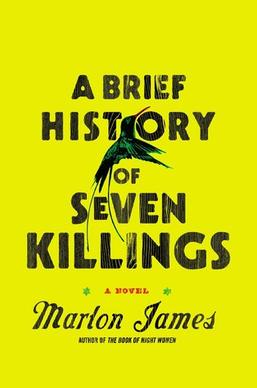
It’s a great list, packed with scads of 1970s classics that anyone familiar with his medium-cool sensibility would recognize shards of in his work—All the President’s Men, The Parallex View—tons of true-crime TV (so much Dateline), and a stack of books that are worth anyone’s time (everything from Robert Caro’s monumental Robert Moses biography The Power Broker to Marlon James’ phenomenal music-crime epic A Brief History of Seven Killings).

He also watched Mad Max: Fury Road and His Girl Friday on the same day. Try it sometime.

Writer’s Desk: Keep Trying

There is almost no greater cliche in publishing than reminding aspiring writers that even Stephen King got rejection letters by the basketful early in his career. But it is still worth repeating.

To that end, here’s a few notable bestsellers that were originally considered unworthy of publication:

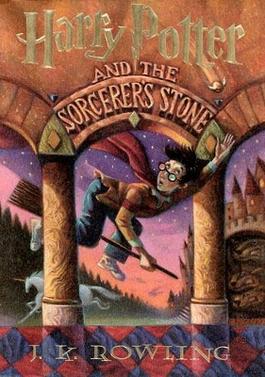
  • Harry Potter and the Sorcerer’s Stone by J.K. Rowling
  • The Diary of a Young Girl by Anne Frank
  • Lord of the Flies by William Golding
  • Lolita by Vladimir Nabokov

Nota Bene: The Prince Edition

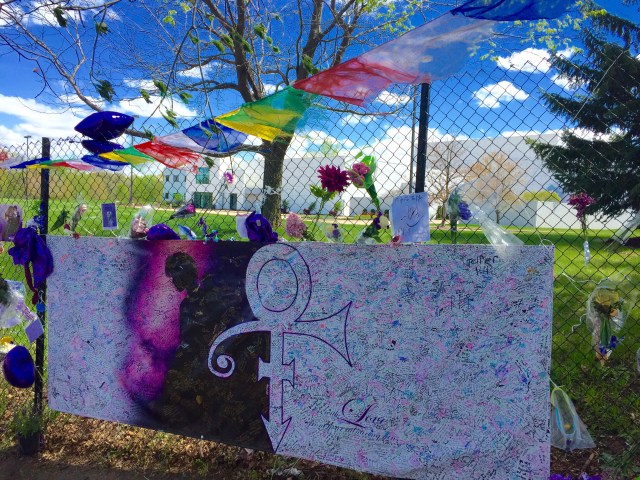
The September 2017 edition of The Journal of African American Studies was devoted entirely to the study of one artist: Prince.

According to the editors:

It is our hope that this special issue will inspire readers to access previously untapped reservoirs of creativity, help reorient the thinking of those who endeavor to pursue similar ventures that place Prince at the center of analysis, as well as prompt scholars to devise nuanced and unconventional ways to probe, study, and analyze an artist whose persona and life’s work defied convention…

Reader’s Corner: Bowie’s Books

In honor of his father’s prodigious and wide-ranging reading habits—Hitchens to Stoppard to Chabon, Carter, and Chatwin—David Bowie’s son Duncan Jones just announced the David Bowie Book Club. Dig it:

My dad was a beast of a reader. One of his true loves was Peter Ackroyd’s sojourns into the history of Britain & its cities. I’ve been feeling a building sense of duty to go on the same literary marathon in tribute to dad. Time allowing…