Quote of the Day: Trollope in China

Historian Simon Winchester in the Times Book Review on an unexpected encounter:

Traveling in China back in the early 1990s, I was waiting for my westbound train to take on water at a lonely halt in the Taklamakan Desert when a young Chinese woman tapped me on the shoulder, asked if I spoke English and, further, if I knew anything of Anthony Trollope. I was quite taken aback. Trollope here? A million miles from anywhere? I mumbled an incredulous, “Yes, I know a bit” — whereupon, in a brisk and businesslike manner, she declared that the train would remain at the oasis for the next, let me see, 27 minutes, and in that time would I kindly answer as many of her questions as possible about plot and character development in “The Eustace Diamonds”?

The lesson: Always know your Trollope.

Readers’ Corner: The Scary Printed Word

From the Duke Chronicle, regarding the school’s decision to have students read Alison Bechdel’s graphic memoir Fun Home:

Several incoming freshmen decided not to read “Fun Home” because its sexual images and themes conflicted with their personal and religious beliefs. Freshman Brian Grasso posted in the Class of 2019 Facebook page July 26 that he would not read the book “because of the graphic visual depictions of sexuality,” igniting conversation among students. The graphic novel, written by Alison Bechdel, chronicles her relationship with her father and her issues with sexual identity.

“I feel as if I would have to compromise my personal Christian moral beliefs to read it,” Grasso wrote in the post.

funhome1And from a report by the American Association of University Professors on “trigger warnings” and letting students opt out of materials they find offensive or troubling:

The presumption that students need to be protected rather than challenged in a classroom is at once infantilizing and anti-intellectual. It makes comfort a higher priority than intellectual engagement and … it singles out politically controversial topics like sex, race, class, capitalism, and colonialism for attention. Indeed, if such topics are associated with triggers, correctly or not, they are likely to be marginalized if not avoided altogether by faculty who fear complaints for offending or discomforting some of their students.

Granted, some of us who are great fans of Bechdel’s work will object to these objections on strictly aesthetic grounds. But it could also be seen as a troubling trend toward absolving students of dealing with any subject matter which they would prefer to ignore. True reading, true intellectual discovery comes frequently from the new, the unusual, and even the disturbing. Coziness should never be confused with education.

Writer’s Desk: Getting Boys to Read

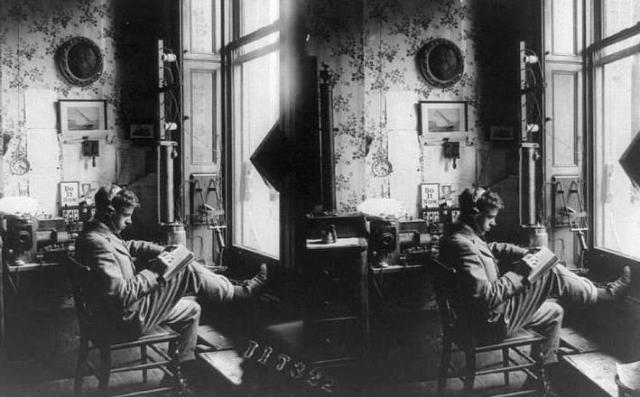
boyreading-LOC

It’s one of those not-so-secret secrets in education and the publishing world that when it comes to making books for kids, it is much much easier to do so for girls. Why? Compared to their feminine counterparts, boys just don’t read, and when they do, their reading comprehension lags. According to the Brookings Institute:

Reading scores for girls exceed those for boys on eight recent assessments of U.S. reading achievement.  The gender gap is larger for middle and high school students than for students in elementary school.

What to do? Since it’s education, there is advice aplenty. But perhaps the best idea proposed so far has come from Nick Hornby (High FidelityAbout a Boy):

I have boys, and boys are particularly resistant to reading books. I had some success recently with Sherman Alexie’s great young adult novel The Absolutely True Diary Of A Part-Time Indian – I told my son it was highly inappropriate for him, and one of the most banned books in America. That got his attention, and he raced through it.

Now, take that advice out of its parental and educational context and think about how you would apply it to your writing. Channel your rebellious inner middle-school kid who doesn’t want to be told what book they can read.

Writers’ Desk: Future Library

Trees into books ... eventually.
Trees into books … eventually.

Because there is apparently no end to the inventive riches of Scandinavian literary culture, we now have the Future Library Project.

They are planting a forest of 1,000 pine trees in Norway north of Oslo that will be harvested a century in the future and used to print an anthology of writing. In the manner of a literary time capsule, the pieces for the anthology are being written now at the rate of one per year and held in secret until publication in 2114.

Margaret Atwood, who knows a few things about future writing, is the first contributor, with a piece about which only the title is known: Scribbler Moon. According to Atwood:

There’s something magical about it … It’s like Sleeping Beauty. The texts are going to slumber for 100 years and then they’ll wake up, come to life again. It’s a fairytale length of time. She slept for 100 years.

Fellow quasi-futurist David Mitchell (Cloud AtlasBone Clocks) is next up.

It’s a fascinating thing to contemplate, writing something that won’t be read until well after one is dead. The advantage? No worries about reviews. The downside? No adulation.

Still, it’s worth thinking about the next time you sit down to your next writing assignment. Pick up a book from the 1910s and see how much the language and underlying societal assumptions have changed since then. Then, taking that into consideration, start writing with an eye for timelessness. Who knows? Somebody may pick it up in 2114, on a screen or yellowed paper, and you want to make sure that they will know what you are talking about.

Readers’ Corner: Collecting Rare Editions

Trarebooks1here are book lovers who don’t care about condition, they will take books in any kind of format: split-back hardcover, old 50-cent Bantam paperback with yellowing pages slipping out of the binding. It doesn’t matter: just gimme.

Then there are the book collectors, many of whom are still book lovers, but who are also entranced by the physical thing itself, the heft and weight of the paper and the delicate tracery of an embossed slipcase from the previous century.

You would think the latter type would be slipping into obscurity. But according to the Wall Street Journal (and they should know), book collecting is still a strong business in the ebook age:

Take JT Bachman, a 28-year-old architect with Rockwell Group in New York. He gets his news from digital sources but prefers printed material when reading for pleasure and says he has become a recent convert to book collecting. Mr. Bachman says he has about 100 new, used and out-of-print titles on his shelves, including the architectural tome “Herzog & de Meuron: Natural History” by Pierre de Meuron and Jacques Herzog, and plans on buying more.

Of course, it’s best if one doesn’t get into the business looking to actually make a quick buck:

Annette Campbell-White, the founder of venture-capital firm MedVenture Associates, in Emeryville, Calif., says collectors should be driven by their interest in books, not by the prospect of financial gain. “I wouldn’t encourage anyone looking for a quick profit to turn to book collecting,” she says. “If you make money, it is incidental.”

Reader’s Corner: Great Library Reading Rooms

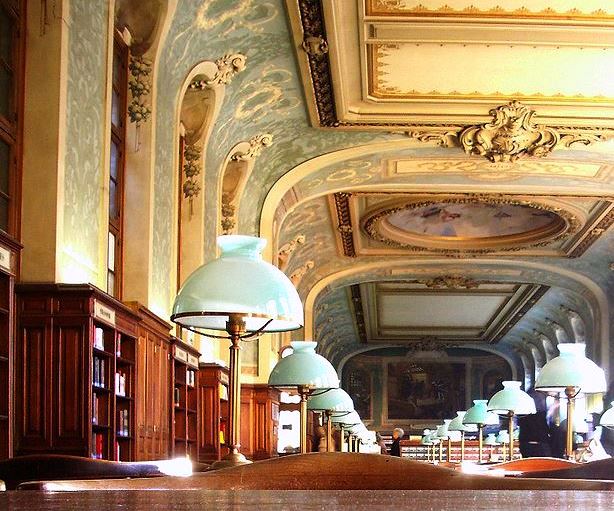
The library at Paris's La Sorbonne (Zantastik).
The library at Paris’s La Sorbonne (Zantastik).

Even in our brave new online world, libraries are still one of the best repositories for research and reading. Yes, most things can be gotten online, but there are times when the physical proximity of materials provides new insights that strictly electronic pursuits do not.

They are also simply great places to read. The good folks at Read It Forward have presented here nine of the greatest and grandest library reading rooms from around the world. Some are beautiful enough that it’s hard to imagine not being too distracted to even turn the page.

In Books: Ursula K. Le Guin is Right About ‘The Buried Giant’

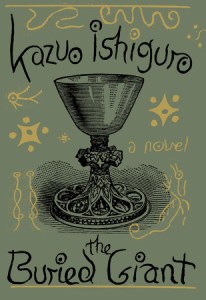
buriedgiant-coverIn Kazuo Ishiguro’s new novel The Buried Giant, the author of Remains of the Day takes on a different kind of period setting: A fantastical yesteryear in which ogres roam the land, King Arthur is only recently departed, and a great dragon threatens the land.

It’s not the easiest fit for Ishiguro, who never quite seems comfortable in his own setting. He continually holds the reader’s hand, taking them aside for background notes on what they are witnessing instead of just letting the story flow. The flatness of his language, which was more appropriate to the subject of a novel like Never Let Me Go and its story of stunted humanity, here keeps the reader from ever engaging with his deeper, fascinating-in-theory themes of memory and selective amnesia.

When Ishiguro was interviewed about working in a different metier than he was used to, he seemed uneasy that readers might think of the novel as being fantasy. Which, of course, it was. You wouldn’t think that authors would still hold such prejudices against genre, given how porous the borders between literary fiction and fantasy and science fiction have become. Just see the reaction to Cormac McCarthy’s post-apocalyptic novel The Road a few years back. Now everybody can play.

Ursula K. Le Guin (The Left Hand of Darkness) took exception with Ishiguro’s defensiveness, as well as his seeming nervousness, “Are they going to say this is fantasy?”

I respect what I think he was trying to do, but for me it didn’t work. It couldn’t work. No writer can successfully use the ‘surface elements’ of a literary genre — far less its profound capacities — for a serious purpose, while despising it to the point of fearing identification with it. I found reading the book painful. It was like watching a man falling from a high wire while he shouts to the audience, “Are they going say I’m a tight-rope walker?”

Le Guin is right in her judgment. Ishiguro’s inability to commit to the wild strangeness of his story kills any joy or mystery the reader might have found in it. Perhaps the natural chilliness of Ishiguro’s prose makes it a better fit for certain other types of genre writing (again, like he was able to deliver much more powerfully in the mournful science fiction of Never Let Me Go).

The Buried Giant is fantasy. It’s just not very good fantasy.

There’s an excerpt from the novel here. You can also see Ishiguro reading from it here.

In Books: ‘All the Light We Cannot See’

German soldiers march through Paris, June 1940 (German Federal Archive)

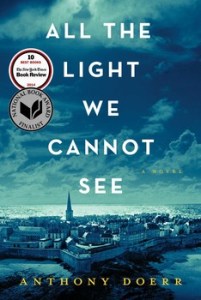
allthelightwecannotsee1Sometimes it can just take you a while to get around to that book that everybody has been reading. Anthony Doerr’s fairly beloved novel All the Light We Cannot See has been hanging around on the bestseller lists pretty much since it was published last summer, and for good reason. It’s not just the France-during-the-occupation setting or the gorgeous language, though both of those attributes help, of course. It has a magic to it, plain and simple.

All the Light We Cannot See is available in hardcover everywhere, with a paperback edition scheduled for this December; my review is at PopMatters:

Like many great novels of the Second World War and other epic clashes of civilizations, Anthony Doerr’s All the Light We Cannot See is a story of the grandeur of terror. At least it begins that way. It’s August 1944 in Saint-Malo, a venerable seaside town on the northwestern coast of France. The Allies have landed and are steadily punching their way out of Normandy. The war is nearing another crescendo of death…

In Books: The Best Nonfiction of 2014

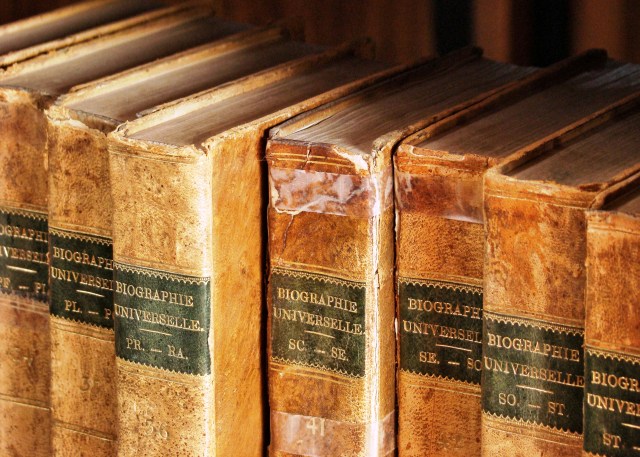
oldbooks1
(image by pepo)

After PopMatters published their best fiction of 2014 feature earlier in the week, they ran the (perhaps more serious in tone, but still somehow more fun) compilation of the awesomest (yes, that’s a word) nonfiction titles that came out last year.

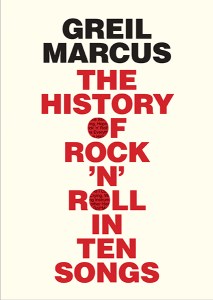
greilmarcus1Doing my part, I wrote about:

  • Against Football: One Fan’s Reluctant Manifesto, Steve Almond
  • Capital in the Twenty-First Century, Thomas Pikkety
  • The History of Rock ‘n’ Roll in Ten Songs, Greil Marcus
  • The Invisible Bridge: The Fall of Nixon and the Rise of Reagan, Rick Perlstein
  • The Trip to Echo Spring: On Writers and Drinking, Olivia Laing

You can find the feature here.

Reader’s Corner: Keeping Up

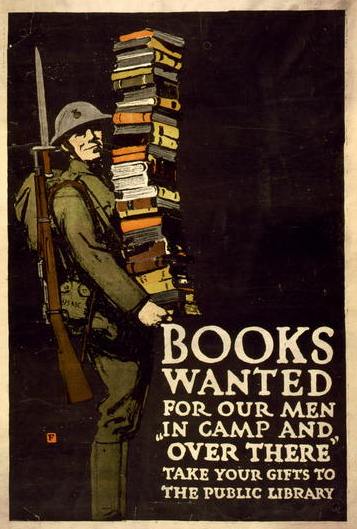
bookswantedAny serious reader is never satisfied with how much they’re reading. They’re more likely to be anxious and perturbed by the ever-growing stack(s) of books that threaten to blot out the season’s weak winter sun.

Still, few readers have a to-read list to rival that of Times critic Dwight Garner, who says he gets about 25 books a day in the mail and that it takes him on average 8 hours to read one. Do the math.

Here’s a few of the better lines from a recent interview with Garner:

One doesn’t review one’s friends. Having said that, “friend” is an elastic term.

A lot of books are like first dates. You know in 25 seconds if it’s going to work out.

[On whether he reads every page of every book he reviews] I do. Out of moral obligation. Also out of fear. You don’t want to miss something crucial. You want to be definitive in your pronouncements. You want to be able to write things like, “Not once in 350 pages does Mr. Borges huff paint.” You don’t want to worry about a huffing scene on Page 211 that you skipped over.

Writer’s Corner: Grim Children’s Stories

It seems like the youth of America are about the only ones still reading these days. According to NPR:

Young Americans are more likely to have read a book in the past year than their older counterparts, a new study finds. According to data from the Pew Research Center, “88% of Americans under 30 read a book in the past year, compared with 79% of those age 30 and older.” The findings go against the oft-repeated narrative that the Internet is degrading the reading habits of the young (those millennials supposedly Snapchatting themselves into a cultureless stupor). In another surprise, people under 30 were also more likely to say that there is “a lot of useful, important information that is not available on the internet.”

Bookstores are filled with new and ever-burgeoning series of novels targeted at the young adult market, not to mention slightly simplified versions of nonfiction bestsellers like Unbroken. In other words, this is a big and potentially growing market.

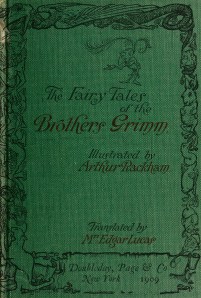
grimm_talesAlso, young readers are generally being given more latitude in terms of the subject matter deemed appropriate.  Jack Zipes’ new translation of Grimms’ fairy tales from Princeton University Press makes a point of including some “gruesome” additions previously unknown to modern readers:

How the Children Played at Slaughtering, for example, stays true to its title, seeing a group of children playing at being a butcher and a pig. It ends direly: a boy cuts the throat of his little brother, only to be stabbed in the heart by his enraged mother. Unfortunately, the stabbing meant she left her other child alone in the bath, where he drowned. Unable to be cheered up by the neighbours, she hangs herself; when her husband gets home, “he became so despondent that he died soon thereafter”. The Children of Famine is just as disturbing: a mother threatens to kill her daughters because there is nothing else to eat.

Whether or not any children will be read these as bedtime stories remains to be seen. But in any case, if you’re looking to sell books, write with the youth market in mind.

Quote of the Day: In Defense of Idleness

brussell1

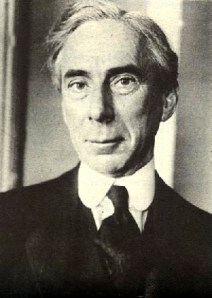
Like most of my generation, I was brought up on the saying “Satan finds some mischief still for idle hands to do.” Being a highly virtuous child, I believed all that I was told and acquired a conscience which has kept me working hard down to the present moment. But although my conscience has controlled my actions, my opinions have undergone a revolution. I think that there is far too much work done in the world, that immense harm is caused by the belief that work is virtuous, and that what needs to be preached in modern industrial countries is quite different from what always has been preached … I hope that after reading the following pages the leaders of the Y. M. C. A. will start a campaign to induce good young men to do nothing. If so, I shall not have lived in vain.

—Bertrand Russell, “In Defense of Idleness,” Harper’s Magazine (October 1932)

Readers’ Corner: Taking Books to the Street

bookmobileMost people who read as children have fond memories of the bookmobile. One had normally thoroughly ransacked the age-appropriate shelves at the local public library and the thin offerings in the school itself. So having an RV pull up with an appropriately stern librarian with some new offerings (or at least the old offerings newly presented) was manna from heaven.

In Portland, Oregon, a phenomenal little nonprofit group is taking that idea in an entirely different direction. Street Books is a small band of dedicated booklovers who spend a few hours each week bicycling books around to the city’s homeless population. From the Times writeup:

The Street Books project is nothing if not messy. The librarians — the three salaried employees, including Ms. Moulton, are paid $60 a week for a three-hour shift — fill their carts based on their tastes and their patrons’ tastes.

Diana Rempe, 48, a community psychologist who recently completed her Ph.D. and pedals the bike one afternoon a week, stops at a day-labor assembly site on the city’s east side, where many Mexican and Latin American men gather, waiting to be hired. So she loads up on books in Spanish. (Her proudest book coup, she said, was getting a hard-to-find book on chess moves in Spanish for two Cuban players.)

You can donate money here, or email them and ask about donating books that people have been asking about.

Reader’s Corner: Run this Bookstore

Wigtown (Shaun Bythell)
Wigtown, book town (Shaun Bythell)

Hey, wanna run a bookstore? If you can get yourself over to Wigtown in beautiful, not-independent Scotland, they’re giving away the chance to learn all the ins and outs of the trade. According to The Bookseller:

The Open Book project will invite interested parties to apply to live in and run a local bookshop, renamed The Open Book, for a period of up to six weeks. Anyone is invited to apply, with preference given to artists, writers, thinkers, and “bibliophiles”. Participants will be given a crash course in bookselling and will be asked to contribute to a blog outlining their experiences, as well as keeping the shop open for a set number of hours a week.

Check it out. Wigtown (it’s Scotland’s National Book Town, don’t you know) is on the western shore, looks remote and positively gorgeous. You’ll get a lot of reading done and perhaps learn why booksellers are both frequently grumpy and at the same time highly content with their lives.

Reader’s Corner: The Books Facebook Users Love

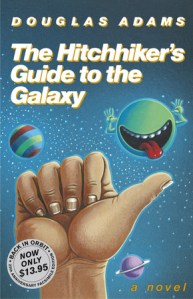
hitchhikers1Does this list say something about who’s using Facebook? In yet another of the listicles that they’re famous for, BuzzFeed shows the Top 20 books most beloved by Facebook users. With the exception of the number one pick (Harry Potter and the Sorcerer’s Stone?), it’s pretty much what you would expect:

  • Great Modern Novels I Had To Read In School But Actually Liked (1984, The Great Gatsby)
  • Books That I Read 50 Million Times As A Child And Whisked Me Away Somewhere Magical Each Time (The Lion, the Witch, and the WardrobeAnne of Green GablesA Wrinkle in TimeThe Lord of the Rings)
  • Actual Classics That Tend Not To Be Assigned In School Anymore (Jane EyrePride and Prejudice)
  • Self-Help Creed Masked As Literature (The Alchemist)
  • The Only Book I Read In The Past Few Years (The Hunger Games)
  • Outlier (The Handmaid’s Tale, The Hitchhiker’s Guide to the Galaxy, The Bible)

watchmen1When you dig into the full dataset that Facebook made available, particularly the full Top 100 list, a few more surprises pop up. There’s a heavier sprinkling of modern YA, plus the occasional religious text (The Book of Mormon). But what’s fascinating is just how overwhelmingly genre the list is, compared to what it might have been a few years ago. Even though many mainstream readers barely know who they are, Terry Pratchett, Orson Scott Card, Alan Moore, Robert Heinlein, and Robert Jordan all make appearances here.

This begs the question: Are Facebook users geekier than the population at large, or as the percentage of adults who actually read books falls every year, are genre fans just the ones more likely to keep reading books as opposed to tweets?

Also: is it a problem that the number-one book is Harry Potter? After all, according to Scientific American, children who were read to from those books acted more compassionately afterwards.