Writer’s Desk: One Idea per Sentence

Though Bill Bryson takes on large subjects, including but not limited to the history of everything, he tries to keep things simple. In his Dictionary of Troublesome Words, he gave some particularly specific advice:

There is no quota on periods. When an idea is complicated, break it up and present it in digestible chunks. One idea to a sentence is still the best advice that anyone has ever given on writing.

Writer’s Desk: Care About the Right Things

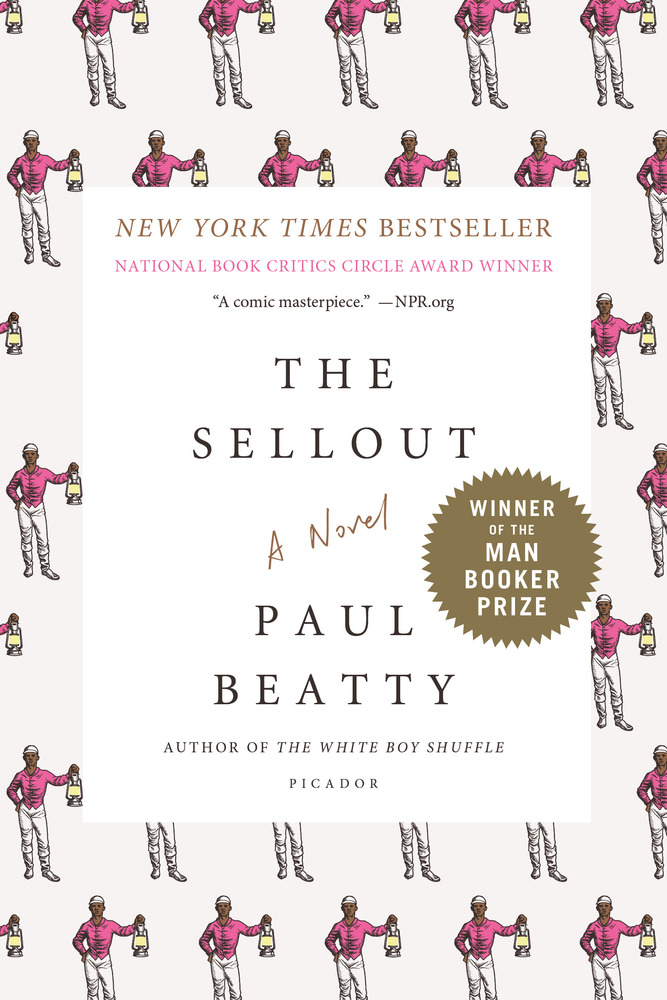
Paul Beatty, author of the incredible novel The Sellout, wrote about some things he wished he had known when he was starting out:

I felt a bit of pressure that if I wanted to be an author, I’d have be relatable, tell people what they wanted to hear, what they believed to be true about themselves, if not the world around them. Be like one to those corny Netflix stand-up comedians who win the (always overwhelmingly white) audience over by pillorying the easy target, pretending we’re all in this together, cultivating what Jerry Seinfeld calls the “we agree applause”.

He realized that worrying about everything outside the actual words on the page is mostly wasted effort:

I can’t say I’ve ever stopped worrying about becoming an author, and it’s not that I ever actively tried to become one, but I did stop thinking about trying. Reading WG Sebald’s Austerlitz and Percival Everett’s Erasure, listening to Bernadette Mayer and Rebecca Solnit talk about their forthcoming projects Helens of Troy and Infinite City, respectively, helped to remind me that the work is about the work…

Writer’s Desk: Follow Your Own Advice

Writers do not lack for advice. They are, in fact, drowning in it. This very site adds another drop to that flood most weeks; hopefully not entirely in vain.

Yes, sage advice from working authors can be crucial to those of us struggling to get words (the right words) on a page each day that do not embarrass us and hopefully put something new and fresh and true out in the world.

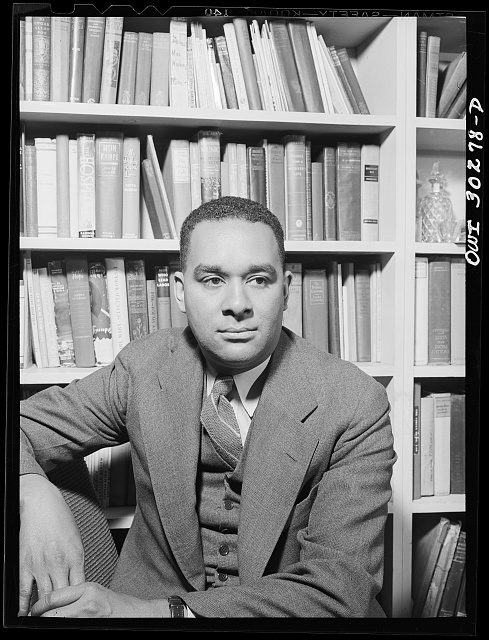
But that will only get you so far. This is what Richard Wright (Native Son) knew.

In 1945, in a letter Wright wrote to the artist Antonio Frasconi, he said:

I hold that, on the last analysis, the artist must bow to the monitor of his imagination, must be led by the sovereignty of his own impressions and perceptions.

You will not get anywhere without listening to what you have to say.

Writer’s Desk: Once Again, With Feeling

A few days after 9/11, Ian McEwan wrote in The Guardian about the aftermath of the tragedy, the shock it had caused in the people he knew. Despite the world-spanning nature of the events, he noted that “the reckoning, of course, was with the personal.”

In describing how people channeled their traumatized watching into fantasies and daydreams that limn the cracks in the “terrible actuality”, McEwan hits on something essential in these imaginings about “what if it was me?”:

This is the nature of empathy, to think oneself into the minds of others. These are the mechanics of compassion … Imagining what it is like to be someone other than yourself is at the core of our humanity. It is the essence of compassion, and it is the beginning of morality.

Your writing does not have to overtly engage with ethical quandaries in order to be moral. All it needs to do is whisk the reader into another person’s consciousness. By doing so, fiction can breed understanding.

Writer’s Desk: Invite the Reader In

In her essay “Mr. Bennett and Mrs. Brown“, Virginia Woolf described the phantom form that books can take for writers, a little figure (who identifies in this instance as “Brown”) and says “Catch me if you can.” That infuriating chase makes up the bulk of a writer’s life:

And so, led on by this will-o’-the-wisp, they flounder through volume after volume, spending the best years of their lives in the pursuit, and receiving for the most part very little cash in exchange. Few catch the phantom; most have to be content with a scrap of her dress or a wisp of her hair…

And what to do when you have finally caught the phantom? How to bring the reader in to witness the glory of your catch? Treat them as a guest:

The writer must get into touch with his reader by putting before him something which he recognises, which therefore stimulates his imagination, and makes him willing to co-operate in the far more difficult business of intimacy. And it is of the highest importance that this common meeting-place should be reached easily, almost instinctively, in the dark, with one’s eyes shut…

If you give the reader something familiar to hang on to, they will be more likely to follow you anywhere.

(H/T: LitHub)

Writer’s Desk: Use Your Memories

In his essay “So What Shall I Write About?” Haruki Murakami talks about his memories as a capacious warehouse filled with odds and ends which he can draw upon for his fiction:

We are─or at least I am─equipped with this expansive mental chest of drawers. Each drawer is packed with memories, or information. There are big drawers and small ones. A few have secret compartments, where information can be hidden. When I am writing, I can open them, extract the material I need and add it to my story…

He goes on to evoke Steven Spielberg’s E.T.:

There’s an umbrella, a floor lamp, pots and pans, a record player … [E.T.] manages to throw all those household items together in such a way that the contraption works well enough to communicate with his home planet thousands of light years away. I got a big kick out of that scene when I saw it in a movie theater, but it strikes me now that putting together a good novel is much the same thing.

Pack your head with memories and ransack them at will. Don’t worry if they do not seem to make sense together at first. They will.

Writer’s Desk: Say It Out Loud. Again.

The great and ever-acerbic Martin Amis has a new book out, Inside Story, which appears to be pretty juicy and part of that popular new sub-genre of quasi-nonfiction “novels”. (He also appears in the great new documentary The Meaning of Hitler which is showing in some festivals now and should be tracked down with all speed.)

Whether he’s expounding on tyrants or the cynical complexities of the London smart set, Amis delivers sharp prose that has reads as though it has been turned over on a lathe until every rough or unfinished particle has been removed. So if he has a bit of advice to provide, it is worth listening to. Here is something he offered at the Chicago Humanities Festival:

Saying the sentence, self-vocalizing it in your head until there’s nothing wrong with it.

If it does not sound right when you say it aloud, it probably will not read right on the page.

Writer’s Desk: Getting Past the Fear

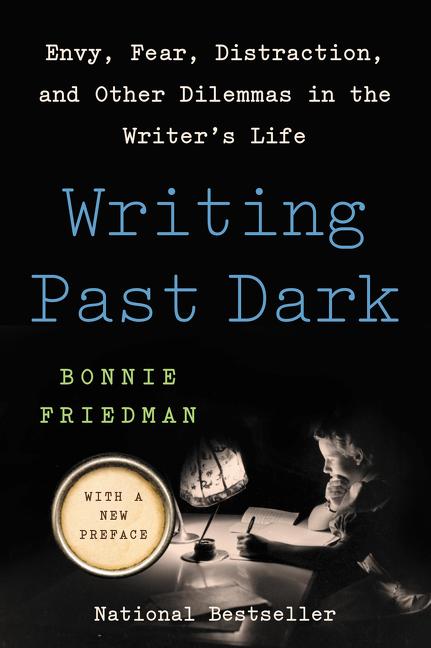
25 years ago, Bonnie Friedman sat down and let all the things that stymied her as a writer just flow out. Her guide, Writing Past Dark, is out now in an anniversary edition.

LitHub talked to Friedman about what led to that book:

There were a lot of things I did that made me suffer as a writer, and I wanted to learn why I did them. For instance, I routinely sickened myself with envy in bookstores. And, I was so afraid of getting right to work in the morning that I did a bunch of chores first and set everything as straight as possible before sitting down, by which point I was tired and there wasn’t enough time left. Also, ambient sounds seemed so interruptive that, even in a frigid Massachusetts winter, I set an air conditioner on my coffee table and turned it on for its enveloping roar. And if a short story received more than two rejections I chucked it forever into a bottom bin, ashamed…

Be proud of your work. It helps.

Writer’s Desk: Be Brave

When Sylvia Plath was attending Smith College in the 1950s and writing furiously in her journals about the kind of life (writing life, to be very specific) that she wanted for herself, she was absolutely determined to better herself. The entries are filled with orders to herself (“I will learn shorthand”, “I will begin reading Joyce”) and plenty of self-criticism.

At the same time, she is also trying to give herself the courage to succeed. Part of that involved trying to overcome her fears. Which appear to be mostly the same as any other writer.

Along the way, she delivers this sharp little apercu:

Everything in life is writable about if you have the outgoing guts to do it, and the imagination to improvise.

The more commonly quoted part comes right after: “The worst enemy to creativity is self-doubt”. While this is certainly true, it does not have the same snap.

Anything can be written about. Just go out and do it. Take from life everything you can for material. But do not be afraid to make up whatever you have to.

Writer’s Desk: Meet a Stranger for Coffee

Like many performers, Maria Bamford is often stricken with insecurities about her own work. That can make it difficult to write, much less perform.

But unlike most writers, Bamford has a unique process for working out her material:

In 2018, she began issuing periodic invitations, on Twitter, for fans who live in cities where she is appearing to meet her for coffee and listen to her run through her set before she performs. 

Is it scary to have a total stranger critique your writing before anybody else in the world sees it? Absolutely.

Is it more scary than having somebody you know critique it? Absolutely not.

If they are willing, talk to strangers about your work. Generally, they’re nice about it.

Writer’s Desk: Say It Clean

In his landmark work From Dawn to Decadence, historian Jacques Barzun has this to say about how the readability of written English can be under threat:

…the resulting obstacles to good prose were: a vocabulary full of technical terms and their jargon imitations, an excess of voguish metaphors, and the preference for long abstract words denoting general ideas, in place of short concrete ones pointing to acts and objects.

When it doubt, say it plain. Simplicity above all.

(h/t: Tablet)

Writer’s Desk: Get Out There and Live

When Walt Whitman first published his genre-redefining verse collection Leaves of Grass, he was not going after small game, acknowledging in the preface:

The land and sea, the animals, fishes, and birds, the sky of heaven and the orbs, the forests, mountains, and rivers, are not small themes…

Not everybody can match Whitman’s cranked-up barbaric yawp approach to writing. But nevertheless, it is worth taking a page or two from his tactic:

Who troubles himself about his ornaments or fluency is lost. This is what you shall do: Love the earth and sun and the animals, despise riches, give alms to every one that asks, stand up for the stupid and crazy, devote your income and labor to others, hate tyrants … read these leaves in the open air every season of every year of your life, re-examine all you have been told at school or church or in any book, dismiss whatever insults your own soul…

Embrace the world. Get out there. Come home. Write about it.

Writer’s Desk: Pay Attention

If writing were just stringing words together, literally anybody could do it. Because there is more to it, would-be writers spend many thousands of hours pondering how to do it better, and even read books and take classes to learn how to do something that seemingly anyone can do once they’re in elementary school.

In his superb guide First You Write a Sentence, English professor Joe Moran did his best to illuminate all the “intangible” ways that a sentence becomes more than the sum of its parts, and how he imparted that understanding to his students. His insight is simple but profound:

What I have learned is that trainee writers do not need to be able to parse every sentence into its parts. They just have to learn to care. Van Gogh, in a letter to his brother Theo, wrote that ‘what is done in love is well done.’ The purest form of love is just caring…. The purest form of praise is to pay attention. This is how we offer up the simplest of blessings to the world around us and to the lives of others. ‘Attention,’ wrote the French thinker Simone Weil, ‘is the rarest and purest form of generosity.’ Give your sentences that courtesy and they will repay you.

Put another way, you have rarely written a sentence that would not be improved by another pass. Pay attention.

Writer’s Desk: Don’t Write Your Pandemic Book … Yet

Writers are already a solitary lot. Even when there is not a pandemic. Those of us who pay the bills through teaching or other gigs that require contact with people have been even more isolated than usual. We also tend to respond to what is around us. So it’s more than likely than many of us have that COVID-related project that we have been tinkering around with.

However, Bill Morris warned in The Millions that we should maybe think about holding off. Not just because the market is about to be flooded with similar books, but because it’s probably better to let it sit for a while:

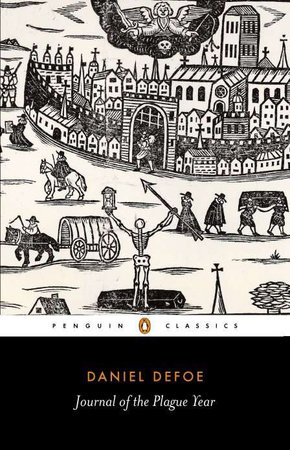
Daniel Defoe took his time before writing about his era’s horrific calamity, publishing A Journal of the Plague Year almost 50 years after the bubonic plague ravaged London in 1665. The book purports to be a first-person account of that grim year, and its rich detail and plausibility led many readers to regard it as a work of nonfiction rather than what it was—a deeply researched work of imaginative historical fiction. (Defoe was five years old during the plague.) The Nobel laureate Orhan Pamuk has spent the past four years researching and writing an historical novel called Nights of Plague about an outbreak of bubonic plague that killed millions in Asia in 1901, more than a century ago. Before putting pen to paper, Defoe and Pamuk had the good sense to let time do its work of giving traumas context and perspective…

There is no rush. Let it sit. Get it right.

Writer’s Desk: Give It Time

In 1948, Evelyn Waugh sent a letter to Thomas Merton in which he offered the following bit of advice from one writer to another:

Never send off any piece of writing the moment it is finished. Put it aside. Take on something else. Go back to it a month later and re-read it. Examine each sentence and ask “Does this say precisely what I mean? Is it capable of misunderstanding? Have I used a cliché where I could have invented a new and therefore asserting and memorable form? Have I repeated myself and wobbled round the point when I could have fixed the whole thing in six rightly chosen words? Am I using words in their basic meaning or in a loose plebeian way?”…

Wall Street Journal

You might disagree with Waugh’s usage of “plebeian” here (he was, after all, one of the great snobs of English literature, a genre already replete with the type). But the point remains solid: Take a second. Look again. That sentence you thought was carved with beautiful simplicity like a jewel could now show itself to be a bit baggy, in need of a little more carving.