Writer’s Desk: The Costanza Rule

Occasionally, sitcoms can help. So you have all seen the Seinfeld episode “The Opposite”? (If somehow not, go here for the gist.) In short, that’s the episode where the perennially selfish, short-sighted, and self-sabotaging George Costanza realizes that his best change for success is ignoring all of his instincts and doing exactly the opposite.

In honor of Costanza’s insight, it would behoove many writers to check out the Twitter account The Worst Muse. Its “advice” is solid gold:

It’s still not too late to add a vampire.

If a character is in New York, she’s got to be either a model or a writer, right?

If your alien culture isn’t a thinly veiled allegory for contemporary politics, what’s the point?

Follow the Costanza rule with every one of these tweets and you’ll be set.

Writer’s Desk: Style and Forbearance, Young Scribe

The great dispenser of acid-laced bon mots Dorothy Parker, born on August 22 in 1893, had the occasional bit of advice for writers. To wit:

If you have any young friends who aspire to become writers, the second-greatest favor you can do them is to present them with copies of The Elements of Style.

Hard to argue with, yes? Strunk and White’s paen to simplicity is a must-have tool for any writer of any age.

But Parker went on:

The first-greatest, of course, is to shoot them now, while they’re happy.

While people have a low tolerance for writers whingeing about the frustrations baked in to the writing life—nobody forced us to do it, after all—it’s worth pointing out to those just embarking on that path that happiness and fulfillment don’t necessarily follow.

Just writing, and writing well (preferably with a copy of Strunk and White at your side), must often be its own reward.

Writer’s Desk: Watch TV and Movies

Well, not always. But sometimes when you need inspiration, anything with imagery and people can do. Tennessee Williams liked to hunt for his characters, particularly women, in other media.

In his book Follies of God, James Grissom wrote about reaching out to Williams in the early 1980s for advice on writing. Williams told him that in his youth, the world of characters, what he called “the fog,” just came to him. Later on, it wasn’t so easy:

Writing early in the morning or deep into the night, Tenn kept his television set on, the volume set to low, a radio or a phonograph playing the music of people who had led him to fog-enshrouded stages in the past. An image would come across the screen and catch his eye, the volume would be raised, and a voice would speak to him. Tenn had notes and diagrams and plot outlines scrawled on envelopes, napkins, hotel stationery, menus from restaurants and diners and airport lounges. Once, he delicately constructed a plot outline on a paper tablecloth, which the waiter neatly folded and presented to him along with the check.

Whether Williams would have recommended public television, streaming, or reality TV for inspiration, is not known.

Writer’s Desk: Don’t Stop Now

benjaminbnf

The great Walter Benjamin once postulated the 13 rules necessary for the writer to make a go of it with their craft. It’s a smart, detail-fixated, and lengthy list, which you can review in full here.

They’re not all for everybody—”Avoid haphazard writing materials. A pedantic adherence to certain papers, pens, inks is beneficial” is a tad on the fussy side—but the following items seem relevant to just about any ink-stained wretch out there:

  • “Talk about what you have written, by all means, but do not read from it while the work is in progress. Every gratification procured in this way will slacken your tempo.”
  • “Consider no work perfect over which you have not once sat from evening to broad daylight.”
  • “Never stop writing because you have run out of ideas. Literary honour requires that one break off only at an appointed moment (a mealtime, a meeting) or at the end of the work.”

It is likely that a broader belief in the concept of “literary honour” would serve the writing classes well.

Writer’s Desk: Larry McMurtry

typewriter1

Cowboy novels, screenplays, weepies, Larry McMurtry’s written them all.  It’s a tossup as to what’s going to lead his obituary, Lonesome Dove or Brokeback Mountain, but either one is the kind of big-hearted and deeply-felt work most writers would kill to be associated with. He also runs his own bookstore, which is the sort of thing more writers should do.

A few years back, McMurtry—whose birthday was this past Friday—gave some writing advice to The Daily Beast; herewith a few selections:

  • “If you’re going to write fiction, you should read Tolstoy and the Russians; Flaubert and the French; Dickens; George Eliot; Dreiser; Twain; and on and on.”
  • “I have never mapped out a book ahead of time. It’s important to me to leave a little space for serendipity. Most of my books start with an ending. Then I go backwards and write towards the ending.”
  • “One thing I don’t do is read fiction while writing fiction. It interferes with my imagination.”

It’s difficult to imagine not reading fiction while writing it. After all, even a short novel takes most people months. That’s a long dry spell. But, then, he wrote Lonesome Dove, so probably knows a thing or two.

Writer’s Desk: Clancy’s Rules

Red_storm_rising

The late and arguably great Tom Clancy—born this past week in 1947—was never going to be remembered as a stylist. The characters in his techno-thrillers like The Hunt for Red October and Patriot Games generally talked alike (unless they were villains) and he was never good at setting a scene.

However, before bestseller bloat started turning his ever-denser plots into 1,000-page bores, he could crank out a perfectly good wargame scenario for the kind of readers who liked theorizing over who would win in a firefight: Delta Force or Spetsnaz?

Here are some of Clancy’s rules for writing and life. Take them as you will:

  • Tell the story
  • Writing is like golf
  • Make pretend more real than real
  • Writer’s block is unacceptable
  • No one can take your dream away

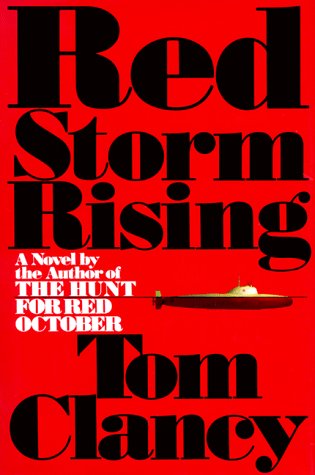
Perhaps not to everyone’s liking. But, then, not everyone has written the (still very readable) Red Storm Rising, which was seen as so plausible a World War III scenario at the time that Reagan read it to prep for his Iceland summit with Gorbachev.

Writer’s Desk: Get It Down

MakeGoodArt_Hardback_1359996371

This series has been visited by the great Neil Gaiman more than once. There’s a reason for that. In between all his other work, the guy manages to keep up a regular torrent of thoughts and advice on the witchy craft of writing that are rarely short of inspirational.

Recently, he’s been doing this on Tumblr. Here’s his response to a question from a fan who’s been having a hard time getting their “amazing ideas” down on paper:

Write the ideas down. If they are going to be stories, try and tell the stories you would like to read. Finish the things you start to write. Do it a lot and you will be a writer. The only way to do it is to do it.

Gaiman goes on to tell the real way to write; it involves five golden berries, five white crows, and reciting the whole of Fox on Sox. Who knows? Maybe that way works, too.

(h/t: Galley Cat)

Writer’s Desk: The First Draft

baudelaire

Jane Smiley on getting out of your own way:

… you cannot be judging yourself as you write the first draft—you want to harness that unexpected energy, and you don’t want to limit the possibilities of exploration. You don’t know what you’re writing until it’s done. So if a draft is 500 pages long, you have to suspend judgment for months. It takes effort to be good at suspending at judgment, to give the images and story priority over your ideas…

I think there are two kinds of sentences in a rough draft: seeds and pebbles. If it’s a pebble, it’s just the next sentence and it sits there. But if it’s a seed it grows into something that becomes an important part of the life of the novel. The problem is, you can’t know ahead of time whether a sentence will be a seed or a pebble, or how important a seed it’s going to be…

This, of course, is easier said than done. We’ve all been stuck at the desk, agonizing over the drivel we’ve been turning out and questioning the entire vocation. But just stick with it and (for a little while at least) ignore the inner critic. If you don’t have any raw material to work with, then there’s nothing to chisel and hone into something beautiful later on.